
A good grill thermometer is the difference between a juicy medium-rare steak and a hockey puck. Whether you’re firing up charcoal on a Saturday afternoon or running a low-and-slow smoke for hours, knowing the exact temperature at the grate, in the meat, or in the air around it transforms guesswork into repeatable results. This lineup covers instant-read probes, in-grill replacement gauges, wireless multi-probe setups, and oven-friendly options, so you can match the tool to your cooking style.
The Lineup, Simplified

Alpha Grillers Instant Read Meat Thermometer Digital

Weber Replacement Thermometer 67088 Center Mount

ThermoMaven Smart WiFi Wireless Meat Thermometer

ThermoMaven Sub-1G Smart Wireless Meat Thermometer
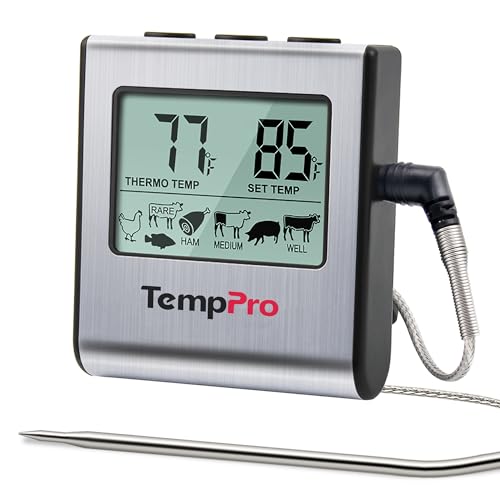
TempPro TempTrack Large LCD Digital Meat Thermometer

TempPro TempTrack Digital Cooking Meat Thermometer Dual Probe

2-Pack 431 Stainless Steel Oven Thermometer

ThermoMaven WiFi Wireless Meat Thermometer P2

ThermoMaven WiFi Wireless Meat Thermometer P4

Wireless Bluetooth Meat Thermometer with Ultra-Thin Probes
More Details On Our Top Picks
Pulling a probe out of a hot grill is a familiar moment for most backyard cooks, and the Alpha Grillers instant-read model is built for exactly that. The slim stainless-steel shaft slides into burgers, chicken thighs, or a thick ribeye with little resistance, returning a reading in roughly one to two seconds. Compared with the Weber replacement gauge below, this isn’t built into the grill at all; it lives in a drawer and travels wherever you cook.
It comes pre-calibrated out of the box and includes a recalibration function for long-term accuracy, plus a reference chart for common proteins. In our view, this is the kind of tool beginners reach for first and seasoned grillers keep as a backup even after upgrading to a wireless setup.
Points In Its Favor
- Lightning-fast readings help prevent overcooking thin cuts like fish fillets or smash burgers.
- Compact size fits in a kitchen drawer or apron pocket between uses.
- Recalibration feature extends usable life across seasons of weekend grilling.
- Backed by a waterproof rating that simplifies cleanup after messy marinades.
Things To Weigh Up
- No wireless connectivity, so you’ll be standing at the grill for every check.
- Probe tip should be hand-washed rather than soaked to preserve the seal over time.
Who It Suits Best
Home cooks who want a single fast probe for weeknight grilling without managing apps or base stations.
Consider Something Else When
Cooks running all-day smokes from indoors will appreciate the ThermoMaven P2 instead, since it streams readings to a phone over Wi-Fi.
When the factory gauge on a Weber gas grill fogs up or stops responding, swapping in the 67088 center-mount thermometer restores factory-level accuracy. It’s designed to fit most Genesis, Genesis II (2016+), and Summit gas grill series, displaying both Fahrenheit and Celsius at the lid. Unlike the Alpha Grillers probe above, this stays put on the hood and reads ambient chamber temperature rather than internal meat temperature.
Installation is a simple center-mount replacement that experienced Weber owners can handle in minutes. One thing worth noting: the outer housing is sold separately under model 66049, so confirm your existing bezel is intact before ordering. For owners who want a working gauge without replacing the whole grill, this is the cleanest path.
What Works In Its Favor
- Direct-fit replacement preserves the look and feel of the original Weber hardware.
- Dual-unit display removes guesswork for cooks who reference recipes in Celsius.
- No batteries required since it relies on a bimetallic coil, reducing long-term maintenance.
Room For Improvement
- Outer housing must be reused or purchased separately for a complete installation.
- Only compatible with specific Weber series, so confirm your model year before ordering.
- Reads chamber air temperature only, not meat internal temperature.
Made For
Weber gas grill owners dealing with a faded or unresponsive stock gauge on Genesis, Genesis II (2016+), or Summit models.
Look Elsewhere When
Grillers on a non-Weber cooker should check the TempPro dual-probe unit, which handles multiple proteins at once without requiring a factory-matched bezel.
The ThermoMaven with two probes targets grillers who want real-time core temperatures without babysitting the fire. The smart base station sits on a counter or picnic table and shows readings locally, so you don’t need a phone in hand for every alert. Unlike the Alpha Grillers instant-read tool earlier in this list, this system keeps eyes on two cuts at once over Wi-Fi, making it a fit for brisket, ribs, or a chicken-and-steak combo.
Setup leans on a one-click pairing process, and the base handles temperature targeting on its own. In most kitchens and covered patios, the connection holds steady through walls and across decks. You may find the included probes best for thicker cuts, since ultra-thin fish fillets can be tricky to seat cleanly.
Benefits That Matter
- Two probes allow simultaneous tracking of different proteins at varying target temps.
- Standalone base displays readings without requiring the companion app open.
- Wi-Fi range beats typical Bluetooth limits for monitoring from inside the house.
Honest Caveats
- Charging the base between long cooks becomes part of the routine.
- Probe wires need routing around grill lids to avoid pinching over time.
Who Should Grab It
Tech-friendly pitmasters running hour-long smokes who want alerts on their phone and at the base station.
Not Your Match When
Cooks who prefer zero connectivity should stick with the Sub-1G ThermoMaven G1, which keeps things simpler without a smartphone dependency.
Not every griller wants to fuss with apps, and the Sub-1G ThermoMaven skips that step entirely. The standalone base handles pairing, displays real-time readings, and lets you set target temperatures on the device itself. Sub-1G refers to a wireless frequency band that travels farther than typical Bluetooth while consuming less power, so the base stays connected through walls and across a yard without draining quickly.
Compared with the Wi-Fi ThermoMaven earlier, this model trades smartphone notifications for a simpler, single-device workflow. The probe snaps to the base in seconds, and a single click gets cooking underway. It’s a smart move for anyone who wants wireless convenience without turning grilling into a screen-time hobby.
Positive Takeaways
- No app required, which removes a common barrier for casual grillers.
- Sub-1G signal reaches across longer distances than standard Bluetooth setups.
- Display base doubles as a counter-friendly readout during prep and rest.
Some Limits To Know
- Single probe limits simultaneous tracking to one cut at a time.
- No remote phone notifications mean you stay within earshot of the base for alerts.
The Right Fit
Grillers who want wireless freedom without learning a new app or carrying a phone to the patio.
Reach For A Different Pick When
Cooks hosting large gatherings with multiple proteins should consider the ThermoMaven P4, which handles four probes at once.
Straining to read tiny digits at a distance is a real frustration, and the TempPro TempTrack answers with a generously sized LCD. It ships with USDA preset temperatures, so beginners can dial in poultry, beef, or fish without consulting a chart. The timer stretches up to nearly 100 hours, which is plenty for long oven braises and weekend smoking sessions alike.
The wired probe plugs into the base, and a single cable routes out to the grill or oven door. It works equally well on a smoker, an oven rack, or a stovetop pot. Compared with the TempPro dual-probe unit reviewed later, this is the simpler, single-cut option for everyday cooking.
Reasons It Performs
- Large LCD improves readability from across a busy kitchen or patio.
- USDA presets simplify decisions for newer cooks still learning doneness ranges.
- Long timer window handles everything from weeknight roasts to all-day smokes.
Worth Bearing In Mind
- Single probe design means swapping cables between cooks if running multiple dishes.
- The base unit itself should stay clear of direct grill heat to protect the electronics.
Quick Facts
Perfect Match For
Family kitchens where multiple cooks want a clear, no-fuss readout during weeknight meals and holiday roasts.
A Better Fit Elsewhere
Outdoor pitmasters managing a full spread of meats will prefer the TempPro dual-probe thermometer, which watches two cuts at once.
Low-and-slow smoking demands attention to both pit temperature and meat internal temperature, and the TempPro dual-probe model handles both jobs. The HI/LOW alarm system alerts you when the grill or smoker drifts outside a programmed range, so you know when to adjust vents or add fuel. USDA presets cover common proteins, and the design specifically targets grill and smoker workflows.
Unlike the single-probe TempPro above, this unit runs two cables out to the cook chamber, letting you track a brisket and a pork shoulder side by side. Owners commonly report that the magnetic back keeps the base planted on a smoker shelf without sliding. For dedicated outdoor cooks, it’s a meaningful step up from a basic wired thermometer.
Positive Points
- Dual probes let you monitor two cuts simultaneously without swapping cables mid-cook.
- HI/LOW range alarm helps maintain stable pit temperature for predictable smoke results.
- USDA presets speed up setup for new pitmasters still learning target temps.
Trade-Offs To Consider
- Two probe wires mean more cable management around a hot lid hinge.
- The base requires line-of-sight placement for the loudest alarm response.
Whose Shelf It Belongs On
Smoker enthusiasts running brisket, ribs, or shoulder who want both pit and meat temps on one display.
Swap It Out When
Grillers who want phone alerts from the couch should consider the ThermoMaven P2, which streams readings over Wi-Fi.
Analog gauges have a charm that digital probes don’t, and this 2-pack covers both an oven and a secondary appliance at a sensible price. The 431 stainless steel body tolerates the heat of gas or electric ovens, and a tempered glass lens protects the bold dial. The range stretches from 100 to 600 degrees Fahrenheit, more than enough for baking, roasting, and grilling tasks alike.
At roughly three inches square, the gauges fit on most oven racks without crowding cookware. Compared with the digital TempPro models reviewed earlier, these are pure analog with no electronics to charge or calibrate. For bakers who trust a steady dial, the format is honestly hard to beat.
Strengths Worth Knowing
- Two-pack covers an oven and a grill, smoker, or pizza oven in a single purchase.
- Stainless steel body shrugs off high-heat environments without warping.
- Analog format means no batteries, charging, or firmware updates to worry about.
Small Caveats
- Analog dials read slightly slower to the eye than digital displays.
- Doesn’t measure internal meat temperature, only ambient chamber heat.
Best Suited To
Home bakers and pizza enthusiasts who want a reliable ambient gauge for oven tuning without digital extras.
Another Choice May Suit
Grillers chasing internal meat temperature should reach for the Alpha Grillers instant-read probe, which handles protein doneness directly.
The P2 earns its place in this lineup through sensor density: six internal sensors per probe track core temperature with finer resolution than typical single-point probes. The smart base shows live readings without requiring the app, while Wi-Fi connectivity pushes alerts to a phone wherever there’s a signal. For weekend cooks running hour-long smokes, that combination is genuinely useful.
Setup is a one-click pairing from the base, and the companion app adds cooking history and guided programs for those who want extra support. Compared with the Sub-1G ThermoMaven earlier, this model leans harder into smart features. You may find the Wi-Fi link more convenient for monitoring from inside the house, especially during overnight brisket sessions.
Practical Pluses
- Multi-sensor probes catch temperature swings faster than single-point designs.
- Wi-Fi range lets you check progress from inside, work, or even while running errands.
- Base display doubles as a kitchen-friendly readout when a phone isn’t nearby.
Practical Considerations
- Wi-Fi dependency means dead spots or weak routers can disrupt alerts.
- Probes need careful drying after washing to protect internal sensor components.
Feature Snapshot
Who Should Grab It
Data-driven cooks who want the highest probe resolution and Wi-Fi reach for serious weekend sessions.
Skip It When
Minimalist grillers will find the ThermoMaven Sub-1G easier to live with, since it skips Wi-Fi entirely.
Big cookouts mean juggling multiple proteins at once, and the P4 handles four probes on the same base. Each probe carries six internal sensors for high-resolution tracking, mirroring the technology in the P2 above. The Wi-Fi link streams every probe’s status to a phone while the base shows live readings locally, so nobody is locked to a single screen.
For a backyard party with chicken, steak, ribs, and a brisket all on the grill at once, the P4 keeps everything organized. Compared with the dual-probe ThermoMaven earlier, this model doubles the capacity without doubling the footprint. One thing worth considering: charging four probes between sessions becomes part of the routine.
Notable Upsides
- Four probes remove the bottleneck when hosting larger gatherings with mixed proteins.
- Wi-Fi alerts keep hosts connected even while entertaining guests indoors.
- Sensor count per probe stays consistent with the smaller P2 for predictable accuracy.
Factors To Consider
- Four probes demand a charging routine to keep them ready between cooks.
- Cable routing gets crowded around a busy grill with multiple lids opening.
Technical Highlights
Right Fit For
Backyard hosts running four-protein cookouts who want one system to manage every cut without swapping gear.
Where A Sibling Pick Shines
Solo grillers cooking a single brisket will find the ThermoMaven Sub-1G simpler, since two probes would just gather dust.
Tailgates, picnics, and camping trips call for gear that travels well, and the MOGUNDAM wireless thermometer leans into that. The ultra-thin probes leave smaller puncture marks in delicate proteins like fish or chicken breast, and Bluetooth 5.3 holds a stable connection across a generous open-air range. A waterproof build simplifies cleanup after a greasy camp cookout.
The companion app works on both iOS and Android, walking through setup with minimal fuss. Unlike the Wi-Fi ThermoMaven models reviewed earlier, this unit keeps things local through Bluetooth, which means staying closer to the grill for monitoring. For weekend warriors who pack light, the compact footprint is a real advantage.
Useful Touches
- Ultra-thin probes preserve the appearance of fillets and tenderloins after cooking.
- Bluetooth range covers most tailgate setups without a router or Wi-Fi signal.
- Waterproof design tolerates rain, splashes, and post-cook washing.
Where It May Fall Short
- Bluetooth range drops sharply through walls compared with Wi-Fi systems.
- Two probes limit you to a small cookout spread, not a full party menu.
Core Details
Built With In Mind
Travelers, tailgaters, and casual grillers who want portable Bluetooth convenience without bulky base stations.
Where Another Pick Suits Better
Home cooks wanting whole-house Wi-Fi range should pick the ThermoMaven P2, which extends monitoring well beyond a single patio.
Picking The Right Tool For Your Grill
Grilling and smoking styles vary widely, so matching a thermometer to your habits matters more than chasing the most feature-heavy option. A wireless multi-probe system earns its keep during long cooks, while an instant-read probe covers fast weeknight grilling just as well. Defining the cooking style first, then narrowing by probe count, connectivity, and durability, keeps the search focused on what you’ll actually use.
Probe Type And Reading Speed
Instant-read probes deliver results in seconds and live in a drawer between uses, making them the most flexible tool for quick checks. Leave-in wired or wireless probes track temperature continuously during longer cooks, removing the need to open the lid and lose heat. For most grillers, owning at least one of each style covers the full range of cooking scenarios, from a seared steak to an overnight brisket.
Connectivity And Range
Bluetooth models work well for patios and tailgates but typically lose signal through walls or across long distances. Wi-Fi systems extend that reach into the house, the office, or anywhere a router signal reaches, which suits overnight smokes especially well. Sub-1G radios sit between the two, traveling farther than Bluetooth without needing a home network. Choosing the right signal type comes down to where you’ll be while the food cooks.
Display And Readability
Large LCD screens help in bright sunlight, busy kitchens, or anywhere multiple people need to read the temperature at a glance. Analog dial gauges offer a tactile, battery-free option that fits ovens and pizza ovens equally well. For cookers running complex multi-protein meals, a base station with a real-time readout removes the friction of unlocking a phone for every check.
Build Quality And Maintenance
Stainless steel probes handle high heat and frequent washing without corroding, though hand-drying extends their working life. Waterproof ratings simplify cleanup but don’t replace routine probe inspection for frayed cables or loose seals. For outdoor cooks in humid or coastal environments, corrosion-resistant materials tend to outlast bargain alternatives over several seasons.
Smart Habits Before You Commit
Pitfalls Shoppers Hit
Buying a four-probe system when you only ever cook one cut at a time leaves expensive gear sitting unused. On the flip side, picking a single-probe analog thermometer for overnight smoking means losing sleep over pit checks. Match the tool to the cooking style, not the spec sheet, and the rest of the decision falls into place.
Another common trap is assuming Bluetooth range matches Wi-Fi range, which leads to dropped alerts and missed temperature windows. For grills set far from the house, Wi-Fi or Sub-1G systems hold up better. Reading the connectivity details before ordering saves the frustration of returns.
When Paying More Pays Off
Higher-tier wireless thermometers earn their cost through stronger connectivity, multi-sensor probes, and base-station displays that work without a phone. For cooks running hour-long smokes or hosting large gatherings, those upgrades translate into fewer mistakes and less time hovering over the grill. Casual weeknight grillers, though, will find plenty of accuracy in simpler instant-read or analog options.
Frequently Asked Questions
How accurate do barbecue grill thermometers need to be?
Most reputable models hold readings within a few degrees of true temperature, which is more than enough for everyday grilling and smoking. The bigger accuracy gap usually comes from probe placement, not the device itself.
Can one thermometer handle both grilling and smoking?
Yes, most modern probes tolerate the heat range of a hot sear and the lower, sustained temperatures of a smoker. Leave-in wireless probes handle long cooks especially well, while instant-read tools work great for quick grill checks.
Do wireless thermometers work through walls and closed lids?
Wi-Fi and Sub-1G models typically maintain signal through walls and across yards, while Bluetooth tends to weaken through barriers. For whole-house monitoring, Wi-Fi is the safer bet.
Are analog oven thermometers still worth using?
Analog gauges are reliable, battery-free, and easy to read at a glance, which keeps them relevant for ovens, pizza ovens, and smoker chambers. They don’t replace a meat probe, but they pair nicely with one.
How do you clean and store grill thermometer probes?
Hand-washing with warm soapy water and drying thoroughly before storage extends probe life significantly. Coiled cables and base stations fit neatly in a kitchen drawer or a small carrying case between cooks.
The Takeaway
The right grill thermometer turns temperature guessing into repeatable results, and the best option depends on how you actually cook. Quick-grill cooks benefit from a fast instant-read probe, while dedicated smokers and entertainers get the most from wireless multi-probe setups. Pick the tool that fits your routine, and you’ll pull better food off the grate for years to come.