
A flat top turns a backyard grill into a second kitchen. Pancakes at sunrise, smash burgers at lunch, peppers and onions alongside ribeye at dinner, all on one steady slab. Picking the right griddle saves you from warped plates, uneven heating, and that frustrating slide where half your hash browns end up in the flame.
This list rounds up ten options worth considering across three common fits: dedicated outdoor burners, portable camping setups, and full-size gas grills. Each pick is judged on cooking surface, heat retention, cleanup reality, and whether it actually fits the grill you already own. Read on for the trade-offs, then match one to your setup.
A Snapshot Of The Selections

Camp Chef Grill Barbecue Box 16″ Orange Flame Stoves

Utheer Ceramic Cast Iron Griddle Camp Chef 3 Burner

Weber Gourmet BBQ Griddle Porcelain-Enameled Cast Iron

Ninja Woodfire XL Flat Plate BBQ Griddle

Uniflasy Cast Iron Flat Top Griddle 17 x 13 Inch
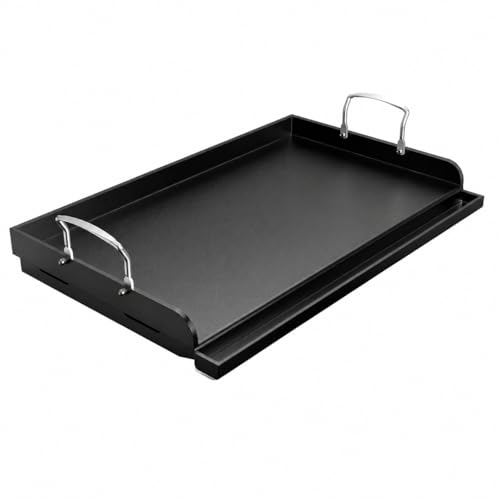
Uniflasy 25 x 16 Inch Cast Iron Flat Top Griddle

Uniflasy 23″ x 16″ Cast Iron Stove Top Griddle

Utheer 25×16 Nonstick Cast Iron Griddle PFAS-free

Utheer 25″ x 16″ Enameled Cast Iron Griddle
Utheer Nonstick Reversible Cast Iron Griddle 16.5 x 10.5
Taking A Closer Look At The Options
Camp Chef’s barbecue box slips over the 16-inch Orange Flame stove and turns a portable burner into a legitimate grilling station. Cast iron grates hold steady heat across the 16 by 24 inch surface, and the integrated heat diffuser plates convert flame into infrared energy that vaporizes drippings on contact, so cleanup stays manageable after a cookout.
For anyone already running a Camp Chef two-burner system, this is the simplest upgrade path. The unit weighs roughly 33 pounds and arrives pre-assembled for the most part, so setup is more of a slide-in-place move than a project. Out of the box, the True Seasoned Finish means you can start cooking with minimal prep time.
What Pays Off
- Cast iron grates retain heat and deliver strong sear marks on burgers and steaks
- Heat diffuser plates vaporize grease drippings to reduce flare-ups during long cooks
- Custom fit for the Orange Flame stove means no wobble or sliding during use
- Pre-seasoned finish cuts the break-in time that usually comes with new cast iron
Worth Noting
- 33 pounds makes this heavier than most portable options, so transport requires planning
- Limited to Camp Chef 16-inch stove owners; not a universal fit for other brands
Built With In Mind
Camp Chef Outdoor Stove owners who want a permanent grilling surface rather than a swap-out griddle plate.
Consider Something Else When
Shoppers running a generic gas grill should look at the Uniflasy 25 x 16 Inch Cast Iron Flat Top Griddle instead, since that fits standard gas grates.
This Utheer plate covers the full three-burner span of the Camp Chef 16-inch cooking system, turning a campsite stove into a flat-top restaurant surface. The ceramic-coated cast iron slides across all three burners, so you can run one zone hot for searing and another cooler for onions or eggs simultaneously.
Compatibility stretches across GB90D, TB90, TB90LW, SPG90B, and CCH3 models, which is worth verifying before ordering. The 37.4 by 17.3 inch footprint handles full breakfast spreads for a family without the cramped juggling that smaller plates demand.
Where It Helps
- Covers all three burners so a full breakfast or dinner cooks in one pass
- Ceramic coating reduces sticking on eggs, fish, and delicate proteins
- Compatible with several Camp Chef stove generations, not just the current model
Things To Consider
- Ceramic surfaces can wear with metal utensils, so owners commonly switch to softer spatulas to extend life
- Limited to Camp Chef 16-inch system owners; not a retrofit for other outdoor stoves
Feature Snapshot
Whose Shelf It Belongs On
Camp Chef three-burner owners who want a wide flat-top experience without buying a separate dedicated griddle station.
Look Elsewhere When
Anyone using a Weber kettle should consider the Weber Gourmet BBQ Griddle Porcelain-Enameled Cast Iron, since the Weber insert is built specifically for that system.
Weber’s Gourmet BBQ System griddle drops into a 12-inch opening on compatible Weber charcoal grills, swapping the center grate for a flat porcelain-enameled slab. The enamel coating seals moisture into proteins and wipes down faster than bare cast iron, which is the main reason home cooks gravitate toward it.
Heat retention runs high thanks to the cast iron core, so the surface holds steady through stacks of pancakes or batches of smash burgers. This is a focused insert rather than a full-width plate, so it pairs best with weekday cooking for two to four people, not full party spreads.
What It Does Well
- Porcelain enamel prevents sticking and cleans up faster than raw cast iron
- Retains heat for even searing across the 12-inch surface
- Drops into the Gourmet BBQ System grate for a tidy center-station setup
Trade Offs
- Fits 12-inch Weber charcoal grills only, with no flexibility for other brands
- Smaller footprint means cooking for large crowds requires multiple batches
- Enamel can chip if dropped, so storage care matters over the long term
Made For
Weber charcoal owners with a Gourmet BBQ System who want a refined sear surface for everyday dinners.
Skip It When
You need a wider cooking area for family-sized breakfasts; the Uniflasy 23″ x 16″ Cast Iron Stove Top Griddle covers more plates at once.
This flat plate converts a Ninja Woodfire XL grill into a true flat top for searing vegetables, sautéing shrimp, or running a pancake bar. The ceramic non-stick coating sits over a roughly 45 by 31 cm cooking area, which is sized for the XL grill cavity specifically.
Foods that usually fall through standard grates, like asparagus, sliced onions, and cherry tomatoes, stay put on the flat plate. The non-stick layer means you can run with less oil, which suits cooks who want lighter breakfasts and weeknight dinners.
Useful Strengths
- Ceramic non-stick makes delicate foods like prawns and asparagus easy to flip
- 45 by 31 cm surface fits the Ninja Woodfire XL cavity without overhang
- Lighter oil use since the coating releases food without heavy seasoning
Small Caveats
- Limited to Ninja Woodfire XL owners; no fit on other grill brands
- Smaller cooking zone than full-width plates when cooking for groups
Quick Facts
The Right Fit
Ninja Woodfire XL owners who want to expand their grill into a flat-top station for delicate vegetables and seafood.
Another Choice May Suit
Backyard grill owners seeking a wider flat-top surface should look at the Uniflasy 25 x 16 Inch Cast Iron Flat Top Griddle for broader coverage.
This 17 by 13 inch Uniflasy plate is sized for tailgates, RV trips, and small home grills where a full 25-inch plate is overkill. Cast iron holds heat the same way larger plates do, so a smaller footprint does not mean weaker searing on the surface that matters most.
You can drop it on a gas grill grate, balance it over a charcoal kettle, or set it across two stovetop burners at home. The plate’s compact size also makes storage simpler in cabinets and outdoor kitchens where space runs short.
Benefits That Matter
- 17 by 13 inch size fits smaller grills that can’t accept full-width plates
- Universal fit across gas, charcoal, and stovetop use
- Compact footprint for easier storage in cabinets or RV compartments
Factors To Consider
- Smaller surface means cooking for large groups requires batch rotation
- Cast iron demands seasoning upkeep that some casual cooks may find tedious
Who It Suits Best
Tailgaters, RV travelers, and small-grill owners who want portable flat-top cooking without the bulk.
Not Your Match When
You host frequent large cookouts; the Utheer 25×16 Nonstick Cast Iron Griddle offers much more surface area for the same grill size.
This is the workhorse pick for anyone running a five-burner or larger gas grill. The 25 by 16 inch cooking area, with handles bringing the total outside length to roughly 27 inches, gives you room for a dozen burgers, a full breakfast spread, or a mix of proteins and vegetables side by side.
The fit check matters here, since the handles extend beyond the cooking surface on both ends. Measure your grill’s clear inside length at grate level before ordering; if your grill only clears 25 inches inside, the handles will not seat properly.
Useful Highlights
- 25 by 16 inch surface handles full meal service for family cookouts
- Cast iron construction holds steady heat across the entire plate
- Drops onto standard five-burner gas grills without modification
Practical Considerations
- Handle width requires at least 27 inches of clear grill space, which excludes smaller grills
- Cast iron requires seasoning maintenance to keep the surface performing over time
Feature Snapshot
Best Suited To
Owners of five-burner or larger gas grills who regularly cook for big family gatherings.
Swap It Out When
You run a smaller grill; the Uniflasy 17 x 13 Inch Cast Iron Flat Top Griddle fits where this one will not.
The 23 by 16 by 2.6 inch profile slots over a four-burner range oven and across most gas and charcoal grates with room for two or three dishes at once. This is the middle ground for households that want one griddle that works indoors on a weeknight and outdoors on a weekend.
The depth of 2.6 inches creates a shallow well that holds a bit of oil or grease at the perimeter, useful when cooking bacon or searing fajita meat. Compare that to thinner plates, which tend to let grease run straight off the edges.
Points In Its Favor
- Fits four-burner range ovens and most standard grills for indoor-outdoor flexibility
- 2.6 inch depth contains grease better than thinner plates
- Spacious enough for full family breakfasts or fajita nights
Things To Weigh
- Heavier than thinner plates, so moving from indoor range to outdoor grill takes planning
- Cast iron needs regular seasoning to maintain the non-stick qualities
Perfect Match For
Home cooks who want one plate that moves between a kitchen range and a backyard grill without buying two.
A Better Fit Elsewhere
Those wanting a lighter non-stick surface should look at the Utheer 25×16 Nonstick Cast Iron Griddle, which uses a PFAS-free ceramic layer.
This 25 by 16 by 2.6 inch griddle brings a PFAS-free nano-ceramic non-stick surface to a familiar cast iron platform. For cooks who want easier release on eggs and pancakes but still want the heat retention that bare cast iron provides, this is a smart compromise.
The coating is made without PFOA, PFAS, PFOS, PTFE, lead, or cadmium, which appeals to anyone avoiding traditional non-stick chemistries. The trade-off is that the ceramic layer requires gentler utensils and a softer cleaning approach to last.
What Stands Out
- PFAS-free ceramic non-stick releases eggs and pancakes without heavy oil
- Cast iron core still holds heat for proper searing on burgers and chops
- Standard 25 by 16 size fits most gas and charcoal grills without modification
Honest Caveats
- Ceramic non-stick is more sensitive to metal utensils than bare iron
- Same weight class as a bare cast iron plate, so two-handed handling is the norm
Who Should Grab It
Cooks who run a standard gas grill and want an easy-release surface for low-fat breakfasts and weeknight dinners.
Where Another Pick Suits Better
Those who prioritize easier cleanup over non-stick chemistry should consider the Utheer 25″ x 16″ Enameled Cast Iron Griddle, where enamel handles most of the work.
This Utheer griddle swaps bare cast iron for an enameled finish, which is the same approach Weber takes on its Gourmet BBQ System insert. The porcelain-style coating seals the surface against rust and reduces sticking, so the cleanup story after a long cook is much friendlier than with raw iron.
It still drops onto a four-burner range oven, a gas grill, or a charcoal grill with a wide enough surface. The 2.6 inch depth matches the Uniflasy plate, so grease stays contained rather than dripping straight through to the grate below.
Practical Pluses
- Enameled finish resists sticking and wipes down without aggressive scrubbing
- 2.6 inch depth keeps grease contained during high-fat cooks
- Universal fit across gas, charcoal, and four-burner range ovens
Points To Keep In Mind
- Enamel can chip if the plate is dropped or banged on hard surfaces
- Heavier than non-cast options, requiring two hands to lift when hot
Feature Card
Best Suited To
Entertainers running a backyard gas grill who want a forgiving surface that survives a full party and cleans up fast afterward.
Reach For A Different Pick When
You prefer a lighter bare-iron plate with no enamel to maintain; the Uniflasy 25 x 16 Inch Cast Iron Flat Top Griddle is the simpler alternative.
This reversible plate flips between a flat griddle and a ridged grill surface, so one piece of iron covers breakfast eggs at sunrise and seared steaks or grill marks at dinner. The 16.5 by 10.5 inch footprint spans two stovetop burners or sits across a small grill grate.
Cast iron with an upgraded ceramic non-stick layer provides heat retention without the bare-iron seasoning routine. The reversible design also means you can run both surfaces in the same session, searing vegetables on the flat side while finishing proteins on the ridged side.
What Helps Most
- Reversible design gives you a griddle and a grill in one plate
- 16.5 by 10.5 inch size fits two-burner setups and small grills
- Ceramic non-stick eases cooking on the flat side without heavy oil
Some Limits To Know
- Smaller cooking area means large batches still need rotation
- Reversible design adds weight and bulk compared to single-side options
The Right Fit For
Apartment dwellers and small-kitchen cooks who want one plate that covers stovetop, oven, and grill use without taking over storage.
Where A Sibling Pick Shines
Camp Chef outdoor stove owners should grab the Utheer Ceramic Cast Iron Griddle instead, since it covers all three burners in a single slab.
What To Weigh Before Choosing Barbecue Grill Griddles
Sizing Up The Surface
Cooking area is the first number to nail down. A 17 by 13 inch plate handles a single small family or a tailgate setup, while 25 by 16 inches covers a full five-burner gas grill and supports cooking for six to eight people without batch juggling. The cast iron core underneath the size matters just as much, since bare iron holds heat better than thinner steel plates during a packed cook. Measure your grill’s clear inside width at grate level before ordering a full-size plate, because handles add roughly an inch on each side and can keep a 27-inch plate from seating on a 25-inch interior.
Material And Coating Trade-Offs
Bare cast iron gives you the strongest sear and best heat retention but demands regular seasoning to stay non-stick. Porcelain enamel sits over the iron and skips most of that upkeep, though it can chip if dropped. Ceramic non-stick layers release delicate foods like eggs and pancakes with less oil, but they are more sensitive to metal utensils than enamel or bare iron. For most home cooks, the choice comes down to how much seasoning work you want to do and whether you prefer a slicker release or a more durable finish.
Fit, Compatibility, And Versatility
A griddle that fits one brand of stove often refuses to seat on another, so check the compatibility list before checkout. Universal-fit plates sized around 17 by 13 or 25 by 16 inches drop onto most gas and charcoal grills with enough clearance. Camp Chef and Weber system owners get tighter tolerances and better seating with the matching inserts, which matters more on portable stoves where wobble becomes a safety issue. The depth, usually 1.3 to 2.6 inches, also affects how well the plate holds grease during high-fat cooks.
Pitfalls Shoppers Hit And Where The Extra Money Goes
Wrong Turns To Avoid
Skipping the measurement step is the most common mistake. A 25 by 16 inch plate with handles extending to about 27 inches will not seat on a grill with only 25 inches of clear interior width, and that returns the plate. Buying bare cast iron without planning for seasoning is the next slip up; the surface needs oil and heat cycles to stay non-stick, and skipping that step leaves you with stuck eggs and a frustrated morning. Finally, mistaking a system insert like the Weber Gourmet griddle for a universal plate wastes money, since those only fit the specific Weber 12-inch opening.
Where The Extra Money Goes
Higher-tier griddles tend to layer porcelain enamel or nano-ceramic coatings over the cast iron core. That added finish costs more in materials and production, and it cuts down on the seasoning routine that bare iron demands. Premium plates also tend to be heavier, with deeper 2.6 inch walls that hold grease rather than letting it run off the edge. For a backyard cook who fires the grill once a week, the upgrade pays off in easier mornings. For a casual tailgater, a basic bare-iron plate gets the job done without the added cost.
Frequently Asked Questions
How Do I Season A New Cast Iron Griddle?
Rub a thin coat of high-smoke-point oil across the surface, then bake the plate upside down at a high temperature for about an hour to polymerize the oil into a protective layer. Repeat the process a few times before the first cook for the best release.
Can These Griddles Go In the Oven?
Most cast iron griddles without plastic handles are oven-safe, though the exact temperature limit depends on the handle material. Check the product listing for any plastic or coated components before sliding the plate into a hot oven.
Will A Griddle Plate Fit A Three-Burner Gas Grill?
A 25 by 16 inch plate typically covers three burners, but the exact fit depends on the grill’s clear interior width and any raised features inside the firebox. Measure inside the lid at grate level for the safest match.
Do I Need To Remove The Grates Before Using A Griddle Plate?
Yes, standard grates need to come out so the plate sits flat across the burners. Leaving the grates in place creates an unstable, elevated surface that traps heat unevenly and can warp thinner plates over time.
How Do I Clean Stubborn Stuck-On Food?
Pour a small amount of water on the hot plate right after cooking and scrape gently with a flat spatula. For tougher residue, coarse salt and a paper towel work as a mild abrasive without damaging the seasoning.
The Takeaway
Cast iron, ceramic, and enameled plates each cover a different kind of cook. Match the plate to the grill you already own, the crowd you feed, and the cleanup you are willing to live with, and the right griddle becomes obvious. Start with what fits, then refine by surface and coating.