
A good fire is the spine of a good cookout, and the gap between mediocre and memorable usually comes down to two things: how quickly the coals catch and how cleanly they burn. Whether you’re lighting a kettle grill for weeknight burgers, prepping a kamado for a long brisket, or coaxing a backyard fire pit to life, the right charcoal and starter setup removes guesswork and leaves more time for the actual cooking. This roundup walks through ten well-built options, from natural fire starters and chimney starters to organic briquettes, so you can match fuel and ignition to your setup without buying twice.
The Leading Options At A Glance

WH 185 pcs Natural Fire Starters, 5 lb Box

WH Natural Fire Starters 15 lb Bundle

WH 370 pcs Natural Fire Starters, 10 lb Box

E500 Large Charcoal Chimney Starter

CADARA Charcoal Chimney Starter

M. ROSENFELD Electric Charcoal Burner

onlyfire Heavy Duty Stainless Steel Chimney

OLIVETTE Organic BBQ Charcoal Briquettes, 4-Bag
OLIVETTE Organic BBQ Charcoal Briquettes, 2-Bag
Oklahoma Joe’s Halftime XL Charcoal Starter
A Deeper Look At The Lineup
If you only fire up the kettle on Saturdays, a small starter box that disappears into a drawer is easier to live with than a five-pound jug of cubes. The WH 5 lb box ships 185 pieces, which is enough for roughly a season of weekend grilling for a household of two.
Where this starter earns its keep is the material. The cubes are pressed pine wood combined with fatty and lauric acid, which are plant-derived fats that act as the ignition accelerant. That means you avoid petroleum-based lighter fluid flavor transfer on food, and the burn stays odorless during the first few minutes while your charcoal is still catching.
Where It Delivers
- Ignites from a single match or lighter, cutting setup time
- Odorless combustion preserves food flavor during ignition
- Plant-based fatty acid binder means no paraffin or chemical residue
- Compact 5 lb box stores easily in a garage or shed shelf
Things To Consider
- Smaller supply means reordering if you host large cookouts often
- Store the box sealed, since humidity is the usual culprit when any fire cube underperforms
Who It Suits Best
Casual weekend grillers who want a clean, low-fuss ignition method without stocking a giant pile of cubes in the garage.
Look Elsewhere When
Frequent hosts running multiple grills each week get better value from the WH 15 lb bundle, which covers the same need at higher volume.
The same ignition chemistry as the smaller WH starter, just doubled and packed into a 15-pound bundle that covers a household’s entire charcoal season. You get one 185-piece box and one 370-piece box together for a total of 555 cubes.
This is the box to buy if you’re tired of running out mid-summer or if your grill shares a chimney starter with a fire pit, fireplace, and pizza oven. The pine wood and lauric acid blend burns long enough to catch stubborn lump charcoal without flareback.
What It Does Well
- Bulk format reduces reorder trips for frequent hosts
- Compatible with grill, fire pit, fireplace, wood stove, and pizza oven
- Longer burn time per cube versus smaller-format starters
- Plant-based binder means no paraffin, wax, or chemical residue
- Odorless ignition avoids chemical aftertaste on grilled food
Points To Note
- 15 lb is heavy, so storage space matters more than with smaller boxes
- Keep the bag sealed between uses, since pine-based cubes can absorb ambient moisture
Feature Snapshot
Right Fit For
Frequent grillers and hosts running multiple fire setups who want one annual purchase that stays in the garage all season.
Swap It Out When
Owners with limited storage and only weekend use get more practical sizing from the WH 5 lb box.
The middle child of the WH lineup is the 10-pound size that lands between weekend-casual and full-season stockpile. With 370 cubes in a single box, you get roughly twice the supply of the 5-pound option without committing to the 15-pound bundle.
For households that fire up the grill two or three times a week across spring and summer, this box strikes the right balance. The pine wood and fatty acid blend stays odorless through ignition, so even if you’re starting charcoal on a covered patio, you won’t get chemical flavor on steaks.
Everyday Perks
- Mid-size 10 lb box balances supply with manageable weight
- Ignites from one match without lighter fluid
- Smoke-free burn during ignition keeps food flavor clean
- Works for grill, fire pit, or wood stove setups
Honest Caveats
- Cubes can lose performance in humid storage, so a sealed bin helps
- Not the right pick if you only grill once a month; the 5 lb box is leaner for casual cooks
Made For
Regular backyard cooks who want a multi-month supply without committing to the largest bundle size.
Consider Something Else When
Heavy hosts running grills and fireplaces together run out faster, and the WH 15 lb bundle suits that demand better.
A chimney starter (a cylindrical metal tube that lights charcoal from below using newspaper or cubes as kindling) is the most reliable way to skip lighter fluid, and the E500 package bundles the chimney with 60 starter cubes so first-time chimney users have everything in one box. Compared to buying a chimney separately, this combo removes the question of which starter cubes match the chimney size.
The body is galvanized steel, which means a zinc coating that resists corrosion and holds up to repeated high-heat cycles. You light the cubes at the base, wait roughly 10 to 15 minutes, and the coals at the top are ready to pour into the grill.
The Helpful Details
- Includes 60 starter cubes, eliminating a separate shopping trip
- Galvanized steel resists rust across seasons of outdoor storage
- Designed to light charcoal in roughly 10 to 15 minutes
- No lighter fluid needed, so food flavor stays clean from the start
Worth Noting
- Galvanized steel can discolor over time, though it remains functional
- Replacement cubes must be sourced separately once the included 60 are used
Quick Facts
Best Suited To
First-time chimney users who want a single purchase that pairs the chimney with matching starter cubes.
Skip It When
Experienced grillers who already stock cubes prefer a heavier-duty chimney like the onlyfire stainless model.
If you want chimney convenience without a premium price tag, the CADARA starter covers the basics in a zinc-coated steel build. The 0.6 mm steel gauge is lighter than premium options, which is noticeable when you lift it full of coals, though it keeps the cost accessible.
What the design gets right is airflow. Side vents run up the body, and the base has wide holes that draw air upward, so coals light from the bottom with consistent ventilation. The whole unit measures roughly 10.7 by 6.5 by 6.5 inches, which fits standard kettle grills.
What Works In Its Favor
- Side vents promote consistent ignition from bottom to top
- Compact dimensions fit standard kettle grill openings
- Zinc coating resists surface rust during typical outdoor storage
Practical Considerations
- Thinner steel gauge means denting is more likely if dropped on a hard patio
- Single handle design offers less control when pouring, unlike dual-handle premium options
Whose Shelf It Belongs On
First-time chimney shoppers on a budget who want a no-frills tool that handles weekend grilling.
A Better Fit Elsewhere
Heavy users running high-heat sessions benefit from the onlyfire stainless chimney, which offers better heat tolerance.
An electric charcoal starter solves a specific problem: you need lit coals indoors, on a balcony, or anywhere an open flame feels like overkill. The M. ROSENFELD burner uses 450 watts through a 304 stainless steel hot plate, which is a food-safe grade that resists rust under repeated heating.
It’s built primarily for coconut shell charcoal and similar cubes used in hookahs or small indoor grills. The package includes tongs and a portable coal holder, which is a thoughtful touch since handling hot coals without proper grip is the usual safety complaint.
What Makes Sense
- Flame-free electric heating works where open fire is restricted
- 304 stainless hot plate handles frequent use without corrosion
- Includes tongs and a coal basket for safer handling
- Reaches ignition-ready coals in roughly 10 minutes
Trade Offs
- Limited to cube and flat-format coals, not full-size lump or briquettes
- Requires access to a 110V power outlet, so outdoor placement needs an extension cord
At A Glance
Who Should Grab It
Apartment dwellers and hookah users who need lit coals indoors without an open flame on the stove.
Not Your Match When
Backyard grillers running full-size briquettes need a chimney starter instead, like the onlyfire or E500 picks.
Where the budget chimney saves money on steel gauge, the onlyfire chimney invests in stainless steel and a dual-handle design. Stainless holds its color and structural integrity across seasons better than galvanized steel, which tends to darken and pit with repeated high-heat cycles.
The dual-handle setup is the real upgrade for safety. The main grip stays away from heat, while the side handle pivots for steady coal pouring. A reinforced heat deflector reduces warping, which is the typical failure point on cheaper chimneys after a year of heavy use.
Why It Works Well
- Stainless steel body resists warping under repeated high heat
- Dual-handle layout keeps hands farther from radiant heat
- Reinforced heat deflector adds structural rigidity to the chimney
- Pivoting side handle steadier for transferring lit coals
Room For Improvement
- Heavier than budget chimneys, which is noticeable during long pour sessions
- Higher price point is harder to justify for casual weekend-only grillers
Built With In Mind
Frequent grillers running long, multi-batch cookouts who need a chimney that won’t warp under repeated daily use.
Where Another Pick Suits Better
Casual users lighting the kettle once a week find the CADARA chimney covers their use without the stainless upgrade cost.
OLIVETTE’s briquettes are pressed from recycled olive pulp, olive pits, and olive pruning branches, which is an unusual feedstock in a category dominated by hardwood. The result is a briquette that burns with a mild olive-wood aroma instead of the generic charcoal smell, and carries organic certification on the US market.
The 4-bag case at 6.6 lb each delivers 26.4 lb of briquettes, enough for a season of entertaining without restocking. Because the briquettes are pressed from olive byproducts, the ash output and burn time are notably consistent from piece to piece.
Points In Its Favor
- Made from recycled olive pulp and pits, which is unusual feedstock for briquettes
- Organic certification means no chemical binders in the fuel itself
- Mild olive aroma during cooking rather than generic charcoal smell
- Bulk format reduces reordering for entertaining-heavy households
Some Limits To Know
- Premium organic feedstock typically costs more per pound than commodity briquettes
- Availability can vary by region, so plan ahead before hosting events
Perfect Match For
Entertainers and pitmasters who want organic briquettes with a distinctive olive-wood character for special-occasion cooks.
Reach For A Different Pick When
Budget shoppers stocking everyday weeknight fuel find commodity hardwood briquettes easier on the wallet.
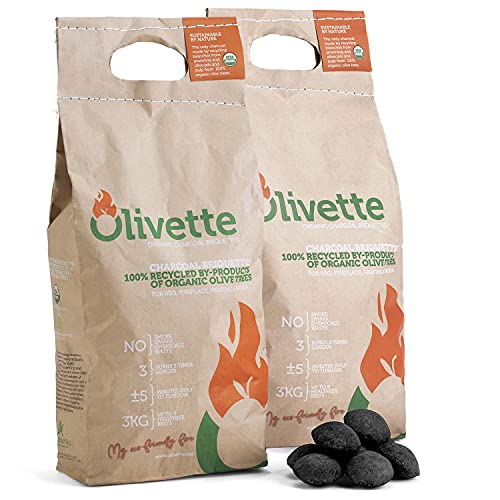
The 2-bag pack offers the same organic olive briquettes as the 4-bag case, just in a smaller format for shoppers who want to test the fuel without buying in bulk. Two 6.6 lb bags cover roughly four to six grilling sessions, depending on cook length.
This is a smart format for anyone curious about organic briquettes but unsure whether the olive-wood aroma suits their usual cook. If the flavor profile clicks, the 4-bag case offers better per-pound value. If not, you’ve only committed to two bags.
Practical Pluses
- Smaller pack size suits trial runs before committing to bulk
- Same organic olive feedstock as the 4-bag case
- Mild aroma during cook rather than generic charcoal smell
Potential Sticking Points
- Higher per-pound cost than the 4-bag bulk format
- Only 13.2 lb total, so heavy entertainers will need to reorder quickly
Who Will Love This
First-time organic charcoal users who want to test olive briquettes on a few cooks before buying bulk.
Another Choice May Suit
Once the olive profile is a hit, the 4-bag OLIVETTE case delivers better long-term value per pound.
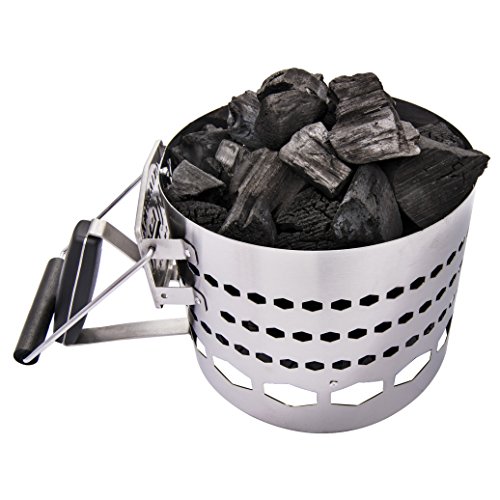
The Halftime XL earns its name by lighting a full chimney of coals in roughly half the time of a standard chimney starter. For pitmasters running offset or barrel smokers, that speed difference is real value, since lighting the fire is the slowest part of any long cook.
The build is heavy-duty stainless steel, which matters most when the chimney sits over burning coals for extended periods. The handle is engineered to stay cool-to-the-touch during use, which is a meaningful safety upgrade over single-handle budget models where the grip radiates heat back into your hand.
Notable Gains
- Lights full chimney roughly twice as fast as standard designs
- Heavy-duty stainless build holds up to repeated high-heat use
- Cool-touch grip reduces the need for heavy grilling gloves
- Works with both briquettes and lump charcoal
Less-Strong Areas
- Premium price is harder to absorb on a casual grilling budget
- Specialty smoker focus makes it more chimney than most weeknight grillers need
Built With In Mind
Offset and barrel smoker pitmasters running long low-and-slow cooks who need lit fuel fast.
Where A Sibling Pick Shines
Weekend kettle grillers get more value from the CADARA budget chimney or the E500 starter kit combo.
What Matters Most When Choosing Barbecue Coals
The first decision is whether you want a fuel product or an ignition tool. Fuel products (charcoal, briquettes) are what actually burn; ignition products (fire starters, chimney starters) are how you light that fuel. Most setups benefit from both: a chimney for fast ignition and consistent briquettes for cooking heat.
Briquette shape and material come next. Standard hardwood briquettes burn evenly and predictably, which suits most grilling. Lump charcoal lights faster and burns hotter, which appeals to sear-focused cooks. Organic briquettes made from agricultural byproducts like olive pulp offer a distinctive aroma and cleaner combustion profile, though availability and per-pound cost run higher.
For ignition, natural fire starters made from pine wood and plant-based fatty acids burn cleaner than chemical cubes. Chimney starters work with newspaper or cubes as kindling and remove the need for lighter fluid entirely. Stainless steel chimneys outlast galvanized ones under heavy use, though galvanized models cost less upfront.
Finally, match the chimney and starter sizes to your grill. A 6.5-inch chimney fits most kettle grills; larger barrels or smokers benefit from XL chimney designs that light more fuel per session. Buying a chimney that’s too small means running two lighting rounds per cook, while too large a chimney overflows smaller grill basins.
Matching Fuel Format To Cooking Style
For weeknight grilling under an hour, standard briquettes and a basic galvanized chimney cover the job. For long smoking sessions, organic briquettes paired with an XL stainless chimney reduce lighting time and provide consistent burn characteristics. For indoor or balcony use where open flames aren’t ideal, an electric coal burner paired with cube-format coconut charcoal is the practical path.
Starter Cube Volume Per Cooking Frequency
Weekend grillers need roughly 50 to 100 cubes per season. Regular backyard cooks running two to three sessions per week burn through 200 to 400 cubes across the warm months. Heavy hosts and pitmasters running year-round burn 500 or more, which makes bulk bundles more economical than per-box pricing.
Key Considerations Across These Picks
Common Shopping Slip Ups
The most frequent mistake is matching a chimney starter to a grill that doesn’t fit. Measure your grill’s charcoal bed width, since a chimney that’s wider than the bed makes pouring awkward and unsafe.
Another trap is overbuying starter cubes based on price-per-pound alone. If you store cubes in a humid garage or shed, performance drops as the cubes absorb moisture, and buying more cubes just means more cubes to lose. A sealed bin matters as much as supply size.
Where The Extra Money Goes
Premium chimneys invest in stainless steel and dual-handle designs, which add real safety and longevity under heavy use. Higher-tier charcoal pays for unusual feedstock (olive pulp, premium hardwood) and organic certification, which means cleaner flavor profiles and more consistent burn times.
The honest read is that premium picks reward heavy users; casual grillers rarely recoup the upgrade cost.
Frequently Asked Questions
How long do barbecue coals take to light with a chimney starter?
Most chimney starters light fully in 15 to 25 minutes with newspaper or fire-starter cubes. Faster designs like the Oklahoma Joe’s Halftime XL cut that roughly in half.
Are organic briquettes worth the extra cost?
Organic briquettes like OLIVETTE offer a distinct aroma and cleaner combustion profile, which matters most for special cooks. For weeknight grilling, commodity briquettes deliver similar cooking performance at lower cost.
Can I use lump charcoal and briquettes interchangeably?
Lump charcoal lights faster and burns hotter, which suits searing. Briquettes burn longer and more evenly, which suits low-and-slow smoking. Both work in the same grill; pick based on the cooking style of the session.
Do natural fire starters leave chemical taste on food?
Fire starters made from pine wood and plant-based fatty acids burn odorless and smoke-free, which preserves food flavor. Cubes with chemical binders or paraffin can leave traces during ignition.
Wrap Up
Choosing barbecue coals comes down to matching fuel and ignition to how you actually cook. Casual weekend grillers get the most value from natural fire starter cubes and a basic galvanized chimney. Frequent hosts and pitmasters benefit from bulk starter supply, organic briquettes, or a premium stainless chimney that speeds up each session. Pick the combination that fits your cooking rhythm, and the rest of the cookout tends to take care of itself.