
10 Best Backyard Rain Gauge for 2026: Track Every Drop With Confidence
A backyard rain gauge turns weather into useful data, whether you tend a vegetable patch, log storms for a community network, or just want to know when to skip the sprinkler. Choosing the right one means matching accuracy, capacity, and durability to the way you actually observe rainfall day to day.
The Choices Worth Comparing
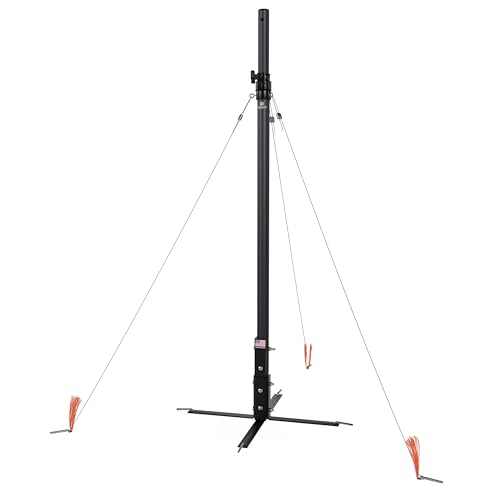
CLIMALYTIC Universal Pole Mount for Tropo Rain Gauge & Weather Stations

Tropo Precision Rain Gauge, CoCoRaHS Approved, High-Capacity

JMBay 7″ Plastic Rain Gauge Replacement Tube, 2-Pack with Brush

FUAUFAS KEXMY Rg202 Stratus Professional Rain and Snow Gauge
Lueudu 7″ Plastic Rain Gauge Replacement Tube, Cold Resistant

Sainlogic SA68 12-in-1 Wireless Weather Station with Rain Gauge

Tropo Rain Gauge + Pole Mount Bundle, 13.5″ Capacity

Headwind EZRead 26″ Giant Professional Outdoor Rain Gauge

Sainlogic Automatic Plant Waterer for 15 Potted Plants
Sainlogic Indoor Air Quality Monitor, 16-in-1, 7.2″ Display
What Each Pick Brings To The Table
A powder-coated steel pole solves a quiet frustration many backyard weather watchers run into: where exactly do you put a gauge so it sits at the right height, stays level, and stops getting knocked over? This mount pairs an 18-inch center spike with four 10-inch anchor stakes, so installation in soft soil is genuinely a one-person job for most setups. The included guy-wires add a layer of stability that matters once a winter storm rolls through or the neighbor’s dog pays a visit.
The 1.25-inch tube diameter accepts most lightweight instruments, including the Tropo gauge reviewed later, small weather stations, and even trail cameras. Compared to staking a wooden post and hoping it stays plumb, this mount cuts the fiddling to almost nothing. You’ll still want a level spot, but the hardware does the rest.
The Good Stuff
- Powder-coated steel resists rust through multiple seasons of rain and sun.
- Four anchor stakes and guy-wires prevent wobble during high winds.
- Accepts gauges, cameras, and lightweight stations on a single pole.
- Spike-driven install skips concrete and post-hole digging in most yards.
Things To Consider
- Soft or sandy soil may require extra tamping around the stakes to keep the pole from drifting over time.
- Not designed for heavy instruments, so weight limits matter if you stack sensors.
Right Fit For
Tropo gauge owners who want a clean, sturdy home for their instrument without improvising a mount from fence posts.
A Better Fit Elsewhere
Backyard weather hobbyists who prefer an all-in-one solution should consider the Sainlogic SA68 Weather Station instead, since it bundles sensors on its own stand.
The Tropo gauge borrows its dual-cylinder design from the National Weather Service standard 8-inch instrument, which is the kind of detail that matters when you want numbers you can trust. CoCoRaHS approval (the Community Collaborative Rain, Hail and Snow Network) means your readings can feed directly into a national volunteer dataset without second-guessing the hardware. Resolution down to 0.01 inch gives you the precision gardeners and storm chasers tend to want.
Compared to the replacement tubes covered elsewhere, this is a complete measuring system, not just a tube. For someone logging precipitation weekly for years, the higher upfront cost tends to balance out against replacements and recalibrations. You’ll want to mount it somewhere level and away from overhangs, but the gauge itself is the easier part of the setup.
The Helpful Details
- Dual-cylinder design matches the NWS standard, supporting data credibility.
- 0.01-inch resolution catches light drizzles that coarse gauges miss.
- CoCoRaHS compatibility lets your readings join a wider weather network.
- Freeze-resistant construction handles cold-climate observation cycles.
Points To Note
- Cylinder readings require a steady hand and a flat surface for accurate decanting.
- Glass-like clarity of inner tubes can fog or collect algae if cleaned only seasonally.
Made For
Citizen-science volunteers and serious weather loggers who submit readings to CoCoRaHS or similar networks.
Skip It When
Casual gardeners who just want to know whether to water should reach for the Headwind EZRead 26″ gauge, where legibility matters more than precision.
Sometimes the gauge you already own just needs fresh inner tubing, and that’s exactly where this JMBay set fits. The 7-inch plastic tube reads in standard inch increments with upgraded large-font markings, so checking totals from the kitchen window is easier on the eyes. Freeze-proof and crack-resistant plastic keeps the tube intact through the kind of cold snaps that shatter lesser cylinders.
You get two tubes plus a small cleaning brush in the box, which is the practical bonus. The included brush is handy because algae and pollen tend to settle into standing water between storms. Compared to the Lueudu single-tube option reviewed next, this kit doubles down on longevity for households that want a spare ready to go.
Notable Upsides
- Two-pack format means one tube stays installed while the other is cleaned or stored.
- Large-font scale improves readability in low light or from awkward angles.
- Cleaning brush removes residue that gradually clouds the plastic.
- Cold-resistant plastic reduces winter cracking risk.
Honest Caveats
- Plastic walls can scratch over time, which slightly dulls the printed scale.
- Not a standalone unit, so it requires a compatible outer cylinder or mounting setup.
Best Suited To
Backyard gardeners in cold climates whose existing gauge needs a durable replacement tube before the next storm season.
Look Elsewhere When
Anyone starting from scratch should consider the Tropo Rain Gauge + Pole Mount Bundle, which arrives ready to measure out of the box.
The Rg202 Stratus leans into the kind of long-term reliability that justifies a permanent backyard fixture. Its polycarbonate body contains no metal parts to rust, which matters more than you’d expect after three or four wet winters. Resolution to 1/100th of an inch matches professional expectations, and the Quick Connect bracket turns routine cleaning into a 30-second task rather than a recalibration headache.
Where this gauge earns its keep is in regions that see both rain and snow. Melted snowfall empties into the measuring tube, so a single instrument logs both precipitation types across the year. Compared to the Tropo’s dual-cylinder precision, the Stratus trades a bit of measurement resolution for a more rugged, all-season construction. The 4-inch opening catches snow efficiently, which is a real advantage in mountainous or northern yards.
What Helps Most
- UV-resistant polycarbonate body holds up to full-sun exposure year after year.
- 1/100-inch resolution suits serious backyard weather tracking.
- Quick Connect bracket simplifies cleaning and tube swaps.
- Handles heat and frost equally, with no warping in extreme swings.
Less Ideal Details
- Post-mount installation requires a separate post and basic hardware.
- Smaller catch opening compared to the Headwind 26-inch gauge reduces float readability for distant checks.
Whose Shelf It Belongs On
Backyard weather watchers in four-season climates who want one instrument that survives both summer storms and winter freezes.
Reach For A Different Pick When
Those prioritizing quick at-a-glance readings from indoors should choose the Headwind EZRead 26″ gauge, where scale visibility outranks measurement fineness.
The Lueudu replacement tube fills a niche between “I need a spare” and “I want to upgrade my whole gauge.” Measuring 8.23 by 2.24 by 1.65 inches, the inner opening at 1.6 inches fits most standard outdoor gauge housings on the market. The clear scale prints in standard inch increments, and the plastic is formulated to resist cold-weather cracking better than budget alternatives.
Single-pack simplicity is the appeal here. For homeowners who just need one fresh tube after a mishap, buying a two-pack can feel like paying for a backup you’ll never touch. Compared to the JMBay kit covered above, this is the lean option for a focused replacement.
Well-Handled Touches
- Standard dimensions slot into most common gauge housings without modification.
- Clear scale markings stay legible through extended outdoor use.
- Cold-resistant plastic suits northern backyards with freeze-thaw cycles.
Small Caveats
- Single tube means downtime during cleaning if no spare is on hand.
- No cleaning brush included, so the JMBay kit is a better value for households that rinse weekly.
Who Will Love This
Homeowners replacing a single cracked tube and wanting a no-fuss match for an existing gauge body.
Not Your Match When
Garden caretakers managing multiple gauges or wanting a backup ready should grab the JMBay 2-pack with brush instead.
The SA68 stretches the definition of a backyard rain gauge into something closer to a complete backyard weather station. It tracks rainfall alongside wind speed and direction, barometric pressure, indoor and outdoor temperature, and humidity, all pushed wirelessly to an indoor display. For someone whose curiosity runs beyond precipitation, the integrated sensor suite is genuinely useful rather than gimmicky.
The 8-inch display features bold fonts and adjustable backlighting, which matters more than spec sheets suggest for early-morning glances. Compared to the standalone precision gauges reviewed earlier, the SA68 trades absolute accuracy for convenience and breadth. You won’t get CoCoRaHS-grade readings, but you’ll know at a glance whether the past hour’s storm dropped a tenth or a full inch.
Features That Help
- 12-in-1 sensor coverage replaces several separate instruments.
- Wireless indoor display eliminates trips outside to check the gauge.
- Adjustable backlight supports readability at any hour.
- Wind and pressure data add context that rain alone can’t provide.
Where It Is Less Suited
- Wireless range can drop in homes with thick masonry or metal siding.
- Multi-sensor complexity means more setup steps than a simple cylinder gauge.
Feature Snapshot
Perfect Match For
Data-driven homeowners who want rain plus wind, pressure, and temperature readings on a single indoor console.
Swap It Out When
CoCoRaHS volunteers needing reportable precision should reach for the Tropo Precision Rain Gauge instead.
Bundling the Tropo gauge with its matching pole mount removes the most common stumbling block for new backyard weather watchers: figuring out how to actually install the thing. The gauge reads to 0.01-inch resolution and holds roughly 13.5 inches of total precipitation across its inner and outer cylinders, which handles even a heavy tropical downpour without overflowing. The telescoping pole adjusts to whatever height your yard demands.
The pour spout and handle on the outer cylinder make decanting straightforward, so spills during measurement become rare. Snow catchment improves too, because the larger outer tube catches flakes before they blow past. Compared to the standalone Tropo gauge reviewed earlier, this bundle is the more complete answer for someone starting from scratch.
Positive Takeaways
- Inner cylinder measures 1 inch; outer cylinder adds 12.5 inches of capacity.
- Pour spout simplifies decanting and reduces spillage during reads.
- Telescoping pole fits varied yard heights and snow depths.
- Bundle format skips the separate mount-buying step entirely.
Practical Considerations
- Taller pole profile can catch strong winds, so guy-wires or staking are advisable.
- Larger capacity means occasional cleaning of the outer cylinder, which takes longer than rinsing a small tube.
Who Should Grab It
First-time backyard weather station builders who want a matched gauge and mount without piecing parts together.
Another Choice May Suit
Existing Tropo gauge owners who only need a mount should pick the standalone CLIMALYTIC Universal Pole Mount instead and skip the duplicate gauge.
The EZRead solves a problem no other gauge here addresses as directly: you don’t want to walk outside every time you’re curious. Standing 26 inches tall with a high-visibility float and water-level magnification, the EZRead can be read from up to 50 feet away on a covered porch. For casual weather watchers, that visibility turns the gauge into a glance-and-go tool rather than a scheduled chore.
Its funnel design blocks leaves and debris from clogging the cylinder, which keeps measurements honest during autumn storms. USA-made construction and freeze-proof materials extend its lifespan across harsh winters. Compared to the precision-focused Tropo gauges, the EZRead trades fine resolution for at-a-distance readability, which is a sensible trade-off in many backyards.
A Few Strong Suits
- Float-and-magnification design readable from 50 feet.
- Debris-blocking funnel reduces cleaning frequency.
- Freeze-proof body holds up through cold-climate winters.
- Mountable design works with posts, fences, or railings.
Some Limits To Know
- Tall profile requires a sturdy mount, since wind load on a 26-inch cylinder is significant.
- Float readings are approximate and not suited to network-grade data submission.
Right Fit For
Casual observers and older gardeners who want quick readings without stepping off the porch.
Consider Something Else When
Citizen-science contributors needing rigorous measurements should consider the Tropo Precision Rain Gauge for network-compatible accuracy.
The Sainlogic plant waterer bends the roundup’s theme in a useful direction, since it answers the question backyard gardeners often ask right after checking the gauge: do my pots need water? The system combines 15 drip emitters with a moisture-driven controller, so each pot gets water only when its soil drops below your threshold. The 3.07-inch display shows current moisture levels and signals “WET” when watering stops.
For frequent travelers, the vacation-watering use case alone justifies the system. Setup is more involved than a simple gauge, since you route tubing and position each emitter, but once tuned the system runs itself. Compared to a standalone rain gauge, this device reacts to soil rather than sky, which complements outdoor precipitation tracking rather than replacing it.
A Few Highlights
- 15-emitter capacity covers a full indoor or patio garden.
- Humidity Mode delivers water only when soil crosses a dryness threshold.
- Deep root irrigation supports healthier root development over time.
- IP64 rating handles splashes and humid indoor environments.
Worth Bearing In Mind
- Each emitter must be positioned and primed individually during setup.
- Reservoir refills depend on pot count and plant thirst, so frequent travelers should size accordingly.
The Right Fit
Plant owners who travel frequently or want consistent watering without daily attention.
Where A Sibling Pick Shines
Anyone focused purely on rainfall tracking should reach for the FUAUFAS Stratus gauge, which is purpose-built for that single job.
The Sainlogic indoor air quality monitor rounds out this list by covering what happens to your home environment once weather data sends you indoors. It tracks nine key indicators (CO2, PM2.5, PM10, PM1.0, AQI, HCHO, TVOC, temperature, and humidity) on a 7.2-inch display with three-color AQI alerts. The 16-in-1 framing reflects the user-defined alert thresholds layered over those base readings.
For households monitoring indoor comfort or wildfire smoke seasons, particulate and VOC tracking fills gaps that rain gauges don’t touch. Compared to outdoor weather tools, this monitor’s value sits in the living room rather than the garden. Pairing it with any of the precipitation gauges reviewed above gives you a fuller picture of both outdoor weather and indoor response.
Practical Advantages
- Multi-parameter tracking captures particulates, gases, and comfort metrics.
- Tri-color LED alerts provide quick visual cues from across a room.
- 7.2-inch display balances detail with at-a-glance readability.
- User-defined thresholds customize alerts to household priorities.
Trade-Offs To Consider
- Indoor-only placement means it complements, rather than replaces, outdoor weather monitoring.
- Multiple sensors require occasional recalibration to maintain accuracy over time.
Built With In Mind
Homeowners monitoring indoor air quality alongside outdoor weather, especially during wildfire season or allergy peaks.
A Better Fit Elsewhere
Outdoor-focused weather hobbyists should choose the Sainlogic SA68 Weather Station, which centers on backyard data rather than indoor air.
Factors That Matter When Choosing Backyard Rain Gauge
Measurement Precision Versus Day-to-Day Convenience
Resolution to 0.01 inch supports serious weather logging and network submission, but most gardeners only need to know whether last night’s storm dropped a quarter-inch or a full inch. Precision gauges like the Tropo models reward users who log readings consistently, while larger float-style gauges like the Headwind EZRead trade fine resolution for visibility from indoors. Your routine matters more than your aspirations.
Climate And Seasonal Exposure
Freeze-proof construction matters in regions that swing below zero, and UV-resistant polycarbonate prevents fading or brittleness in full-sun yards. Stainless or powder-coated steel mounts resist rust through wet winters, while untreated fasteners can stain wooden posts within a season. Pick materials matched to your worst weather, not your average day.
Mounting And Placement Realities
A rain gauge works best when placed level, away from overhangs, and at a height that allows easy reading without stooping. Pole mounts like the CLIMALYTIC system and the Tropo bundle solve most placement headaches, while freestanding gauges need a flat post or fence rail. Consider where you’ll read the gauge and how often before committing to a setup.
Standalone Gauge Or Multi-Sensor Station
Some shoppers want one number: how much rain fell. Others want rain plus wind, pressure, temperature, or indoor air quality on the same display. Wireless weather stations like the Sainlogic SA68 consolidate multiple data streams, while single-purpose gauges deliver cleaner readings with less setup. The right answer depends on whether you want breadth or focus.
Smart Choices Across This Lineup
Common Shopping Slip Ups
Many first-time gauge shoppers buy on resolution alone and end up with a precision instrument they never actually read. The smarter approach is to start with your routine: how often you’ll check the gauge, where you’ll place it, and what you’ll do with the data. A well-mounted float gauge used daily beats a precision cylinder that sits ignored because it required a ladder to read.
Placement oversights are another common trap. Placing a gauge too close to a roof line, fence, or tree distorts readings by blocking or funneling rain. Pick a spot with clear sky overhead and a level surface, even if that means a slightly less convenient location. Honest readings depend more on placement than on the gauge itself.
What The Higher Tier Buys
Stepping up to a CoCoRaHS-approved gauge or a full weather station costs more up front, but it unlocks network-grade data submission and broader environmental tracking. The Tropo bundle’s larger capacity also reduces overflow risk during tropical storms, where cheaper gauges max out. For anyone logging precipitation professionally or simply wanting fewer surprises, the upgrade pays off in fewer replacement purchases over a decade.
Frequently Asked Questions
How accurate do backyard rain gauges really need to be?
For casual gardening, half-tenth-of-an-inch resolution is plenty, while network-grade logging benefits from 0.01-inch precision. Match accuracy to how you’ll actually use the readings.
Where should I place a backyard rain gauge?
Set it on level ground with clear sky overhead, away from roofs, fences, and trees that block or funnel rain. Two to four times the height of nearby obstructions is a common rule of thumb.
Do plastic rain gauges hold up in freezing weather?
Cold-resistant plastics like those in the JMBay and Lueudu tubes resist cracking far better than basic alternatives, though emptying the gauge before hard freezes extends its lifespan. Polycarbonate bodies offer similar winter durability.
Can a wireless weather station replace a manual rain gauge?
Wireless stations like the Sainlogic SA68 deliver convenience and additional sensors, but manual gauges still lead in raw accuracy and zero-power reliability. Many observers run both for redundancy.
How do I keep my rain gauge from getting clogged?
Funnel designs like the Headwind EZRead’s debris-blocker reduce clogging, and routine rinsing with the included brush prevents algae and sediment buildup. A quick monthly clean is enough for most climates.
Closing Remarks
The right backyard rain gauge depends less on spec sheets than on how you actually observe weather. Match the instrument to your routine, climate, and placement reality, and the data falls into place. Start with what you’ll use daily, and upgrade from there as your interest grows.