
The right pack changes everything on the trail. A well-fitted backpack distributes weight across your hips, keeps snacks within reach, and shrugs off the kind of weather that wrecks a poor build. Choose wrong, and a day hike becomes a slow, sweaty grind with shoulder straps that dig and pockets you cannot access mid-stride.
This list covers the full range, from ultralight packable daypacks to 50-liter backpacking haulers, plus a tactical option and a dedicated first aid carrier. Every pick is matched to a specific kind of outdoor use, so you can zero in on the size, capacity, and feature set that fits how you actually get outside.
A Snapshot Of The Selections

Camoredy First Aid Bag Red Multi-Pocket

Osprey Rook 50L Men’s Backpacking Backpack


G4Free 10L/15L Packable Hiking Daypack
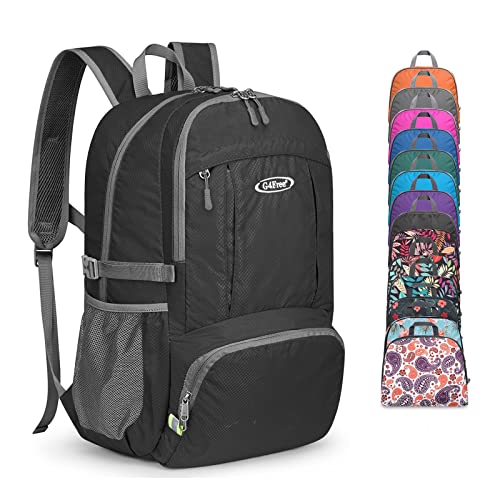
G4Free 40L Packable Hiking Backpack
G4Free 10L Packable Hiking Daypack

NWT XPEDITION 40L Tactical Backpack

G4Free 20L Hiking Travel Backpack

G4Free 18L Lightweight Packable Hiking Backpack
G4Free 15L Padded Backpack for Travel, Hiking, Work
Inside Each Recommended Option
The Camoredy first aid bag is purpose-built for the “what if” moments that the rest of your kit is not designed for. While every other pick on this list carries your food, layers, and shelter, this one holds the bandages, antiseptic, and trauma supplies that should travel with any group heading into the backcountry.
It is not a backpack in the traditional sense, and it is not trying to be. Treated as a dedicated module that drops into a larger pack or rides in a vehicle, it earns its place. Solo travelers who keep a base camp will appreciate how the red exterior is hard to misplace in a busy tent.
Benefits That Matter
- High-visibility red shell so the kit is easy to spot under stress
- Multi-pocket layout that separates trauma tools from basic dressings
- Thick foam padding protects glass thermometers and small bottles from crushing
- Reflective strips improve visibility in low-light roadside or trailhead situations
- Compact enough to slot into a larger pack without dominating the main compartment
Things To Consider
- Arrives empty, so you will need to build out the contents separately
- Not designed to carry personal gear, so it pairs with a primary pack rather than replacing one
Key Product Details
Made For
Group leaders, scout troops, and anyone responsible for backcountry safety who wants a purpose-built medical kit carrier.
Consider Something Else When
The Osprey Rook 50L is the better match for hikers who need a single pack to carry both their gear and a small personal first aid kit, rather than a dedicated trauma bag.
The Osprey Rook 50L sits in the sweet spot where most multi-day backpackers land. It carries a tent, sleeping bag, pad, and three days of layers without ballooning into the 65-plus liter freight-hauler category. For most people planning two- or three-night trips, the 50-liter class is the right size.
Where the Rook earns its reputation is the suspension system. Osprey’s AirSpeed tensioned mesh back panel is the brand’s signature feature, and it creates a real channel of air between your back and the pack body. On a hot ascent with a loaded bag, that airflow makes a measurable difference compared to closed-cell foam panels that trap sweat.
Strong Points
- 50-liter capacity covers most weekend backpacking trips without forcing careful rationing
- AirSpeed mesh back panel keeps airflow moving across the spine on warm climbs
- Injection-molded ladder lock torso adjustment, so fit is dialable across a wide range of torso lengths
- Integrated raincover deploys quickly when weather rolls in faster than expected
- bluesign certified, indicating the materials meet a recognized environmental and safety standard
Worth Noting
- 50 liters fills up quickly once you add group cooking gear, so minimalists may want less space
- Heavier than frameless packable daypacks, which matters for fast-and-light hikers
Who It Suits Best
Backpackers tackling two- to four-night trips who want a suspension system that genuinely breathes on climbs.
Look Elsewhere When
The G4Free 40L packable backpack is the smarter buy for hikers who only need single-night capacity and value light weight over a rigid frame.
The YETI Crossroads earns its premium framing through build quality rather than ultralight tricks. The clamshell-style opening folds the main compartment flat like a suitcase, which changes how you pack: layers stack on top of each other, you can see everything at once, and re-packing at a camp hostel feels familiar.
YETI built its reputation on coolers that shrug off abuse, and the Crossroads carries that same engineering DNA. The 35-liter capacity reads as the travel-leaning option in the YETI outdoor line, big enough for a full day of trail time plus an extra layer, but not quite roomy enough for backcountry overnights.
Where It Helps
- Clamshell fold-flat opening for suitcase-style packing
- Rugged shell construction designed to handle rough handling
- Pass-through strap on the back for securing to roller luggage handles
- Internal organization built for travel and electronics rather than just trail gear
Trade Offs
- 35 liters is tight for a true overnight backpacking kit
- Priced noticeably above standard daypacks in this capacity range
Feature Snapshot
Right Fit For
Travelers and commuters who split their week between flights, hotels, and the occasional trailhead.
A Better Fit Elsewhere
The Osprey Rook 50L handles serious trail mileage better if your priority is hauling a backcountry sleep system rather than a road trip wardrobe.
The 10L/15L G4Free is a packable daypack in the truest sense: it stuffs into its own pocket until you need it. For travelers who already own a larger 40L or 50L pack, this is the kind of secondary bag that lives in the bottom of your luggage, then becomes your daypack at the destination.
Where the dual-size listing earns attention: 10L handles a light summit run with water and a snack, while 15L covers a half-day loop with a rain layer packed in. The fabric is polyester rather than ultralight nylon, so it has more structure than a true featherweight but still folds small.
Real-World Strengths
- Pockets into itself for stashing in a larger bag, jacket pocket, or glove box
- Adjustable shoulder straps accommodate different torso lengths and over-layer wear
- Front pocket sized for a standard 7-inch phone and quick-grab items
- Reinforced stitching handles the bouncing load of a quick trail run
Room For Improvement
- Minimal back-panel padding compared to framed backpacks
- Not a substitute for a primary pack on any trip that requires real gear
Best Suited To
Travelers and casual hikers who want a backup daypack they can deploy without thinking about weight.
Skip It When
The YETI Crossroads is the right call for users who carry a laptop and want one bag that does trail and travel equally well.
Forty liters is the workhorse capacity for hikers who want real volume without committing to a full backpacking frame. The G4Free 40L splits that space into a separate waterproof wet pocket at the back, designed for swim gear, damp towels, or rain-soaked layers, and a main compartment for dry kit.
Compared to the smaller 10L/15L G4Free, the jump in capacity is dramatic. You can fit an ultralight shelter, a puffy jacket, food for a long day, and a hydration reservoir. The trade-off is bulk: this is no longer a “fits in your coat pocket” bag, but it still folds down smaller than a framed pack.
What Pays Off
- Dedicated waterproof wet pocket keeps electronics and dry layers separated from swim gear
- 40L capacity covers single-night trips or aggressive day hikes with extra food
- Multi-compartment design supports real organization rather than one cavernous cavity
- Packable construction stows in luggage for destination travel
Points To Note
- No rigid frame, so heavy loads ride closer to the body and require a hip belt for true comfort
- Bigger than the average daypack, so it may feel oversized for quick trail outings
Who Should Grab It
Active outdoors users who want one bag that handles wet/dry separation for swim-hike days and a single-night campout.
Another Choice May Suit
The Osprey Rook 50L fits hikers who want a true framed backpacking pack instead of a soft-sided packable design.
This 10L G4Free is the smaller sibling of the packable daypack family, and the spec that defines it is the folded footprint: roughly 7.5 by 6 inches, small enough to ride in a coat pocket or a small handbag. That is the entire pitch in one number, since most daypacks still require a separate stuff sack.
It is a casual-leaning pack, more “city walk and light trail” than “summit push.” The shoulder straps are basic, the back panel has no real padding, and the fabric is meant to be folded and unfolded repeatedly without complaint. For a traveler or commuter who just needs a bag that shows up when called, it earns its place.
Everyday Advantages
- Ultra-compact folded size makes it disappear in luggage or a coat pocket
- Unisex design with simple styling that works for casual wear
- Lightweight build that does not add noticeable weight to a packed suitcase
- Unfolds to roughly 15.5 x 9 x 3.5 inches, which holds a water bottle, snack, and a layer
Honest Caveats
- 10L is genuinely small, so anything beyond a phone and a granola bar needs careful packing
- Minimal padding means the contents press against your back on a full load
Built With In Mind
Travelers and city walkers who want a stowable secondary bag for unplanned trail detours or market runs.
Reach For A Different Pick When
The G4Free 18L is the step up for hikers who want the same packable concept but with more room for a longer outing.
The NWT XPEDITION 40L sits in a different category than the G4Free packable family. This is a tactical-style pack with MOLLE webbing, the strap-and-loop attachment system that lets you clip extra pouches, a radio holder, or a knife sheath to the outside of the bag. For range days, fishing trips, or any outdoor activity where you need to add modular accessories, that webbing is the whole reason to buy it.
At 3.2 pounds and roughly 12.6 by 9.6 by 19.6 inches, it is a serious piece of gear. The 3mm stitching claim is a tell that this pack is built for abuse, with seams designed to hold up under heavier than average loads.
The Value In It
- MOLLE webbing allows custom accessory mounting for range, fishing, or work use
- 40L capacity holds a substantial load without depending on external attachments
- Reinforced 3mm stitching at stress points, which is more than most daypacks offer
- Multi-pocket compartment layout supports organized gear separation
- Foam-padded shoulder phone pocket keeps a device accessible without bouncing
Worth Bearing In Mind
- 3.2 pounds is heavier than a comparable G4Free packable daypack
- Does not include a hydration bladder, so add one separately if you run long
Feature Snapshot
Perfect Match For
Range-goers, anglers, and field workers who want a bag that accepts modular accessories instead of fighting them.
Where A Sibling Pick Shines
The G4Free 40L packable model suits hikers who want similar capacity in a lighter, foldable form, without the tactical mounting system.
The 20L G4Free is the middle child of the line, and in daypack terms, that is often the most useful capacity of all. It carries a water bottle, a puffy, lunch, a first aid kit, and a phone with room left over, all without the bulk of a 40L bag or the limitations of a 10L.
Marketed as a casual daypack, it leans toward versatility over specialization. It works for a city commute, a half-day hike, a festival day, or a museum-and-market afternoon. For people who want one bag that covers most of their active day without a specific niche, 20L is the practical answer.
The Practical Payoff
- 20L is the versatile size that handles most daily outdoor needs without feeling oversized
- Unisex styling works across outfits and settings
- Lightweight shell keeps the empty bag from feeling like dead weight
- Doubles as a travel daypack once you reach your destination
Small Caveats
- Limited spec detail in the source, so expectations around fabric weight and frame support are modest
- Not a substitute for a backpacking pack on overnight trips
Whose Shelf It Belongs On
Casual outdoor users who want a single bag that splits time between a neighborhood trail and a weekend city outing.
Not Your Match When
The G4Free 40L suits hikers who want to push capacity for a long day with extra layers and food, instead of a compact 20L footprint.
The 18L G4Free is the size that lives in the gap between a tight 15L and a roomy 20L. For most people, that two- to five-liter difference is invisible, but for the way you actually use the bag, it matters. You can squeeze a small insulating layer, lunch, and a liter of water into 18L where 15L forces a hard choice.
Like the other G4Free packables, it folds into a small footprint, which is the defining feature of the line. Where this one pulls slightly ahead of the 15L is that headroom for a real hike. Where it falls short of the 20L is on days when you want to bring a book or a change of shoes.
A Few Strong Suits
- 18L covers a real day hike with food, water, and an extra layer
- Lightweight packable construction disappears in luggage
- Unisex fit works for a range of body types
Less-Strong Areas
- Not designed for multi-day trips
- Source data is sparse, so frame and padding details are limited
Right Fit For
Hikers planning long day routes who want a step up from a 15L commuter bag without going full 20L.
Swap It Out When
The NWT XPEDITION 40L tactical pack fits users who want MOLLE compatibility and a heavier-duty build, not a lightweight daypack.
The 15L G4Free is the brand’s commute-first option. “Padded” is the key word in the spec, and it sets this model apart from the lighter 10L sibling. A padded back panel and shoulder straps make a real difference on a packed laptop-and-lunch commute, where a frameless bag digs into your shoulders by mid-afternoon.
At 15L, the bag splits the difference between a slim commuter pack and a casual daypack. It will not fit a full overnight kit, but it handles a workday plus a short walk after hours. The hike framing in the listing is real but modest: think paved path, fire road, or a quick loop, not a summit push.
Where It Delivers
- Padded back panel and straps add comfort for daily wear
- 15L fits a laptop, lunch, and a layer without bulging
- Lightweight construction that does not add noticeable weight on top of a workday load
- Multi-use framing for work, travel, and casual trail time
Some Limits To Know
- 15L is tight for a true day hike with food, water, and layers
- Padding is light by backpacking standards, so heavy loads still feel the strain
Who Will Love This
Commuters and remote workers who walk or bike to a job and want a bag that handles a trail detour on the way home.
Where Another Pick Suits Better
The G4Free 20L is the upgrade for anyone who finds 15L too tight for a proper outdoor day and wants more room without going to 40L.
What To Look For Before Choosing Your Backpack
Capacity matched to trip length. The simplest filter is how long you stay out. A 10L to 20L daypack covers anything from a quick walk to a long day hike with food and layers. A 35L to 50L pack steps up to single-night or multi-night trips where you carry a shelter, sleep system, and cooking kit. Picking the right size up front prevents the most common mistake: overpacking a 20L for an overnight trip, or hauling a 50L on a half-day walk you could have done with a 15L.
Suspension and fit matter more than fabric. Back-panel design, torso length adjustment, and a real hip belt are the features that decide whether a loaded pack feels manageable or punishing. Tensioned mesh back panels, like the Osprey AirSpeed system, increase airflow at the cost of extra contact points. Closed-cell foam back panels are simpler and lighter but trap more heat.
Organization versus open volume. Some packs give you one main cavity and expect you to bring your own pouches. Others split the interior into dedicated wet/dry pockets, laptop sleeves, and quick-access front pockets. Hikers carrying swim gear or damp rain layers benefit from a dedicated wet pocket, like the G4Free 40L. Commuters carrying a laptop benefit from internal sleeves, like the YETI Crossroads.
Build features that change real-world use. Reflective strips improve visibility on early-morning trailheads. Integrated raincovers deploy faster than a stowed pack cover. MOLLE webbing, the strap-and-loop grid on tactical packs, accepts modular pouches. Each feature adds cost, so prioritize the ones you will actually use rather than paying for the full spec sheet.
What Separates Premium From Basic In Outdoor Packs
Common Shopping Slip Ups
Shoppers often pick capacity based on a generous future scenario rather than the trips they actually book. A 50L pack sounds future-proof, but on a 90-minute local loop it sits half empty, bounces around, and feels oversized. The honest read is to start with what you do most weeks and step up only when a real overnight trip is on the calendar.
Another trap is treating weight as the only quality signal. A sub-pound packable daypack is appealing on paper, but the lack of a hip belt and frame means any load above about 8 pounds rides on your shoulders. For short outings that is fine. For a long day with water and food, that is the difference between a fun trail and a sore one.
The Upgrade Payoff
Stepping into a premium tier usually buys three things: a more breathable back panel, better materials at the abrasion points, and a longer service life. A premium pack that lasts a decade of weekend trips costs less per outing than a budget pack you replace every couple of seasons. The trade-off shows up front in the price, then disappears into the cost-per-use math over time. For hikers logging dozens of days a year, that math tends to favor the upgrade. For casual users who head out a few weekends each season, a well-chosen mid-tier pack delivers most of the value at a much friendlier entry point.
Frequently Asked Questions
How do I choose the right backpack size for day hikes versus overnight trips? Day hikes under 6 hours usually fit in a 15L to 25L pack, while full-day routes with food, water, and a layer need 25L to 35L. Overnight trips require 40L or more to fit a shelter, sleep system, and extra clothing.
What is a packable backpack, and who benefits most from one? A packable backpack folds into its own pocket or a small stuff sack so it can be stored in luggage, a larger pack, or a coat pocket. Travelers and hikers who already own a primary pack benefit most, since the packable serves as a deployable secondary bag for day trips at the destination.
Do I need a hip belt on a small daypack? For loads under 8 pounds, a simple strap-style daypack without a hip belt is usually fine. Above that, a real hip belt transfers weight off the shoulders and makes a noticeable difference on longer days.
How does MOLLE webbing work on a tactical pack? MOLLE (Modular Lightweight Load-carrying Equipment) is a system of woven webbing straps sewn to the outside of a pack. Compatible pouches, holsters, and accessories slip between the straps and lock in place, letting you customize the bag for range, fishing, or field work.
What is the difference between a waterproof pack and a water-resistant pack? A waterproof pack uses sealed seams and waterproof zippers to keep contents dry even in heavy rain or brief submersion. A water-resistant pack sheds light rain but will eventually soak through in prolonged downpours, so electronics and dry layers need their own internal dry bags.
Closing Remarks
The right backpack comes down to matching capacity, suspension, and features to the way you actually get outside. Match the size to your typical trip length, pick a suspension system that breathes well for your climate, and prioritize the organizational features you will use. The list above covers a wide range of those use cases, from a stowable 10L commuter-daypack to a 50L backpacking hauler, so the right answer is the one that fits your next trail, not someone else’s.