
A solid backpacking tent can make the difference between a memorable trip and a miserable one. The right shelter keeps weight off your hips, stands up to a sideways rain, and pitches quickly when you roll into camp after dark. This roundup focuses on tents that genuinely earn their place in a pack, plus one care product that extends the life of whatever shelter you choose.
The Main Contenders

Forceatt 2-Person Waterproof & Windproof Backpacking Tent

Nikwax Tent & Gear Solarproof Concentrate 1000ml

Naturehike Cloud-Up 2 Person Ultralight Backpacking Tent
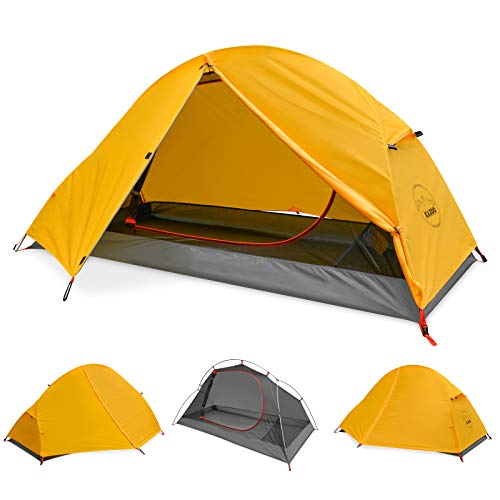
KAZOO Ultralight 1/2 Person Backpacking Tent

COBIZI 4-12 Person Camping Tent 1500mm

USGI Industries Self-Deploying Bivy Tent
A Breakdown Of The Leading Choices
The Forceatt two-person tent addresses one of the most common complaints about small shelters: feeling boxed in. Two D-shaped doors mean you and your tent partner each get your own entry, and the two vestibules (the small covered areas outside the door that extend the usable space) keep wet boots and packs off the sleeping floor. The aluminum pole structure (the rigid frame that holds the tent shape) keeps trail weight around 5.5 pounds, which is reasonable for a double-wall, two-door design built to handle three- to four-season use.
Floor dimensions stretch to roughly 88.6 by 53.1 inches, with a peak height near 43.3 inches. You won’t sit fully upright, but most backpackers can sit up partially and change clothes without crawling. Compared to the single-door competitors in this price tier, the dual-entry layout genuinely improves livability when two people share a small tent for multiple nights.
What Works In Its Favor
- Two doors and two vestibules reduce gear pile-ups and make nighttime exits less disruptive
- Aluminum poles keep packed weight near 5.5 pounds while supporting a roomier footprint
- Three- to four-season rating means the same shelter works for shoulder-season trips when temperatures drop
- Freestanding design (the tent stands on its own without stakes) lets you reposition on rocky or sandy platforms before committing
Worth Noting
- At 5.5 pounds, it is heavier than ultralight rivals like the Naturehike Cloud-Up covered later
- Peak height under 44 inches may feel tight for taller campers sitting up
Quick Facts
Who It Suits Best
Weekend backpackers sharing a tent with a partner who value dual-entry convenience over ultralight weight.
Consider Something Else When
Long-distance hikers counting every ounce should look at the Naturehike Cloud-Up 2 Person Ultralight Backpacking Tent instead.
Not a tent, but a critical accessory. Nikwax Tent & Gear Solarproof is a water-based treatment that revives the DWR (durable water repellent, the factory coating that makes water bead up and roll off fabric) on tent rainflies, packs, and covers. The 1000ml concentrate dilutes to roughly 3500ml, enough to refresh several shelters or one large family tent multiple times. Think of it as preventative medicine for the shelter you already own.
UV exposure slowly breaks down fabric coatings and weakens tear strength, especially on thin nylon shelters like the Naturehike covered below. A periodic treatment can meaningfully extend service life, particularly for backpackers who camp at altitude where the sun is punishing.
Real-World Strengths
- Dual-action formula refreshes water repellency and adds UV protection in one step
- Concentrate format reduces plastic waste and stretches across multiple applications
- Works on rainflies, canvas, backpacks, and covers, not just tents
- Water-based and designed to be safe on technical outdoor fabrics
Trade Offs
- Requires dilution and either a spray bottle or a paint-on application, which adds a setup step
- Results depend on how worn the original DWR is; severely degraded coatings may not fully recover
Made For
Backpackers who already own a tent and want to stretch its useful life across many more seasons of sun and rain.
Skip It When
First-time buyers shopping for their very first shelter should prioritize the Forceatt or KAZOO tents over maintenance products.
The Naturehike Cloud-Up 2 has built a quiet reputation among thru-hikers (people hiking long-distance trails end to end) for one reason: it disappears in the pack. The shell uses 20D nylon (a denier rating, where 20 denier means a very fine and lightweight fabric weave) with a 4000mm PU (polyurethane) waterproof coating, which sits well above the 1500mm rating you’ll find on budget shelters. The included footprint (a separate ground sheet that goes under the tent to protect the floor) extends floor life on abrasive granite and pine-needle sites.
Available in dark blue or green, the tent pairs 20D fly fabric with a B3 mesh inner (a breathable mesh rated to keep out biting insects while letting air flow). 7001 aluminum poles strike a balance between stiffness and packable weight. Compared to the heavier Forceatt above, this is the shelter for hikers who measure trips in miles, not weekends.
What It Does Well
- 4000mm PU coating handles sustained rain far better than entry-level tents at this weight
- Included footprint saves a separate purchase and protects the floor over rocky ground
- 20D nylon keeps pack weight low without sacrificing tear resistance for normal use
- Freestanding geometry simplifies pitch on platforms, sand, or hardwood forest floors
Points To Keep In Mind
- 20D fabric is light but more puncture-prone around thorny brush and careless stake placement
- Thin coatings can degrade faster under heavy UV, which is where the Nikwax treatment above earns its place
Feature Snapshot
Best Suited To
Thru-hikers and section hikers who want serious rain protection without the weight penalty of a heavier two-door design.
A Better Fit Elsewhere
Campers sharing a tent with a partner who each want their own door should look at the Forceatt 2-Person Waterproof & Windproof Backpacking Tent.
The KAZOO ultralight comes in at 3.3 pounds packed, with a carry bag around 20 by 6 inches. For solo backpackers, that is the difference between forgetting the tent is in the pack and constantly noticing the weight. The polyester ripstop shell (a fabric woven with reinforcing threads at regular intervals to stop small tears from spreading) and double-layer construction aim for a balance between weather resistance and trail-friendly pack size.
The freestanding aluminum frame makes pitch forgiving on uneven ground. Floor dimensions stretch to 83 inches long and roughly 40 inches wide, which is genuinely roomy for a solo tent. Compared to the Naturehike above, the KAZOO trades a thinner 20D nylon for a more puncture-resistant polyester, gaining durability at a small weight cost.
Bright Spots
- 3.3-pound trail weight keeps long days manageable on foot
- Ripstop polyester resists small tears better than ultralight nylon rivals
- Packs to roughly 20 inches, fitting inside most 50+ liter packs without strapping
- Freestanding aluminum frame pitches quickly on platforms and hard ground
Honest Caveats
- Single-person layout means no room for a partner or a large gear-heavy loadout
- Polyester, while tough, can be heavier and bulkier than premium nylon alternatives for the same waterproof rating
Feature Card
Whose Trail It Belongs On
Solo backpackers who want one-person shelter that disappears in the pack and stands up to rough campsites.
Look Elsewhere When
Couples sharing gear should reach for the Forceatt 2-Person Waterproof & Windproof Backpacking Tent instead.
The COBIZI is the odd one out in this list, and that is the point. Where everything else targets backpackers hauling gear on their backs, the COBIZI lineup (sizes from four to twelve people) targets car campers, festival-goers, and family basecamps. The 190T polyester shell (a tightly woven midweight fabric) carries a 1500mm PU coating, the removable rainfly (a separate outer layer that adds weather protection) lets you strip weight on clear nights, and the whole tent reportedly goes up in six to ten minutes.
Two large screen windows help with cross-ventilation, which matters more in a multi-person tent where body heat builds fast. The packed weight of about 8.8 pounds and a 21 by 7 by 7-inch carry bag make it reasonable for short hikes from a parking lot but unrealistic for any real backcountry mileage.
Well-Handled Touches
- Multiple size options (4, 6, 8, 10, 12 person) fit different group setups without changing brands
- Removable rainfly converts the tent into a stargazing mesh shelter on dry nights
- Two screen windows improve airflow, important in a multi-occupant shelter
- Beginner-friendly setup reportedly completes in under ten minutes
Some Limits To Know
- 1500mm waterproof rating is lower than the Naturehike’s 4000mm, so heavy prolonged rain tests the seams
- At 8.8 pounds, it is far too heavy for backcountry trips, where weight matters more than capacity
Who Should Grab It
Families and group campers who prioritize room and easy setup over trail weight and ultralight materials.
Reach For A Different Pick When
Anyone carrying their shelter more than a few hundred meters from a vehicle should consider the KAZOO Ultralight 1/2 Person Backpacking Tent instead.
The USGI Industries bivy (short for bivouac, a one-person shelter that wraps around your sleeping bag) is built around a single clever trick: throw it in the air and it deploys. Spring-loaded poles inside the stuff sack pop the shelter open on release, which sounds gimmicky until you’re trying to set up camp in a downpour at midnight. The polyester shell keeps the packed profile small enough for stashing in a pack, trunk, or emergency kit.
A mesh sleep system on the interior promotes airflow on warm nights, while the double rain fly loops let you rig extra protection in harsher conditions. Inside, a small mesh pouch holds a bottle or headlamp within reach. This is not a comfortable basecamp tent, and it doesn’t try to be. It is a fast-deploy, single-person shelter for emergencies, fast bivies, and ultralight trips where comfort takes a back seat to speed.
Good Reasons To Consider
- Self-deploying design sets up in seconds with no pole assembly
- Compact pack size fits a bug-out bag or car emergency kit
- Mesh interior supports airflow in warm three-season conditions
- Internal mesh pouch and double rain fly loops add practical small touches
Practical Considerations
- Spring tension means the contents are under pressure; keep the unit away from your face when deploying
- Single-person, no-frills layout is cramped for anyone over six feet or anyone carrying bulky gear
The Right Fit
Preppers, emergency kit builders, and ultralight travelers who value speed of deployment over interior comfort.
Where Another Pick Shines
Backpackers planning real overnight trips with sleeping pads and gear should pick the KAZOO Ultralight 1/2 Person Backpacking Tent instead.
Choosing A Backpack Tent That Actually Works For You
Weight Versus Livability
The first real tradeoff in any backpacking shelter is weight against comfort. A sub-3-pound single-wall tent feels great on day one of a long trail and cramped by day five, while a 5-pound double-wall tent weighs more but breathes better and handles condensation (moisture that forms inside the tent from body heat and trapped humidity) more gracefully. Solo hikers who count every gram lean toward designs like the KAZOO, while people sharing a tent usually accept extra weight for the dual-door comfort of a Forceatt.
Fabric And Waterproof Ratings
A shelter’s waterproof rating, measured in millimeters (the height of a water column the fabric can resist before leaking), tells you how much rain pressure the coating can handle. 1500mm works for casual three-season use, while 4000mm stands up to sustained downpours on exposed ridges. Thinner 20D nylon saves weight but punctures more easily; ripstop polyester costs a little more in pack size but shrugs off abrasion from rocks and branches. UV exposure quietly degrades both, which is where a treatment like Nikwax earns its place.
Pole Design And Pitch Reliability
Freestanding tents (those that stand on their own without stakes) pitch on platforms, sand, and rocky ground without perfect staking, a real advantage in unpredictable terrain. Aluminum poles in the 7000-series alloy range strike a good balance between strength and weight. The trade-off is bending under heavy snow load, which is why three-season tents are not winter shelters.
Matching Capacity To Use
Rated capacity assumes a tight fit. A “two-person” tent sleeps two adults on pads with little room for packs, while a “three-person” gives a couple plus gear space. For most backpackers, sizing up by one person improves quality of life more than any other upgrade. Group campers prioritizing room over pack weight can skip this logic entirely with a car-camp design like the COBIZI.
Key Considerations Across These Picks
Pitfalls Shoppers Hit
The most common mistake is chasing the lowest weight without checking the waterproof rating or fabric thickness. A 2-pound shelter with a 1000mm coating feels great on the trail and leaks at the first real storm. The second trap is trusting listed capacity. A two-person tent rarely fits two adults plus packs, and a one-person bivy like the USGI has essentially zero extra room. Always factor in your pad, bag, and any gear you want inside.
When Paying More Pays Off
Spending more on a backpacking tent usually buys better fabric coatings, stronger poles, and tighter seams. The 4000mm PU coating on the Naturehike, for example, handles weather that would soak a budget shelter. Higher prices also tend to bring better quality control on stitching and seam taping (sealing the stitched seams with waterproof tape to prevent leaks), which matters more than any headline spec. For weekend trips in mild weather, the budget tier is fine. For multi-day routes with real weather exposure, the upgrade usually pays for itself in dry sleep and longer fabric life.
Frequently Asked Questions
What size tent do I need for backpacking?
Plan for one person more than your group size if you want room for packs and wet gear. A “two-person” tent fits two adults snugly, while a “three-person” version gives a couple plus gear space. Solo backpackers can save weight with a true one-person shelter.
How important is the waterproof rating?
Very important for anywhere with sustained rain. A 1500mm rating handles light showers, but anything under 2000mm can struggle in multi-day storms. Higher ratings like 4000mm on the Naturehike Cloud-Up add meaningful margin in real weather.
Can I use a backpacking tent for car camping?
Yes, though you give up some interior space for the lower weight. A backpacking tent works fine for one or two people at a campsite. For families or groups, a car-camp design like the COBIZI is more practical.
How do I extend the life of a tent?
Dry the tent fully before storage, avoid prolonged UV exposure, and refresh the DWR coating (durable water repellent, the factory-applied treatment that makes water bead off fabric) periodically. A product like Nikwax Tent & Gear Solarproof adds water repellency and UV protection in one step, which is especially useful for thin nylon shelters.
Are self-deploying bivy tents comfortable?
Not compared to a full tent, but they serve a different purpose. A bivy like the USGI Industries Self-Deploying Bivy Tent is built for fast deployment and emergency use, not for spacious overnight comfort. Plan to use a sleeping pad and accept a tight, ground-hugging layout.
Wrap Up
The right backpacking tent depends on your trip style, your tolerance for weight, and how many people share the shelter. Solo long-distance hikers will find the Naturehike Cloud-Up or the KAZOO ultralight a strong match, while partners splitting the load get genuine livability gains from the Forceatt’s two-door layout. Larger groups and family campers fit better in the COBIZI lineup, and anyone building an emergency kit should keep a USGI bivy in mind. Whatever you choose, treat the fabric well, refresh the DWR when it fades, and your shelter will pay you back across many seasons on the trail.