
Tackling weeds, pests, and fertilizer across a half-acre used to mean a sore shoulder and a constant pump rhythm. Modern backpack sprayers change that equation by trading manual pressure for battery power, longer wands, and smarter nozzle sets. The seven models below cover everything from quick spot treatments to all-day coverage for serious lawn work, with one aerosol option for indoor bug control.
A Fast Comparison Of The Options

Raid Ant & Roach Killer, 17.5oz Aerosol

FlowZone Typhoon 3 Battery Backpack Sprayer

Makita DUS158Z 18V LXT Backpack Sprayer
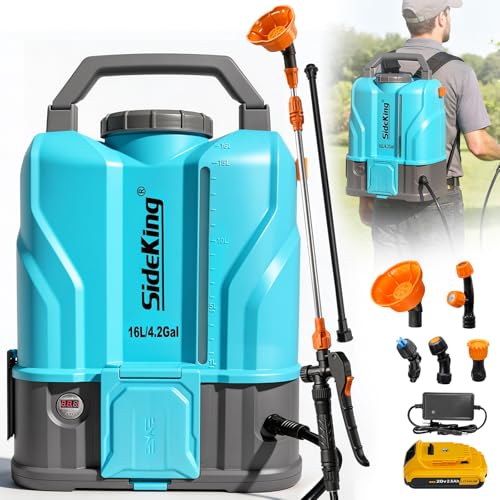
SideKing 4.2 Gallon Battery Backpack Sprayer
Poxsmuly 5.3 Gallon Backpack Sprayer for DeWalt 20V

SideKing 3.2 Gallon Battery Backpack Sprayer

LABAAOAO 2 Gallon Electric Sprayer (Blue)
The Details Behind The Selections
Not every pest job happens outdoors with a tank on your back. The Raid Ant & Roach Killer 17.5oz aerosol handles the indoor side of pest control where a pressurized sprayer simply does not belong, treating cracks along baseboards, behind the stove, and around the garage entry. It fits naturally alongside the backpack units on this list as a household complement rather than a yard tool.
Inside the can, the formula is built for contact kill on listed crawling insects, including roaches, ants, silverfish, crickets, earwigs, stinkbugs, and black widow spiders. The fragrance-free profile is a quiet win for people sensitive to strong sprays in enclosed kitchens or utility rooms.
The Case For It
- Kills listed bugs on contact, useful right when you spot a trail or nest
- Residual action keeps working on treated surfaces for up to about 13 weeks
- Fragrance-free spray avoids leaving a heavy chemical smell behind
- Targets a broad list, including spiders, crickets, and silverfish beyond ants and roaches
Things To Consider
- 17.5oz cans run out fast in heavy infestations and need frequent replacement
- Aerosol is indoor-focused, so it does not replace any yard-focused pick on this list
- Spraying around pets usually means moving animals out during application and drying time
At A Glance
Who It Suits Best
Apartment dwellers and homeowners who need fast indoor crawling-insect control without hauling gear.
Where Another Pick Suits Better
For larger outdoor coverage, the FlowZone Typhoon 3 Battery Backpack Sprayer handles yard-scale pest and weed work with far less manual effort.
The FlowZone Typhoon 3 swaps the familiar hand-pump routine for an 18V lithium-ion power pack, which is the whole reason it sits near the top of the backpack-sprayer category. Compared to the handheld Raid aerosol that opened the list, this is the tool you grab when the job moves outside and covers more than a single room. Sealed internal electronics hint at a design meant to shrug off accidental splashes in a busy yard.
For homeowners with multi-acre lots or small-plot growers, the runtime figure is the headline: up to 3 hours of continuous spray and over 110 gallons on a single charge. That kind of coverage is hard to beat without dragging out a tow-behind tank.
Strengths Worth Knowing
- Five pressure settings from roughly 8 psi to 115 psi for fine mist to long-distance stream
- At the top setting, spray reach extends past 30 feet, useful for tall trees
- Padded ComfortStraps help reduce shoulder fatigue during longer sessions
- Threaded brass hose connector lets you detach the line without pulling the cover
Worth Noting
- Battery and charger come included, but replacement packs are an extra cost over time
- At full pressure, runtime drops faster than the headline 3-hour figure suggests
Key Specs
Made For
Homeowners managing larger yards, orchards, or multi-zone pest and weed schedules who want one battery-powered unit to cover the full day.
Look Elsewhere When
Shoppers already invested in DeWalt 20V batteries may prefer the SideKing 4.2 Gallon Battery Backpack Sprayer to skip buying a separate battery platform.
The Makita DUS158Z reads more like a pro landscaper’s tool than a weekend sprayer, and that is exactly the point. It runs on the same 18V LXT slide batteries that power hundreds of other Makita tools, so a contractor who already owns drills, saws, and trimmers can drop in a battery and go. The compact frame helps in tight rows and fence lines where the bigger FlowZone Typhoon 3 may feel bulky.
Where this Makita really earns its place is the lock-on function and the roughly 0.5 MPa max pressure ceiling, which is enough for most residential weed and pest jobs without overspraying delicate beds. You do need to bring your own batteries and charger since it ships as a tool-only unit.
Useful Touches
- Slides onto any Makita 18V LXT battery you already own
- Lock-on trigger reduces hand strain during longer spraying sessions
- Compact body improves maneuverability around garden beds and fencing
Trade Offs
- Battery and charger are not included in the box
- Pressure ceiling is lower than the FlowZone Typhoon 3, limiting stream reach
Right Fit For
Makita loyalists and working landscapers who already have LXT batteries and want a backpack sprayer that fits the same platform.
Not Your Match When
You need all-day runtime without managing extra batteries. The Poxsmuly 5.3 Gallon Backpack Sprayer offers a much larger tank and similar pressure for longer continuous coverage.
The SideKing 4.2 Gallon pushes a 120 psi ceiling, the highest on this list, which makes it the right call for taller trees and longer fence lines. The trade-off is that the sprayer is sold without a battery, leaning into shoppers who already own a 20V DeWalt pack. That is a smart fit for contractors, but first-timers need to factor in the cost of a battery and charger separately.
On the practical side, two included spray wands and five nozzles give you a wider range of patterns than a single-rod sprayer, and a 1.0 GPM peak flow helps cover ground at a steady pace.
Everyday Wins
- 120 psi ceiling outclasses most residential sprayers in this price tier
- Two wands and five nozzles handle mist, fan, and direct stream patterns
- Compatible with DeWalt 20V packs, which is a common battery platform for many DIYers
- 1.0 GPM flow rate keeps coverage moving on larger lawns
Room For Improvement
- Battery and charger not included, which raises the real entry cost
- 4.2 gallons is a meaningful load when fully filled, so plan for a sturdy back pad
Feature Snapshot
Best Suited To
Shed owners with a stack of DeWalt 20V batteries who want a high-pressure sprayer without adding another charging system.
Skip It When
You want a turnkey setup out of the box. The FlowZone Typhoon 3 ships with its own 18V battery and charger, which keeps things simpler for new users.
If raw capacity is your priority, the Poxsmuly 5.3 Gallon offers the largest tank on this list by a clear margin. That extra gallon versus the 4.2-gallon SideKing model means fewer refills mid-job, which matters when you are halfway through a multi-zone weed and pest pass on a half-acre or more. It also runs on the same DeWalt 20V battery family, so existing tool owners can plug in and spray.
You also get a telescopic wand and seven nozzles, the broadest nozzle selection here, giving flexibility from narrow stream to wide fan without buying extras.
Advantages To Know
- 5.3-gallon tank is the largest capacity in this roundup
- Seven nozzles cover every common pattern from jet to wide mist
- Telescopic wand extends reach without ladders
- 100 psi ceiling handles most residential pest and weed applications
Points To Note
- Battery is not included, adding cost for first-time DeWalt shoppers
- A full 5.3-gallon load is heavy, so shoulder padding quality matters over longer sessions
Feature Card
Whose Shelf It Belongs On
Shed owners with a large property, several garden beds, and a stockpile of DeWalt 20V batteries ready to swap in.
Consider Something Else When
You have a smaller yard or limited storage. The SideKing 3.2 Gallon Battery Backpack Sprayer is easier to fill, carry, and tuck away.
The SideKing 3.2 Gallon is the friendliest entry point on the list for first-time backpack sprayer users. The tank is small enough to fill from a kitchen sink and light enough to carry without back strain, which makes it a natural fit for smaller yards, raised beds, and patio-scale weed control. Compared to the heavier Poxsmuly 5.3 Gallon, you trade raw capacity for everyday comfort.
Three spray speeds and a real-time battery indicator keep operation simple, while the 40-inch telescopic wand helps you reach under foliage and along fence lines without contortion.
Strong Points
- 3.2-gallon tank keeps the loaded weight manageable
- Three spray speeds simplify mode selection for new users
- Battery indicator on the handle shows remaining charge at a glance
- 40-inch telescopic wand improves reach without sacrificing control
Honest Caveats
- Smaller tank means more frequent refills on big properties
- Lower pressure ceiling than the larger SideKing 4.2 Gallon sibling
Who Will Love This
Beginners, apartment renters with shared gardens, and homeowners who want a backpack sprayer they can use without help from a partner.
A Better Fit Elsewhere
You have to cover a half-acre or more per session. The Poxsmuly 5.3 Gallon Backpack Sprayer offers more capacity for fewer fill-ups.
The LABAAOAO 2 Gallon rounds out the list as the most compact electric option, ideal for small patios, balcony gardens, and tight storage spaces. Its 23.62-inch retractable wand and six nozzles handle common weeding, fertilizing, and pesticide jobs in a footprint that fits a closet shelf. Runtime lands in the same 2 to 3-hour window as the SideKing 3.2 Gallon, just at a smaller scale.
For shoppers who do not need a backpack form factor, this is a quieter, lighter alternative that still gets the benefit of electric pressure without manual pumping.
What Makes Sense
- 2-gallon tank is easy to lift, fill, and store
- Six nozzles cover mist, fan, and direct stream patterns
- 23.62-inch retractable wand adjusts for low beds and tall pots
- Carry handle supports simple hand transport instead of a backpack harness
Points To Keep In Mind
- Not a true backpack design, so longer carries may strain one hand or shoulder
- Tank capacity limits you to small-area work sessions
Built With In Mind
Patio gardeners, balcony growers, and small-lot homeowners who want electric spraying without backpack bulk.
Swap It Out When
You have a larger yard to cover hands-free. The SideKing 3.2 Gallon Battery Backpack Sprayer gives you shoulder straps and more capacity for slightly bigger jobs.
What To Weigh Before Choosing A Backpack Sprayer
Tank size sets the rhythm of every job, and most residential users find that 3 to 5 gallons hits the sweet spot. Below 3 gallons, you refill constantly on anything bigger than a small patio, while anything above 5 gallons gets heavy fast and demands solid shoulder padding and a sturdy frame to stay comfortable for full sessions. The 2-gallon LABAAOAO and the 5.3-gallon Poxsmuly bookend that range for clear reasons.
Pressure, measured in psi (pounds per square inch), controls how far and how finely you can spray. Higher psi means longer stream reach, which helps with tall trees and fence lines, but it also tends to waste product on windy days. The FlowZone Typhoon 3, SideKing 4.2, and Poxsmuly models each clear 100 psi for those higher-reach tasks, while the SideKing 3.2 and LABAAOAO 2 Gallon keep it lower for gentler, more targeted application.
Battery compatibility quietly shapes long-term cost. Models that run on DeWalt 20V or Makita 18V LXT packs let you reuse batteries already on the shelf, but tool-only listings mean buying the battery and charger separately. Self-contained kits like the FlowZone Typhoon 3 cost more upfront but save the extra step. You may find that the right call depends on whether you already own a compatible platform or are starting from scratch.
Finally, nozzle and wand count affect versatility more than people expect. A wider nozzle set, like the seven on the Poxsmuly or six on the LABAAOAO, lets you switch from a wide fan for broadleaf weeds to a tight stream for spot treatment without buying extras. A telescopic or longer wand, present on the Makita, Poxsmuly, and SideKing 3.2, reduces the need to bend or climb during routine work.
Key Considerations Across These Picks
Mistakes Worth Dodging
The single biggest slip-up is buying a sprayer without checking the battery situation. A bare-tool listing on the Makita, SideKing 4.2, SideKing 3.2, and Poxsmuly means you still need a compatible pack to run it. Another common miss is overestimating tank size, since a fully loaded 5-gallon sprayer weighs over 40 pounds and gets uncomfortable fast on a small frame. Match capacity to the actual area you cover rather than chasing the largest tank on the page.
Where The Extra Money Goes
Premium tiers in this category buy you higher pressure ceilings, sealed electronics, and longer runtime per charge. The FlowZone Typhoon 3, for example, includes its own battery and charger, runs up to 115 psi, and pushes past 30 feet of stream reach. That extra capability pays off on multi-zone properties and taller trees, where a basic 2-gallon unit would force constant refills and ladder work. Smaller properties and shorter jobs, by contrast, often do fine with a simpler electric model at a friendlier entry cost.
Frequently Asked Questions
How long does a battery backpack sprayer typically run on a full charge?
Most battery backpack sprayers in this category run 2 to 3 hours of continuous spraying, depending on the pressure setting chosen. Higher pressure settings drain the battery faster, so heavy stream work cuts that window shorter than fine mist applications.
Can I use the same sprayer for fertilizer, weed killer, and pest control?
You can, but thorough cleaning between products is essential to avoid chemical reactions or crop damage. Rinse the tank, wand, and nozzles with clean water and a mild neutralizing agent appropriate for the prior product, then run clean water through the entire spray path before refilling.
Do I need to buy a battery separately for these sprayers?
Some models include a battery and charger in the box, like the FlowZone Typhoon 3, while others ship as tool-only units. The Makita, SideKing 4.2, SideKing 3.2, and Poxsmuly listings require you to supply a compatible battery from your existing tool collection.
What tank size works best for a typical home yard?
For most home yards under a half-acre, 3 to 4 gallons balances runtime and manageable weight. Larger properties benefit from 5 gallons or more, while small patios and balcony gardens can comfortably use 2-gallon units.
How important is pressure for pest control versus weed control?
Pressure matters more for reaching tall trees and dense foliage than for close-up weed work. For typical lawn weeds and ground-level pest control, 40 to 80 psi is usually plenty, while tree spraying and longer-distance work benefit from 100 psi or higher.
Bottom Line
The right backpack sprayer really comes down to your yard size, your existing tool batteries, and how often you refill. For most home users, a 3 to 4-gallon electric model covers the routine, while shoppers with bigger properties or DeWalt 20V batteries already in the shed will get the most out of higher-capacity options. Pair any backpack sprayer with a small indoor aerosol for the kitchen and garage, and your pest control setup is complete for the season.