
A wet phone, a soggy sleeping bag, or a soaked set of keys can ruin a day on the water faster than anything else. Backpack Dry Sacks solve that problem by sealing your essentials inside a waterproof shell you can actually carry. With so many styles, capacities, and closure systems on the market, choosing the right one comes down to how and where you plan to use it. This roundup covers five solid options across the spectrum, from ultralight packable sacks to heavy-duty roll-tops.
A Quick View Of The Lineup

Skog Å Kust GymSak Patented 2-in-1 Cinch Bag with Dry Sack

Cressi Ocelot Dry Bag – Water-Resistant with Carry Straps

Bee Nesting Waterproof Dry Bag Lightweight Marine Dry Sack 3-Pack
HEETA Dry Bags Waterproof Backpack 40L for Men & Women
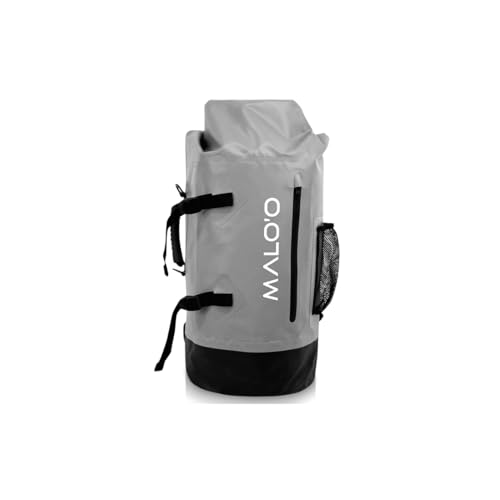
Malo’o 45L Waterproof Dry Bag Backpack – Heavy Duty Roll Top
More On The Choices That Made The List
The Skog Å Kust GymSak takes a different approach from the typical roll-top dry bag. It combines a lightweight polyester cinch sack with a removable 70D PVC-coated nylon liner that rolls down and seals with an IPX-6 rating, a tier of ingress protection that means it handles powerful water jets without leaking. That dual-layer setup lets you grab the outer bag for the gym or coffee run and still have a fully waterproof pouch when the weather turns.
For commuters who walk or bike between transit and the office, the reflective logo and key-clip pocket are small touches that earn their place. The machine-washable liner is a quiet bonus, especially after a sandy beach session.
Points In Its Favor
- Two bags in one: a casual cinch carry and a removable waterproof liner
- IPX-6 protection handles spray, rain, and brief dunks
- Reflective accents help you stay visible on dusk walks or bike commutes
- Outer shell is light enough for everyday carry without bulk
Worth Noting
- Capacity is modest compared to dedicated expedition dry bags
- The decorative prints vary; the Sugar Skulls design may not appeal to all tastes
- Not designed as a true backpack with padded straps for long hauls
Feature Snapshot
Who It Suits Best
Students, gym-goers, and casual paddlers who want one bag that flexes between daily errands and wet-weather outings.
A Better Fit Elsewhere
For multi-day expeditions where you need a true backpack harness, the HEETA 40L rolls deeper capacity and padded shoulder support.
Designed in Italy by a brand long associated with diving and water sports, the Cressi Ocelot leans into its aquatic heritage. The shell uses tarpaulin, a reinforced fabric coated to resist punctures and abrasion, and the classic roll-down closure creates a watertight seal once you buckle the top. Available in 10L, 20L, and 30L sizes, the Ocelot scales up gracefully whether you’re swimming laps at a lakeside cove or hauling wetsuit layers to a dive site.
Carry options shift with size. The 10L rides across the body on a single adjustable strap, while the 20L and 30L add a second strap for backpack-style hauling. For paddleboarders, that matters: a crossbody bag stays put when you’re kneeling and paddling, while the larger two-strap versions distribute weight more evenly on longer treks.
What Earns Its Place
- Three size tiers cover everything from a quick swim to a full dive-day kit
- Tarpaulin construction shrugs off scrapes against rocks and boat decks
- Italian design pedigree with a strong water-sports track record
- Backpack straps on larger sizes free up your hands for climbing in and out of watercraft
Some Limits To Know
- Listed as water-resistant rather than fully waterproof for prolonged submersion
- Tarpaulin can feel stiff in cold weather, affecting how compactly the bag folds
- No internal organizer pocket, so smaller items tend to migrate to the bottom
Made For
Swimmers, snorkelers, and paddleboarders who want a brand rooted in water sports and a bag that scales with their day.
Not Your Match When
You need a packable, stowable sack for a backpacker’s kit, in which case the ultralight Bee Nesting set is a better companion.
Bee Nesting’s three-pack of dry sacks targets backpackers and travelers who think in terms of grams, not gallons. The bags are made from 20D ripstop nylon (a tightly woven fabric that resists tearing) with a siliconized finish and a PU-coated inner membrane, all sealed with PU tape at the seams. The headline spec is a 5,000mm waterhead rating, which means the fabric can withstand a column of water five meters tall before letting moisture through. For most storms and river crossings, that is more than enough.
You get three nested sizes: 2L, 4L, and 8L. That nestability is the real trick: the smaller bags slip inside the larger one, and the whole set compresses to roughly the size of a fist when empty. If you measure your kit by weight, this trio adds about 100 grams of protection across three separate compartments.
Positive Points
- Three graduated sizes let you sort gear by category and urgency
- 5,000mm waterhead rating handles heavy rain and brief immersion
- Total set weighs around 100 grams, light enough for ultralight pack lists
- Bags nest together for compact storage in a pack’s lid or side pocket
Trade-Offs
- 20D fabric is light but more vulnerable to abrasion than heavier deniers
- No backpack harness; you carry these inside a larger pack or by hand
- Siliconized finish can feel slippery when loading the bag on uneven ground
Best Suited To
Thru-hikers, kayakers on multi-day trips, and anyone who wants to organize gear into separate waterproof compartments without weighing down their kit.
Skip It When
You need a single large bag for full-day hauls; the Malo’o 45L offers more volume in one rugged shell.
The HEETA 40L trades ultralight ambitions for raw durability. Its shell uses 500D PVC, a thick, vinyl-coated fabric that laughs at sharp rocks, boat gunwales, and the kind of abuse that shreds thinner materials. Reinforced seams hold the structure together when the bag is fully loaded, and the roll-top closure cinches down to a manageable carry handle or a set of backpack straps.
Where this bag earns its place is on multi-day fishing trips and rugged camping weekends. Forty liters swallows a change of clothes, a towel, snacks, and a small first-aid kit without strain. The cushioned back panel and shoulder straps add a layer of comfort you don’t get from basic dry bags, which matters when you carry it for more than a few minutes.
Everyday Wins
- 500D PVC shell resists punctures from fishing hooks and rocky shorelines
- 40L capacity covers multi-day trips with room for layers and food
- Padded back panel reduces pressure points during longer carries
- Functions as both dry storage and a standalone backpack on short treks
Points To Keep In Mind
- Heavier than ultralight options, weighing down smaller frames on long hikes
- Stiff PVC can develop creases if stored folded for long periods
- Solid colors show scuffs more visibly than patterned shells
Key Specs
Whose Shelf It Belongs On
Anglers, river rafters, and campers who prioritize toughness over gram-counting and need room for serious gear.
Look Elsewhere When
You need a sub-200-gram daypack for fast-and-light missions; the Cressi Ocelot 10L covers that profile more easily.
The Malo’o 45L is the largest bag in this roundup, and it wears that capacity well. Malo’o uses what they call DryCore Technology paired with thermo-welded seams, a process that fuses the material rather than stitching it, eliminating the needle holes that traditionally become weak points in waterproof gear. The result is an IPX6-rated shell that keeps rain, spray, sand, and mud out of the main compartment.
Beyond the waterproof core, the bag adds practical touches: a front zip pocket for quick-access items like keys or a phone, plus side mesh pockets for water bottles. At 45 liters, the main cavity swallows towels, tackle boxes, snacks, and a change of clothes without strain. For kayak fishing trips or full-day beach sessions where you need everything in one dry container, that volume changes how you pack.
Everyday Advantages
- Thermo-welded seams remove stitch holes that usually weaken waterproofing
- 45L main compartment handles full-day kits for solo or shared trips
- Front zip pocket keeps essentials reachable without unrolling the top
- IPX6 rating holds up against heavy spray and rain on open water
A Few Limitations
- Bulkier than smaller sacks when half-empty, with less shape retention
- Mesh side pockets are not waterproof, so bottles need their own sleeve
- Roll-top takes practice to seal correctly for full protection
Feature Card
Perfect Match For
Kayak anglers, surfers heading out for a full day, and travelers who need one large dry pack that doubles as a backpack.
Reach For A Different Pick When
You need modular organization across multiple small sacks; the Bee Nesting three-pack fits that approach better.
Choosing A Backpack Dry Sack That Fits Your Adventures
Backpack Dry Sacks vary widely, and the right pick depends on what you actually carry and where you carry it. Capacity, waterproof rating, and carry comfort all matter, but they matter differently depending on your activities.
Capacity And Pack Size
Most dry sacks range from 2L to 45L, and matching the bag to your load is the simplest way to avoid over- or under-buying. A 10L bag handles a towel, a phone, and a snack, while a 40L to 45L pack swallows overnight layers and full-day fishing or surfing kits. For backpackers, smaller graduated sacks nested inside a larger pack often work better than one oversized bag.
Waterproof Rating And Materials
Look for ratings like IPX6 (protected against powerful water jets) or higher if you expect spray and rain. Material weight, measured in denier (D) where higher numbers mean thicker fabric, tells you how tough the shell is. Ultralight 20D nylon saves weight but scuffs easily, while 500D PVC resists punctures at the cost of added bulk. The trade-off shows up most clearly on rocky shorelines versus long trail miles.
Closure Type And Carry Style
Roll-top closures are the standard because they create a reliable watertight seal when properly folded and buckled. Zippered dry bags offer convenience but rely on the zipper’s waterproof coating. Carry style matters too: crossbody straps suit short trips, while padded backpack straps help on longer hauls where weight adds up.
Intended Use And Environment
A paddler who spends weekends on rivers has different needs than a commuter who wants rain protection for a laptop. Match the bag to your most common scenario rather than the most extreme one, and you’ll spend your money where it counts.
Key Considerations Across These Picks
Where Shoppers Go Wrong
A common slip-up is buying by capacity alone. A 40L bag with thin walls and no padding is far less useful than a 25L bag with shoulder straps you can actually wear for an hour. Another trap is ignoring closure quality. A roll-top that doesn’t fold at least three times before buckling will leak under pressure, regardless of the fabric’s waterproof rating. Test the seal at home before you trust it in the field.
When Paying More Pays Off
Higher-tier models tend to invest in welded or reinforced seams, heavier denier fabrics, and better strap systems. For a one-day beach trip, that upgrade is hard to justify. For multi-day expeditions or commercial-grade use, the extra cost translates to fewer failures and more comfort over years of use.
Frequently Asked Questions
What Size Backpack Dry Sack Do I Need?
The right size depends on your typical load. A 10L to 20L sack handles a day at the beach or a gym kit, while 30L to 45L bags suit multi-day trips or full-day fishing outings.
Can You Swim With A Backpack Dry Sack?
Most roll-top dry bags with IPX6 or higher ratings can handle brief submersion, but they’re designed primarily to keep gear dry during splashes, rain, and short dunks. Extended underwater use calls for a dedicated dry bag or a hard waterproof case.
How Do You Clean A Waterproof Dry Sack?
Mild soap, warm water, and a soft cloth work for most shells. Some liners, like the GymSak’s inner bag, are machine-washable. Always air-dry thoroughly before storage to prevent mildew.
Are Heavier Dry Sacks Always More Durable?
Not always. Denier rating and material type matter more than raw weight. A 500D PVC shell is more puncture-resistant than a 1000D woven fabric with a thin coating, because the coating does the waterproofing.
What’s The Difference Between Water-Resistant And Waterproof?
Water-resistant bags handle light rain and splashes but can fail under submersion or heavy spray. Waterproof bags with sealed or welded seams and proper closures hold up against jets, rain, and brief dunks.
The Takeaway
Backpack Dry Sacks solve a simple problem: keeping your gear dry when the world gets wet. The five options here cover the full spectrum, from the ultralight Bee Nesting three-pack for backpackers to the rugged Malo’o 45L for full-day water adventures. Match the bag to your most common scenario, and you’ll spend less time worrying about soggy gear and more time enjoying the trip.