
Cordless outdoor tools have reshaped weekend yard work, and backpack battery leaf blowers now deliver the kind of run time and air output that used to demand a gas tank. You’ll see why this matters the moment you start clearing a driveway full of wet leaves without earplugs, fumes, or a pull cord fighting back. The seven models below cover a wide spread: heavy landscapers, suburban homeowners, and anyone who wants a quiet tool for early-morning cleanup.
The Main Contenders

Makita XBU02PT1 36V Brushless Blower Kit

Worx WG582 40V Quiet Blower
Sakerplus Cordless Leaf Blower

WORX WG547 20V Turbine Blower

WORX WG543 Nitro 20V Blower

WORX WG581.1 40V Quiet Blower
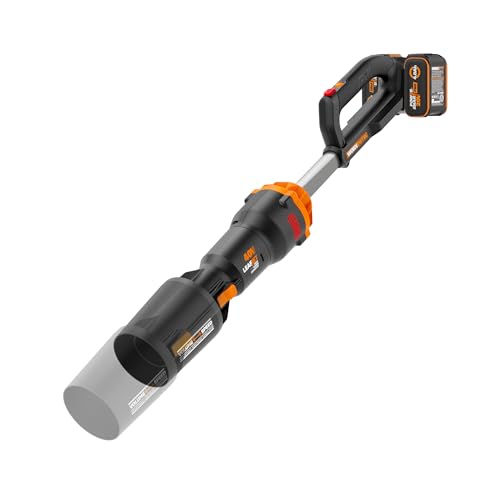
WORX WG585 Nitro 40V Blower
A Closer Look At Each Pick
The Makita XBU02PT1 sits at the contractor end of the cordless spectrum, pairing two 18V LXT batteries (a 36V system in series) with a brushless motor that pushes air without the vibration or noise of a gas unit. Four 5.0Ah batteries ship in the kit, which means crews can rotate packs through a long day without sitting idle at a charger. Compared to the more homeowner-oriented picks that follow, this Makita trades lightness for sustained output.
For anyone already invested in the Makita LXT platform, the blower slots into an existing battery ecosystem, sparing the cost of a second charger and wall of packs. The trade-off, depending on your property size, is a heavier unit than the handheld models below, which can wear on the arm during overhead clearing of gutters.
What Works In Its Favor
- Dual-battery 36V architecture delivers gas-comparable airflow with zero emissions.
- Brushless motor extends tool life and squeezes more runtime per charge.
- Four 5.0Ah batteries included, so you can rotate through long sessions without downtime.
- Cross-compatible with the broader Makita 18V LXT lineup for crews who already own the platform.
Things To Consider
- Heavier than single-hand 20V options, which can fatigue the wrist during extended use.
- Premium positioning means the upfront cost climbs well above entry-level picks.
- Air concentrator nozzles tend to clog with wet debris, requiring occasional clearing.
Key Specs
Who It Suits Best
Landscapers and homeowners with acreage who already lean on the Makita LXT platform and want a commercial-grade cordless blower.
Consider Something Else When
You mainly sweep a small suburban lot and would prefer the lighter, cheaper Worx WG547 instead.
The Worx WG582 targets thick, damp leaf piles that overwhelm smaller 20V units. Its 40V platform pairs two PowerShare batteries in series, and the high-efficiency brushless motor pushes air volume that rivals small-displacement gas handhelds. The “quiet” design language matters on Saturday mornings when neighborhood patience runs thin.
Where the Makita above leans pro, this Worx sits in a comfortable middle ground: serious output without the contractor price tag. You may find the balance shifts toward the front when the battery load increases, a common quirk of high-CFM cordless designs.
Reasons It Performs
- 40V brushless motor produces air volume that punches through wet, matted leaves.
- Dual-battery PowerShare design lets you swap into other Worx 20V and 40V tools.
- Quieter operation compared to gas units, easing early-morning cleanup sessions.
Trade Offs
- Two batteries in series add noticeable front-end weight during long sweeps.
- Battery and charger are sold separately on some configurations, raising the real cost.
Key Specs
Made For
Homeowners with mature trees who face thick, wet leaf drops each fall and want quieter operation than a gas blower offers.
Where Another Pick Suits Better
You only need to clear a small patio weekly, where the Sakerplus Cordless Leaf Blower offers a friendlier weight.
The Sakerplus Cordless Leaf Blower plays a different game than the heavy hitters above: it’s a grab-and-go dust sweeper for small jobs. At roughly 2.3 pounds, it’s lighter than many laptops, and the balanced body lets you clear a patio, deck, or workshop floor with one hand. Think sawdust off the workbench, leaves off the porch steps, or grit out of the garage corners.
This is the pick for someone whose cleanup is measured in minutes, not hours. It’s no match for a soggy carpet of autumn leaves, but for daily tidying, the lightweight design is the whole point.
Strong Points
- Sub-3-pound body makes overhead and one-handed work genuinely comfortable.
- Balanced housing reduces wrist strain during quick cleanup bursts.
- Compact size stores easily on a garage shelf or in a closet.
Points To Note
- Air volume won’t move wet, packed leaves on a driveway.
- At sustained working volume, ear protection is recommended for sensitive users.
- Small motor means shorter continuous runtime before the pack needs a top-up.
Right Fit For
Anyone who wants a featherlight tool for porches, garages, and small yard corners rather than whole-lawn clearing.
Skip It When
You’re clearing a half-acre of fallen oak leaves, where the Worx WG585 brings far more muscle.
The WORX WG547 is a friendly 20V unit aimed squarely at suburban driveways and small lawns. Its turbine fan design generates steady airflow without the bulk of a 40V system, and two speed modes let you tame the output around flower beds or open it up on a stubborn leaf pile. Air volume tops out around the range suited to clearing clippings off sidewalks after mowing.
Where the WG582 above flexes raw CFM, this one prioritizes comfort and storage. It’s the kind of tool you carry out with one hand and tuck into a small shed without rearranging the lawn mower.
Everyday Advantages
- Turbine fan design delivers stronger airflow than basic 20V blowers in this class.
- Two-speed switch balances runtime against power for different cleanup tasks.
- Light, compact body suits smaller hands and short storage spaces.
- Cross-compatible with the Worx 20V PowerShare battery platform.
Worth Noting
- A single 20V pack runs shorter under heavy use than 40V dual-battery picks.
- Not ideal for thick, wet debris after a soaking storm.
Key Specs
Best Suited To
Suburban homeowners who want a simple, lightweight tool for weekly driveway and sidewalk touch-ups.
Look Elsewhere When
You want a quiet machine for early-morning runs, where the WORX WG581.1 is engineered for lower noise.
The WORX WG543 steps the Nitro lineup into a 20V chassis with a clever sliding nozzle that toggles between volume mode and speed mode. Volume mode spreads air wide for fast coverage of open lawn; speed mode narrows the stream to push stubborn debris out of corners. It reaches meaningful CFM numbers without climbing into 40V territory.
For a homeowner who wants adjustability without the dual-battery tax, the WG543 hits a comfortable sweet spot. You trade raw power for a friendlier weight and a smaller battery investment.
The Value In It
- Sliding nozzle adjusts between volume and speed for different debris types.
- Nitro brushless motor delivers stronger output than older brushed Worx 20V units.
- Single 20V battery keeps the weight low and the price approachable.
- PowerShare compatibility across the Worx 20V family.
Soft Spots
- Runtime on a single 20V pack limits longer sweeping sessions.
- Air volume still trails the 40V picks when leaves are wet and heavy.
Whose Shelf It Belongs On
Budget-conscious homeowners who want a feature-rich 20V blower and already use other Worx 20V tools.
Swap It Out When
Your yard drops heavy, wet leaves every fall and you want more muscle, where the WORX WG585 delivers a noticeable step up.
The WORX WG581.1 is built around a quiet-tech housing that brings decibel output down to a level where neighbors won’t glare from across the fence. Underneath that quieter shell sits a brushless motor paired with a 40V battery platform, so the air volume stays useful for serious cleanup. It carries PowerShare compatibility, meaning the same battery runs a growing wall of Worx tools.
For early risers or anyone living under HOA noise restrictions, the quiet operation is the headline feature. You give up a bit of top-end CFM versus the louder WG585, but gain a tool that respects the people next door.
A Few Strong Suits
- Quiet-tech design keeps noise low enough for noise-sensitive neighborhoods.
- Brushless motor 2.0 boosts power and runtime efficiency over older generations.
- 40V PowerShare platform supports cross-tool battery use.
Points To Keep In Mind
- Top-end CFM is slightly below louder 40V siblings.
- Quieter design still benefits from ear protection during long jobs.
Key Specs
Built With In Mind
Homeowners in dense neighborhoods or HOA communities who need real power without the loud gas-blower soundtrack.
Reach For A Different Pick When
You want maximum air volume and don’t mind more noise, where the WORX WG585 outperforms on raw output.
The WORX WG585 is the Nitro flagship for cordless air output, designed for acreage and serious leaf seasons. A variable air nozzle toggles between volume and speed modes, and the brushless motor pushes air volume high enough to rival small gas handhelds. It carries the same PowerShare battery family as the rest of the Worx 40V lineup.
For property owners with open lawns, long driveways, or a small acreage, the WG585 trades a slightly higher price for the kind of muscle that finishes the job faster. The cost shows up clearly in the runtime per charge, though: heavy use drains any 40V pack.
Standout Benefits
- Variable nozzle toggles between high-volume and high-speed modes for different debris.
- Nitro brushless motor delivers top-tier airflow for the 40V class.
- PowerShare 40V battery compatibility broadens tool investment options.
Trade-Offs To Consider
- Highest-output mode drains the battery noticeably faster than mid settings.
- Larger body may feel unwieldy for shoppers used to compact 20V handhelds.
Key Specs
Perfect Match For
Owners of larger suburban lots or multi-acre properties who want gas-like output without the maintenance headaches.
A Better Fit Elsewhere
You mainly need a tool for occasional porch sweeping, where the Sakerplus Cordless Leaf Blower is far easier to handle.
What To Weigh Before Choosing A Backpack Battery Leaf Blower
Air Volume Versus Air Speed
CFM (cubic feet per minute) measures how much air a blower pushes, and MPH measures how hard that air hits. Yard cleanup is mostly a CFM game: you want volume to lift leaves off the ground. MPH matters more for dislodging stuck debris from cracks and edging along pavement. Most of the picks here lean toward volume, with a couple offering adjustable nozzles for both.
Battery Platform And Runtime
A 20V system keeps weight and cost down, while a 40V or dual-18V setup delivers more output at the cost of heavier packs and longer charging cycles. Think about whether you already own tools from one brand: the WORX PowerShare platform, for instance, lets one battery float between blower, mower, and trimmer. Rotating spare packs solves most runtime complaints on bigger properties.
Noise And Neighbor Considerations
Cordless blowers already run quieter than gas units, but models like the WG581.1 push that further with quieter housings and lower decibel ratings. For early-morning sessions, weekend starts, or HOA-restricted neighborhoods, that lower noise floor can matter more than peak CFM.
Weight, Balance, And Storage
A blower you’ll carry for an hour needs to feel balanced, not just light. Handheld 20V units under three pounds disappear in the hand; 40V and dual-battery picks demand a steadier grip and may wear on the wrist during overhead work. Storage matters too: a compact tool tucks into a small shed without rearranging the mower.
Key Considerations Across These Picks
Common Shopping Slip Ups
The biggest mistake is chasing the highest CFM number without checking the battery system behind it. A blower that delivers peak airflow for five minutes isn’t useful on a long driveway. Confirm the included battery capacity, look at whether spares are available, and match the tool to your property size rather than to a spec sheet.
What The Higher Tier Buys
Stepping up to premium 40V or dual-battery models typically buys a brushless motor, longer runtime per charge, and quieter operation. For most suburban lots, a mid-tier 20V or 40V pick handles 90 percent of the work. The upgrade pays off when you face weekly leaf coverage, multi-acre lawns, or noise-sensitive weekends.
Frequently Asked Questions
How long does a backpack battery leaf blower typically run on a single charge?
Most 20V handheld units in this class run 20 to 40 minutes on a single pack at moderate speed, while 40V and dual-battery models extend well past an hour under similar conditions.
Can cordless leaf blowers handle wet leaves as well as gas models?
Top-tier 40V brushless blowers move wet, matted leaves competently, though they still trail the very largest gas backpack units in sustained heavy clearing.
What does CFM mean on a leaf blower?
CFM stands for cubic feet per minute, the volume of air a unit pushes each minute, and it’s the main number that decides how fast a blower clears open ground.
Are backpack battery leaf blowers safe to use around kids and pets?
Treat any cordless blower like a power tool: keep pets and children well clear of the air stream and avoid pointing it at windows, gravel, or loose debris.
How do I store a battery leaf blower between seasons?
Store the tool indoors, remove the battery, and keep the pack at room temperature with a partial charge to extend overall battery life.