
Whether you’re installing a new irrigation system, replacing a tired valve, or bringing an existing setup up to local inspection standards, picking the right backflow preventer protects potable water from contamination. Homeowners running sprinkler lines, contractors handling service entry points, and anyone winterizing outdoor plumbing need assemblies that match pressure class, thread type, and hazard rating. The eight options below cover double-check and reduced-pressure designs at 3/4″ and 1″ sizes, plus a winterizing accessory and a test-cock kit for annual compliance checks.
Your Options, Compared

Pinrui 34-350 3/4″ Double Check Backflow Preventer

Zurn RK18-860XL Wilkins 1/8″ Test Cocks, Pack of 4

Pinrui 3/4″ 975XL Reduced Pressure Backflow Preventer

Pinrui 3/4″ 009M3-QT RPZ Backflow Preventer
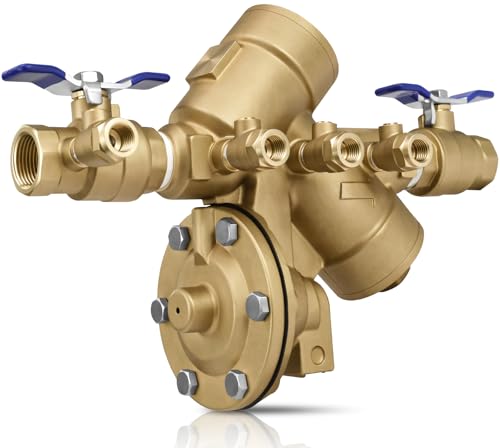
Onylraep 34-975XL 3/4″ Reduced Pressure Preventer

Vibrant Yard Winterization Brass Adapter Fitting

Watts 1″ 007M1QT Double Check Valve

Onylraep 1-350 Double Check Valve Assembly
Inside Each Recommended Option
A double-check assembly like this one stacks two independent check valves inside a single housing, so a stuck disc in one chamber still leaves the second one guarding the potable line. For homeowners running a 3/4″ irrigation main in regions with deep freezes, that layered safety feels reassuring, because a single mechanical failure no longer means contaminated water creeps back toward the house.
The stainless steel and reinforced nylon build keeps the unit light enough to lift into a valve box without help. Serviceable off-line design lets you pull the pressure vessel without cutting the entire line, which simplifies annual inspection. You may find the nylon portions scuff faster than a full bronze body over many seasons, but the trade-off shows up mostly in cosmetic wear rather than function.
What It Does Well
- Two-valve redundancy keeps protection intact if one check valve sticks or wears out
- Modular pressure vessel removes for cleaning without disturbing the surrounding piping
- Accepts horizontal or vertical mounting, which helps in tight meter pits and unusual orientations
- Stainless and nylon housing tolerates cold snaps better than all-plastic alternatives in most climates
Trade Offs
- Lacks a relief chamber, so it suits non-health-hazard applications rather than chemical fertilizer lines
- Annual testing requires separate gauge equipment not bundled with the unit
Feature Snapshot
Best Suited To
Homeowners and irrigation contractors protecting a 3/4″ service line from mild contamination risks in outdoor settings.
Skip It When
You need higher-tier protection for health hazards; the Pinrui 3/4″ 975XL Reduced Pressure Backflow Preventer is the stronger fit there.
Test cocks are the small threaded ports a certified tester attaches differential pressure gauges to during annual certification, and Zurn’s RK18-860XL pack covers the 1/4″ to 1″ assembly range. For property managers and contractors juggling multiple irrigation accounts, a four-pack keeps spares on the truck so a missing or stripped test cock never derails an inspection visit.
The 1/8″ standard size aligns with most residential and light commercial backflow preventers currently installed in the field. Wilkins-grade parts tend to fit the assemblies they are designed for without modification. Depending on the brand you service, though, you may run into assemblies that need a different cock profile, so carrying only this style can leave gaps.
Notable Upsides
- Pack of four supports multiple service calls from one purchase
- Wide size fit from 1/4″ through 1″ assemblies covers most residential installs
- Zurn/Wilkins pedigree matches assemblies from the same brand family for clean replacement
Worth Noting
- Specialized part that only matters if you are rebuilding or maintaining an existing preventer
- Brand-specific tolerances mean cross-brand assemblies occasionally require a different cock
Whose Shelf It Belongs On
Plumbing contractors and irrigation techs who run annual backflow certification tests and need consistent replacement parts.
A Better Fit Elsewhere
Homeowners needing a complete preventer rather than service parts should consider the Pinrui 3/4″ 009M3-QT RPZ Backflow Preventer instead.
Where the double-check design above handles non-hazard scenarios, an RPZ assembly steps in when fertilizer injection, chemical boosters, or other health hazards sit downstream. This Pinrui 975XL uses two check valves plus a relief chamber that dumps water to atmosphere the moment internal pressure hints at a failure, so contaminants cannot backflow into the city main even briefly.
The Y-shaped bronze body opens through separate top access covers, which means gasket and seat replacements happen without yanking the whole valve from the line. Three test cocks support annual certification without extra adapters. For pools, decorative fountains, or any site where stagnation could reach the potable supply, this is the tier worth paying for.
What Pays Off
- Visible relief drain acts as an early warning that one of the check valves is degrading
- Top-access service covers cut annual rebuild time significantly compared to inline-only assemblies
- 175 PSI working pressure handles most residential and light commercial water main pressures
- Operates between 33°F and 140°F, fitting cold-spell irrigation lines and warm boiler feeds
Room For Improvement
- Heavier bronze body requires two hands and a stable mounting surface during install
- Relief valve discharge may need a dedicated drain line to handle occasional weeping during normal operation
- Annual test kits are a separate buy, adding to total ownership cost
Quick Facts
Right Fit For
Properties with health-hazard cross connections like fertigation lines, pool fills, or boiler feeds that demand the highest backflow protection tier.
Consider Something Else When
You only need non-hazard protection on a tight budget; the Pinrui 34-350 3/4″ Double Check Backflow Preventer covers basic irrigation duty at lower cost.
Where the 975XL above uses separate access covers, this 009M3-QT uses a single top entry and pairs the assembly with quarter-turn full-port ball valves up and downstream of the RPZ section. For one-person service calls, that combination removes the need for a second wrench, because shutting off the line and rebuilding the valve happens from one cover on top.
The cast bronze body delivers longevity comparable to other RPZ assemblies, while captive springs prevent parts from launching out during disassembly. You may find the integrated shutoffs slightly bulkier than standalone valves, but the all-in-one footprint simplifies spec writing on new builds where inspection will trace every isolation point.
The Upside
- Factory-fitted ball valves eliminate separate stop-valve purchases during new installs
- Captive springs reduce the chance of lost or ejected internal parts during servicing
- Large-bore flow path keeps pressure loss minimal during peak irrigation demand
- Single top cover shortens annual rebuild time compared to multi-cover RPZ designs
Small Caveats
- Integrated ball valves add overall length, which can crowd narrow meter boxes
- Test ports require a gauge kit for annual certification that ships separately
Spec Overview
Who Should Grab It
Plumbing contractors and serious DIYers who want a self-contained RPZ assembly with built-in isolation for fast service.
Look Elsewhere When
Space is at a premium inside the valve box; the Onylraep 34-975XL 3/4″ Reduced Pressure Preventer uses a shorter wye geometry in tighter pits.
Valve boxes tend to be unforgiving, and traditional RPZ assemblies can sprawl beyond the lid footprint. The Onylraep 34-975XL uses a wye-triangular body that keeps overall length short without sacrificing the triple-defense backflow protection that defines an RPZ. For retrofits inside an existing round meter box, that geometry saves the kind of install headaches that lead to cracked lids and exposed piping.
The cast brass body and dedicated ports for each check valve simplify annual rebuilds, since each chamber is reachable on its own. Owners commonly report that the integrated filter screen cuts down on debris reaching the seats during the first few irrigation cycles. Depending on your existing piping layout, the wye shape may not align with straight runs, so a short nipple offset often helps.
A Strong Showing
- Short overall footprint fits common round valve boxes without major rework
- Independent access ports per check valve cut rebuild time during annual service
- Integrated filter screen catches debris before it fouls check valve seats
- Wye body design eases installation labor in retrofit scenarios
Honest Caveats
- Wye geometry may not align with existing straight piping without an offset nipple
- Filter screen requires periodic cleaning to maintain full flow
Who It Suits Best
Retrofit installers working inside cramped meter boxes who still want RPZ-grade protection on a 3/4″ service.
Reach For A Different Pick When
Your existing piping is straight-run and you prefer a longer but simpler alignment; the Pinrui 3/4″ 975XL Reduced Pressure Backflow Preventer handles that case cleanly.
Backflow preventers do not actually need replacement every year, but they do need winterizing in climates where standing water would freeze inside the body and crack the casting. The Vibrant Yard adapter turns a standard air compressor hose into a blow-out tool that pushes remaining water out of the preventer and pressure vacuum breaker (PVB) before the first hard frost.
Solid lead-free brass construction handles repeated compressor cycles without thread fatigue. You may not need it if your municipality requires professional winterization services, but homeowners comfortable running a compressor themselves get a reusable tool that pays off across many seasons.
A Few Highlights
- Lead-free brass casting avoids corrosion concerns that affect lower-grade fittings
- Adapts standard compressor output to common PVB and backflow inlet sizes
- Reusable packaging doubles as storage for the adapter between seasons
Points To Keep In Mind
- Specialized tool rather than a primary backflow assembly, so it supplements rather than replaces a preventer
- Requires an available air compressor and basic familiarity with blow-out procedures
Right Fit For
Homeowners in freeze zones who winterize their own sprinkler systems each fall and need a reliable blow-out adapter.
Consider Something Else When
Your priority is a primary prevention assembly rather than winterization gear; the Watts 1″ 007M1QT Double Check Valve fits a standard service line install.
The Watts 007 series has been a familiar sight on service lines for decades, and the 1″ 007M1QT keeps that reputation intact for non-health-hazard applications. Bronze body construction handles decades of pressure cycling, while internal components stay accessible for inspection. Municipal inspectors tend to recognize the model on sight, which can smooth permit review on new service installs.
The 175 PSI working pressure rating covers standard residential water mains without strain. You may find local codes require annual testing by a certified tester, which is normal for the category rather than specific to this unit. The trade-off compared to the smaller Pinrui double-check at pick 1 is size; this is the right pick when 1″ main flow matters.
A Favorable Mix
- Long-standing Watts 007 design with widespread installer familiarity
- Bronze body tolerates decades of buried service
- 175 PSI rating matches typical residential main pressures
- Suited to non-hazard cross connections where RPZ would be overkill
Factors To Consider
- Local jurisdictions often mandate certified-tester annual inspection, adding ownership cost
- Bulkier footprint than 3/4″ alternatives may not suit shallow service entries
Feature Rundown
Made For
Service lines on non-hazard applications where a 1″ connection is required and longevity matters more than initial cost.
Swap It Out When
Your service line carries any health hazard like chemical injection; step up to the Pinrui 3/4″ 975XL Reduced Pressure Backflow Preventer (or its 1″ equivalent if available).
The 1″ sibling to the smaller double-check at pick 1 handles higher flow service entrances where a 3/4″ body would create unnecessary restriction. Two check valves stacked in series protect against backpressure and back-siphonage simultaneously, and continuous pressure piping systems run without complaint thanks to that redundant seal.
Irrigation contractors working on larger residential properties or small commercial grounds tend to reach for this size because zone valves downstream need every gallon the main can deliver. The trade-off compared to the Pinrui 3/4″ version is weight and footprint, so mounting space inside the meter box matters during planning.
The Good Stuff
- 1″ port size supports higher flow demands for larger irrigation zones
- Dual check valve redundancy protects against stuck disc failures
- Continuous pressure compatibility suits systems that stay charged year-round
Some Limits To Know
- Heavier 1″ assembly requires more planning around mounting surface and clearance
- Annual certification requires a separate gauge kit and qualified tester
Who Will Love This
Irrigation contractors and homeowners with larger service lines where 1″ flow capacity is non-negotiable.
Where A Sibling Pick Shines
On a tighter 3/4″ service with limited meter box space, the Pinrui 34-350 3/4″ Double Check Backflow Preventer fits more cleanly.
Picking the Right Backflow Preventer for Your Setup
Choosing the correct assembly starts with understanding hazard classification, because the wrong tier either overpays for protection or leaves contaminants a path back into the potable line. Local plumbing codes often dictate which valve class applies, so checking inspection requirements before purchase saves rework.
Match the Assembly to the Hazard Level
A double-check valve handles non-health-hazard scenarios like lawn irrigation where the worst-case contaminant is sediment rather than chemicals. An RPZ (reduced pressure zone) assembly steps up for health hazards like fertilizer injection, boiler feeds, or pool fills where contamination carries real health risk. Within each class, size the valve to match your pipe diameter rather than upsizing “just in case,” because oversized valves can chatter and wear prematurely under low flow.
Thread Type and Mounting Orientation
Most residential backflow preventers use FNPT (female national pipe thread) connections, but verifying the existing pipe thread before ordering prevents return trips. Vertical and horizontal mounting both work for most modern assemblies, though check the spec sheet because older designs sometimes lock orientation. Vertical drops from a meter are common and worth confirming during planning.
Pressure, Temperature, and Climate
Standard 175 PSI working pressure covers municipal supply across most regions, but temperature range matters more than people expect. Cold-climate installs benefit from bodies rated down to at least 33°F, while warm-loop applications like boiler feeds need upper-end tolerance. Drain accommodations for relief valve discharge should be planned before installation, especially for RPZ units that occasionally weep during pressure fluctuations.
Service Access and Annual Testing
Backflow preventers require annual certification by a qualified tester in most jurisdictions, so the layout should leave room for gauge hookups and a wrench. Test cocks like the Zurn RK18-860XL covered at pick 2 sometimes need replacement during service, so choosing an assembly with widely supported parts reduces future headaches. Plan for the worst-case rebuild scenario, because a valve that cannot be opened in the field often ends up being replaced entirely.
Key Considerations Across These Picks
Mistakes Worth Dodging
The most common shopping slip up is picking a double-check valve for a health-hazard application, which leaves contaminants a path back into the potable supply if one check valve fails. The reverse mistake happens too: spending on an RPZ assembly for a basic lawn irrigation line where the extra relief chamber and certification cost never pay off. Matching tier to actual hazard level keeps both safety and budget honest.
Another trap is sizing by pipe diameter rather than flow demand, which leads to undersized assemblies that starve multi-zone irrigation systems during peak demand. Always cross-check flow requirements against valve capacity rather than trusting pipe size alone. Finally, ignoring relief drain routing for RPZ units causes wet valve boxes and freeze damage the following winter.
When Paying More Pays Off
Higher-tier RPZ assemblies cost more up front, and the upgrade is worth it the moment fertilizer injection, chemical treatment, or any potential health hazard enters the picture. The visible relief drain acts as an early-warning system that a basic double-check cannot match, catching internal failures before they become contamination events. For properties where local code requires RPZ anyway, paying for the better assembly is simply the cost of compliance.
Premium bronze bodies also earn their keep over decades of buried service, while budget nylon-housed units may need replacement sooner depending on soil chemistry and freeze cycles. The honest read is that the extra dollars buy longevity and a wider service margin, which matters more on critical service lines than on supplementary irrigation feeds.
Frequently Asked Questions
What is the difference between a double check and an RPZ backflow preventer?
A double check uses two check valves in series for non-health-hazard applications like lawn irrigation. An RPZ adds a pressure relief chamber that dumps water to atmosphere during failures, making it suitable for health-hazard cross connections.
Do backflow preventers need annual testing?
Most jurisdictions require annual certification by a licensed tester using a differential pressure gauge kit. Check local codes for specific intervals and approved tester credentials in your area.
Can I install a backflow preventer myself?
Homeowners with plumbing experience often handle double-check installations, but RPZ assemblies frequently require permits and licensed installers depending on local rules. Verify your jurisdiction before starting any work.
How do I winterize a backflow preventer?
Use an air compressor with a blow-out adapter like the Vibrant Yard fitting to push remaining water out of the valve body before freezing weather arrives. Some homeowners hire irrigation specialists for this seasonal task.
What size backflow preventer do I need?
Match the assembly size to your service line diameter, typically 3/4″ for residential and 1″ for larger service entrances. Verify local requirements, because some codes specify minimum sizes for specific applications.
Picking a backflow preventer comes down to matching hazard tier, pipe size, and local code requirements rather than chasing the heaviest-duty option on the shelf. The eight options above cover most residential and light commercial scenarios you’ll encounter, from basic irrigation duty through chemical-injection service lines. Start with your local inspector’s requirements, then choose the lowest tier that meets the hazard classification; that approach keeps both compliance and budget in line without overpaying for protection you don’t need.