
Streams don’t care about your thirst. A clear alpine creek can still carry bacteria, protozoa, or fine sediment that turns a long hike into a short hospital stay. Backcountry water filters shrink that risk into something you can hold in your palm. The picks below cover ultralight straw-style filters for solo hikers, hollow-fiber systems that screw onto standard bottles, and pump-action units built for groups filtering lake water at camp.
The Shortlist At A Glance
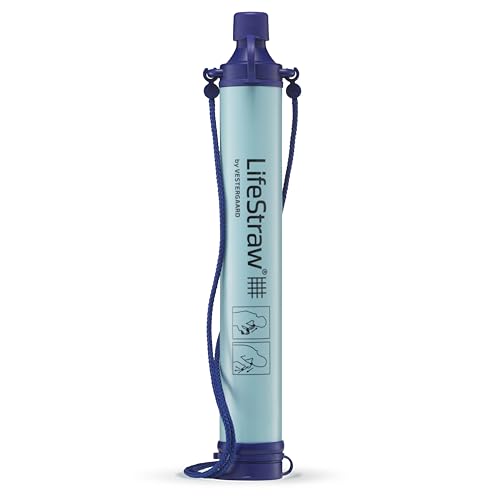
LifeStraw Personal Water Filter (Blue)

Sawyer Squeeze Water Filtration System

Sawyer SP128 Mini Water Filtration System

Practical Survival 5-Pack Emergency Water Straws

NatureNova Personal Water Filter Straw
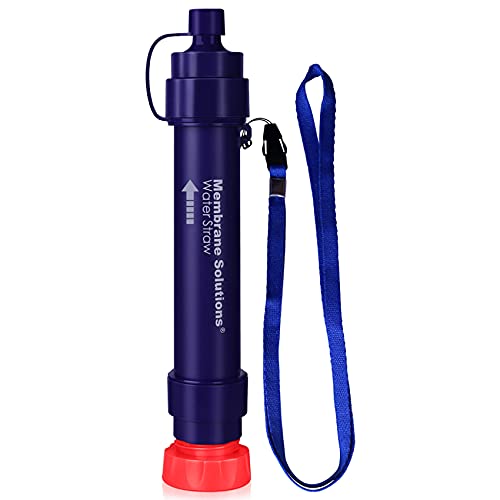
Membrane Solutions S2 Detachable Water Filter Straw

Yuclet Emergency Water Filter Straw (2 Pack)

LifeStraw Peak Series Personal Water Filter
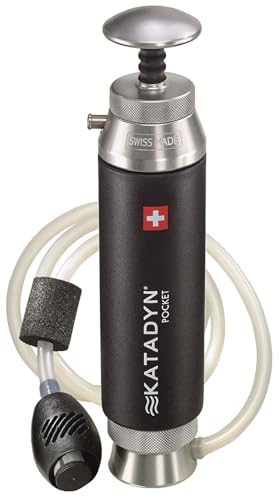
Katadyn Pocket Ceramic Hand Pump Water Filter

Katadyn Hiker Pump-Action Water Filter
The Details Behind The Selections
The original LifeStraw earned its reputation by doing one job well: turning suspect creek water into something safe to drink through a simple straw. At a featherweight build that disappears into a hipbelt pocket, it pairs naturally with a soft flask on day hikes or sits in a bug-out bag for emergencies. Solo backpackers who prize simplicity over flow rate tend to gravitate toward this exact tool.
It’s the straw format that defines the use case. You drink directly from the source, so there’s no extra bottle or pumping action to manage on the move. First-time filter shoppers who want a no-learning-curve option often start here.
Strengths Worth Knowing
- Ultralight carry weight suitable for fastpacking and thru-hikers counting every gram
- Straw design lets you drink straight from streams without a second vessel
- Recognized by emergency-prep circles for inclusion in go-kits
- No moving parts means nothing to break mid-trip
Things To Consider
- Sipping directly from a murky creek in cold weather takes commitment
- Flow rate slows noticeably as the filter nears the end of its life
Who It Suits Best
Solo hikers, international travelers, and emergency-preparedness builders who want the simplest possible setup with zero moving parts.
A Better Fit Elsewhere
Groups or cooks filling multiple bottles at camp should look at the Katadyn Hiker Pump-Action Water Filter for a faster group workflow.
The Sawyer Squeeze built its fan base by squeezing clean water into a standard soft flask, which means you filter while filling your drinking vessel rather than committing to a straw-only approach. Thru-hikers on the Pacific Crest Trail or Appalachian Trail often pack one because the system bends to fit almost any setup. Compared to the LifeStraw above, this is a filter-plus-bottle solution rather than a bare-drinking tool.
Its hollow-fiber membrane uses tiny tubes with pores small enough to trap bacteria, protozoa, and microplastics. The thicker walls in the fiber add longevity for trips that rack up serious mileage.
Features That Help
- Threads onto most standard 28mm bottles for flexible carry options
- Backflush cleaning extends useful life across many seasons
- Filter housing doubles as a gravity-drip setup when hung from a tree
- Lifetime rated for roughly 100,000 gallons under proper care
Points To Note
- Requires occasional backflushing, which adds a small learning curve
- Not the right tool for filling multiple large pots quickly
Quick Facts
Made For
Thru-hikers and trip leaders who want one filter that handles drinking, cooking water, and camp cleanup without changing systems.
Look Elsewhere When
Ultralighters focused purely on gram-count should consider the Sawyer SP128 Mini Water Filtration System, which strips down to the essentials.
The Sawyer Mini crams the same 0.1-micron hollow-fiber membrane as its bigger sibling into a body that fits in the palm of your hand. At about 2 ounces, it disappears into a running vest pocket or a day-hike lumbar pack. For runners, bikepackers, and fastpackers, that weight savings justifies picking the smaller housing over the full-size Squeeze.
Filtration performance matches the category standard: bacteria, protozoa, and cysts are blocked at the source. The trade-off shows up in flow rate, which trails the standard Squeeze when water is murky.
Why It Works Well
- Palm-sized footprint for stashing in small pockets or pouches
- Same 0.1-micron membrane tech found in larger Sawyer filters
- Inline use with hydration bladders for hands-free drinking
A Few Limitations
- Smaller surface area clogs faster in sediment-heavy water sources
- Lower flow rate means slower fills at camp
- Requires the included syringe for proper backflushing
Best Suited To
Ultralight backpackers and trail runners who want proven Sawyer filtration without the bulk of a full-size squeeze system.
Skip It When
You’re filtering for a group or cooking large quantities; the Katadyn Hiker Pump-Action Water Filter handles higher-volume needs more easily.
The Practical Survival pack solves the redundancy problem that solo straws can’t: if one clogs or gets lost, four backups ride in your pack. With five straws totaling around 10 ounces in a small bundle, you can stash filters in the car, the go-bag, the kids’ backpacks, and still have spares. Emergency-prep households building layered kits often find this format more practical than a single premium unit.
Notable Gains
- Five filters distribute across kits and family members
- No expiration date allows long-term storage without rotation
- Lightweight 2 oz each for distributing weight across packs
- Straw format mirrors the LifeStraw approach for direct drinking
Honest Caveats
- Bulk format means you’re carrying redundancy you may not use
- Straw-only format has the same limits as the LifeStraw above for filling bottles
Perfect Match For
Emergency-preparedness families who want filters stashed in multiple vehicles, go-kits, and travel bags without buying five separate units.
Consider Something Else When
Active backpackers who want one high-performance filter for daily use should reach for the Sawyer Squeeze Water Filtration System instead.
The NatureNova straw uses a four-stage filtration chain rather than a single membrane, which gives it extra reach against sediments and odors at a wallet-friendly cost. New backpackers dipping a toe into backcountry filtration often start here because the entry price keeps the commitment small. The build leans toward casual day hikes and weekend trips rather than long-distance treks.
The Practical Payoff
- Four-stage chain tackles sediment that single-membrane straws can miss
- Lower price point for first-time filter shoppers testing the concept
- PP cotton layer catches larger particles before the membrane
- Fits the same hydration-pack slot as other standard straws
Where It May Fall Short
- Less name recognition than LifeStraw or Sawyer for support and warranty
- Flow rate varies more between units than established brands
Who Should Grab It
Beginner hikers and casual campers building their first filter kit on a tight budget.
Another Choice May Suit
Thru-hikers who need proven longevity should pay more for the Sawyer SP128 Mini Water Filtration System.
The S2’s detachable two-stage setup is what makes it interesting: you can use just the prefilter stage for clearer sources, then swap in the finer stage for murky puddles. Backpackers who cross varied terrain appreciate that flexibility. Compared to a fixed-membrane straw, this one adapts without forcing you to swap entire units.
Useful Highlights
- Two-stage design adapts from clear streams to murky sources
- Detachable construction makes field cleaning simpler
- Compact profile fits in most running vest pockets
- Independent testing reported against common NSF/ANSI protocols
Practical Considerations
- Two stages mean more parts to keep track of on the trail
- Detach point can leak if not reseated carefully after cleaning
The Right Fit
Hikers who cross varied water-source quality and want a filter that adjusts to the conditions instead of forcing one setup.
Reach For A Different Pick When
You want the simplest possible straw with zero maintenance; the LifeStraw Personal Water Filter (Blue) has fewer moving parts.
Two straws in a single pack hits a sweet spot for partners hiking together or parents building a starter kit for older kids. Each Yuclet unit runs through a 0.1-micron membrane and is rated for about 1,300 gallons of clean drinking water. That capacity comfortably covers multi-day backpacking trips for two without forcing anyone to share a single straw.
What Makes Sense
- Two-pack suits couples sharing one purchase decision
- 0.1-micron rating matches category expectations
- SGS-tested build for independent quality verification
- Reported capacity supports multi-day trips for pairs
Less-Strong Areas
- Less widely adopted than LifeStraw for community knowledge and tips
- Straw-only format has the same filling limitations as other straws here
Who Will Love This
Hiking partners and parents introducing teens to backcountry filtration who want a two-unit starter without overspending.
Swap It Out When
You’re heading out solo on a long-distance trek; the Sawyer Squeeze Water Filtration System gives you one high-performance unit instead.
The Peak Series is what happens when LifeStraw goes back to the drawing board on a product that already worked. The grip got reworked, the flow rate got faster, and the body uses materials the brand describes as more sustainable. Style-conscious hikers who want a recognizable brand with refreshed ergonomics tend to land on this version over the original.
Advantages To Know
- Redesigned grip handles better with cold or wet hands
- Faster flow rate than the classic LifeStraw above
- Sustainable materials align with low-impact packing preferences
- No extra parts to keep track of in the field
Small Caveats
- Premium over the original LifeStraw for incremental improvements
- Straw format still requires direct drinking from the source
Feature Card
Built With In Mind
Hikers who already trust the LifeStraw platform and want the modernized version with better grip and faster sipping.
Not Your Match When
Budget shoppers buying a first filter; the original LifeStraw Personal Water Filter (Blue) covers the same basics for less.
The Katadyn Pocket belongs to a different category from the straws above: it’s a pump-action hand unit built for sustained use across years and decades. The cleanable filter element means you can scrub it back to flow rather than replacing cartridges, which is why long-term trip planners and cabin owners lean toward this one. It’s heavier than a straw, but the lifespan justifies the trade for serious users.
Good Reasons To Consider
- Ceramic element cleans and restores flow for repeated long-term use
- Field output around 1 liter per minute for fast fills
- Robust metal housing holds up to rough packing and repeated handling
- Capacity rated up to 13,000 gallons depending on source water
Trade-Offs To Consider
- Heavier carry weight than straw or squeeze alternatives
- Pumping action requires setup time at each water source
- Premium positioning puts it above entry-level budgets
Key Product Details
Whose Shelf It Belongs On
Long-term campers, cabin owners, and preparedness households who want a filter that lasts decades instead of seasons.
Where Another Pick Suits Better
Day hikers and thru-hikers focused on weight should pick the Sawyer SP128 Mini Water Filtration System instead.
The Hiker brings Katadyn’s pump-action approach down to a backpackable 11-ounce package. For group camps where one person handles water for the cook setup, pumping into a shared pot beats sipping through straws. Trekkers and base-camp cooks appreciate that the Hiker runs without batteries or cartridges, just arm power and clean water.
Positive Points
- Pump action fills group quantities faster than straw sipping
- 11 oz carry weight sits between ultralight straws and heavy-duty pumps
- Microfilter cartridge handles bacteria and protozoa across sources
- No batteries or cartridges to replace in the field
Possible Compromises
- Setup and pumping take more time than squeezing a bottle
- Not the right pick if you want to drink while walking
Right Fit For
Group campers and base-camp cooks filling cook pots and shared bottles without managing straws or inline sipping.
A Better Fit Elsewhere
Solo thru-hikers who filter on the move should reach for the Sawyer Squeeze Water Filtration System for a faster hands-free approach.
Choosing A Filter That Fits Your Route
Selecting the right backcountry water filter starts with how you hike, not the brand on the box. Solo day hikers have very different needs than base-camp cooks filling a communal pot, and a heavy ceramic pump makes no sense for a fastpacker counting grams.
Flow Rate Versus Weight
Flow rate determines how fast you fill a bottle, but higher flow usually means more membrane surface area, which means more weight in your pack. Straw-style filters sip slowly but weigh almost nothing. Pump-action units push liters per minute but add ounces and setup time. Match the trade to your trip: ultralight fastpackers favor straws and squeezes, while group camps benefit from higher-flow pumps.
Micron Rating And What It Blocks
A 0.1-micron filter, common across the Sawyer and LifeStraw lines, blocks bacteria, protozoa, and cysts. That covers the main wilderness concerns in North American backcountry. Heavily polluted or stagnant water sources may need additional treatment, but for most alpine creeks and lakes, a 0.1-micron membrane handles the job. Ceramic elements like the Katadyn Pocket use similar microfiltration but with field-cleanable surfaces.
Lifespan And Maintenance
Cartridge lifespan ranges from hundreds of gallons for compact membranes to tens of thousands for ceramic elements. Hollow-fiber filters like the Sawyer Squeeze recover flow through backflushing with clean water. Ceramic filters scrub clean in the field. Either approach extends useful life, but the maintenance habit matters more than the rating printed on the box.
Format And Carry Style
Straw filters drink directly from the source, which works for solo hikers but slows down bottle filling. Squeeze filters thread onto standard bottles for filtering-while-filling. Pump-action units produce the most water per minute but require setup time at each source. Choose the format that matches your hiking rhythm, not just your pack space.
Key Points Before You Decide
Pitfalls First Timers Hit
New filter shoppers often grab a straw and expect it to fill bottles like a pump. Straws are drinking tools, not filling tools. Others pick the highest-capacity ceramic pump for a fastpacking trip and carry ounces they don’t need. Match the tool to the route: solo day hikes favor straws and squeezes, group camps favor pumps. Avoid filters that lack verified micron ratings; anything above 0.2 microns misses the smaller pathogens that matter most.
Why Top-Tier Costs More
Premium ceramic pumps like the Katadyn Pocket cost more because the housing and cleanable element outlast hollow-fiber cartridges by orders of magnitude. The upgrade pays off for long-term trip planners, cabin owners, and preparedness households who filter thousands of gallons over years. For seasonal backpackers who replace gear every few years anyway, a mid-priced squeeze or straw delivers the same daily filtration at a fraction of the weight and cost.
Frequently Asked Questions
How Often Should I Backflush A Hollow-Fiber Filter?
Backflush whenever flow slows noticeably, which usually means every few days on a multi-day trip. Carry a clean syringe or use a soft flask to push clean water backward through the membrane.
Can Backcountry Water Filters Remove Viruses?
Standard 0.1-micron filters block bacteria and protozoa, but most viruses are smaller. For international travel or suspect water sources, pair a filter with chemical treatment or use a purifier rated for viruses.
Do Straw Filters Work For Filling A Water Bottle?
No. Straw filters are designed to drink directly from the source. To fill a bottle, you need a squeeze, gravity, or pump system. The Practical Survival straws and LifeStraw originals fit the same direct-drinking niche.
How Long Does A Personal Filter Last In Storage?
Hollow-fiber membranes and ceramic elements both store well for years when kept clean and dry. Practical Survival and LifeStraw products carry no expiration date, so they fit long-term emergency kits without rotation.
Is Pump Action Worth The Extra Weight?
Pump filters like the Katadyn Hiker shine at base camp, where one person fills group cookware. For moving fast on a solo hike, the slower sipping of a straw or squeeze saves weight and time. Match the format to the trip.
The Takeaway
Backcountry water filters fall into three rough families: straw-style for ultralight solo sipping, hollow-fiber squeezes for flexible filtering on the move, and pump-action units for higher-volume group use. Match the format to your trip, the micron rating to your water sources, and the maintenance habit to your willingness to clean in the field. The right tool disappears into your routine and keeps your water safe without thinking about it.