
A bad sleeping pad turns a dream trip into a night of hip-bone regret. This roundup sorts ten backcountry sleeping pads by the realities you actually face: long mile days, cold ground, rocky tent platforms, and the occasional “why did I bring this” moment. Foam or inflatable, ultralight or cushioned, the right pad matches your trip, your pack, and your shoulders.
A Snapshot Of The Selections

Therm-a-Rest Z Lite Sol Sleeping Pad
NEMO Equipment Switchback Foam Sleeping Pad
Therm-a-Rest Z Lite Original Sleeping Pad

Big Agnes Rapide SL Insulated Sleeping Pad

Teton Outfitter XL Sleeping Pad

Big Agnes Pumphouse Ultra Multi-Use Pump

INVOKER Self-Inflating Camping Pad (Green)

INVOKER Connectable Sleeping Pad (Blue)

INVOKER Connectable Sleeping Pad (Green)

Elegear 4″ Thick Insulated Sleeping Pad
A Closer Look At Each Pick
The Z Lite Sol is the foam pad that refuses to quit, and for thru-hikers logging long-mile days, it solves the eternal pack-weight debate without dropping comfort to zero. Closed-cell foam (dense, non-inflatable padding that bounces back when stepped on) keeps the pad light and nearly indestructible, while the accordion fold slips behind a pack or straps to the outside of a frame. You give up the plushness of an inflatable, but in trade you get a pad that can’t pop, can’t deflate, and won’t punish you for tossing it onto gravel.
The “Sol” version adds a reflective ThermaCapture surface (a heat-bouncing coating that sends warmth back toward your body) for cooler nights, so it pulls double duty from spring desert sections to shoulder-season alpine starts. Most backpackers find it warm enough down to freezing when paired with a typical three-season bag.
The Value In It
- Foam build shrugs off rocks, pine needles, and pet claws that would puncture an inflatable.
- Reflective layer adds real warmth for shoulder-season trips in the 30s Fahrenheit.
- Slips onto the outside of a pack, freeing internal volume for food and shelter.
- For most three-season routes it removes the “did I forget to inflate?” worry entirely.
Things To Consider
- Bigger packed size than the NEMO Switchback sitting next in this roundup.
- Foam thickness is thinner than inflatable pads, so side sleepers with sensitive shoulders may feel the ground through the night.
Built With In Mind
Thru-hikers and ultralight travelers who want a pad that survives abuse, packs outside the bag, and adds warmth without weight.
Reach For A Different Pick When
Side sleepers craving plush comfort should look at the Big Agnes Rapide SL Insulated Sleeping Pad, which delivers a much thicker sleep surface at the cost of a few more ounces.
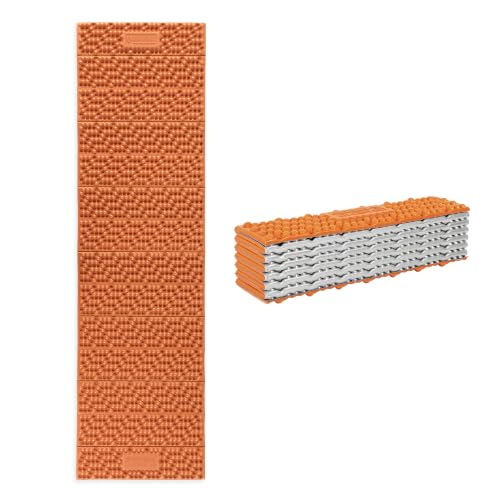
Where the Therm-a-Rest Z Lite Sol solves warmth, the NEMO Switchback solves packing volume. Its hexagonal nesting pattern lets taller foam nodes fold into tighter gaps, so the rolled pad disappears behind a frameless pack or tucks into a bear-canister lid. Minimalists who count cubic inches tend to gravitate toward this design.
Dual-density foam (two foam layers of different firmness stacked together) puts softer nodes on top for comfort and firmer foam below for ground feel, so it balances cushion against puncture resistance. Cold-soak mornings are still foam-cold, but you trade some warmth for the smaller footprint.
Reasons It Performs
- Hex pattern collapses tighter than the Z Lite Sol, reclaiming pack space.
- Taller foam nodes create more room under your bag, helping insulation loft (fluff up to trap warm air) rather than getting crushed flat.
- Closed-cell foam stands up to repeated stuffing inside a pack without delaminating.
- Useful as a sit pad during breaks, a knee pad in the snow, and an emergency windbreak.
Worth Noting
- No reflective coating, so it runs cooler than the Z Lite Sol on frosty nights.
- Thinner than the Teton Outfitter XL foam pad reviewed later.
Right Fit For
Ultralight backpackers and bike-packers prioritizing tight pack geometry over peak insulation.
Swap It Out When
Cold-weather campers should grab the Therm-a-Rest Z Lite Sol Sleeping Pad for its reflective heat layer.
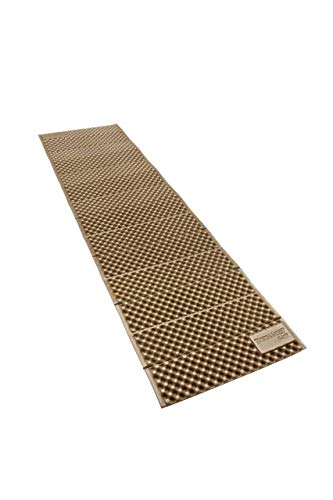
The Original is the grandparent of every foam pad on this list, and that history shows in how confidently it just works. Strip away the reflective layer of the Sol, drop a few dollars, and you get the same accordion fold, the same dimpled underside, and the same “I can stand on it in the parking lot” durability. It’s the pad that scouts learn on and that veterans still keep in the trunk.
For weekend trips and casual overnights, the Original handles rocks, cots, and bunk-bed platforms with equal ease. You give up the Sol’s heat-bounce, but the closed-cell foam still traps warm air in its dimples.
What Stands Out
- Lowest barrier to entry for a quality foam pad in this roundup.
- Folding design packs flat against a pack’s frame or slides into a cargo box.
- Dimpled underside catches warm air, helping bags hold loft on cool nights.
- Indestructible enough to lend to friends without losing sleep over it.
Honest Caveats
- No reflective coating, so it runs cooler than the Sol on frosty nights.
- Thinner profile makes it less comfortable for restless side sleepers on hardpan ground.
Best Suited To
New backpackers, scout troops, and anyone wanting a no-fuss foam pad for occasional trips.
Not Your Match When
Shoppers chasing maximum warmth from foam should step up to the Therm-a-Rest Z Lite Sol Sleeping Pad covered earlier.
The Rapide SL is what you reach for when the foam pads reviewed above feel like a compromise you no longer want to make. Built on double rip-stop nylon (a nylon fabric woven with reinforcing threads at regular intervals to stop small tears from spreading) with aviation-grade TPU lamination (a thermoplastic polyurethane film heat-bonded to the fabric for airtightness), it inflates into a plush, three-season sleep platform and deflates into a stuff sack the size of a water bottle. The wide-regular cut gives restless sleepers room to roll without falling onto the tent floor.
An R-value of 4.8 (a standardized insulation rating, where higher numbers mean more warmth from the ground) puts it firmly in shoulder-season territory, which is exactly where most long-distance backpackers live for two-thirds of the year. Compared to the foam pads earlier in this list, you trade puncture-proof simplicity for genuine cushion.
What Helps Most
- Double rip-stop shell holds up to abrasion from granite slabs and gritty tent floors.
- R-value of 4.8 covers spring, summer, and most fall trips without cold-soak waking.
- Lightweight profile keeps pack weight reasonable for multi-day routes.
- Wide-regular footprint gives side sleepers room to sprawl.
Trade Offs
- Inflatable construction means a patch kit belongs in your repair bag.
- Higher cost than any foam option in this roundup.
Key Product Details
Made For
Long-distance backpackers and shoulder-season travelers who want inflatable comfort without an alpine weight penalty.
A Better Fit Elsewhere
Shoppers camping in deep winter should consider the Elegear 4″ Thick Insulated Sleeping Pad covered later for higher insulation ratings.
The Teton Outfitter XL is what happens when a foam pad stops pretending to be a backpacking tool and leans all the way into basecamp comfort. Two inches of poly-canvas-covered foam cushions hips and shoulders on cot tops, and slip-resistant loops keep the pad centered through the night. It rolls up rather than folds, so storage leans toward a car trunk or a gear shelf, not a backpack.
Campers who already sleep on a cot or a raised platform appreciate that the foam thickness compensates for hard cot bars. It’s overkill for ultralight trips, which is exactly why it works for the use case it’s built around.
Where It Helps
- Thick foam handles cot bars and rocky car-camp platforms without bottoming out.
- Poly-canvas cover resists abrasion and wipes clean after muddy weekends.
- Roll-up storage keeps it ready to drop on the ground next to a tent or truck bed.
- No inflation means setup is unroll-and-lie-down.
A Few Limitations
- Bulk and weight rule it out for backcountry mileage.
- Foam alone gives less cold protection than an inflatable with a higher R-value.
Whose Shelf It Belongs On
Car campers, truck-bed sleepers, and anyone layering cushion on top of a cot or bunk platform.
Look Elsewhere When
Backpackers counting ounces will be happier with the Therm-a-Rest Z Lite Original Sleeping Pad, which trades cushion for packability.
The Pumphouse Ultra is the rare accessory that earns its place in the pack rather than the junk drawer. It attaches to a compatible Big Agnes valve and inflates your pad without breath, which matters more than you’d think at altitude when lungs are already working overtime. Aviation-grade ultralight fabric keeps weight down while the seams stay waterproof.
Once the pad is inflated, the Pumphouse pulls double duty as a stuff sack, dry sack, pillow, or even a backcountry shower. Multi-use design like this is the kind of gear consolidation that pays off over a long trip, and most backpackers find the inflation savings worth the small weight.
Real-World Strengths
- Cuts pad inflation time dramatically compared to mouth-blowing a wide inflatable.
- Doubles as a stuff sack, so it earns its packed weight on every trip.
- Waterproof fabric keeps electronics and sleeping layers dry in wet camps.
- Compatible with Big Agnes valves across multiple pad models.
Points To Keep In Mind
- Works only with valves on compatible Big Agnes pads, so check your pad’s valve type before packing it.
Who It Suits Best
Big Agnes pad owners and anyone tired of mouth-inflating wide sleeping pads after long days.
Consider Something Else When
If you use foam pads exclusively, this accessory does nothing for your setup and the NEMO Equipment Switchback Foam Sleeping Pad already needs no inflation.
Self-inflating pads solve a problem most beginners don’t realize they have: the ten minutes of panting into a valve at the end of a tired day. Open the double valve, the open-cell foam core (foam with interconnected air channels that draws air in on its own) expands, and the pad inflates itself while you pitch the tent. A few breaths top it off.
The INVOKER version sits at 3.15 inches thick with a 30D knit fabric face and a waterproof TPU under-layer (a thin thermoplastic polyurethane film bonded to the fabric that blocks moisture from seeping up through the pad). At 75 by 24 inches, it’s a generous rectangle for restless sleepers and a comfortable ride for casual car-camping or short backpacking trips.
The Case For It
- Self-inflating core removes most of the lung work at setup.
- 30D knit fabric feels softer against skin than bare rip-stop nylon.
- Waterproof TPU layer blocks ground moisture from seeping through.
- 3.15-inch thickness cushions hips and shoulders better than thin foam pads.
Some Limits To Know
- Bulkier packed size than dedicated ultralight inflatables like the Big Agnes Rapide SL.
- Self-inflating foam absorbs moisture over time and benefits from occasional airing out at home.
Perfect Match For
Weekend campers and casual backpackers who want inflatable comfort without the inflation workout.
Where Another Pick Suits Better
Thru-hikers counting every cubic inch should look at the NEMO Equipment Switchback Foam Sleeping Pad earlier in this list.
This is the “share the platform” version of the INVOKER lineup, and the difference matters. Horizontal air chambers contour to your body, the built-in pillow supports your neck without a stuffed jacket, and the side clips let two pads lock together into a single queen-sized sleep surface. Couples and parent-kid duos tend to love it once they realize how a unified platform changes the feel of the tent.
A built-in foot pump means no mouth blowing and no extra pump stuffed into the bag. You press, the chambers fill, and you walk away. Most campers find the setup fast enough to do in a headlamp-lit tent at midnight.
Everyday Wins
- Side clips merge two pads into one wide platform for couples or kids.
- Foot pump inflation cuts setup time and saves lung capacity for the hike.
- Built-in pillow removes one item from your pack list.
- 4-inch thickness cushions hips and shoulders generously.
Where It Is Less Suited
- Heavier and bulkier than solo-oriented pads reviewed above.
- 40D nylon with TPU coating (a coated fabric with a thin thermoplastic polyurethane layer for moisture resistance) is durable but heavier than ultralight shells like the Big Agnes Rapide SL.
Who Should Grab It
Two campers sharing a tent who want a stable, unified sleep platform without wrestling a queen-sized air mattress.
Skip It When
Solo backpackers chasing ounces should pick up the Therm-a-Rest Z Lite Sol Sleeping Pad instead.
The Green Connectable shares the same internal architecture as the Blue version reviewed above: horizontal air chambers, built-in pillow, foot pump inflation, and side clips for joining. You’re choosing between colorways with identical specs, which sounds trivial until you’re the person whose partner refuses to sleep on “the wrong color.”
Performance and dimensions stay consistent across both pads, so the choice really is about aesthetics or stocking at your retailer. Either way, the build delivers the same 4-inch-thick comfort that side sleepers appreciate.
Useful Strengths
- Same side-clip system as the Blue version, so two pads join into a wide platform.
- Foot pump fills the chambers without breath or extra accessories.
- 40D nylon with TPU coating resists moisture and scratches from rocky tent floors.
- Built-in pillow keeps the packing list lean for car camping and short routes.
Worth Bearing In Mind
- Heavier packed weight than solo foam pads in this roundup.
- Pairs only with another matching pad, so the clips do nothing for solo campers.
Who Will Love This
Campers wanting the connectable platform in a green colorway to match tents, tarps, or personal taste.
Another Choice May Suit
Solo travelers get more value from the INVOKER Self-Inflating Camping Pad (Green) covered above.
The Elegear is built for the nights the rest of this roundup politely declines. A 9-layer insulation system pushes the R-value to 9, which puts it in serious four-season territory and means the pad holds warmth even when the ground radiates cold air. Four inches of air-chamber thickness cushions the body and adds another buffer between you and frost-heaved tent platforms.
Compared to the Big Agnes Rapide SL Insulated reviewed earlier, you trade weight and packability for raw cold-weather performance. Winter campers, alpine bivouac setters, and shoulder-season hunters tend to be the audience here.
Notable Upsides
- R-value of 9 keeps sleepers warm in deep cold and on frozen ground.
- 4-inch air chambers deliver generous cushion for side sleepers and restless backs.
- Insulation layers also reduce convective heat loss inside the pad structure.
- Wide platform gives room to roll without falling off.
Practical Considerations
- Bigger and heavier than three-season inflatables, so it’s a winter-trip tool, not a summer-through-hike choice.
- Higher cost than lighter inflatables in this roundup.
Built With In Mind
Winter campers, alpine bivouackers, and cold-soak hunters who need reliable ground insulation on frozen tent sites.
A Better Fit Elsewhere
Three-season backpackers will be happier with the lighter Big Agnes Rapide SL Insulated Sleeping Pad from earlier in this list.
What To Weigh Before Choosing A Backcountry Sleeping Pad
A sleeping pad does three jobs at once: it cushions your body, it blocks cold transfer from the ground, and it packs into whatever space you have left in your kit. The right choice depends on which of those jobs matters most for your trip. Foam pads win on durability and weight but lose on comfort and packed size. Inflatable pads flip that trade, with more cushion and warmth per ounce, but more vulnerability to puncture.
Match The Pad To The Trip
Most three-season backpacking lives comfortably in an R-value range of 3 to 5, which keeps the pad light while still handling frosty nights above freezing. Winter trips and high-altitude bivouacs demand higher R-values because frozen ground sucks heat out of a sleeping bag faster than cold air does. Foam pads generally run cooler, while insulated inflatables trap more warmth with internal layers.
Comfort Comes Down To Thickness And Sleep Style
Side sleepers need more thickness under the hip and shoulder to avoid ground pressure, while back sleepers can usually get away with thinner pads. Inflatable designs at three to four inches tend to satisfy side sleepers without crushing the packed size. Foam pads at one inch or so work best for back and stomach sleepers who don’t put a hip bone into the ground.
Weight, Packed Size, And Inflation Style
Counting grams and cubic inches means foam pads almost always win. They strap to the outside of a pack or slide behind the frame. Inflatable pads compress into stuff sacks the size of a Nalgene bottle but require breath or a pump, which is why the Big Agnes Pumphouse Ultra Multi-Use Pump exists. Self-inflating designs split the difference, doing most of the work on their own.
Key Considerations Across These Picks
Mistakes Worth Dodging
Choosing a pad by R-value alone ignores comfort, and chasing low weight with a thin foam pad can leave side sleepers awake at 2 a.m. Buyers who skip checking valve compatibility on inflatables end up with pumps that don’t fit. Inflatable pad owners who forget patch kits discover the limitation at the worst possible moment, while foam pad owners never have that problem.
Where The Extra Money Goes
Premium inflatables spend the budget on lighter fabrics, better welds, and higher R-values, which is why the Big Agnes Rapide SL Insulated and Elegear 4″ sit above foam pads on price. The upgrade buys weight savings, better warmth-to-weight ratios, and thicker comfort, but the trade-off is puncture risk. Higher cost also reflects tighter dimensional tolerances, meaning the pad inflates more evenly and packs smaller. For most backpackers, the upgrade pays off on trips longer than two nights where every ounce compounds.
Frequently Asked Questions
How Thick Should A Backcountry Sleeping Pad Be?
Most backpackers do well with 2.5 to 3.5 inches of inflatable pad or a foam pad around 0.75 to 1 inch. Side sleepers should aim for the higher end of inflatable thickness to keep pressure off hips and shoulders.
Are Foam Pads Warmer Than Inflatable Pads?
Not typically. Foam pads usually have lower R-values than insulated inflatables, but the reflective coating on Therm-a-Rest’s Sol pads narrows that gap. For deep cold, an insulated inflatable with an R-value above 5 generally outperforms foam.
Can You Use A Backcountry Sleeping Pad For Car Camping?
Absolutely. Foam pads like the Teton Outfitter XL shine on cots, while self-inflating and insulated inflatables handle car-camp comfort with room to spare. Match thickness to how soft the platform underneath already is.
How Do You Clean And Store A Sleeping Pad?
Wipe down with mild soap and water, let it dry fully, then store unrolled or loosely rolled in a cool, dry place. Long-term compression damages foam and can delaminate coatings on inflatables.
What Should You Do If An Inflatable Pad Springs A Leak?
Carry a patch kit, mark the leak with soapy water, clean the area, apply the patch, and wait the recommended cure time before reinflating. Field repairs buy you a night; permanent fixes happen at home.
The Takeaway
The right backcountry sleeping pad fits your trip, your pack, and your sleep style. Foam handles abuse, inflatables deliver comfort, and insulated designs carry you into shoulder-season cold. Pick the one that solves the problem you’ll actually face on your next night out.