
A doorway that takes the brunt of sideways rain, a patio that bakes in afternoon sun, a side yard that needs a privacy wall on demand: awnings solve problems you notice only after living without one. The right match depends on the surface you need to cover, the weather you actually face, and whether you want a permanent install or a fabric you can swap. This roundup breaks down nine awnings across door canopies, retractable patio shades, RV fabric replacements, and side screens, so you can pick based on fit rather than guesswork.
The Main Contenders

GVCSTXP Polycarbonate Door Awning 60x110cm Smoke Gray

Xenjum 18.5oz RV Awning Fabric Replacement (Black Fade, 16′)

Xenjum 19.5oz 5-Layer RV Awning Fabric (15’2″)

Sunbrella Marine 60in Awning Fabric (Marine Blue)

ADVANING Luxury 16’x10′ Electric Retractable Awning (Heather Gray)

VIVOHOME Polycarbonate Door Awning 38″x78″ Brown

VIVOHOME Polycarbonate Door Awning 38″x115″ Brown
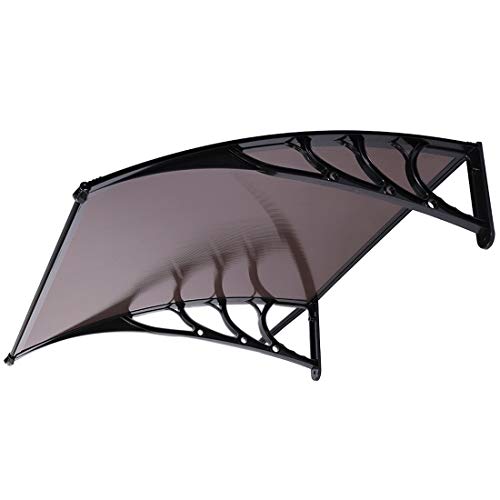
VIVOHOME Polycarbonate Window Awning 38″x40″ Brown

ANTSKU 276″x71″ Retractable Side Awning (Grey)
The Picks, Examined More Closely
Compact in footprint, serious in spec: the GVCSTXP pairs a smoke gray polycarbonate panel (a tough, lightweight thermoplastic that shrugs off impact and UV) with reinforced aluminum alloy brackets, which is a step up from the ABS plastic arms found on many small door canopies. Owners commonly describe the 60 by 110 cm panel as a tidy fit for a single doorway, a kitchen window, or the side entry of a small shop.
For most homes, the wider temperature tolerance and claimed 220 lb load rating mean you can leave it up year-round without worrying about the first cold snap. The integrated drainage channel helps direct water away from the threshold, so you’re not stepping into a puddle mid-storm.
Noteworthy Benefits
- Polycarbonate panel rated to handle broad temperature swings, useful for climates that swing from freezing winters to hot summers.
- Aluminum alloy brackets resist the rust that plagues steel arms in coastal or humid regions.
- Built-in drainage groove helps keep the entryway drier during heavy rain.
- Neutral smoke gray tone reads as modern without clashing with brick, siding, or stucco.
Worth Noting
- At 60 by 110 cm, the panel is generous for a single door but too narrow for a double storefront, so measure your opening first.
- Mounting hardware is the one part owners most often flag as the friction point during installation.
Who It Suits Best
Homeowners and small shop owners who need a fixed, year-round canopy over a single doorway or window in a climate that swings between extremes.
Where Another Pick Suits Better
Reach for the VIVOHOME 38″x115″ door awning instead when you need a wider, more traditional brown-toned canopy over a patio or French door.
An RV awning fabric is a heavy vinyl sheet that rolls out to shade a campsite, and it takes the worst of sun, wind, and road grime for years. The Xenjum 18.5oz replacement is built for that punishment: 18.5oz refers to the weight per square yard, a common measure of vinyl thickness where higher numbers mean tougher fabric. The proprietary vinyl blend is engineered to stay softer in the cold and resist the cracking and brittleness that ends most factory awning fabrics.
For most RVers, the 16′ size (with a 15’2″ finished fabric length) is the most common spec on modern coaches, which keeps measuring and ordering simple. The black fade color also hides tree sap and road dust better than lighter shades, a small but real quality-of-life win on long trips.
The Helpful Details
- Engineered 100% waterproof barrier that repels rain during multi-day rainy trips.
- UV-resistant blend helps the fabric hold up in full-sun desert campsites where unprotected vinyl chalks quickly.
- Universal fit for both electric and manual RV awning systems simplifies matching to your rig.
Trade Offs
- Replacement only: the existing awning hardware, arms, and roller tube must be in working order, or the new fabric won’t help.
- Vinyl this heavy benefits from a careful re-roll on the way home, so storage and transport matter.
Made For
Weekend RVers and trailer owners refreshing a tired, sun-baked awning on a coach that came off the lot several years ago.
Consider Something Else When
Step up to the Xenjum 19.5oz 5-layer replacement if you full-time in your RV and want thicker fabric that survives the harshest stretches of road and sun.
Thicker, heavier, and more layered than the previous Xenjum option, this 19.5oz rip-stop vinyl is engineered for RVers who treat their awning as a long-term fixture rather than a periodic refresh. Rip-stop means a reinforcing grid is woven into the vinyl, so a small puncture is far less likely to turn into a long tear. For full-timers and snowbirds, that extra margin matters during extended stays in punishing sun or wind.
You may find the UPF 50+ rating (a measure of how much UV the fabric blocks) the most underrated spec, because most owners don’t realize how much heat transfer a darker awning can cut at midday. The 16-foot fabric with a 15’2″ finished cut fits a wide range of modern motorhomes and travel trailers.
Key Advantages
- 5-layer vinyl construction adds meaningful puncture and tear resistance over single-ply options.
- 100% leak-proof build keeps heavy rain from dripping through seams during storms.
- UPF 50+ sun protection reduces radiant heat under the awning on bright afternoons.
- Compatible with both electric and manual awning systems, so it drops into a range of RV brands.
Honest Caveats
- Heavier fabric means re-rolling and stowing the awning takes a bit more muscle than thinner replacements.
- Higher material weight also means slightly slower deployment on a manual awning arm.
Best Suited To
Full-time RVers and frequent long-haul travelers who want a single replacement that survives multiple seasons of sun, storms, and road miles.
Skip It When
Pick the lighter 18.5oz Xenjum instead if you camp occasionally and don’t need the extra rip-stop reinforcement for daily exposure.
Sunbrella is the well-known name in outdoor fabric, and the Marine 6078 line is built for the worst UV conditions around boats and ocean-facing patios. Solution-dyed acrylic means the color pigment is added during fiber production rather than printed on the surface, so the marine blue holds its color far longer than standard fabric. Sold by the yard at 60 inches wide, it gives DIYers and custom shops a versatile material for replacing worn patio awnings, bimini tops, or even re-covering cushions on exposed benches.
You may find the cleaning routine refreshingly simple: a wipe-down with mild soap and water, then a rinse, is all the brand recommends. The fabric is breathable too, which means it doesn’t trap the musty moisture that plagues some vinyl options under awnings.
A Favorable Mix
- Solution-dyed acrylic resists fading much longer than printed outdoor fabrics, especially in direct sun.
- Breathable weave reduces the mildew risk common in tight, sealed vinyl under humid conditions.
- By-the-yard cut lets you order exactly the length your project requires, with less waste.
Small Caveats
- Fabric only, with no hardware included, so this suits DIYers and custom builds more than plug-and-play shoppers.
Feature Snapshot
Who Should Grab It
DIYers and small custom shops recovering a patio awning, boat shade, or outdoor cushion that needs serious color retention.
Another Choice May Suit
Choose the ADVANING Luxury retractable awning instead if you want a complete, motor-driven system rather than a fabric by the yard.
The ADVANING Luxury sits at the opposite end of the awning scale from the polycarbonate door canopies: a 16 by 10 foot motorized shade for a full patio, deck, or storefront. It ships fully assembled, so installation is mostly about mounting the cassette to a wall or header and running power to the motor. The heather gray canvas reads as a neutral patio accent, and the Easy Pitch adjustment lets you fine-tune the slope depending on the sun angle throughout the day.
For most backyards, the appeal is simple: a remote-controlled shade big enough to cover an outdoor dining set, retractable when you want open sky. Compared to the Xenjum RV fabrics above, this is a permanent residential install rather than a vehicle-grade replacement, so the comparison is more about the category of shade you need than direct competition.
Why It Works Well
- Electric motor and remote let you extend or retract the canopy without leaving your seat.
- 16 by 10 foot coverage shades a full patio set, hot tub, or storefront window line.
- Adjustable pitch system adapts the slope to the time of day for better sun control.
Points To Keep In Mind
- Requires a solid mounting surface and electrical access, so installation is more involved than a door canopy.
- Large retractable systems benefit from occasional retracting during high winds, which is normal owner practice rather than a flaw.
Perfect Match For
Homeowners with a patio, deck, or storefront facade who want push-button shade and have the wall space and power access to mount a large cassette.
Not Your Match When
Pick the Sunbrella fabric by the yard instead if you’d rather build or recover a smaller awning without an electric motor.
The VIVOHOME 38 by 78 inch brown canopy is the middle sibling in the brand’s polycarbonate line, and for many homes it’s the right size for a single front or back door. The polycarbonate panel pairs with ABS brackets (a tough, molded plastic that’s lighter and cheaper than metal but more vulnerable to UV over time) and an aluminum stripe along the front edge for rigidity. The brown tint blends nicely with wood-tone doors, brick facades, and earth-toned siding.
You may find the 78-inch depth enough to keep rain from blowing in during a sideways storm, which is the real test of a door canopy. Unlike the GVCSTXP above, this uses ABS rather than aluminum alloy brackets, so the construction story is more about affordability than all-metal durability.
Points In Its Favor
- Brown tint complements warm-toned doors and traditional exteriors better than clear or smoke panels.
- Aluminum front edge adds rigidity to a long panel without a metal frame across the whole canopy.
- Mid-range 38 by 78 inch size fits most standard single doors without trimming.
Less Ideal Details
- ABS brackets are more prone to UV wear over many years than the aluminum alloy arms on the GVCSTXP option.
- Width suits a single door, so wider entries will need a second canopy or a different size.
Key Product Details
Who Will Love This
Homeowners replacing or adding a door canopy on a single front or back entry where brown tones match the existing trim.
Look Elsewhere When
Pick the GVCSTXP 60x110cm canopy instead if you want aluminum alloy brackets and a smoke gray finish for year-round coastal or northern climates.
The wider 115-inch sibling in the VIVOHOME line stretches across double doors, French doors, or a wide sliding-glass entry, which is exactly where a narrower canopy leaves you half-covered. The build mirrors the 78-inch model with a polycarbonate panel, ABS brackets, and an aluminum front edge, so the trade-off here is coverage rather than materials.
For most homes with a wide patio entry, the extra 37 inches of width is the difference between stepping out dry and stepping out damp. The honest read is that you give up a bit of overhang rigidity, since the longer panel flexes slightly more in heavy wind, but in return you get continuous coverage without seams.
Practical Pluses
- 115-inch width spans most French door and patio door sets in one panel.
- Same warm brown tone and aluminum front edge as the rest of the VIVOHOME line for a matched look.
- Polycarbonate panel keeps direct rain off the threshold during sideways storms.
Possible Compromises
- Longer panel puts more stress on ABS brackets during heavy gusts, a commonly noted concern in long-door installs.
- Two-person mounting is the practical reality with a panel this long, since solo handling gets awkward quickly.
Right Fit For
Owners of homes with wide French doors or sliding patio doors who want one continuous canopy instead of two side-by-side panels.
A Better Fit Elsewhere
Choose the VIVOHOME 38″x78″ version instead for a single standard door, where the smaller panel is easier to handle and install solo.
The smallest VIVOHOME in the roundup is sized for windows rather than doors, and the 40-inch depth keeps rain and direct sun off glass, AC condensers, or basement egress windows. The black bracket variant gives a slightly more architectural look than the matching brown arms on the door models, which can read as a deliberate contrast against lighter siding.
You may find this size just right for a kitchen window that gets punished by afternoon sun, or a side window where you want to reduce heat gain without committing to a full door canopy. Compared to the larger VIVOHOME panels, the lighter weight and shorter span make it a friendlier solo-install project.
The Upside
- 38 by 40 inch size is well-matched to standard residential windows without overhang overkill.
- Black brackets offer a subtle contrast against cream, white, or light gray siding.
- Compact panel keeps wind load low, which matters on exposed upper-story walls.
What To Weigh
- Smaller coverage area won’t shade a door, so this is a window-only solution in the VIVOHOME line.
- ABS brackets share the same long-term UV wear story as the larger VIVOHOME canopies.
The Right Fit
Homeowners shading a single window, basement egress, or AC unit where a door-sized canopy would be visually heavy and structurally unnecessary.
Reach For A Different Pick When
Pick the VIVOHOME 38″x78″ door awning instead when you need to cover a full doorway rather than a smaller window opening.
Side awnings solve a different problem than door canopies: privacy and wind screening along the edge of a patio, deck, or balcony. The ANTSKU pulls out to 276 inches wide and stands 71 inches tall, with a retractable design that rolls back into the post when you don’t need it. The aluminum alloy frame and 280g/m² polyester fabric (a measure of fabric density, where higher numbers mean thicker material) with PU coating handle the rain and UV exposure of an open patio edge.
For most balconies and side yards, the appeal is being able to drop a quick visual screen between you and a neighbor’s window without committing to a permanent fence. The honest read is that this is an accessory for an existing patio, not a primary shade solution like the ADVANING above.
The Practical Payoff
- 276 by 71 inch coverage is enough to screen a long side patio or balcony edge in one pull.
- Retractable design lets you open the space back up when privacy isn’t needed.
- Aluminum alloy frame resists rust in humid and coastal conditions better than steel alternatives.
- UPF 30+ polyester helps cut direct sun and wind on exposed patio edges.
Less-Strong Areas
- Requires two anchor points at the right distance, so installation planning matters for proper tension.
- Fabric benefits from a quick wipe-down after heavy pollen seasons, since the tight weave can collect surface dust.
Whose Shelf It Belongs On
Balcony and side-patio owners who want a flexible privacy and wind screen that retracts when the space is open again.
Where A Sibling Pick Shines
Pick the ADVANING Luxury electric awning instead when you need overhead sun protection rather than a vertical side screen.
What Matters Most Before Choosing Awnings
Match the Awning to the Opening
The first decision is the shape of coverage you actually need. Door canopies (the GVCSTXP and VIVOHOME line) are fixed polycarbonate panels suited to single entries, double doors, or windows. Retractable patio awnings (the ADVANING) deliver large overhead shade that rolls away. Side awnings (the ANTSKU) give you a vertical privacy and wind screen. RV fabrics (the Xenjum pair) are a separate category entirely, sized for camper roller tubes. Picking the wrong family is the most common reason an awning underperforms.
Material Choices and What They Mean
Polycarbonate is a tough, lightweight thermoplastic that shrugs off impact and UV. ABS is a molded plastic bracket material, affordable and light but more vulnerable to UV wear over many years. Aluminum alloy arms resist rust and handle temperature swings better, which matters in coastal and northern climates. Solution-dyed acrylic (the Sunbrella) holds color longest because the pigment is built into the fiber rather than printed on the surface. Heavier vinyl (the 19.5oz Xenjum) resists tearing better than thinner 18.5oz options, useful for full-time travelers.
Sizing and Installation Realities
Measure the actual opening, then add several inches of overhang on each side and at least 12 to 18 inches of depth in front of the door. Two-person mounting is the practical reality for any panel over 78 inches, since solo handling gets awkward and risky. Retractable side screens need two solid anchor points at the right span for proper tension. RV fabrics require a working roller tube and arms; the fabric alone won’t fix a failed mechanism.
Key Considerations Across These Picks
Where Shoppers Go Wrong
The most common mistake is buying on overall panel size without checking the depth, which is the measurement that actually keeps rain from blowing in sideways. Another is assuming all “outdoor” brackets are equal, when the difference between ABS plastic and aluminum alloy shows up after a few harsh winters. RV owners occasionally order the wrong fabric length, since the finished fabric is often a foot or two shorter than the listed awning size.
What The Higher Tier Buys
The jump to a premium pick like the Sunbrella fabric or the ADVANING electric retractable pays for two specific things: longer color life and easier daily use. Solution-dyed acrylic stays close to its original color across many seasons, while a motor-driven retractable turns a multi-minute manual job into a remote-control action. The 19.5oz 5-layer RV fabric adds rip-stop reinforcement that pays off on full-time rigs, where a single tear in a thinner fabric can shorten the awning’s life by years.
Frequently Asked Questions
What is the difference between a door canopy and a retractable awning?
A door canopy is a fixed polycarbonate or metal panel mounted permanently over an entry. A retractable awning is a larger motorized or manual shade that extends and rolls back on demand.
Are polycarbonate awnings strong enough for snow and wind?
Polycarbonate panels handle impact and temperature swings well, but heavy wet snow can still overload a flat-mounted panel. Sloped installation and occasional clearing help in snowy regions.
How do I know what size RV awning fabric to order?
Measure the existing awning from the center of one arm to the center of the other, and check the finished fabric length rather than the overall awning size, since the fabric is usually shorter than the frame.
Can I install a side awning on a rented balcony?
Many renters mount side awnings with non-permanent anchors or tension setups, but check your lease terms and avoid drilling into shared walls. A weighted base or clamp-style mount is often the safer route.
How do I clean a polyester side awning without damaging the coating?
A gentle wipe with mild soap and water, followed by a clear rinse, is enough for routine cleaning. Avoid harsh solvents or pressure washing, which can break down the PU coating over time.
The Takeaway
Awnings earn their place when the size, material, and mounting match the spot you actually need to cover. Start with the opening, then the climate, then the style of use: that’s how the right pick from this list becomes obvious rather than a guess.