
Saturday mornings used to mean wrestling with a loud gas mower before the heat set in. If your weekends have started to feel more like yard duty than downtime, a robot mower can quietly reclaim those hours. The seven options below cover everything from a tiny urban patch to a hilly half-acre, including a couple of corded-battery push mowers for homeowners who still like the tactile feel of a walk-behind.
A Side-By-Side Look

Sunseeker X3 Plus Robot Lawn Mower (0.3 Acre)

ANTHBOT M5 LIDAR Robotic Lawn Mower (1/8 Acre)
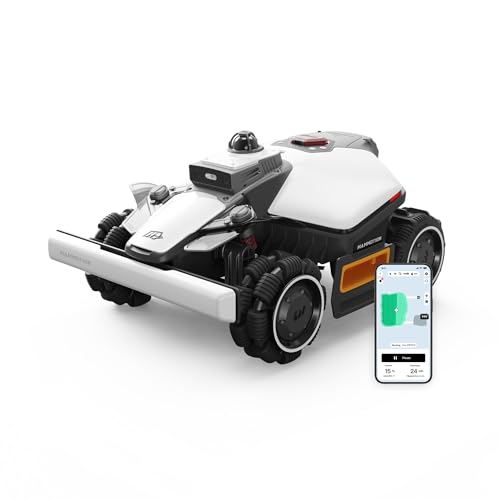
Mammotion LUBA mini 2 AWD Robot Lawn Mower (0.37 Acres)
YARDCARE V100 Robot Lawn Mower (1600 sq ft)

Sunseeker X7 AWD Robot Lawn Mower (0.75 Acre)

Litheli 40V 16-Inch Cordless Lawn Mower

Litheli 14-Inch Cordless Lawn Mower
A Closer Look At Each Pick
Suburban lots up to roughly 13,000 square feet sit squarely in this mower’s wheelhouse, and the wire-free setup removes the most painful part of installing a robot mower. AONavi pairs RTK positioning (satellite-based location tracking that delivers centimeter accuracy) with VSLAM (visual simultaneous localization and mapping, where the camera builds a map while tracking position) to plan routes and stitch together front, back, and side lawns without burying a single boundary wire.
Daylight hours unlock a vision AI stack and ultrasonic sensors that help the unit recognize obstacles before contact. Compared to the more affordable ANTHBOT M5 a few rows down, the X3 Plus adds RTK refinement that holds up better in tricky yard shapes, though it isn’t built for the steep grades the LUBA mini 2 can climb.
A Few Highlights
- RTK plus VSLAM dual navigation keeps routes consistent even when trees or fences block part of the sky.
- Camera and ultrasonic sensors help avoid garden hoses, toys, and the occasional curious pet.
- Zero boundary wire means a weekend install instead of a weekend digging project.
- Covers up to 0.3 acre, enough for most small to midsize suburban properties.
Things To Consider
- Slope handling is moderate, so very steep grades may need a different unit.
- Vision-based obstacle detection works best in daylight and may slow down at dusk.
- RTK performance can dip under heavy tree cover where satellite signals weaken.
Key Advantages
Who It Suits Best
Suburban homeowners with a defined multi-zone yard under a third of an acre who want premium navigation without running wire.
Where Another Pick Suits Better
The Sunseeker X7 AWD is a stronger match for properties pushing past half an acre with rougher terrain.
Setup speed is the headline feature here, and the M5 LIDAR lives up to it. Pop it on the lawn, open the app, and a 360-degree LiDAR scanner (laser-based ranging that spins to build a 3D map of surroundings) paired with dual cameras maps the yard in moments. There’s no RTK antenna to mount and no boundary wire to bury, which removes the two chores that push most people off robot mowers entirely.
At 1/8 acre of rated coverage, the M5 is smaller than the Sunseeker X3 Plus and well below the LUBA mini 2. For a tight city lot or a single-zone suburban patch, though, the trade-off is intentional and easy to live with.
The Good Stuff
- Unbox-to-mow setup measured in minutes, not hours.
- 360-degree LiDAR plus dual cameras handle obstacle detection in varied light.
- Wire-free design keeps the install clean for renters or short-term owners.
Worth Noting
- Coverage tops out around 1/8 acre, so larger lawns will leave patches.
- Without RTK, very open lawns may rely more heavily on LiDAR for stable positioning.
At A Glance
Made For
City dwellers and first-time robot mower owners who want a small-lot specialist with the gentlest install curve.
Skip It When
The Mammotion LUBA mini 2 AWD is a better match for sloped, multi-zone properties with rougher ground.
Sloped yards are where most robot mowers quietly give up, and the LUBA mini 2 AWD is built specifically to keep climbing. A 360-degree by 45-degree field of view pairs LiDAR with dual cameras, giving the unit true all-around awareness rather than the narrow forward cone some competitors offer.
All-wheel drive helps the chassis hold traction where two-wheel-drive rivals spin out, and the included garage keeps rain and sun off the dock. Versus the Sunseeker X3 Plus, the LUBA trades some setup simplicity for stronger slope handling and broader obstacle recognition. For flat lawns, that extra capability may go unused.
Reasons It Performs
- Up to 80% slope rating handles hills that stop other robot mowers in their tracks.
- 20-zone management keeps complex yards with separate patches running on independent schedules.
- DropMow logic lets the unit work segmented or oddly shaped lawns without a full route plan.
- Garage shelter extends dock and contact-point life in harsh weather.
Trade Offs
- Overkill for flat suburban lots where simpler units handle the job.
- Higher learning curve with multi-zone setup in the companion app.
Right Fit For
Homeowners with rolling terrain, multi-zone yards, or anything approaching 0.37 acres of uneven ground.
Consider Something Else When
The Sunseeker X3 Plus makes more sense for small flat suburban lots where AWD traction goes unused.
Tiny lawns rarely justify a premium robot mower, and the V100 sits in the niche that actually fits: a 1,600-square-foot patch with a couple of flower beds to dodge. HD vision plus a bumper sensor handle the basics, and the AI can reportedly distinguish grass from non-grass areas while identifying up to 150 common obstacles.
The trade-off shows up the moment your yard grows past that 1,600-square-foot ceiling. Compared to the ANTHBOT M5, you give up 360-degree LiDAR in favor of a simpler visual system, and there’s no RTK layer for ultra-precise edges. For a small suburban lot, the savings and simpler app can be worth it.
Key Advantages
- HD vision navigation keeps the hardware simple and the price approachable for small lots.
- No-go zones let you protect garden beds without rerouting the whole map.
- Lightweight chassis is easy to lift and store in a tight garage or shed.
Points To Note
- Coverage stops at roughly 1,600 sq ft, so anything bigger requires a different unit.
- Without LiDAR or RTK, the system leans more on bumper corrections for tight corners.
Feature Snapshot
Best Suited To
Owners of compact urban lawns who want hands-off mowing without paying for capacity they won’t use.
Not Your Match When
The Sunseeker X3 Plus serves you better on lots above a quarter acre where its RTK navigation earns its keep.
Big properties with rough ground stretch most residential robot mowers past their comfort zone, and the X7 AWD sits at the heavy end of that challenge. Coverage stretches to 0.75 acre (32,000 square feet), with all-wheel drive and deep-tread tires built to push through mud, roots, and uneven patches.
Where the X3 Plus sticks to defined borders, the X7 spreads across multi-zone lawns, driveways, and slopes. AONavi still anchors the system, layering RTK with visual mapping so satellite dropouts under heavy canopy don’t bring the unit to a halt. Compared to the LUBA mini 2, the X7 trades some slope precision for raw coverage and tire grip.
Strong Points
- 0.75-acre ceiling covers most large suburban properties without a second dock.
- AWD chassis with deep-tread tires grips wet grass and uneven ground that stops smaller mowers.
- RTK plus VSLAM redundancy keeps routes intact when trees or buildings block the sky.
- Wire-free install avoids the trenching work that wrecks established landscaping.
A Few Limitations
- Larger battery and chassis mean longer charge cycles between sessions.
- Binocular vision and AI perform best in good light and may slow under heavy rain or fog.
Who Should Grab It
Owners of larger multi-zone properties with mixed terrain who need raw coverage and grip more than they need gentle refinement.
A Better Fit Elsewhere
The Mammotion LUBA mini 2 AWD makes more sense for yards under half an acre where 80% slope handling matters most.
Not every homeowner wants to hand the lawn over to a robot, and a cordless walk-behind is the natural middle ground. The Litheli 40V uses two 5.0Ah batteries to deliver steady 40V output across a 16-inch deck, with six height settings spanning 25 to 75 mm. A 50-liter collection bag and mulching mode keep clippings handled either way you prefer.
The brushless motor cuts the maintenance chores that gas mowers pile up: no oil changes, no spark plugs, no carburetor cleaning. Where the YARDCARE V100 handles small lots autonomously, the Litheli trades autonomy for a wider cut and the satisfying feedback of a real mower under your hands.
Bright Spots
- 16-inch deck covers ground faster than smaller 14-inch alternatives.
- Six height settings from 25 to 75 mm cover everything from low ornamental grass to thicker cool-season turf.
- Brushless motor reduces long-term maintenance and runs quieter than gas equivalents.
- Mulching plus bagging gives you options for clippings depending on the season.
Honest Caveats
- Both batteries must be installed for full 40V output, so charging logistics matter on bigger yards.
- Push-mower effort means this isn’t the right pick if you want fully hands-off mowing.
Feature Rundown
Perfect Match For
Suburban homeowners who want cordless convenience and a wider cut but still prefer guiding a mower themselves.
Look Elsewhere When
The Litheli 14-Inch model is a tighter, lighter fit for very small lots where a 16-inch deck is overkill.
Small lawns and tight storage spaces are where this Litheli earns its keep. The 14-inch deck, single 5.0Ah battery, and a quick-fold handle keep the whole package light enough to lift with one hand and small enough to slide onto a garage shelf. Rated for up to 3,000 square feet, it lands in a comfortable middle ground between a robot mower’s autonomy and a full push mower’s footprint.
Five height positions from 1 to 2.5 inches cover the most common cool-season cuts. The brushless motor skips the oil-and-spark-plug routine that makes gas ownership feel like a part-time job. Compared to the larger 16-inch Litheli up the list, you give up deck width for easier handling and storage.
Where It Delivers
- Lightweight design makes the mower approachable for seniors and smaller-framed users.
- Quick-fold handle collapses the unit to a compact size for tight garages or sheds.
- Zero-maintenance brushless motor avoids the gas-engine chore list entirely.
Soft Spots
- Smaller deck means more passes on anything approaching 3,000 sq ft.
- Single-battery setup may need a top-up for thicker grass or longer sessions.
Whose Shelf It Belongs On
Homeowners with small yards, modest storage space, or anyone who values a light, easy-to-handle cordless mower over raw cutting width.
Another Choice May Suit
The Litheli 40V 16-Inch model is a stronger match for mid-size yards where a wider deck saves real time.
Picking The Right Robot Mower For Your Yard
Map Your Yard Before You Buy
Coverage rating is the first filter, and it matters more than almost any other spec. Measure your actual grass area, not your lot size, and remember that driveways, garden beds, and house footprints cut the mowable square footage down. A unit rated for 0.3 acre can handle a 13,000-square-foot yard on paper, but a tightly packed suburban property with several obstacles behaves very differently from an open lawn of the same size.
Understand The Navigation Trade-Offs
RTK delivers centimeter-level accuracy using satellite signals, VSLAM uses cameras to build a visual map on the fly, and LiDAR spins lasers to scan the surroundings. Each system has weak spots. RTK struggles under heavy tree cover, VSLAM can falter in low light, and LiDAR uses more battery. The strongest picks in this list, like the Sunseeker X3 Plus and X7 AWD, layer two systems together for redundancy, which is worth the cost on larger or more complex properties.
Match The Chassis To Your Terrain
A flat, rectangular suburban lot is a different job from a sloped, multi-zone yard with tree roots and uneven ground. All-wheel-drive models like the Mammotion LUBA mini 2 and Sunseeker X7 climb and grip where two-wheel-drive units spin out, but you pay for that capability in upfront cost and battery size. For flat lots under a quarter acre, the simpler designs run cooler and last longer on a charge.
Decide Between Robot And Walk-Behind
Cordless walk-behinds like the two Litheli models keep the tactile satisfaction of mowing while skipping the gas-engine maintenance. Robot mowers remove you from the loop entirely, which is the point, but they also require charging docks, app configuration, and clearances from obstacles. For very small urban lots, either approach works. For larger or more complex yards, the trade-off is real and personal.
Key Considerations Across These Picks
Pitfalls Shoppers Hit
The most common mistake is buying based on coverage rating alone, then discovering that the rated area assumes a wide-open lawn without narrow passages or steep grades. A second trap is underestimating installation: even wire-free robot mowers need a charging dock with power access, decent Wi-Fi at the dock, and a clear sky view for RTK. Finally, ignore slope ratings at your peril. A mower rated for 35% will struggle where 80%-rated units climb easily.
What The Higher Tier Buys
Stepping up to premium models typically means layered navigation, all-wheel drive, larger batteries, and weather shelters like the LUBA mini 2’s garage. These features show up as steadier route planning, fewer stuck-on-hill moments, and less babysitting through a long season. For flat small lawns, the extra cost rarely pays back in real-world time savings. For large, sloped, or multi-zone properties, the upgrade often earns its keep within a single growing season.
Frequently Asked Questions
How accurate is RTK navigation for residential lawns?
RTK typically delivers accuracy within a few centimeters when the satellite link stays strong. Heavy tree cover, tall fences, and indoor-edge mowing can weaken the signal, which is why higher-tier models layer VSLAM or LiDAR on top as a backup.
Do robot mowers work in the rain?
Most units in this category can handle light moisture, but wet grass cuts poorly and clogs the deck. Many owners schedule mowing windows that pause during rain, and some premium models return to the dock automatically when sensors detect moisture.
What maintenance does a robot mower actually need?
Expect regular blade replacement every few months, periodic cleaning of the underside and sensors, and occasional firmware updates through the companion app. Battery health is the long-term watch item, and cold storage in winter helps extend pack life.
Can a robot mower handle multiple lawn zones?
Yes, models like the Mammotion LUBA mini 2 support 20-zone management, and most wire-free units let you map separate areas through the app. The mower will travel between zones via a defined path rather than treating them as one continuous lawn.
How loud are robot mowers compared to gas mowers?
Robot mowers run in the 55 to 65 dB range, well below the 90+ dB of a typical gas mower. You can usually run them early in the morning without disturbing close neighbors, though check local noise ordinances if you live in a dense area.
The Takeaway
The right autonomous mower comes down to yard size, terrain, and how hands-off you want the experience to be. Compact lots pair well with the YARDCARE V100 or ANTHBOT M5, mid-size suburban properties shine with the Sunseeker X3 Plus, and tougher terrain calls for the Mammotion LUBA mini 2 or Sunseeker X7 AWD. If you’d rather keep your hands on the handles, the Litheli walk-behinds offer a lighter, quieter alternative that still skips the gas-engine chore list. Match the mower to your yard, not the other way around, and the weekends open up.