
Tired of trading Saturday mornings for the buzz of a mower? You’re not alone. More homeowners are shifting toward automatic mowers that quietly trim the lawn while you drink coffee, take the kids to practice, or finally finish that book. The picks below cover small city patches, mid-size suburban lots, and bigger properties with slopes and tight corners. One of them should match your grass, your layout, and the amount of hands-on time you actually want to spend.
A Snapshot Of The Selections
YARDCARE V100 Robot Lawn Mower HD Vision 1600 sq ft

ANTHBOT M5 LIDAR Robot Lawn Mower 1/8 Acre Wire-Free
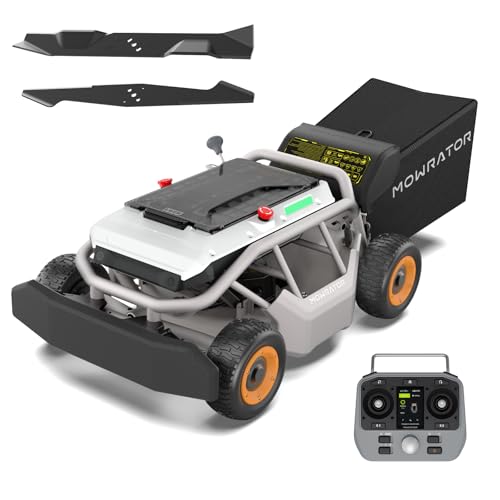
Mowrator S1 4WD Remote Control Lawn Mower 21-Inch

YARDCARE AI Vision Robotic Lawn Mower 1600 Sq.Ft Dark Grey
YARDCARE V100 Robot Lawn Mower HD Vision Small Lawns

ANTHBOT M5 Robot Lawn Mower 1/8 Acre with Garage

ANTHBOT M9 Robot Lawn Mower 1/4 Acre RTK NRTK

ANTHBOT Robot Lawn Mower 0.9 Acre RTK 4-Eye Vision

ANTHBOT N8 Robotic Lawn Mower with Sweepe 3/8 Acre
A Closer Look At Each Pick
The YARDCARE V100 is built for the kind of lawn most city dwellers actually own: a tidy rectangle of grass behind a townhouse, maybe a narrow side yard, total coverage capped at 1600 square feet. Its HD camera paired with a bumper sensor reads the ground in front of it, telling grass from patio and giving the unit enough smarts to dodge toys, hoses, and the occasional garden gnome.
Where the V100 earns its place is in low-fuss ownership. Setup skips the buried boundary wire that older generations of robot mowers demanded, so you can be trimming within minutes of unboxing. Compared with the ANTHBOT M5 LIDAR up next, this YARDCARE leans on visual mapping rather than laser scanning, which works well in open lots with predictable edges. For most small backyards, you may find the obstacle detection handles daily life just fine.
Noteworthy Benefits
- HD vision system recognizes up to 150 obstacle types, cutting down on the stucks and rescues that frustrate first-time owners
- Up to 1600 sq ft coverage suits urban lots where every square foot of grass counts
- No perimeter wire means a Saturday afternoon install instead of a weekend project
- Compact footprint slides into narrow side yards and tight gate openings with no wrestling
Things To Consider
- Camera-based navigation can struggle in very low light, so night runs may need scheduling around dusk
- 1600 sq ft ceiling feels tight if your lawn stretches beyond a small patch
Right Fit For
First-time robot mower owners with a compact, well-defined city lawn.
Swap It Out When
The ANTHBOT M5 LIDAR suits you better for a wire-free setup on a slightly larger suburban yard.
The ANTHBOT M5 LIDAR is the kind of robot that makes you wonder why anyone still buries wire. LiDAR is a laser-based scanning technology that maps your yard in 360 degrees, and paired with dual cameras it gives this M5 a sharp sense of where the grass ends and the flowerbed begins. Coverage runs to roughly 1/8 acre, which fits a modest suburban lot.
For shoppers new to robotic mowing, the appeal is the almost absurdly short setup time. You place the unit on the lawn, open the app, and watch it figure out the boundaries. Compared with the YARDCARE V100’s camera-only approach, this M5 brings a second sensory layer, which helps in yards with mixed surfaces and irregular edges. Depending on your layout, the dual-vision fallback covers gaps the laser might miss.
The Good Stuff
- Wire-free install removes the most intimidating chore in the robot mower category
- 360-degree LiDAR plus dual cameras delivers consistent edge detection across simple and oddly shaped lawns
- 1/8 acre coverage comfortably handles small suburban lots without midweek recharges
- App control means you can send it out from the office on a hot afternoon
Worth Noting
- LiDAR units tend to sit at a higher tier, so this is more of a step-up spend than an impulse buy
- Heavy tree cover can occasionally confuse laser mapping on the first run
Quick Facts
Made For
First-time robot mower owners who want wire-free setup without learning a complex install routine.
Another Choice May Suit
The YARDCARE V100 fits tighter budgets on very small lawns where camera-only navigation is enough.
Calling the Mowrator S1 a robot mower sells it short. It is a remote-controlled, four-wheel-drive machine with a 21-inch cutting deck and a 37-degree slope rating, which means the kind of hill that buries push mowers and stalls cheaper robots. The 18Ah battery gives it the stamina to chew through larger patches before needing a top-up.
What sets the S1 apart from the rest of this list is that you are still in the loop. You steer it via a handheld controller, which trades quiet autonomy for a level of control no autonomous unit can match on rugged terrain. Compared with the ANTHBOT M5 LIDAR, this Mowrator is a different category: less “set and forget,” more “drive and decide.” For most properties with mixed grass, brush, and serious inclines, you may find the manual touch essential.
Everyday Wins
- 4WD drivetrain and 37-degree slope rating handle inclines that stall lighter robots
- 21-inch deck finishes large areas quickly, which matters on multi-acre properties
- Remote-control operation gives full authority on uneven ground, around trees, and near garden borders
- 18Ah battery supports longer runs between charges than typical residential units
Honest Caveats
- Remote control means you are present for every mow, so it is not as hands-off as the ANTHBOT models
- Heavier chassis requires more storage space and a firmer surface to dock on
Best Suited To
Homeowners with steep, uneven terrain who want a heavy-duty unit they can actively steer.
Look Elsewhere When
The ANTHBOT M9 makes more sense for a flat, mid-size suburban lot where true autonomy matters more than slope climbing.
YARDCARE’s AI Vision mower targets a very specific headache: the lawn dotted with flower beds, vegetable patches, and play areas you do not want trimmed. The 32-foot magnetic strip included in the box lets you lay out temporary no-go zones without any app fuss, just place the strip and the mower steers clear.
The dark grey finish is a small touch, but it does help the unit blend into a garden setting rather than scream “robot” at the neighbors. Where this pick stands out from the YARDCARE V100 reviewed earlier is the magnetic strip approach, which is far more practical than virtual boundaries for gardeners who rearrange beds seasonally. For most backyards with sensitive plantings, you may find this hybrid of vision and physical barrier refreshingly simple.
Good Reasons To Consider
- 32-foot magnetic strip creates no-go zones without relying solely on app-drawn boundaries
- AI vision system identifies obstacles and adjusts course in real time
- 1600 sq ft capacity suits small-to-medium urban lawns with mixed landscaping
- Dark grey shell visually integrates with garden settings and sheds visible dust better than lighter shells
Trade Offs
- Magnetic strip requires physical placement, which means a small amount of setup and occasional repositioning
- 1600 sq ft ceiling may feel tight if your lawn has expanded with recent landscaping work
Key Product Details
Right Fit For
Gardeners with flower beds, vegetable patches, or play areas that need clear no-go zones.
Reach For A Different Pick When
The ANTHBOT M5 LIDAR fits better for a no-strip setup on a slightly larger lawn.
This second YARDCARE V100 on the list is a sibling to the unit reviewed first, sharing the HD vision system but tilting toward a different audience: homeowners on smaller lots who care most about quiet operation. The unit’s profile keeps the noise floor low enough that early morning or evening runs are unlikely to draw side-eye from the neighbors.
Its obstacle detection is camera-driven, which means it sees what’s in front of it rather than relying on bumpers alone. Compared with the ANTHBOT M5 LIDAR, the trade-off shows up in coverage area: 1600 sq ft versus 1/8 acre, and a simpler mapping routine. For most tight urban yards with predictable boundaries, the quieter operation and lighter footprint make this a friendly pick.
Positive Points
- HD vision identifies up to 150 obstacle types, reducing the stucks that eat into your weekend
- Low-noise operation suits early-morning and evening schedules without neighborhood complaints
- Small-lawn capacity targets the kind of patch most city homes actually have
- Wire-free install means a faster path from box to first mow
Room For Improvement
- Vision-based mapping may need a few runs to fully learn a complicated yard
- Coverage tops out at 1600 sq ft, so larger suburban lots will need a step-up model
Made For
Quiet neighborhood streets where noise matters as much as cutting performance.
Where Another Pick Suits Better
The YARDCARE AI Vision mower is a smarter match for yards with flower beds that need physical no-go strips.
The M5 with Garage is a sensible package for anyone who treats their mower as outdoor furniture and wants it to last. The included shelter keeps the unit out of direct sun and rain between runs, which over time helps the housing, battery contacts, and charging pins age better. Under the hood, full-band NRTK positioning refines standard RTK (Real-Time Kinematic, a satellite-based positioning method that delivers centimeter-level accuracy) by adding extra signal bands, helping the mower stay locked onto its map.
Where this version differs from the LiDAR M5 reviewed earlier is the navigation stack: NRTK plus dual vision, no laser scanner. That makes it slightly more dependent on clear sky view for the RTK signal but better suited to areas where dense tree cover can muddy satellite reception. For most suburban lots, the garage alone justifies the package, since it removes one common maintenance worry: a sun-baked charging dock.
Notable Upsides
- Included garage shelters the unit from sun, rain, and debris between runs
- Full-band NRTK plus dual vision delivers precise positioning in tricky satellite environments
- 1/8 acre coverage handles small-to-medium suburban lots comfortably
- Multi-zone mapping supports front, back, and side lawns in a single routine
Soft Spots
- RTK performance can dip under heavy canopy, where the LiDAR M5 has an edge
- Garage footprint requires a flat, accessible spot near a power outlet
Feature Snapshot
Best Suited To
Suburban homeowners who want weather protection built into the package.
Not Your Match When
The ANTHBOT M5 LIDAR is a stronger fit for heavily shaded yards where laser mapping beats satellite positioning.
The M9 is where the ANTHBOT line stretches its legs, doubling the coverage to 1/4 acre while keeping the dual-vision and full-band RTK and NRTK combination. The “full-band” approach means it pulls in every civilian satellite signal it can find, which is the difference between a mower that wanders off course at the back fence and one that hugs the boundary line.
Multi-zone mapping is the feature most shoppers notice first. You can label the front lawn, backyard, and a narrow side strip, then send the M9 out to handle them on its own schedule. Compared with the smaller ANTHBOT M5, the M9 trades compactness for stamina, which pays off on properties with separated lawn areas. For most mid-size suburban homes, this lands in the practical sweet spot of the lineup.
Useful Touches
- 1/4 acre coverage doubles the working area of the M5 without doubling the complexity
- Full-band RTK and NRTK maintain positioning accuracy across satellite-challenged yards
- Multi-zone mapping supports separated lawn areas on a single schedule
- 45% slope handling matches the rest of the ANTHBOT line for residential inclines
Points To Keep In Mind
- Larger battery and chassis need a dedicated storage spot when not in use
- Full-band RTK is most useful in open sky, so heavily wooded lots may still see occasional drift
Perfect Match For
Mid-size suburban properties with multiple lawn zones needing consistent, autonomous coverage.
Where A Sibling Pick Shines
The ANTHBOT N8 makes more sense for homeowners who also want leaf-sweeping and bagging from the same machine.
The 0.9-acre ANTHBOT sits at the top of the residential coverage ladder in this list, and it earns the spot with what is effectively a four-camera vision system rather than the dual-camera setup found on smaller siblings. More eyes mean more depth perception, which helps the unit tell a low garden edging from a soft toy at speed. Combined with full-band RTK, the mower keeps a tight positional grip even when satellite reception weakens under heavy tree cover.
The 30 multi-zone management is the headline feature for properties with front lawns, side strips, backyard play areas, and a separate garden zone. Where the ANTHBOT M9 reviewed earlier handles two or three zones comfortably, this unit scales to thirty. For most large, complex properties, that capacity removes the need to redraw boundaries every time the landscaping changes.
Real-World Strengths
- 4-eye vision system improves depth perception around low obstacles and garden edging
- 0.9-acre coverage suits large properties that smaller robots cannot finish in a single charge
- 30-zone management handles complex layouts with separated lawn areas
- Intelligent anti-theft features add peace of mind when the mower sits in a side yard
Where It Is Less Suited
- Higher feature count means a more involved initial app setup than the smaller ANTHBOT units
- Sticker and footprint place it firmly in the upper residential tier, so small lawns will not benefit from the extra capacity
Core Details
Whose Shelf It Belongs On
Homeowners with large, complex properties that need serious autonomy and deep zone control.
Consider Something Else When
The ANTHBOT M9 is a more cost-effective fit for a typical mid-size suburban lot without the complexity.
The N8 is the multi-tool of the lineup, designed to pull double, triple, and quadruple duty across the year. Beyond mowing, the unit handles mulching, bagging, and leaf sweeping through a Cyclone System built for fall cleanup, with NRTK precision guiding the whole operation. For shoppers tired of swapping gear every season, that is a meaningful consolidation.
Coverage of 3/8 acre splits the difference between the smaller ANTHBOT M5 and the larger 0.9-acre unit, making the N8 a versatile mid-size choice. The “auto dump” function on the bagging system means less hands-on emptying between runs, a small detail that adds up over a busy autumn. For most homeowners who want one machine doing more than one job, you may find the four-mode design genuinely useful rather than a marketing add-on.
What Works In Its Favor
- 4-in-1 design covers mowing, mulching, bagging, and leaf sweeping in a single unit
- Cyclone System leaf-sweeping mode handles fall cleanup that would otherwise need a separate tool
- 3/8 acre coverage suits mid-size properties between the M5 and the 0.9-acre flagship
- Auto-dump bagging reduces the number of trips to the compost pile each season
A Few Limitations
- Multi-function design adds weight and complexity versus a pure mowing unit
- Switching modes and emptying the bag require more user involvement than a basic mower
Who Should Grab It
Homeowners who want one machine to handle mowing, mulching, bagging, and leaf cleanup year-round.
Skip It When
The ANTHBOT M9 is a leaner fit for shoppers who only need mowing and prefer a simpler, dedicated unit.
What To Weigh Before Choosing A Robot Mower
Coverage area is the first filter. The picks above range from 1600 square feet up to nearly an acre, and matching the mower to your actual lawn size prevents daily recharges that shorten battery life. For most city lots, anything above 1/8 acre is overkill; for rural properties, the larger RTK-equipped units earn their keep.
Navigation style shapes day-to-day satisfaction more than people expect. Camera-based systems read the ground ahead and learn your boundaries over time, while LiDAR and RTK systems triangulate position using lasers or satellites. LiDAR tends to shine in open layouts with hard edges, RTK handles satellite-challenged yards with tree cover, and camera systems often cost less while staying capable in simpler settings.
Slope handling matters if you have anything beyond a flat patch. Look for percentage ratings rather than degree angles when comparing, since 45% and 37-degree figures describe the same incline in different ways. For mixed terrain, the Mowrator S1’s remote-controlled 4WD design trades autonomy for control that autonomous mowers cannot match.
Finally, decide how much hands-on maintenance you can tolerate. Magnetic strip no-go systems, like the one on the YARDCARE AI Vision unit, need seasonal repositioning. App-managed virtual zones are invisible but require a learning curve. And units with included garages, like the ANTHBOT M5 package, weather better between runs in regions with harsh sun or heavy rain.
Key Considerations Across These Picks
Pitfalls Shoppers Hit
The most common mistake is buying a mower with too much coverage, which sounds harmless until you realize the larger battery and heavier chassis create storage and charging headaches on small lots. The opposite error is choosing a budget unit for a property it cannot finish in a single cycle, leading to mid-mow recharges and unfinished stripes.
Another trap is ignoring tree cover. RTK-dependent mowers can drift under dense canopy, while LiDAR units can struggle with reflective surfaces like glass fencing. For most mixed suburban lots, a hybrid navigation stack (RTK plus vision, or LiDAR plus cameras) handles the gaps either system would miss alone.
When Paying More Pays Off
Higher-tier models earn their price through better navigation stacks, larger batteries, and protective accessories like the garage included with the ANTHBOT M5 package. You also tend to get more capable multi-zone management, which matters once your property has more than one lawn area to maintain.
The upgrade is worth it for properties with separated lawn zones, heavier tree cover, or year-round yard work like leaf sweeping. For a single, small, sun-exposed lawn, a simpler unit will quietly do the job without the extra features adding complexity to a routine that barely needs any.
Frequently Asked Questions
How much lawn can a robot mower actually handle in one charge?
Most residential units in this list cover between 1/8 acre and 0.9 acre on a full charge. For larger properties, look for models with multi-zone mapping so the mower can return to its dock, recharge, and resume automatically without manual intervention.
Do robot mowers work in the rain?
Many residential units are designed to handle light moisture, but most will return to the dock during heavy rain to protect the cutting deck and electronics. For year-round use in wet climates, a covered charging station like the garage included with the ANTHBOT M5 package helps extend the unit’s life.
How loud are automatic mowers compared to gas mowers?
Robot mowers are typically far quieter than gas-powered models, often producing a hum closer to a window air conditioner than a lawn tool. This makes early-morning or evening runs less likely to disturb neighbors, especially in close-set suburban streets.
Can a robot mower handle slopes and uneven ground?
Slope ratings vary widely, with the units in this list ranging from 25% up to 75% depending on the model and drive system. For very steep or uneven terrain, a remote-controlled 4WD unit like the Mowrator S1 offers more control than a fully autonomous design.
What maintenance does an automatic mower need?
Basic upkeep includes cleaning the cutting deck, checking the blades for wear, keeping charging contacts clear of debris, and updating firmware through the companion app. Magnetic strip boundaries may need occasional repositioning, while RTK and LiDAR systems generally require no physical recalibration once installed.
Bottom Line
The right automatic lawn mower comes down to your lawn size, your tree cover, and how hands-off you want the experience to be. Small urban lots pair well with the YARDCARE V100 or AI Vision models, mid-size suburban homes benefit from the ANTHBOT M5 or M9, and larger or more complex properties call for the 0.9-acre RTK unit or the multi-mode N8. Pick the one that matches your real layout, and the weekends open up.