
The right rooftop shelter changes how you travel, and the wrong one ends a trip before it begins. Auto roof tents let you sleep above the ground in minutes, with most hard-shell models using gas struts (piston arms that hold the shell open while you climb in) for a fast setup at the trailhead. This list mixes hard-shell pop-ups, soft-shell truck-bed options, and SUV-attached shelters so you can match the tent to your vehicle, your climate, and the kind of trips you actually take. Each pick below was reviewed for build materials, setup flow, weather handling, and the reader profile it genuinely serves.
The Shortlist At A Glance

JOYINRUTE Rooftop Tent Hard Shell 4-Season

JOYINRUTE Aluminum Rooftop Tent Hard Shell Pop Up

HEYFUN Adventurer Pro Hard Shell 2-3 Person

WildFinder Rooftop Tent Hard Shell
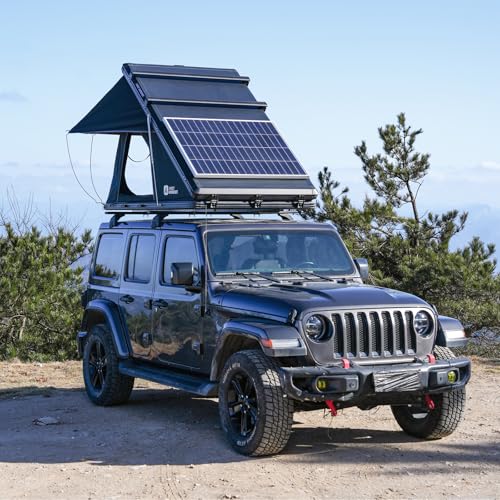
ARCTWONDER Solar Panel Hard Shell Rooftop Tent

JOYTUTUS Truck Tent with Rainfly 5.5-5.8Ft

UNP SUV Tent for Camping 6 Person

Napier Sportz SUV Tent with Screen Room 84000
A Closer Look At Each Pick
Cold-weather camping punishes a tent that loses heat through the shell. JOYINRUTE built this hard-shell around aircraft-grade aluminum and added a winter insulation layer aimed at shoulder-season trips where mornings dip near freezing. The shell itself resists the thermal expansion and contraction that cracks plastic lids after a few seasons on the road.
Unlike the soft-shell truck options later in this list, this is a true pop-up rooftop. You mount it to a rated crossbar system, release the latches, and the gas struts lift the lid into sleeping position. For drivers who chase snow-line camps or high-elevation trailheads, the four-season framing is the real draw, though the price reflects the heavier materials.
A Few Strong Suits
- Aircraft-grade aluminum shell resists weathering better than ABS plastic alternatives.
- Built-in winter insulation layer helps retain heat on cold nights.
- Gas-strut assisted opening makes setup fast after a long drive.
- Hard shell sheds snow and rain without pooling water on the lid.
Things To Consider
- Heavier than soft-shell tents, so your vehicle’s dynamic roof rating must support the load.
- Winter insulation adds bulk, which may not suit summer-only travelers.
Made For
Campers who travel through fall, winter, and early spring in mountainous or northern regions.
Skip It When
The JOYINRUTE Aluminum Pop Up from this list is a lighter, simpler alternative for warm-weather weekend trips.
Setup speed matters when you roll into camp at sunset. JOYINRUTE’s aluminum hard shell uses four high-strength hydraulic support rods (gas-charged pistons that lift and hold the lid open) to pop the tent into position with minimal effort, which removes the ladder-and-pole choreography of older soft-shell designs. The aircraft-grade body keeps weight reasonable without giving up the durability plastic lids tend to lack.
Compare that to the JOYINRUTE 4-Season model above, which trades some of that simplicity for cold-weather insulation. This pick is the warmer-climate sibling, lighter and faster, but without the thermal layer. If you mostly camp spring through early fall at moderate elevations, the streamlined profile fits the bill.
Noteworthy Benefits
- Hydraulic struts handle the lifting, so a single person can deploy the tent.
- Aluminum shell avoids the UV-related brittleness common in plastic housings.
- Lower profile than insulated models means better fuel economy on the highway.
Worth Noting
- No dedicated winter insulation, so cold-weather performance will trail the 4-Season sibling.
- Hard shell storage requires garage or driveway space, as it does not fold flat.
Right Fit For
Weekend overlanders and SUV owners who camp in three-season conditions and value fast deployment.
Look Elsewhere When
The JOYINRUTE Rooftop Tent Hard Shell 4-Season is the better call if you regularly camp below freezing.
Little touches make a tent feel lived-in. The HEYFUN Adventurer Pro adds a built-in LED light strip and an attachable side awning, two features that turn a basic rooftop shelter into a functional base camp. The flocked lining on the floor softens the surface and adds a layer of insulation that barefoot campers will appreciate on cool mornings.
Where the JOYINRUTE picks focus on raw shell durability, the Adventurer Pro leans into the campsite experience. That extra wiring and the awning hardware add setup steps, but the convenience is real once you’re parked. For a couple or a small family that values a ready-to-use setup, the integrated features remove a few items from your packing list.
What Makes Sense
- Built-in LED light strip eliminates a separate lantern for late-night tent entry.
- Attachable side awning extends shaded space without a separate ground tent.
- Flocked tent floor adds comfort and mild insulation under the mattress.
- Two-to-three-person capacity suits couples plus a child or a friend.
Trade Offs
- Extra electrical components mean more connections to inspect and keep clean over time.
- Awning hardware adds wind surface area, so you’ll want solid staking in gusty camps.
Feature Snapshot
Best Suited To
Couples or small families who want a self-contained rooftop setup with built-in lighting and shade.
A Better Fit Elsewhere
The WildFinder Rooftop Tent is a stronger match if you need a unit that fits across multiple vehicles in your household.
Not everyone drives the same rig year-round. WildFinder built this hard shell to mount on Jeeps, SUVs, trucks, and vans with a standard crossbar setup, which makes it a flexible option for households that rotate vehicles or lend the tent to friends. The aircraft-grade aluminum shell pairs with a stainless steel air pressure lever for opening, and the polyester fabric canopy handles rain while letting the interior breathe.
The aluminum construction echoes the JOYINRUTE shells covered above, so you’re getting a similar level of shell durability with a broader compatibility claim. Where it stands out is the mounting range: you can move this tent between a Wrangler on Saturday and a family SUV on Sunday without re-engineering the rack.
What Helps Most
- Cross-vehicle compatibility suits mixed-fleet households and lending situations.
- Aluminum shell avoids the cracking issues plastic lids develop after UV exposure.
- Polyester canopy with blackout properties supports deeper sleep on bright mornings.
- Stainless steel lever resists corrosion in coastal or wet climates.
Honest Caveats
- Crossbar requirements still apply, so confirm your rack’s dynamic load rating before mounting.
- Polyester fabric will need occasional re-proofing to maintain water repellency over the years.
Who It Suits Best
Multi-vehicle owners and outdoor groups who need a tent that follows them between different rigs.
Reach For A Different Pick When
The HEYFUN Adventurer Pro fits better if you want built-in lighting and an attached awning for camp comfort.
Power-hungry campers know the value of charging while parked. ARCTWONDER integrated a solar panel into the hard shell of this rooftop tent, so the top of the lid doubles as a small charging surface during the day. The aluminum top cover, bottom plate, and reinforced corner brackets give the unit the same structural backbone as the JOYINRUTE shells covered earlier.
The thermal layer targets the same cold-weather crowd as the JOYINRUTE 4-Season, which means this is genuinely a four-season-capable shelter with the bonus of off-grid power. For boondockers and dispersed-camp regulars, the panel can offset phone and battery charging without a separate portable solar unit.
Real-World Strengths
- Integrated solar panel charges small electronics while camped in open sun.
- Aluminum shell and corner brackets handle rough roads and heavy use.
- Winter thermal layer supports shoulder-season trips in cold climates.
- Two-person footprint balances interior space with vehicle roof load.
Points To Keep In Mind
- Solar output is modest, so this complements a power bank rather than replacing camp power systems.
- Thermal layer and panel add weight, so lighter SUVs may approach roof load limits when mounted.
Quick Facts
Perfect Match For
Off-grid campers who camp in remote areas and want passive charging without carrying extra gear.
Where Another Pick Suits Better
The JOYINRUTE Pop Up is the lighter, simpler option if you don’t need solar charging or winter insulation.
Truck owners don’t need a roof-mounted shell to sleep comfortably. JOYTUTUS drops a soft-shell tent straight into the bed, turning your pickup into a ground-level camper in minutes. The PU2000mm coating (a polyurethane layer rated to withstand a 2,000mm water column before leaking) on the 210D Oxford polyester and the included rainfly give the unit real wet-weather credibility, which matters when storms roll through after dark.
The sky-view mesh ceiling is a thoughtful touch for warm nights, and the straight-aisle design uses the bed space more efficiently than dome-style truck tents. Unlike the hard-shell rooftop models above, this option requires no crossbars and adds minimal height to your vehicle, which helps with garage clearance and low-clearance drives.
A Favorable Mix
- PU2000mm double-layer construction handles sustained rain without seepage.
- Sky-view mesh roof supports stargazing and ventilation on dry nights.
- Straight-aisle design maximizes interior space inside the truck bed.
- Fits 5.5 to 5.8-foot beds, a common full-size pickup range.
Less Ideal Details
- Truck-bed tents require a bedliner or padding for comfort on bare metal.
- Setup is more involved than hard-shell pop-ups, so plan extra time at the campsite.
Whose Shelf It Belongs On
Pickup truck owners with 5.5 to 5.8-foot beds who want rain-ready camping without a roof rack.
Swap It Out When
The UNP SUV Tent makes more sense for families with larger vehicles who need a six-person footprint.
Family camping stretches past the back seat. UNP built a 10×9-foot ground tent with a 78-inch center height that connects to the rear of your SUV, so the cargo area becomes an extension of the sleeping space. Six people can fit on air mattresses or sleeping bags, and the adjustable vehicle sleeve adapts to different SUV and CUV hatchback shapes.
Where the JOYTUTUS truck tent above uses the bed itself as the sleeping platform, the UNP approach keeps you on the ground with the car as overflow storage. For parents with kids, that extra headroom and the connected cargo access make a real difference at bedtime and during rainstorms when no one wants to crawl outside.
Benefits That Matter
- Six-person capacity fits families without forcing kids to share a tiny space.
- 78-inch center height lets adults stand and change clothes inside.
- Adjustable vehicle sleeve adapts to varied SUV and CUV body shapes.
- Connected cargo access keeps gear within reach from inside the tent.
Practical Considerations
- Vehicle sleeve compatibility varies, so measure your hatchback before purchasing.
- Ground tent footprint needs a level, debris-free site, which limits some dispersed camping.
Spec Overview
Who Should Grab It
Families with SUVs or CUVs who need a connected, roomy shelter for group trips.
Not Your Match When
The Napier Sportz SUV Tent is the smarter pick if bug protection and a screen room matter more than headroom.
Insects can ruin a campground faster than rain. Napier built the Sportz 84000 around a 10×10 main tent with a 7×6 attached screen room, so you get a full sleeping area and a separate bug-free lounging space in one setup. Vertical walls give roughly 20% more headroom than traditional dome tents, and the pole hub design sets up in under 15 minutes once you’ve staged the parts.
Compare that to the UNP above, which prioritizes family capacity over a dedicated screen room. If your trips lean toward humid climates or peak mosquito season, the screen room earns its space by giving you a place to sit, cook, and read without slathering on repellent. The awning adds shade during the hottest part of the day.
Practical Pluses
- Attached 7×6 screen room provides bug-free lounging separate from the sleeping area.
- Vertical wall structure adds headroom compared to dome-style tents.
- Pole hub design supports setup in roughly 15 minutes.
- Vehicle sleeve gives direct access to your cargo area from inside the tent.
- Fits CUVs, SUVs, and minivans, a wide compatibility range.
A Few Limitations
- Screen room is floorless, so debris and small pests can still enter from below.
- Sleeping capacity is generous but tight for six adults with gear in tow.
Built With In Mind
Campers in humid, bug-heavy regions who want a screened lounge space attached to their vehicle shelter.
Consider Something Else When
The JOYTUTUS Truck Tent is the better fit if you drive a pickup and prefer sleeping in the bed rather than on the ground.
What Matters Most Before Choosing Auto Roof Tents
Vehicle Compatibility And Roof Load
Every rooftop tent, hard-shell or soft-shell, depends on your vehicle’s dynamic roof rating, which is the maximum weight your roof can safely carry while driving. Check the owner’s manual and the crossbar manufacturer’s specs before mounting. Undersized racks flex on rough roads and damage both the rack and the tent over time.
Hard Shell Versus Soft Shell
Hard shells pop up in minutes and shed weather, but they sit taller on your roof, which affects garage clearance and fuel economy. Soft shells fold flat for storage and weigh less, but they take longer to deploy and pack. Truck-bed and SUV-attached tents skip the roof entirely and work well for drivers without a rated rack.
Climate And Season Use
Winter-rated tents use insulated shells and thermal layers that add weight and cost. If you camp three seasons, a lighter three-season shell handles most conditions. Coastal humidity and bug pressure push you toward attached screen rooms rather than sealed shells.
Setup Speed And Daily Use
Gas struts make hard-shell deployment a one-person job, while soft-shell tents need two hands and a few minutes. If you arrive at camp after dark or rotate camps often, faster setup makes a real difference in how much you enjoy the trip.
Key Considerations Across These Picks
Common Shopping Slip Ups
A surprising number of shoppers pick a rooftop tent before checking their crossbar’s dynamic load rating, which is the published weight limit for the rack while the vehicle is moving. Mounting a heavy hard shell to an under-rated rack stresses the mounting points and risks roof damage. Always match the tent’s weight to the rack’s rated capacity, and leave a margin for bedding, occupants, and gear stored inside.
Where The Extra Money Goes
Premium hard shells use aircraft-grade aluminum, hydraulic struts, and integrated insulation, which is why they sit well above entry-level soft shells in cost. The upgrade buys faster setup, longer shell life, and cold-weather capability. Pay up if you camp year-round or rotate between vehicles often, since the durability compounds over years of use.
Frequently Asked Questions
How Do I Know If My Vehicle Can Support A Rooftop Tent?
Check the owner’s manual for the dynamic roof load rating, then weigh the tent plus your mattress, bedding, and any gear you store inside. Your crossbar system also has its own weight limit, and the lower of the two numbers is the real ceiling.
Are Hard-Shell Tents Better Than Soft-Shell Models?
Hard shells deploy faster, shed weather, and last longer, but they weigh more and cost more upfront. Soft shells fold flatter, store easier, and suit casual weekend use where setup time is less critical.
Can I Use A Rooftop Tent In Winter?
Only models with thermal layers and four-season ratings, like the JOYINRUTE 4-Season or the ARCTWONDER with its winter insulation, are built for sustained cold. Standard three-season shells let heat escape quickly and may accumulate condensation that freezes overnight.
Do Truck-Bed And SUV-Attached Tents Need A Roof Rack?
No. Truck-bed tents sit in the bed, and SUV-attached tents connect to the rear hatch. Both options work for drivers who don’t have a crossbar system or who want to keep the roof clear for cargo and kayaks.
How Long Does Setup Usually Take?
Hard-shell rooftop tents with gas struts typically deploy in two to five minutes. Soft-shell rooftop tents take ten to twenty minutes, while truck-bed and SUV ground tents generally need twenty to thirty minutes for a full pitch with rainfly and poles.
Wrap Up
The best auto roof tents match your vehicle, your climate, and how you actually camp. Hard-shell pop-ups like the JOYINRUTE models and the ARCTWONDER serve drivers who want fast deployment and weather-ready shells, while truck-bed and SUV-attached options like the JOYTUTUS, UNP, and Napier give you ground-level comfort without a roof rack. Pick the format that fits your rig, confirm the load rating before mounting, and the rest of the decision gets a lot easier.