
Field sleep stops matter. When your nights are short and your body takes a beating, the mat between you and the ground quietly decides whether the next morning starts sharp or sluggish. The right army sleeping mat handles cold earth, packs small, and stays reliable trip after trip.
The picks below cover self-inflating foam, closed-cell foam, and memory foam options, so the right call depends on your climate, pack size, and how much comfort you want from a full-size mat. Insulated pads carry a higher R-value (a standardized insulation rating, where higher numbers mean more warmth against cold ground), which matters in shoulder seasons and on frozen turf.
The Leading Options At A Glance

Sea to Summit Camp Plus SI Sleeping Mat Tapered Regular

Sea to Summit Camp Plus SI Sleeping Mat Tapered Large
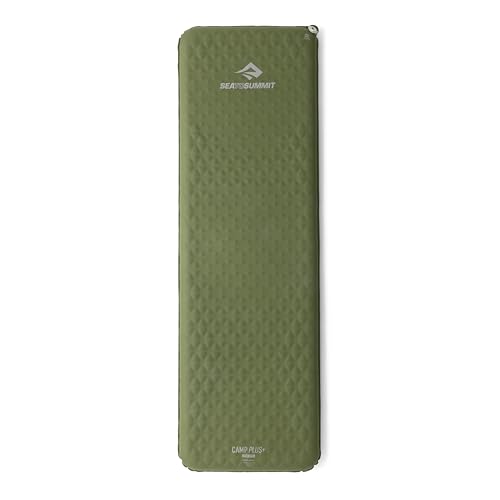
Sea to Summit Camp Plus SI Sleeping Mat Rectangular Large

Sea to Summit Camp Plus SI Sleeping Mat Rectangular Regular
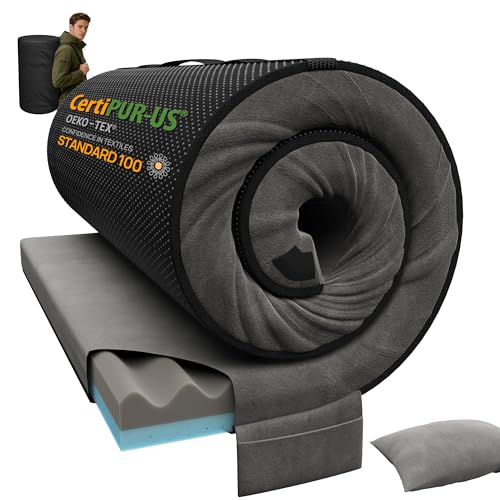
Releep 3-Inch Memory Foam Camping Mattress

Therm-a-Rest Z Lite Original Sleeping Pad

Elegear 4-Inch Insulated Sleeping Pad Single
The Picks, Examined More Closely
Sea to Summit’s Camp Plus line has earned a quiet reputation among serious campers, and this tapered regular sits right in the middle of the range. The 2.6-inch open-cell foam (a sponge-like foam that expands as air enters) fills in on its own when you crack the valve, so setup is a matter of a few breaths and a top-up puff rather than an arm-pumping session. The tapered shape trims weight without stealing much usable surface, which you’ll appreciate on long rucks where every ounce gets counted twice.
At a 4.3 R-value, the insulation handles shoulder-season cold, frosty nights under a tarp, and the occasional early-spring bivouac. It’s a confident middle-of-the-pack performer that doesn’t lean on gimmicks.
Where It Delivers
- Self-inflating foam cuts camp setup time to roughly a minute, so you can focus on tent, food, and fire.
- The 4.3 R-value keeps cold ground at bay on most three-season overnights without dragging along extra bulk.
- Tapered profile saves pack space and weight, which adds up across multi-day movements.
- Reversible valve lets you fine-tune firmness instead of over-inflating and losing sleep to a rock-hard surface.
Points To Keep In Mind
- Heavier than a pure air pad, so ultralight hikers may want to look elsewhere.
- Self-inflating foam can lose some loft (its ability to bounce back and trap air) over years of heavy compression in a pack.
Key Specs
Best Suited To
Anyone running regular three-season training or patrol trips who wants a balance of comfort, warmth, and pack-friendly size without going full ultralight.
Look Elsewhere When
The Therm-a-Rest Z Lite Original is a smarter grab for those who count every gram and want a mat that shrugs off abuse over many seasons.
Take everything that works about the tapered regular and stretch it out, and you get this large version. The added length solves the “feet hanging off the end” complaint that haunts taller sleepers on standard pads, and the same 2.6-inch foam and 4.3 R-value carry over without compromise. Compared to the regular, the difference is mostly about real estate and how much of your body actually contacts warm insulation rather than cold ground.
For long-limbed users, that small change tends to be the difference between waking up rested and waking up stiff. Nothing flashy, just smart sizing.
What Earns Its Place
- Longer cut keeps your full body on insulated foam, so cold patches around the feet become a non-issue.
- Same 2.6-inch loft as the smaller sibling, so cushioning under shoulders and hips stays consistent.
- Self-inflating valve keeps setup painless after dark or in the rain.
Honest Caveats
- Extra length means a larger rolled footprint, which can crowd a tight pack or a small rucksack.
- Heavier than the regular tapered mat, so it’s not the choice for gram-conscious movers.
Right Fit For
Taller users and anyone who has ever woken up with cold, dangling feet on a too-short pad.
Swap It Out When
The Sea to Summit Camp Plus SI Rectangular Large is a better match for restless sleepers who toss and turn and want even more side-to-side room.
The rectangular large ditches the foot taper in favor of full-width coverage, which matters more than people expect. Side sleepers who curl up, restless turners, and anyone who shifts positions all night finally get a mat that doesn’t punish a roll onto your side. The 4.3 R-value holds steady, and the 2.6-inch foam feels notably more supportive under shoulders and hips than thinner air-only pads.
The honest trade-off is bulk: a full rectangle packs larger than the tapered version, so plan your pack volume accordingly. For base-camp or vehicle-supported trips, that trade is often worth it.
Real Benefits
- Full rectangular surface gives side sleepers room to curl without falling off the edge.
- Same dependable 4.3 R-value for solid cold-ground protection in shoulder seasons.
- 2.6-inch foam holds shape under body weight, so you don’t bottom out on rocky ground.
Worth Bearing In Mind
- Rectangular shape rolls up larger than tapered designs, which can squeeze a small pack.
- More material means more drying time if the mat gets wet, especially in humid climates.
Feature Snapshot
Made For
Side sleepers, fidgety sleepers, and anyone who treats sleep quality as a force-multiplier on long days.
Reach For A Different Pick When
The Releep 3-Inch Memory Foam Camping Mattress serves better for those who camp out of a vehicle or in fixed base camps and want a real bed-like surface to come back to.
This rectangular regular uses a slimmer 1.5-inch foam build to shave pack weight while keeping the same dependable reversible valve design. The 4.2 R-value keeps it in cold-weather range for most spring and autumn overnights, even though the lower profile means you feel the ground a bit more under your hips. Think of it as the scout-friendly version of the larger rectangular pad: easier to carry, slightly less cushioned, still warm enough to matter.
For soldiers on the move and backpackers who value a tighter kit, the lower profile is a feature, not a flaw. Long-term, owners commonly report that the foam holds up well if stored unrolled at home.
Points In Its Favor
- Lighter and more compact than thicker foam mats, so it slips into a pack without dominating space.
- Reversible valve supports fast inflation, quick deflation, and pressure tuning for comfort.
- 4.2 R-value still covers frosty mornings and cool-weather bivouacs.
Trade-Offs To Consider
- 1.5-inch profile feels firm on rocky terrain compared to thicker Sea to Summit siblings.
- Less loft means you’ll notice uneven ground more on long nights.
Who Should Grab It
Backpackers and field users who want a self-inflating mat that packs down small and handles the cold without adding too much weight.
A Better Fit Elsewhere
The Sea to Summit Camp Plus SI Tapered Regular is a smarter choice for sleepers who want more cushion under hips and shoulders without jumping to a full rectangular large.
Releep takes a different approach entirely. Instead of self-inflating foam, you get a 3-inch dual-layer build with gel-infused memory foam on top (foam laced with cooling gel beads to reduce heat buildup) and high-density support foam underneath. The result feels closer to a real bed than a camp mat, which is exactly the point. Toss in the included pillow and carry bag, and the package makes a strong case for anyone whose “camping” leans more toward base camp than backcountry.
Versatility is a quiet strength here. It works as a tent pad, a cot topper, a guest bed, even a car-camping mattress for long road trips. Compared to the Sea to Summit pads above, this is heavier and bulkier, but trades packability for a noticeably more home-like sleep.
Features That Help
- Gel memory foam on top cradles pressure points, so hips and shoulders stop aching after long days.
- High-density base foam keeps your spine aligned instead of letting you sink into a hammock-like sag.
- Includes a portable pillow and carry bag, so you can leave extra gear at home.
Some Limits To Know
- Bulky and heavy, which rules it out for any trip that involves long carries on foot.
- Memory foam takes longer to air out after moisture exposure, so care matters in damp climates.
Quick Facts
Perfect Match For
Base-camp and vehicle campers who want genuine bed comfort at the end of long work days in the field.
Where Another Pick Suits Better
The Therm-a-Rest Z Lite Original wins for anyone hiking distance with a pack who needs a mat that shrugs off rocks, roots, and bad weather.
The Z Lite is the mat your instructor probably carried. Closed-cell foam (firm foam with sealed air bubbles that cannot be inflated further) folds into a small accordion stack, attaches to the outside of a pack, and refuses to die. The dimpled surface traps warm air underneath you, which is why this pad has outlasted trends in backpacking gear for decades. It costs less than almost any insulated option, and you can patch damage with nothing more than a spare square of foam and a sharp knife.
Comfort is modest, more like a yoga mat than a bed, and the bulk makes it awkward in a small pack. The honest read is that this is the mat you take when reliability matters more than luxury.
Useful Strengths
- Closed-cell foam cannot puncture or deflate, so you sleep on it the same way year after year.
- Accordion fold packs small and can be strapped to the outside of a pack with no roll-strap needed.
- Trusted for generations, which means parts, tutorials, and real-world experience are easy to find.
What To Weigh
- Less cushioning than self-inflating or air pads, so hips and shoulders feel the ground on long nights.
- Bulkier than a rolled self-inflating mat, which can make a small pack harder to organize.
Whose Shelf It Belongs On
Anyone who treats gear as a long-term investment, fields it hard, and refuses to baby equipment.
Skip It When
The Elegear 4-Inch Insulated Sleeping Pad is the better call for cold-weather bivouacs where serious ground insulation is the priority.
Elegear’s flagship pad goes hard on insulation. A 9 R-value puts it firmly in serious cold-weather territory, well above the 4-season benchmark where most of the other pads on this list sit. The 4-inch profile (a self-inflating air pad design, where internal foam expands as air enters the chambers) lifts you far off the ground, which matters when frozen soil or snow would otherwise leach heat all night. The construction layers multiple insulating sheets inside the mat, so the warmth stays consistent even on bare ice.
The trade is size and weight. This is a pad for arctic training, winter bivouacs, and shoulder-season base camps, not for long foot marches. If your trips rarely drop below freezing, you’re paying for warmth you won’t use.
Notable Gains
- 9 R-value blocks ground chill on snow, frozen turf, and arctic-style overnight conditions.
- 4-inch thickness delivers real cushioning for hips and shoulders during long, cold nights.
- Self-inflating design keeps setup manageable when the cold makes fingers clumsy.
Practical Considerations
- Bigger and heavier than a three-season self-inflating pad, so it suits vehicle or base-camp use more than foot travel.
- Overkill for climates that rarely drop below freezing, where a 4.3 R-value mat does the same job for less bulk.
Technical Highlights
Who Will Love This
Anyone camping in freezing conditions, from winter training exercises to alpine bivouacs, who refuses to cut warmth to save pack space.
Not Your Match When
The Sea to Summit Camp Plus SI Tapered Regular is a smarter everyday pick for three-season travel where a 4.3 R-value already covers the conditions.
What Matters Most When Choosing Army Sleeping Mats
R-Value and Ground Temperature
R-value is the single number that determines whether you sleep warm or wake up shivering. Anything around 4 or higher handles three-season use, while values of 5 and above move into genuine winter territory. Match the R-value to your coldest expected night, not your average, since shivering through one bad night erases the savings from buying a cheaper pad.
Weight, Packed Size, and Pack Style
A self-inflating foam mat feels great in camp but adds noticeable weight. Closed-cell foam pads like the Z Lite strap to the outside of a pack and survive almost anything. Inflatable air pads shave the most weight but add puncture risk. Your pack size and trip length should drive the choice: longer foot marches favor lighter, smaller pads, while vehicle or base-camp setups let you prioritize comfort.
Thickness, Sleep Position, and Ground Conditions
Side sleepers and restless turners need more thickness to keep hips and shoulders off the ground. Back sleepers can often get away with slimmer profiles. Rocky ground demands more cushion; soft forest floors forgive thinner pads. The 1.5-inch to 4-inch range in this list covers the realistic spread from ultralight to genuine cold-weather comfort.
Durability and Repair Reality
Closed-cell foam can be patched with a knife and a square of foam. Self-inflating mats and air pads need patch kits and can lose loft over years of compression. Field use is hard on gear, so a mat that repairs easily or simply refuses to break tends to win long-term.
Common Buying Mistakes Worth Skirting
Mistaking Warmth for Comfort
A thick mat can still feel cold if the R-value is too low for the conditions. Insulation rating and cushioning do different jobs, and many shoppers conflate the two. Pick R-value first, then thickness.
Overprioritizing Weight at the Cost of Sleep
A superlight pad that leaves you sore or cold costs you far more in performance than the grams you saved. Match the pad to the trip, not to a number on a spec sheet. For multi-day outings, a slightly heavier mat that lets you actually rest is often the smarter call.
Where The Extra Money Goes In Higher-Tier Mats
Premium pads spend the budget on higher R-values, more sophisticated insulation layering, and tougher face fabrics. The Elegear 4-Inch Insulated Sleeping Pad, for example, layers multiple insulating sheets to push R-value into serious cold-weather range. You also pay for refined valves, better pack sacks, and more reliable long-term loft retention. The upgrade is worth it when your trips include real cold or extended base-camp time, and harder to justify for casual fair-weather camping.
Frequently Asked Questions
What R-value do I need for army sleeping mats in cold weather?
For genuine cold-weather use, an R-value of at least 4 is a sensible starting point, with values of 5 or higher recommended once frost, snow, or frozen ground enters the picture. The Elegear 4-Inch Insulated Sleeping Pad is built for the deep end of that range, while the Sea to Summit Camp Plus pads cover most three-season and shoulder-season conditions.
Are self-inflating mats better than closed-cell foam for field use?
Self-inflating mats deliver more comfort and better insulation per inch, but they weigh more and can lose loft over years of heavy compression. Closed-cell foam like the Therm-a-Rest Z Lite is nearly indestructible and lighter in some pack setups, though it offers less cushioning.
Can a memory foam camping mat work for tent sleeping?
Yes, as long as the mat is dry and your tent floor can handle the weight. The Releep 3-Inch Memory Foam Camping Mattress works well in tents, cots, and vehicle-based setups, but it is heavy and bulky for any trip involving long foot travel.
How do I store a self-inflating sleeping mat long-term?
Storing it unrolled or loosely folded, with the valve open, helps the foam recover its loft and extends the mat’s useful life. Long-term compression in a stuff sack is one of the most common reasons self-inflating mats lose their bounce over the years.
How thick should a sleeping mat be for side sleepers?
Side sleepers generally want at least 2.5 inches of thickness to keep hips and shoulders from pressing into the ground. The Sea to Summit Camp Plus SI Rectangular Large and the Elegear 4-Inch Insulated Sleeping Pad both give side sleepers the cushioning they need.
Closing Remarks
The right army sleeping mat comes down to climate, pack size, and how much comfort matters on a given trip. Match R-value to your coldest night, weight to your marching style, and thickness to how you sleep. A little honest matching up front pays off in sharper mornings for years of trips to come.