
A bivy cover earns its place on the trail when weather hits, the bag gets soaked, and you still have to sleep. A solid army-style bivy cover shields your sleeping system from rain, snow, and abrasion while adding a vapor-permeable layer that lets perspiration escape. Whether you are a soldier, a survivalist, or a backpacker cutting weight in volatile shoulder seasons, the right shell changes the night. The eight options below cover everything from full ECWCS (Extended Cold Weather Clothing System)-style modular systems to ultralight emergency mylar sacks, each with a different balance of warmth, weight, and durability.
A Quick View Of The Lineup

Tennier Military Modular Sleep System 4-Piece Goretex Bivy

Ironstripe Bivy Sack XL Waterproof Survival Sleeping Bag

SE Survivor Series Army Green Reusable Bivy EB122GN

Monterra Emergency Survival Bivvy Sack

MT Army Military Modular Sleeping System with Bivy

S.O.L. 90% Reflective 2-Person XL Emergency Bivvy

Survive Outdoors Longer 90% Emergency Bivvy
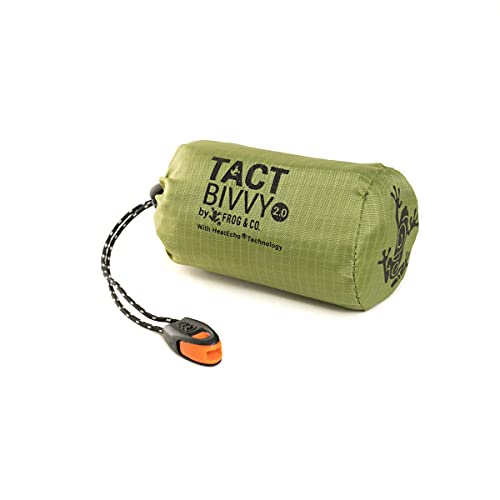
Survival Frog Tact Bivvy 2.0 Emergency Sleeping Bag
More On The Choices That Made The List
The Tennier system is the closest civilian equivalent to actual military-issue kit, and that heritage shows in the build. You get a green mummy Patrol Bag, a black Intermediate Cold Weather bag, a Gore-Tex bivy cover, and a compression sack, all sized to nest together. In a stationary winter camp with proper ECWCS layers, owners commonly rate the combined system down to extreme sub-zero temperatures.
The Gore-Tex shell is the real differentiator: a waterproof yet breathable membrane that vents internal moisture while shedding rain and snow, unlike the mylar emergency bags further down this list. For someone who already trains in cold weather, the layered approach lets you shed pieces as conditions warm up rather than carrying one do-it-all bag.
The Helpful Details
- Gore-Tex membrane is genuinely waterproof and breathable, not just a coated nylon.
- Modular layers mean you can run one, two, or three bags depending on the season.
- Compression sack keeps the packed volume manageable in a pack or vehicle.
- Nylon construction holds up to abrasion against rocks and brush.
- Mil-spec sizing fits wider frames than most civilian mummy bags.
Trade Offs
- Heavier than ultralight options like the Survival Frog further down.
- System cost is high, though each component can be replaced individually.
Feature Snapshot
Who Will Love This
Hardcore cold-weather campers, ex-military users, and anyone running long winter trips where modular layering matters more than packed weight.
Look Elsewhere When
Backpackers counting every ounce should look at the Survival Frog Tact Bivvy 2.0 instead, which trades Gore-Tex for ultralight mylar film.
The Ironstripe takes the standard emergency bivy formula and beefs it up. Thick, tear-resistant polyethylene (PE) film replaces the paper-thin mylar you see on cheaper emergency bags, and reinforced seams help the shell survive being dragged through thorn brush or rocky ground. The integrated hood and built-in emergency whistle add small but meaningful touches.
For a bug-out bag, vehicle kit, or a rough base camp where the bivy will see repeated use rather than one overnight in the trunk, the extra thickness pays off. It is not as light as the Survival Frog, but it is far tougher.
Noteworthy Benefits
- Extra-thick PE film resists punctures better than standard mylar.
- Built-in hood adds warmth and weather protection for the head.
- Emergency whistle sewn in for signaling without rummaging through your pack.
- XL cut fits taller or broader sleepers than typical 84-inch emergency bags.
Worth Noting
- Heavier than ultralight options, so it adds real pack weight on long routes.
- PE is waterproof but not breathable, so condensation can build up inside on humid nights.
- Less packable than the Survival Frog, taking up more room in a tight kit.
Right Fit For
Preppers building a vehicle or home emergency kit who want a bivy that can handle repeated rough use.
Swap It Out When
Thru-hikers chasing sub-3-pound base weights should reach for the Survival Frog Tact Bivvy 2.0 instead.
The SE Survivor Series bivy is the kind of bag you toss in the trunk and forget about until the car breaks down on a winter highway. At 84 inches long and 36 inches wide, it covers most adults, and the army green color helps it disappear in a forest setting. The 30-micron mylar shell is reusable rather than single-use, which is rare at this price tier.
You can also flip it into a ground tarp, gear cover, or rain shield in a pinch, which is the kind of versatility that matters when the bivy doubles as a piece of emergency poly in your pack.
Positive Takeaways
- Reusable mylar that survives multiple trips rather than tearing on first contact.
- Multi-role design works as a ground cover, rain fly, or warming wrap.
- Includes a drawstring pouch for compact storage in a vehicle or pack.
- Army green color blends into natural surroundings.
Honest Caveats
- 30-micron film is thinner than the Ironstripe’s PE shell, so it punctures more easily on sharp brush.
- Reflective heat retention is decent but not as efficient as 90% heat-reflective mylar bags.
Perfect Match For
Shoppers who want a low-cost reusable bivy for a vehicle emergency kit or a backup shelter.
Consider Something Else When
Anyone planning a real cold-weather overnight should look at the MT Army Modular system, which adds an insulating bag layer.
The Monterra bivy sticks to the classic emergency formula: waterproof thermal mylar with sealed seams, designed to reflect a high percentage of your body heat back at you. It is the sort of shelter that lives in a pack lid or a glove box, waiting for an unplanned night in the rain. The sealed seams are the part that matters most, because stitched-and-not-sealed mylar leaks at every joint.
Compared to the SE Survivor Series, the Monterra leans harder into heat reflection, which makes it a smarter pick for genuine cold exposure rather than just a dry layer.
What Pays Off
- Sealed seams keep water out where most budget bags leak first.
- High body-heat reflection supports warmer overnight temps in mild cold.
- Compact when stuffed, easy to dedicate a pocket to it in a daypack.
- Works as an emergency rain shell for a pack or a hiker in distress.
Less Ideal Details
- Mylar shell crinkles loudly when you move, which is fine solo, awkward in a quiet hunting party.
- Not breathable, so moisture from your body collects inside on longer nights.
Who Should Grab It
Day hikers and casual backpackers who want a near-zero-cost insurance layer against a single cold night.
Reach For A Different Pick When
Two-person emergency scenarios call for the S.O.L. 2-Person XL, which spreads the same reflective tech across a wider footprint.
The MT system borrows the mil-spec modular idea and reworks it in Woodland or Multicam, sized at roughly 86.6 x 35.4 x 28 inches. The bivy cover uses a three-layer laminated construction that aims for both waterproofing and breathability, paired with a water-repellent and scratch-resistant nylon face. That makes it a strong alternative to the Tennier system if you want a non-military colorway.
Inside, the patrol and recon bags use ripstop nylon (a woven fabric with reinforced grid lines to stop small tears from spreading) with synthetic fill that compresses well for pack transport. The setup is genuinely usable across spring, summer, fall, and shoulder-winter conditions when you adjust the layering.
Well-Handled Touches
- Laminated bivy fabric balances waterproofing with vapor permeability.
- Ripstop nylon shell resists small punctures from brush and rock.
- Modular layers allow real four-season flexibility.
- Camouflage pattern suits hunting and field-training use.
Potential Drawbacks
- Bulky when fully assembled, which is the trade-off for any modular system.
- Synthetic fill is heavier and slower to dry than down in damp conditions.
Feature Snapshot
Made For
Hunters, airsoft players, and field-training users who want a camouflage modular system that handles year-round conditions.
Skip It When
Anyone who needs true ultralight performance will find the S.O.L. 90% Bivvy far lighter in the pack.
The S.O.L. 2-Person XL is the emergency bivy scaled up for two sleepers, which makes it the right call for partners, parent-and-kid overnights, or a two-person winter car-camp setup. The aluminum-coated polyethylene reflects around 90% of radiant body heat back at the occupants, and the heat-sealed seams keep rain and wind out.
It does not breathe well, and you will get condensation inside after a long night, but for a single unplanned overnight in a roadside ditch, that is a reasonable trade for the warmth retention.
Where It Excels
- Two-person footprint fits adults side-by-side or a parent and child.
- 90% heat reflection delivers strong warmth for the weight class.
- Heat-sealed seams hold up better than stitched budget bags.
- Recognized brand with consistent quality control on emergency gear.
Points To Keep In Mind
- Condensation builds inside since the shell cannot vent moisture.
- Larger packed size than single-person bivies like the Monterra.
Best Suited To
Couples or co-adventurers who want a single emergency shelter that covers both of them in a roadside situation.
Not Your Match When
Solo backpackers will find the S.O.L. single-person bivy a better pack size for their kit.
The single-person S.O.L. bivy delivers the same 90% heat reflection as the 2-Person XL in a solo footprint, and the tinder paracord (a drawstring made from parachute cord that can be stripped to use as fire-starting tinder) plus integrated survival whistle make it feel like a real piece of emergency kit. The drawstring closure is what most generic mylar bags skip, and it genuinely helps seal in warm air when the wind picks up.
Compared to the Ironstripe, this one is lighter and more packable, but it is also more puncture-prone because the film is thinner to hit that weight target.
The Case For It
- Tinder paracord adds a real fire-starting backup, not just a gimmick.
- Drawstring closure traps warm air better than open-hem designs.
- 90% reflective coating matches the more expensive emergency bivies on warmth.
- Tear-resistant film holds up to careful repeated use in a pack.
Less-Strong Areas
- Not breathable, so expect interior condensation on humid nights.
- Film is thinner than the Ironstripe’s PE shell, so sharp rocks are a real risk.
Right Fit For
Backpackers and day-trippers who want a single emergency layer that disappears in the pack until they need it.
A Better Fit Elsewhere
Anyone carrying heavy gear or dragging through dense brush will get more durability from the Ironstripe XL.
The Survival Frog Tact Bivvy 2.0 is the featherweight of the group, weighing in at roughly 4.8 ounces and packing down to almost nothing in its included stuff sack. The HeatEcho reflective polyester film is thin, which is exactly why it weighs so little, and the carabiner plus whistle make it easy to clip to the outside of a pack so you never leave it behind.
This is the one you bring on a long-distance hike where the bivy is a “just in case” layer rather than the main shelter, and where every ounce on your back counts.
Positive Points
- Sub-5-ounce weight is the lightest option on this list by a wide margin.
- Carabiner lets you clip it to a pack or hang it for quick access.
- Stuff sack is oversized enough to repack the bivy without a fight.
- Heat-reflective film boosts warmth in genuine cold snaps.
Possible Compromises
- Thin film punctures more easily than the Ironstripe or any nylon bivy.
- Best treated as a single-trip or occasional-use emergency layer rather than a primary shelter.
Who It Suits Best
Ultralight backpackers, EDC (everyday carry) preppers, and anyone who wants a backup layer that never gets left at home because it weighs nothing.
Where Another Pick Suits Better
Multi-day winter trips call for the Tennier modular system, which adds real insulating bags under the Gore-Tex bivy.
Picking The Right Bivy For Your Night Outside
A bivy cover is not one-size-fits-all, and the wrong match leaves you either cold, sweaty, or weighed down. The big decision is whether you need a primary shelter or an emergency backup, because that changes everything about fabric, weight, and packed size.
Material is the first filter. Gore-Tex and similar membranes cost more and weigh more, but they actually breathe, which matters on multi-day trips. Mylar and aluminum-coated polyethylene (PE, a plastic film) are lighter and cheaper, but they trap condensation, so they work best as single-night emergency layers rather than long-term shelters.
Weight and packed size matter more for backpackers than for drivers. Anything under 6 ounces, like the Survival Frog, basically disappears in your pack. Anything over 2 pounds is really a vehicle or base-camp item unless you are running a true cold-weather modular system like the Tennier or MT kits.
Size and fit come up more than people expect. A 36-inch-wide bivy feels tight to anyone with broad shoulders, and an 84-inch length is borderline for sleepers over 6 feet. If you sit between sizes, the XL cut on the Ironstripe is the safer bet.
Finally, think about reusability. Mylar emergency bags are usually single-use, while the SE Survivor and the Ironstripe are designed to be folded back up and pulled out again next season. If you want a vehicle bag that lives in the trunk for years, reusable is the way to go.
Key Considerations Across These Picks
Common Slip Ups When Shopping
A frequent mistake is buying an emergency mylar bag expecting it to replace a real sleeping system. Mylar reflects heat, but it does not insulate, and on a real cold night you will still freeze without a proper bag under it. Match the bivy to the role: backup, primary, or modular layer.
Another trap is trusting “waterproof” labels without checking the seam construction. Stitched seams wick water through the needle holes, so look for heat-sealed or taped seams, like the Monterra and the S.O.L. bivies, if you expect real rain.
Why Premium Options Cost More
The jump from a $10 mylar bag to a Gore-Tex bivy cover is the jump from single-use emergency to reusable, breathable shelter. You pay for the membrane technology, the taped seams, the heavier face fabric, and the mil-spec construction. For day hikers, that gap is rarely worth it. For winter campers and field users, the durability and breathability show up on the second or third trip and earn the cost back.
Frequently Asked Questions
What is an army bivy cover actually for?
An army bivy cover is a waterproof, weather-resistant shell that goes over your sleeping bag to add a layer of protection against rain, snow, wind, and abrasion. The military versions pair with modular sleeping bags for cold-weather field use.
Can I use a bivy cover without a sleeping bag?
Mylar emergency bivies reflect body heat, so you can survive a night in one without a bag in mild conditions. In real cold, you will need an insulating bag underneath, since the bivy shell alone does not trap warmth the way down or synthetic fill does.
How is a bivy cover different from a tent?
A bivy cover is a one-person, ground-hugging shell that weighs far less and packs down smaller than a tent. The trade is comfort, headroom, and condensation control, since most bivy fabrics do not breathe as well as a double-wall tent.
Are mylar emergency bivies actually reusable?
Some are, like the SE Survivor and the S.O.L. line, which use thicker films and taped seams. The cheapest single-use bags tear on the first outing and are meant to be discarded after one night, so check the construction before assuming you can reuse it.
How do I stop condensation inside a bivy?
Venting is the main lever: leave the face opening cracked, shake the bag out before climbing in, and avoid storing wet clothes inside. Breathable shells like Gore-Tex help, but in truly humid weather even those need active venting to stay dry.
Final Verdict
The right army bivy cover depends on what you are actually trying to survive. A modular Gore-Tex system like the Tennier or MT kit handles real winter field use. Mylar emergency bivies like the S.O.L. and Ironstripe work as backup layers you hope you never need. The Survival Frog wins for ultralight packers, while the S.O.L. 2-Person XL covers couples and partners. Match the shell to the season, the trip length, and your pack size, and the rest takes care of itself.