
A long trail, a sandy beach, or a packed car ride all have one thing in common: somebody forgot the drinks. Backpack coolers solve that problem by merging storage, insulation, and mobility into a single carry, freeing your hands for the hike, the paddle, or wrangling the kids. The picks below cover the spread from serious multi-day hauls to lighter day-trip styles, so the right bag depends less on specs in isolation and more on how you actually spend a day outside. Read on to find the match for your routine.
The Leading Options At A Glance

TOURIT 38 Cans Backpack Cooler

Carhartt Insulated Two Compartment Cooler
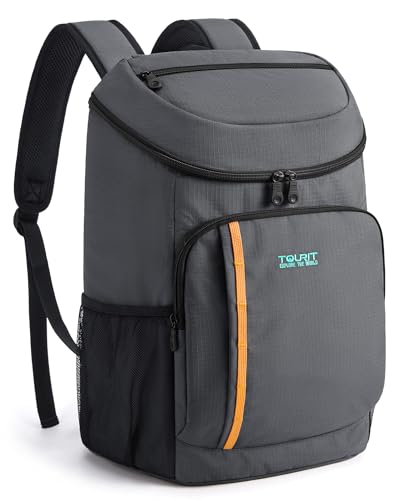
TOURIT 30 Cans Lightweight Cooler Backpack

Titan by Arctic Zone 26-Can Backpack Cooler

Goloni 30 Cans Insulated Backpack Cooler

TOURIT Double Deck Lunch Cooler Backpack

Corkcicle EOLA Insulated Cooler Backpack
What Each Pick Brings To The Table
Group trips run on logistics, and the TOURIT 38 Cans Backpack Cooler leans into that reality with two stacked insulated chambers inside a roughly 28L shell. The top section swallows keys, snacks, and the kind of small gear that always migrates to the bottom of a single-compartment bag, while the lower zone holds the day’s drinks with room for ice on top.
For a family picnic or a Saturday at the lake, that split pays off: nobody is digging past sodas to find the sunscreen. At 11.8″ x 8.3″ x 17.5″, it is taller than the slimmer picks later on this list, so it rides a little closer to a small daypack than a streamlined cooler. Backpack straps handle the weight fine on shorter walks, though fully loaded over a long trek, you may find the bulk shows up sooner than lighter models.
Features That Help
- Dual-compartment layout separates dry goods from chilled drinks, reducing the rummaging problem common to single-chamber coolers
- 38-can capacity suits a family or small group without splitting supplies across two bags
- Top dry-storage pocket keeps keys, a phone, and napkins accessible without exposing the cold zone
- Leak-resistant lower lining contains meltwater on a hot afternoon
- Padded straps help distribute weight across both shoulders during the walk from car to campsite
Things To Consider
- The taller profile may feel bulky on narrow singletrack
- Heavier than single-chamber packs when fully loaded
At A Glance
Who It Suits Best
Families and small groups running a car-to-campsite or car-to-beach outing who want a single bag for both drinks and gear.
Consider Something Else When
The TOURIT 30 Cans Lightweight Cooler Backpack fits solo hikers better with its lighter build and smaller footprint.
The Carhartt Insulated Two Compartment Cooler wears its workwear heritage openly, with 600-denier construction and a water-repellent finish that shrugs off light rain and trail dust. The clever twist is the convertible base: a fully insulated cooler section holds up to 24 cans with ice, and when you do not need the chill, that section folds flat so the bag returns to a standard 13.5″ x 19″ x 8.5″ backpack for daily carry.
That hybrid format covers two roles most of the picks in this list handle separately. The upper compartment fits a laptop and daily gear, which makes the bag a natural fit for commuters who also camp on weekends. Compared to the TOURIT 38 Cans, capacity is smaller, but the trade is a more refined, more durable-feeling carry that bridges work and weekend. Owners report the shell holds up well to repeated outdoor use, though as with most soft coolers, the insulation is tuned for day trips rather than multi-day ice retention.
What It Does Well
- Convertible design eliminates the need for a separate work and play bag
- 600-denier fabric with water-repellent finish handles weather and abrasion
- Front zippered pocket adds quick-access storage for small essentials
- 24-can cooler section is enough for a couple of friends or a long day solo
Worth Noting
- Smaller cooler capacity than dedicated group packs like the TOURIT 38 Cans
- Premium build lands in a higher tier than budget-focused options
Feature Snapshot
Made For
Commuters and weekend travelers who want one bag that handles both laptop duty during the week and food storage on the trail.
Not Your Match When
The Titan by Arctic Zone 26-Can Backpack Cooler is a stronger match for multi-day off-grid use where longer ice retention matters more than a laptop-ready upper section.
The TOURIT 30 Cans Lightweight Cooler Backpack is the pick you reach for when every ounce counts. At roughly 1.1 pounds empty and measuring 13.0″ x 7.5″ x 17″, it disappears on the back, leaving room for up to 30 cans of cargo without dragging you off the trail.
That weight advantage comes from a soft waterproof shell rather than a rigid frame, so the bag compresses when not fully loaded. The trade-off is structure: it does not stand upright on its own the way hard-sided coolers do, which can make packing in a tight car trunk a little fiddly. For day hikes, beach walks, and picnics, that barely registers. Compared to the heavier TOURIT 38 Cans from earlier, this one drops capacity for a noticeably lighter stride.
The Practical Payoff
- Sub-1.5-pound empty weight keeps shoulders fresh over long walks
- Soft-sided construction compresses into a daypack silhouette when partially full
- 30-can capacity covers most single-day group outings
- Leak-proof lining handles melted ice without seeping onto gear
Trade Offs
- Soft shell does not stand upright on its own, so packing is more hands-on
- Less structured than framed packs like the TOURIT 38 Cans
Best Suited To
Solo hikers and couples covering moderate distances on a day trip who value weight savings over rigid structure.
A Better Fit Elsewhere
The TOURIT 38 Cans Backpack Cooler fits group outings better with its higher capacity and dual-compartment layout.
Multi-day trips push a soft cooler to its limits, and the Titan by Arctic Zone 26-Can Backpack Cooler answers with up to two days of ice retention backed by five insulated compartments, twelve accessory pockets, and two removable Ice Walls that boost cold hold. The main chamber swallows 26 cans while a front organizer handles the small stuff: utensils, phone, dry snacks.
All that structure adds weight, so the bag is less nimble than the TOURIT 30 Cans Lightweight from earlier. Where it shines is the overnighter: leave the car Friday with frozen Ice Walls and return Sunday to still-cold drinks. Compared to the budget Goloni covered next, the Titan delivers more compartmenting and a noticeably longer cold window, which justifies its place in the higher tier.
Standout Benefits
- Up to two days of ice retention handles overnight and weekend trips
- Five insulated compartments plus twelve accessory pockets cover storage variety
- Two removable Ice Walls boost cooling performance when pre-frozen
- Front organizer pocket gives quick access to dry goods and small items
Honest Caveats
- Heavier and more complex than single-zone day packs
- More compartments mean more zippers to keep clean over time
Key Specs
Who Will Love This
Campers and anglers running overnight or weekend trips where a long ice window matters more than light weight.
Look Elsewhere When
The TOURIT 30 Cans Lightweight Cooler Backpack is a smarter choice for short day hikes where you would rather drop the pounds than carry an organizer.
The Goloni 30 Cans Insulated Backpack Cooler sits in the accessible tier without dropping the basics. A thickened insulation cotton paired with an aluminum foil lining aims to hold cold for up to 12 hours, and a PE hard-lined interior works with seamless connection technology to keep leaks contained.
For a casual beach day or a commuter who wants chilled lunch on arrival, that level of performance is more than enough. Compared to the Titan covered earlier, the Goloni trades long ice retention for a lower entry point, which makes sense if your day trips end before the second sunset. Owners commonly note the leak-proof interior wipes clean easily after a day of sandy snacks, though the overall build is less rugged than workwear-grade options like the Carhartt covered above.
Reasons It Performs
- 12-hour cold hold covers a full day trip from morning to evening
- 30-can capacity matches the mid-tier TOURIT picks for group-size flexibility
- Wipe-clean PE interior handles spills and sandy food without fuss
- Accessible price point suits first-time cooler backpack shoppers
Points To Keep In Mind
- Shorter ice window than multi-day options like the Titan
- Build is less rugged than higher-tier workwear designs
Perfect Match For
Casual weekend beachgoers and commuters who need reliable day-trip cooling without paying for multi-day features.
Another Choice May Suit
The Titan by Arctic Zone 26-Can Backpack Cooler is the better pick for overnights where a 12-hour cold hold runs out before the trip does.
The TOURIT Double Deck Lunch Cooler Backpack is built around a less common idea: lunches deserve their own architecture. The double-deck layout (12″ x 6.5″ x 17″) separates the cold compartment from a slim front pocket for napkins, utensils, and a tablet, so a packed sandwich never meets a leaking water bottle.
The high-density insulation locks in temperature for hours, and the leak-proof lining wipes down after a soup spill, which matters more in an office or commute setting than on a muddy trail. Compared to the larger TOURIT 38 Cans, this is a more compact daily carry, sized for one or two meals rather than a group supply run. The 30-can headline number applies when you stretch the bag for picnic use, though the slimmer build is the real selling point for everyday carry.
Everyday Advantages
- Double-deck layout keeps food separate from accessories and electronics
- Slim 6.5-inch profile fits comfortably in office and transit spaces
- Wipe-clean lining handles everyday spills with minimal effort
- Lightweight enough to double as a daily work or school bag
Room For Improvement
- Less suited to rugged outdoor use than heavier touring options
- Smaller cooler zone than group-sized picks
Whose Shelf It Belongs On
Office workers, students, and anyone packing a daily lunch who wants one bag for both work essentials and chilled food.
Skip It When
The TOURIT 38 Cans Backpack Cooler is a stronger fit for group camping where a larger, dual-zone cooler layout handles more people.
The Corkcicle EOLA Insulated Cooler Backpack steps outside the trail-ready aesthetic and into something more fashion-conscious. The Seafoam colorway and soft-sided silhouette make this the pick that travels from a wine-country picnic to a downtown rooftop without looking out of place at either stop. Inside, a food-safe liner holds up to 12 cans or 5 full-size wine bottles, so a small gathering or a long lunch for two fits comfortably.
For a tailgate or a park day with friends, the capacity is enough, though anyone feeding a larger crew will want to step up to the TOURIT 38 Cans or Titan covered above. Compared to those rugged picks, the EOLA trades raw capacity and ice retention for a refined look and a softer feel against the back. Owners commonly mention the wipe-clean interior as a welcome touch for the inevitable drips from a chilled bottle.
Real Benefits
- Style-forward design fits beach, picnic, and urban settings alike
- Soft-sided construction carries comfortably without rigid bulk
- Wine-bottle-friendly capacity suits a small gathering or date outing
- Food-safe liner wipes clean after a day of chilled drinks
Less Ideal Details
- Smaller capacity than group-focused options
- Shorter ice retention than multi-day coolers
Built With In Mind
Style-conscious shoppers running small social outings, beach days, and wine-country picnics where look matters as much as function.
Swap It Out When
The TOURIT 38 Cans Backpack Cooler is the right call for group camping trips that demand more capacity and a dual-compartment layout.
What To Weigh Before Choosing An Arctic Backpack Cooler
Capacity Versus Footprint
A 38-can pack sounds generous until you actually wear it on a three-mile trail. Capacity (the number of cans the cooler claims to hold) and footprint (the bag’s actual dimensions) work against each other. A larger bag holds more, but the taller or wider profile changes how the pack rides on your back. For solo trips under five miles, packs in the 25 to 30-can range usually hit a sweet spot: enough room for food and drinks without the bulk of a full group hauler. Match the size to your typical outing, not the largest trip you might take once a year.
Insulation And Ice Retention
Insulation is what separates a true cooler from a fancy lunchbox. Most soft backpack coolers use layers of high-density foam, foil linings, or PE hard liners to slow heat transfer. Manufacturers state retention in hours or days, and those numbers assume a fully packed cooler with pre-chilled contents and enough ice to fill the gaps. Treat retention claims as ceiling numbers rather than guarantees, since outside temperature, sun exposure, and how often you open the bag all chip away at performance. For day trips, 12 hours of cold hold is plenty. For overnights, look for two-day retention and removable Ice Walls to extend the window.
Build Quality And Weather Resistance
The shell fabric is the bag’s first line of defense. 600-denier polyester is a common benchmark for outdoor packs, and water-repellent coatings add a margin of safety against light rain and splashes. Seams, zippers, and the cooler liner tell the real story: a PE hard-lined interior resists punctures and wipes clean, while softer linings can wear faster under heavy use. For beach and lake use, prioritize leak-proof liners to contain meltwater. For trail use, prioritize abrasion resistance on the bottom panel since that is where packs take the most punishment.
Comfort And Carry Style
A cooler that holds 30 cans is not much fun if the straps dig into your shoulders after a mile. Padded straps, sternum straps, and a contoured back panel all matter when the bag is fully loaded. Weight distribution is the quiet factor: an empty bag that weighs 1.1 pounds carries very differently from one that weighs 3 pounds once you add ice and drinks. Lighter shells like the TOURIT 30 Cans Lightweight sacrifice some structure for ease on long walks, while heavily insulated picks like the Titan trade that lightness for ice retention.
Key Considerations Across These Picks
Where Shoppers Go Wrong
The first misstep is picking capacity over comfort, then regretting a 38-can pack on a hike. The second is trusting ice retention claims at face value, especially in direct sun or with frequent openings. A third common slip is ignoring the liner material: a soft foil liner cleans differently than a hard PE shell, and that matters for the soggy sandwich scenario. Match the bag to the realistic outing, not the imagined worst case.
Where The Extra Money Goes
Higher-tier picks like the Carhartt and Titan charge more for two upgrades: better materials and longer ice retention. Workwear-grade denier fabric and water-repellent coatings extend the bag’s life on rough trips, and removable Ice Walls plus multi-layer insulation stretch cold hold from half a day to two. For commuters and weekend travelers, the upgrade often pays for itself in durability. For pure day-trippers, the lower tier covers the job without the extra cost.
Frequently Asked Questions
How Many Cans Should An Arctic Backpack Cooler Hold?
For solo or couple use, 20 to 30 cans covers a full day with room for ice. For family or small group outings, 30 to 40 cans keeps everyone supplied without a second bag. Larger capacity usually means a taller, heavier pack, so balance the can count against how far you plan to carry it.
How Long Does A Backpack Cooler Actually Keep Ice?
Most soft backpack coolers in this list hold ice for 12 to 24 hours under typical conditions. Multi-day picks like the Titan claim up to two days with the included Ice Walls pre-frozen. Heat, sun, and how often you open the lid all reduce that window in practice.
Can A Backpack Cooler Replace A Hard Cooler?
For day trips, picnics, and beach outings, a backpack cooler covers the same role with the bonus of hands-free carry. For multi-day camping, fishing, or tailgating where you leave the cooler in one spot, a hard cooler still holds ice longer. Many people own both and use them for different jobs.
Are Backpack Coolers Leak-Proof?
Most picks in this category use leak-proof or leak-resistant liners to contain meltwater. The interior still gets wet, but the water stays inside the bag rather than soaking your car seat or backpack. Wipe-clean PE liners are easier to dry between uses than soft foil linings.
How Do You Clean A Backpack Cooler?
Empty the bag, wipe the interior with a damp cloth and mild soap, and leave the liner open to air-dry. For stubborn odors, a baking soda paste works on most liners. Avoid harsh detergents that can break down the waterproof coating on the inside fabric.
The Takeaway
The right backpack cooler comes down to how you actually spend a day outside: group size, trip length, and how far you carry the bag. Match the capacity to your crew, the ice retention to your trip length, and the build to your terrain. Any of these seven picks will keep the drinks cold, so the real choice is which one fits the way you use it.