
Backyard cooks chasing that deep, wood-fired flavor have more domestic options than ever, and the latest pellet grills pull double duty as smokers, sear stations, and even outdoor ovens. This roundup focuses on grills built in the USA, mixing dedicated pellet cookers with combo rigs and offset alternatives that round out a real outdoor kitchen. You’ll find picks sized for weeknight family meals alongside models built for full brisket sessions, with notes on what each one handles best.
The Shortlist At A Glance

Traeger Woodridge Wood Pellet Grill & Smoker (WiFi)

Z GRILLS 2026 Electric Pellet Smoker & Grill (700 sq. in.)

Pit Boss 500 FB2 Series Wood Pellet Grill (518 sq. in.)

Pit Boss 3-Series Propane Gas Vertical Smoker (983 sq. in.)

Weber Smoque 22-Inch Pellet Smoker (Black)
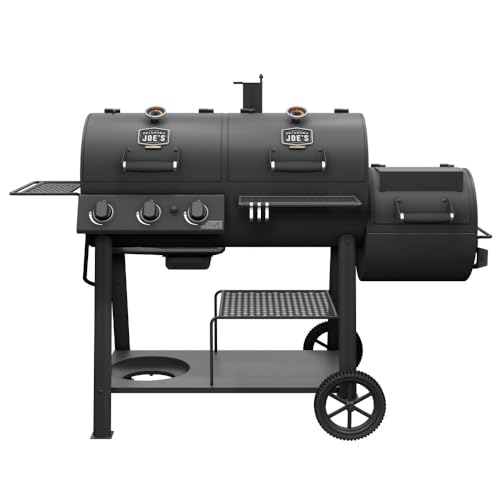
Oklahoma Joe’s Canyon Combo Dual Fuel Smoker and Grill

Pit Boss 4-Burner Deluxe Fold & Go Portable Griddle (753 sq. in.)

Pit Boss 1300 Navigator Series WiFi Pellet Grill (1,329 sq. in.)

Pit Boss 500 Carbon Series Wood Pellet Grill (543 sq. in.)

Oklahoma Joe’s Longhorn Offset Charcoal Smoker and Grill
The Strengths Of Each Pick
Traeger’s Woodridge lands at the top of the list for cooks who want app-managed control without giving up real wood-fired flavor. The 860 square inches of cooking space handles a full brisket flat plus a couple of racks of ribs with room to spare, and WiFi connectivity means temperature adjustments happen from the couch during halftime.
For mixed households juggling burgers one night and pulled pork the next, the 6-in-1 cooking versatility (grill, smoke, bake, roast, braise, and BBQ) keeps the menu options wide open. In our view, this is the sweet spot for homeowners who want pellet convenience with a polished interface.
Useful Strengths
- WiFi controller lets you track and tweak temps remotely, which helps during long overnight cooks.
- 860 sq. in. capacity covers a family dinner plus leftovers for the next day.
- Multi-mode cooking means one rig handles weeknight chicken and weekend brisket equally well.
- Sturdy build aimed at year-round outdoor placement, depending on your cover situation.
- Brand ecosystem (pellets, accessories, recipes) makes onboarding easier for first-time pellet owners.
Points To Keep In Mind
- WiFi features depend on a stable home network; in a detached garage, signal may dip.
- Hopper refills matter on long cooks, and you’ll want pellet storage kept dry nearby.
Quick Facts
Right Fit For
Tech-forward home cooks who want one connected grill to handle weeknight meals and longer weekend smokes without learning offset fire management.
Reach For A Different Pick When
The Pit Boss 1300 Navigator Series suits shoppers cooking for very large groups, where 1,329 sq. in. of cook space and a 30 lb. hopper become a real advantage.
Z GRILLS’ 2026 update leans hard into precision, pairing a PID 3.0 controller with a dual-wall insulated base that holds heat steady in colder months. The 28-hour hopper is the headline figure here, meaning overnight brisket or pork shoulder runs without a refill alarm waking you at 3 a.m.
Where the Traeger Woodridge leans on WiFi, this model emphasizes analog-style accuracy: set the dial, walk away, and trust the controller to manage pellet feed and airflow. Dual meat probes add another layer of confidence for cooks chasing exact internal temps.
Real-World Strengths
- PID 3.0 control tightens temperature swings between 180°F and 450°F for consistent bark development.
- Dual-wall insulation keeps heat in and pellet consumption down, which helps in shoulder seasons.
- 28 lb. hopper supports extended smokes with fewer interruptions.
- 8-in-1 cooking flexibility covers everything from seared steaks to slow-smoked ribs.
Trade Offs
- 700 sq. in. is generous but smaller than the Pit Boss 1300 Navigator’s 1,329 sq. in. spread.
- Cover is included, though long-term outdoor storage still benefits from a sheltered spot.
Feature Snapshot
Made For
Patio cooks running overnight or daylong smokes who care more about tight temperature control than smart-home integration.
Where Another Pick Suits Better
Buyers wanting app-driven control and a larger footprint will find the Traeger Woodridge Wood Pellet Grill a more natural fit.
The 500 FB2 is the most patio-friendly entry in the Pit Boss pellet family, and the Flame Broiler slider changes the game for anyone who wants real sear marks. Slide it open and pellets feed direct flame to the grates, closing it returns to traditional indirect smoke.
For townhomes and small backyards where 1,000+ sq. in. cookers simply won’t fit, 518 sq. in. of two-tier porcelain-coated steel gets the job done. The 5 lb. hopper is modest, but for weeknight cooks that’s a fair trade for the smaller footprint.
What Pays Off
- Flame Broiler gives legitimate direct-flame grilling, not just smoke.
- Two-tier porcelain grates handle multiple dishes without crowding.
- Temperature range from 180°F to 500°F covers low-and-slow plus hot sears.
Worth Noting
- 5 lb. hopper fills shorter than the Z GRILLS or Pit Boss 1300, so plan top-ups on long cooks.
- 518 sq. in. may feel tight for a full brisket plus sides at once.
Who It Suits Best
Small-patio owners who want a single grill that both smokes and sears without dominating the deck.
Consider Something Else When
Cooks feeding ten or more people on the regular will appreciate the Pit Boss 500 Carbon Series’ larger 543 sq. in. cook space and bigger 13.5 lb. hopper.
Not a pellet grill, but a useful alternative for cooks who want wood-chip smoke without the pellet commitment. The 3-Series vertical smoker runs on propane, heats a 2,500 BTU burner to feed the wood chip tray, and circulates smoke across four adjustable racks.
983 sq. in. of cook space across four racks makes this a strong pick for party cooks who run ribs, chicken, and fish at the same time. Rear wheels and a removable grease cup take some of the hassle out of relocation and cleanup.
The Case For It
- Vertical cabinet layout keeps smoke moving around food, no rotation needed.
- Four adjustable racks let you batch a full party menu at one temperature.
- Propane startup is fast, and the analog HVR knob keeps controls simple.
Possible Compromises
- 100°F to 300°F range caps searing potential; this is a smoker, not a grill.
- Wood chips burn faster than pellets, so longer cooks require refilling the tray.
Best Suited To
Entertainers who smoke frequently and value high-capacity vertical layouts over flame-kissed finishes.
Look Elsewhere When
Cooks who also want a direct sear option should look at the Pit Boss 500 FB2, which adds a Flame Broiler slider for grilling.
The Weber Smoque takes a different angle on pellet cooking, focusing on smoke quality over capacity. The SmokeBoost setting holds lower temperatures for longer smoke absorption, and the SmoqueVent system circulates smoke around food for deeper flavor and richer browning on ribs and brisket.
It’s the most refined-feeling pick in the lineup, and the 22-inch footprint works on apartment patios and small decks. Compared to the larger Pit Boss 1300 Navigator, this trades raw cook area for a more deliberate low-and-slow experience.
Well-Handled Touches
- SmokeBoost mode targets the temperature range where wood flavor develops best.
- SmoqueVent smoke circulation produces even browning without manual rotation.
- Compact Weber build quality carries a long track record for durability.
Soft Spots
- Smaller cook surface than the Pit Boss or Traeger models in this list.
- Focused on smoking, so searing happens on a side burner or stovetop.
Who Will Love This
Flavor-first beginners who want a smaller smoker with thoughtful design rather than maximum surface area.
Not Your Match When
Large-format hosts feeding a crowd will find more room in the Pit Boss 1300 Navigator, which triples the cook space.
Oklahoma Joe’s Canyon Combo splits the difference between offset tradition and propane convenience. A 750 sq. in. charcoal chamber handles low-and-slow with hardwood splits, while a 36,000 BTU propane side burner gives you fast, even heat for burgers and steaks.
Total cooking area reaches 1,031 sq. in., enough to smoke two pork shoulders and grill a dozen burgers in parallel. For households splitting time between classic BBQ and quick weeknight grilling, this avoids the need for two separate rigs.
Strengths Worth Knowing
- Dual fuel design means genuine charcoal smoke plus propane convenience.
- Large primary chamber handles competition-level batch cooks.
- Heavy-gauge build is built to take a beating in outdoor setups.
Practical Considerations
- Two fuel systems to manage, learn, and maintain (charcoal, splits, propane tank).
- Footprint is large; smaller patios will struggle to give it room.
Right Fit For
Backyard traditionalists who want authentic offset smoke but also need propane grilling for weeknight meals.
Where Another Pick Suits Better
Buyers wanting pellet automation and WiFi should consider the Traeger Woodridge instead, which simplifies the cook to a single fuel.
A flat-top griddle isn’t a pellet grill, but it earns its spot here for anyone who treats tailgates and campgrounds like a second kitchen. The Fold & Go frame collapses down for transport, and the hard cover protects the 753 sq. in. cook surface during the drive.
Four independently controlled burners put out 62,000 BTU total, hot enough for smashburgers, fajitas, and pancakes at sunrise. Compared to the stationary Pit Boss 1300 Navigator, this trades raw size for genuine portability.
Practical Advantages
- Foldable frame and hard cover make transport and storage realistic.
- Four separate burners let you run hot and cool zones side by side.
- 37-inch by 20-inch cook surface feeds a crowd in a single session.
Less Ideal Details
- Propane-only with no smoke profile, so this complements rather than replaces a smoker.
- Flat-top seasoning takes commitment if you want a non-stick surface long-term.
Made For
Tailgaters, campers, and RV owners who want a serious flat-top they can actually pack up and roll out.
Skip It When
Cooks focused purely on backyard smoking should look at the Pit Boss 1300 Navigator for a stationary, larger pellet rig.
The 1300 Navigator is the largest pellet rig in this roundup, and the spec sheet shows it. 1,329 sq. in. of cook space, a 30 lb. hopper, WiFi and Bluetooth connectivity, and a Flame Broiler slider for direct-heat grilling. For block-party cooks, it covers a full menu at once.
The touchscreen controller is the most polished interface Pit Boss offers, and the folding front shelf adds prep space without eating patio room. Five-year warranty coverage is the most generous on this list, which matters on a rig this size.
What Earns Its Place
- Massive 1,329 sq. in. cook surface handles brisket, ribs, and sides simultaneously.
- WiFi and Bluetooth let you monitor cooks from inside.
- Flame Broiler slider provides direct-flame grilling without a second appliance.
- 30 lb. hopper supports all-day or overnight cooks without refills.
- 5-year warranty backing from the manufacturer.
Honest Caveats
- Size demands a large patio or dedicated outdoor space.
- Higher-end build means more to clean and maintain after big cooks.
Key Product Details
Best Suited To
Hosts running large cookouts and competition-style cooks who need room, app control, and a long warranty in one package.
Where A Sibling Pick Shines
Cooks with limited patio space will be happier with the Pit Boss 500 FB2, which keeps the Flame Broiler feature in a smaller footprint.
The 500 Carbon Series is the no-fuss cousin in the Pit Boss pellet lineup. No WiFi, no Flame Broiler slider, just a 543 sq. in. porcelain-coated cook surface, an LCD digital controller, and a 13.5 lb. hopper that handles most weekend cooks without a refill.
For the cook who fires up the grill every week and doesn’t need app notifications, this delivers the pellet experience without the extras. Compared to the Traeger Woodridge, you give up WiFi and some cook area in exchange for a simpler interface.
The Value In It
- Porcelain-coated grates clean easily and distribute heat evenly.
- 13.5 lb. hopper is generous for a 543 sq. in. cook area.
- 180°F to 500°F range covers traditional low-and-slow and higher-heat cooks.
- Automatic start and cool-down cycles simplify prep and shutdown.
Minor Gripes
- No WiFi, so monitoring means walking out to the patio.
Perfect Match For
Weekly backyard cooks who want a reliable pellet grill without smart features they won’t use.
Where Another Pick Suits Better
Tech-curious cooks will appreciate the Traeger Woodridge’s WiFi controller and larger 860 sq. in. footprint.
The Longhorn is the most traditional smoker in the roundup, an offset barrel design that rewards hands-on cooks willing to manage fire and airflow directly. 751 sq. in. of primary cooking space plus a 309 sq. in. firebox chamber totals 1,060 sq. in.
Hardwood splits and chunks are the fuel, not pellets, and the flavor profile reflects that. For pitmasters who treat fire management as part of the craft, this is a more authentic route than any electronic pellet controller.
What It Does Well
- Offset firebox creates natural convection and traditional smoke flavor.
- Heavy-gauge steel construction holds heat and stands up to seasons of use.
- 1,060 sq. in. total area handles multiple large cuts at once.
Trade-Offs To Consider
- Requires active fire and damper management, not a set-and-forget experience.
- Larger footprint than vertical or cabinet smokers, and it’s heavy to move.
Quick Technical Notes
Whose Shelf It Belongs On
Pitmaster purists who want the traditional offset experience and enjoy managing fire as part of the cook.
Where Another Pick Suits Better
Anyone wanting push-button convenience should look at the Z GRILLS 2026 model, which automates pellet feeding and temperature control.
Picking The Right Pellet Grill For Your Patio
Matching a grill to your cooking style matters more than chasing the largest cook space. Pellet grills burn hardwood pellets fed by an auger, with an electronic controller regulating temperature, so they’re a strong fit for set-and-forget cooks who want smoke without constant fire tending.
Cooking Capacity And Household Size
The right square inches depends on what you typically cook. For two-person weeknight meals, 500 to 700 sq. in. is plenty. Larger households and party cooks will appreciate 860 sq. in. and up, and the Pit Boss 1300 Navigator’s 1,329 sq. in. handles brisket plus sides in a single batch.
Temperature Range And Versatility
A wider range (180°F to 500°F) covers both low-and-slow smoking and higher-heat roasting. Some models add a Flame Broiler slider or sear station for direct flame, expanding what one rig can do. The Pit Boss 500 FB2 and 1300 Navigator both offer that direct-flame option; the Weber Smoque focuses on smoke.
Hopper Size And Run Time
Hopper capacity, measured in pounds, dictates how long a cook can run unattended. A 5 lb. hopper covers short cooks, while 13.5 lb., 28 lb., and 30 lb. hoppers support overnight and daylong smokes. Match hopper size to your typical cook length and refill tolerance.
Build Quality And Long-Term Care
Porcelain-coated grates clean easily, and dual-wall insulation holds heat in colder months. For long-term outdoor placement, plan on a cover, sheltered storage, and routine ash and grease removal. Pellet grills are generally lower maintenance than offset smokers but still benefit from seasonal deep cleans.
Key Considerations Across These Picks
Pitfalls Shoppers Hit
A common trap is buying the largest cook area available and discovering the grill won’t fit the patio or won’t fit through the gate. Measure before you commit. Another mistake is ignoring hopper size; cooks running overnight smokes find 5 lb. hoppers frustrating and end up refilling mid-cook. Skipping pellet storage planning is another small oversight, since pellets spoil quickly when left in a damp garage.
Where The Extra Money Goes
Higher-tier models typically add WiFi or Bluetooth, larger hoppers, longer manufacturer warranty coverage, and direct-flame capability. The jump from a basic pellet grill to a connected, large-capacity model pays off most for frequent entertainers and tech-curious cooks. For occasional weekend use, a mid-tier model with a solid hopper and decent warranty tends to hit the sweet spot.
Frequently Asked Questions
What makes a pellet grill “American made”?
American-made pellet grills are assembled in the United States, often using globally sourced components like steel and electronic controllers. Manufacturing location can affect quality control, parts availability, and warranty support, so check the brand’s documentation for specifics.
How long do pellets last in the hopper?
Hopper run time depends on pellet consumption rate and outside temperature. A 13.5 lb. hopper like the Pit Boss 500 Carbon Series typically covers 8 to 12 hours of low-and-slow cooking, while a 30 lb. hopper (Pit Boss 1300 Navigator) supports overnight or longer sessions.
Can I sear steaks on a pellet grill?
Some pellet grills include a Flame Broiler or sear slider that exposes food to direct flame. The Pit Boss 500 FB2 and Pit Boss 1300 Navigator both offer this, while models like the Weber Smoque focus on smoke profiles and sear on a separate appliance.
Do pellet grills need electricity?
Yes, pellet grills use an electric auger and controller to feed pellets and regulate temperature. They need a standard outdoor outlet, so plan placement near power or run an outdoor-rated extension cord suitable for the grill’s amperage.
What’s the easiest pellet grill for beginners?
For a smaller learning curve, look for a model with a simple digital controller, modest hopper, and clear temperature range. The Pit Boss 500 Carbon Series fits that profile, and the Weber Smoque is approachable for flavor-first beginners.
The Takeaway
A great American-made pellet grill comes down to honest matching: pick the cook area, hopper size, and feature set that match how you actually cook, not what’s flashiest on a spec sheet. Browse the options above, weigh the trade-offs, and choose the one that fits your patio, your household, and your weekend plans.