
You want to spend more time around the campfire and less time wrestling with tent poles. Inflatable air tents swap rigid fiberglass for air-filled beams that stand up once you pump them in, and the modern lineup covers everything from weekend family setups to rugged canvas shelters. This guide walks through eight picks worth your attention, with notes on build materials, layout, climate fit, and the trade-offs that actually matter when you’re standing in a parking lot at dusk.
The Picks In Brief

RBM Outdoors Panda Canvas Inflatable Tent

Coody Premium Inflatable Canvas Tent

AirFort Inflatable Fort for Kids (Starry Night)

Naturehike Village Instant Cabin Tent
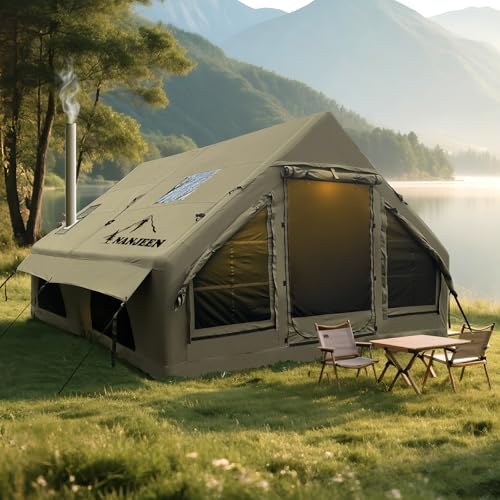
NANJEEN Large Inflatable Camping Tent (12㎡)
Naturehike Cape Instant Pop-Up Tent

NANJEEN 600D Oxford Air Tent (1-2P)
Naturehike KOTA Double-Layer Tent
A Closer Look At Each Pick
The Panda leans into classic glamping territory with a breathable cotton-canvas body, an integrated stove jack, and a low-profile air frame that replaces traditional pole assemblies. You pump the beams, walk in through a wide awning-style door, and settle into a space that handles humidity more gracefully than thin nylon tents do.
Compared with the Coody below, this one reads more like a solo or duo retreat, so couples and small families chasing shoulder-season trips will appreciate the canvas quiet and warmth. Backpackers moving daily will find the packed weight and footprint heavier than they’d like, but for car camping near a wood stove, it earns its keep.
Practical Pluses
- Cotton canvas breathes well, cutting morning condensation in cool weather.
- Built-in stove jack supports a tent wood stove for cold-night camping.
- Inflatable beams remove the multi-pole puzzle most canvas tents require.
- Wide vestibule area gives covered space for boots and packs.
- Stable footprint handles long stays on a single basecamp pitch.
Things To Consider
- Canvas dries slower than polyester after heavy rain, so plan for airing-out days.
- Heavier packed weight makes it a car-camping shelter rather than a trail option.
Feature Snapshot
Made For
Couples or small groups running cool-weather glamping trips who plan to park the car and stay put.
Look Elsewhere When
The Naturehike KOTA is the better call for buyers wanting a lighter, four-season shelter without a canvas commitment.
The Coody skips the cramped-sleeping-bag vibe and reads like an actual outdoor living room. Its canvas walls and tall ceiling let you stand, move around, and host the kind of evenings where the kids crash on air mattresses while adults stay up by the door.
The trade-off versus the Panda is real estate: you gain shared living space but commit to a heavier packed shelter. For families running two-vehicle trips with a basecamp mindset, this is a comfortable step up from a traditional dome tent.
What Stands Out
- Tall walls create standing-height room rare in this category.
- Canvas build keeps interior noise and temperature swings moderate.
- Integrated stove jack supports a wood stove for cold-weather camping.
- Wide door layout reads like a porch for boot storage and gear staging.
- Air-beam pitch keeps setup simple for first-time inflatable buyers.
Worth Noting
- Large packed volume demands a roomy vehicle or trailer for transport.
- Canvas requires careful drying before storage to prevent mildew smell.
- Best suited to established sites with flat, debris-free ground.
Who It Suits Best
Families or friend groups running two- to three-night car camping trips who want a real living room, not a sleep pod.
Skip It When
Solo travelers packing tight will get more use out of the NANJEEN 600D Oxford Air Tent below, which trades canvas for compact portability.
The AirFort is a completely different animal from the camping-focused picks above: it’s an indoor play dome that inflates from a single open door in roughly half a minute. Kids crawl inside, the door flap closes, and the whole thing stays puffed up from a steady stream of air from any standard room fan.
You won’t take it camping, but for parents running sleepovers, rainy afternoons, or birthday parties, it solves the “blow-up something fast and clean up easily” problem better than any pop-up tent on the market.
Everyday Advantages
- Single-step inflation with no assembly parts to lose.
- Spacious interior holds multiple kids and their gear.
- Deflates and folds flat for closet storage between uses.
- Works on carpet, hardwood, or any flat indoor surface.
Small Caveats
- Requires a running fan to stay inflated, so it isn’t silent.
- Outdoor use is limited to calm, dry conditions on soft grass.
Quick Facts
Right Fit For
Parents hosting sleepovers, playdates, or themed indoor parties who want setup that takes seconds, not minutes.
A Better Fit Elsewhere
The Naturehike Cape is the right call for shoppers wanting actual outdoor shelter rather than indoor play space.
The Village isn’t an air tent in the strict inflatable-beam sense, but its pre-attached telescoping poles unfold into a full standing-height cabin in roughly a minute, which solves the same “I want to skip the pole puzzle” problem from a different angle. The 150D Ti Black Technology fabric offers a serious UV block rating and a PU waterproof coating.
For weekend campers who drive up, park once, and want their shelter standing before they finish unloading the cooler, this is the easiest entry on the list. It also handles a crowd better than smaller dome tents without the canvas weight of the Coody.
Good Reasons To Consider
- Pre-attached pole system takes the setup learning curve out of the picture.
- Tall cabin profile lets most adults stand comfortably while changing.
- Full-coverage rainfly keeps bedding dry through sustained showers.
- Available in 4-person and 8-person footprints for different group sizes.
- UPF-rated fabric adds meaningful sun protection in open sites.
Points To Keep In Mind
- Telescoping poles add weight compared with true inflatable beams.
- Cabin shape catches more wind than a low-profile dome.
Best Suited To
First-time campers and weekend road-trippers who want a quick pitch without buying an air pump.
Reach For A Different Pick When
The NANJEEN 12㎡ inflatable tent is a smarter pick for buyers who want a true air-beam pitch with heavier weather fabric.
NANJEEN’s flagship leans hard into the “house away from home” side of inflatable camping. The 12 square meter footprint swallows gear, cots, and people without crowding, while the tech-cotton body and reinforced seams push the weight class well above entry-level nylon shelters.
Where the RBM Panda keeps things compact and the Coody reads more like a porch-friendly canvas lodge, this one is a basecamp tent for longer stays. The hand-pump setup lands in the eight-minute range once you’ve done it a couple of times, which still beats any pole-based equivalent at this size.
A Favorable Mix
- Large 12㎡ floor handles groups of two to ten with room to spare.
- Dual doors allow separate entry and exit flow on busy mornings.
- Mosquito-proof mesh windows keep ventilation without bug pressure.
- Tech-cotton construction balances breathability with weather resistance.
- Air-beam frame removes the ladder-and-pole routine of canvas tents.
Honest Caveats
- Solid 35kg packed weight rules out anything but vehicle-supported trips.
- Eight-minute inflation is fine for car camping but slow for late arrivals.
Spec Overview
Who Will Love This
Group campers and basecamp-style travelers running multi-day stays who value space and weather performance over pack size.
Consider Something Else When
The RBM Panda is the better match for buyers wanting stove-jack canvas in a smaller, lighter package.
The Cape takes the same instant-pitch idea as the Village and stretches it taller and longer, with a tunnel-style layout that gives each section its own door. PU3000-rated waterproofing and 190T polyester with a waterproof coating keep it in the running for wet-weather car camping.
For families who’d rather not crawl across each other to reach the door, the multiple-room layout is a quiet luxury. You don’t get the air-beam simplicity of NANJEEN, but you do get a faster first pitch than any traditional family tent.
What Earns Its Place
- Multi-room tunnel design separates sleep and living areas.
- Tall center height lets parents stand while getting kids settled.
- Strong PU3000mm waterproof rating handles heavy rain events.
- Pre-attached poles cut setup to roughly a minute for practiced hands.
- Family-friendly footprint with multiple capacity options.
Possible Compromises
- Polyester body runs hotter than canvas in direct sun.
- Multiple rooms mean more stakes and guylines to manage.
Built With In Mind
Families with young kids who want room separation without the heavy canvas commitment of the Coody.
Where A Sibling Pick Shines
The Naturehike Village is the smarter pick for shoppers wanting a single-room cabin shape over a tunnel layout.
Where the larger NANJEEN flagship prioritizes group space, this 1-2 person Oxford air tent goes the other way: dense 600D fabric, a five-minute hand-pump pitch, and a black-coated UV layer that blocks harsh midday sun. It is built for the camper who pulls into a site solo and wants shelter up before the sun sets.
Compared with the canvas picks, you give up breathability for portability and faster drying. That trade-off works well for warm-weather road trips, desert weekends, and anyone packing a small car.
The Helpful Details
- Tough 600D Oxford fabric resists abrasion on rough ground.
- UV-blocking inner layer shields you from direct sun exposure.
- Five-minute inflation keeps setup approachable for first-time air-tent buyers.
- Compact packed size fits smaller vehicles and tight storage spaces.
Trade-Offs To Consider
- Oxford fabric breathes less than canvas, so condensation needs venting.
- Best for one to two campers; group trips need a bigger option.
- Black-coated layer absorbs warmth in full-sun desert pitches.
Whose Shelf It Belongs On
Solo travelers, duos, and weekend road-trippers who want fast setup without hauling a canvas shelter.
Swap It Out When
The RBM Panda is the better match for cold-weather camping where canvas and stove heat matter more than packed size.
The KOTA stands out by giving you two shelters in one package: a freestanding mesh inner that handles warm nights under the stars, and a full outer rainfly rated for serious weather. Used together, they form a proper four-season setup; used separately, they double as a stargazing net or a sun canopy on day stops.
For travelers chasing shoulder-season flexibility, this dual-purpose design solves more problems than any single-layer tent on this list. The vestibules and porch add covered space that other Naturehike picks only hint at.
Where It Helps
- Mesh inner tent works alone for warm-weather starwatching.
- Outer fly alone functions as a sun or rain canopy at basecamp.
- Waterproof 3000mm+ rating handles sustained wet conditions.
- Vestibule and porch create covered gear-storage zones.
- Available in 4-, 6-, and 8-person sizes for different trips.
Less-Strong Areas
- Two-layer setup takes longer than single-shell instant tents.
- Not an inflatable beam design, so pole familiarity helps.
Perfect Match For
Year-round campers who want one shelter that adapts from summer stargazing to shoulder-season storms.
Not Your Match When
The Naturehike Cape is the easier pick for families prioritizing fast single-pitch convenience over modular weather layering.
What Matters Most Before Choosing Air Tents
Frame Type And Setup Speed
The biggest divide in this category is between true inflatable air-beam tents and instant-pitch designs with pre-attached poles. Air beams inflate with a hand pump in roughly five to eight minutes and remove the chance of snapping a pole in cold weather. Instant tents fold out in under a minute but add weight and a slightly more mechanical setup feel.
Material And Climate Fit
Cotton canvas breathes well and pairs naturally with a stove jack for cold nights, but it dries slowly and adds bulk. Tech-cotton, polyester, and dense Oxford weave each balance weight, weather resistance, and ventilation differently. Match the fabric to your most common climate rather than your most aspirational one.
Capacity Versus Real Floor Space
Manufacturer capacity numbers run optimistic. A shelter rated for six usually sleeps four adults comfortably with gear. If your group actually fills the listed capacity, look for dual doors, vestibules, and standing height. Otherwise, you spend your trip stepping over each other.
Pack Size And Vehicle Reality
The biggest canvas and cotton shelters tip the scales at 30+ kg and demand a roomy vehicle. Smaller Oxford air tents pack down small enough for a hatchback. Always check packed dimensions against your cargo area before committing.
Key Considerations Across These Picks
Pitfalls Shoppers Hit
Buying by listed capacity is the most common mistake: a “6-person” tent rarely sleeps six adults with gear. Another trap is choosing canvas for warm-weather trips and discovering how slowly it dries after a single rainy night. Air-beam shoppers sometimes skip the pump, the repair kit, or the practice pitch at home, then discover leaks or slow inflation at the campsite.
Where The Extra Money Goes
The premium tier in this category buys heavier fabric, dual-layer construction, real standing height, and integrated stove compatibility. You pay for materials that handle more weather cycles and last through multiple seasons of use. The upgrade is worth it when you camp more than a handful of weekends per year or chase shoulder-season trips; lighter entry-level picks make more sense for occasional summer use.