
Camping without a wall outlet changes what you need from a sleeping pad. Battery-free inflation, low pack weight, and a forgiving surface on rocky ground matter far more than built-in pumps or plush hotel-style tops. Tent sleepers, car campers, overlanders, and weekend festival-goers all hit the same wall: they want real sleep, but they don’t want to haul a heavy compressor or rely on camp power.
The picks below split naturally into two camps. Self-inflating foam mats like the Lost Horizon lineup handle setup with zero electricity, expanding on their own when you crack the valve. Pneumatic air mattresses with built-in pumps can still work off-grid, paired with a portable battery pack, but they trade weight and pack size for a taller, softer feel. Both have a place, and the right choice comes down to your vehicle, your back, and your tolerance for packing bulk.
The Leading Options At A Glance

Intex Dura-Beam Series Essential Rest Airbed with Internal Electric Pump, Bed Height 18″, Queen (2020 Model)

SereneLife Full Size Air Mattress with Built-in Pump

Lost Horizon Self-Inflating Foam Camping Mattress for Model Y

Lost Horizon Self-Inflating Foam Camping Mattress, Single, 3″ Thick

VOSSER Air Mattress with Built-in Pump, Twin 18″ Foam Topper

EnerPlex Queen Air Mattress with Built-in Pump, 16″ Raised

Lost Horizon Option3 Self-Inflating Foam Mattress, Full, 4.5″
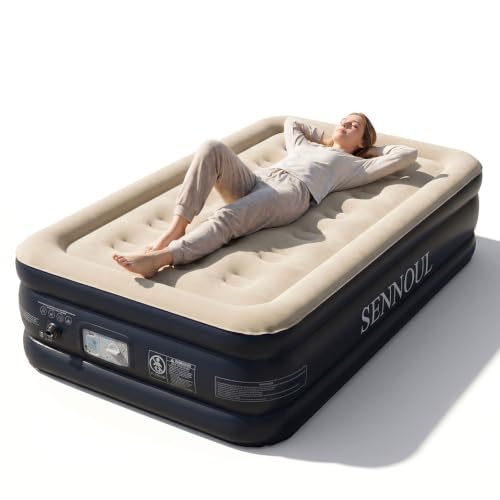
SENNOUL Twin Air Mattress with Built-in Pump, 18″ Raised, 650lb
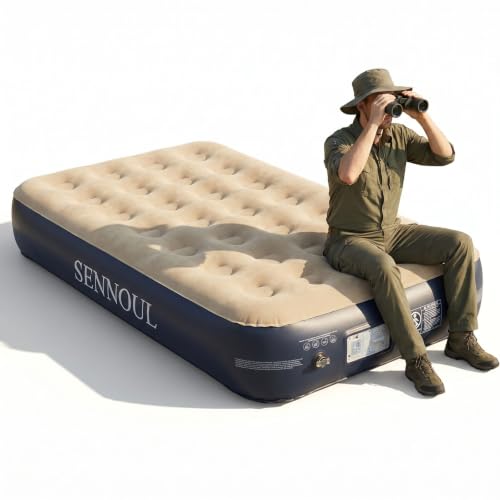
SENNOUL Air Mattress Twin with Built-in Pump, 13″
SENNOUL Twin Air Mattress with Built-in Pump, 16″ Raised, 650lb
The Details Behind The Selections
The Intex Dura-Beam Essential Rest leans on its fiber-tech interior, a network of thousands of high-strength polyester fibers, to keep the bed firm and steady through the night. The velvety sleeping surface adds a layer of softness that feels closer to a traditional mattress than most bare-PVC inflatables, which matters when you’re trading a guest bed for a tent floor.
This 18-inch queen works best for drive-up campers with a car outlet adapter or a portable battery pack on hand. Compared with the lighter self-inflating foam picks later in the list, it carries noticeably more bulk and demands more inflation effort in the field. Setup at home, though, is where it shines, and the same unit can double as a spare bedroom surface when you’re not outdoors.
What It Does Well
- Fiber-tech interior keeps the surface level across the night
- Velvety top layer cuts down on sticky-sleep-bag slide
- 18-inch height makes getting in and out easy on stiff knees
- Queen footprint fits two adults side by side
- Doubles as a guest bed between trips
Points To Keep In Mind
- Internal pump needs wall power or a battery pack off-grid
- Bundled size and weight challenge backpack packing
- Seams may need occasional topping up in cool nights
Who It Suits Best
Drive-up campers with a car battery or power station who want a near-guest-bed feel and don’t mind the extra pack weight.
A Better Fit Elsewhere
Backpackers covering real distance should reach for the Lost Horizon Self-Inflating Foam Camping Mattress, Single, 3″ Thick, which inflates without any pump at all.
SereneLife’s full-size bed markets a three-minute inflation window, which translates in real use to roughly the time it takes to lay out your sleeping bag. The waterproof plush top keeps condensation from soaking through on humid nights, and the PVC body holds up to the rough treatment a car trunk delivers.
At 55 inches wide, this lands between a twin and a queen, giving solo campers room to sprawl and couples a tighter squeeze than the Intex above. The built-in pump again needs a power source, but a compact battery pack handles it just fine. For weekend trips where setup speed matters more than pack size, it’s a low-friction option.
The Practical Payoff
- Three-minute inflation keeps camp setup short
- Waterproof plush top resists tent-floor condensation
- 55-inch width gives solo sleepers extra elbow room
- Flocked surface grips sleeping bags in place
Less Ideal Details
- Pump still requires a wall outlet or battery pack
- PVC material may feel slick without the plush top fully dry
- Full size packs larger than a twin in your vehicle
Made For
Solo travelers and quick-stop campers who value setup speed and don’t mind carrying a battery pack to run the pump.
Where Another Pick Suits Better
The EnerPlex Queen Air Mattress with Built-in Pump, 16″ Raised is a stronger pick for couples who need a wider sleeping surface.
Lost Horizon’s Model Y pad is a true no-electricity solution. Crack the valve, the foam core sucks in air on its own, and the 4.5-inch thickness spreads your weight across roughly nine pounds of foam filling. The custom cut targets Tesla Model Y cargo areas, so the pad sits flush against seatbacks and folded seats without the gap-leak you get from generic rectangles.
It’s a niche pick, useful almost exclusively for Model Y owners running two-row camping setups. The 440-pound capacity covers most pairings, and the foam-heavy interior softens the hard plastic floor that plagues car-camp sleep. For owners of other vehicles, the standard Lost Horizon options later in this list cover similar ground.
Real Benefits
- Self-inflating design requires zero pump or battery
- 4.5-inch foam core cushions hard car floors
- Custom cut fits Model Y cargo area without gaps
- 440-pound capacity handles two average adults
Some Limits To Know
- Vehicle-specific fit limits use outside the Model Y
- Bulkier than a standard self-inflating pad when packed
- Self-inflation leaves air gaps that need a few breaths to top off
Right Fit For
Tesla Model Y owners running car-camping setups who want a pad shaped to their cargo floor and zero pump hassle.
Consider Something Else When
Tent campers without a Model Y should look at the Lost Horizon Self-Inflating Foam Camping Mattress, Single, 3″ Thick for a more universal shape.
The 3-inch single cuts a leaner profile than its 4.5-inch siblings, which makes it the most packable foam pad in this roundup. At 5.5 pounds of foam filling and a 220-pound capacity, it leans toward solo backpackers and ultralight weekend campers. Self-inflation handles setup the moment you unroll and crack the valve.
This pad trades plush thickness for trail-friendly weight. Ground feel is firmer than the thicker Lost Horizon options, so side sleepers may want to test their comfort tolerance before committing to long trips. For thru-hikers and weight-conscious campers, the trade-off usually lands in the right place.
Noteworthy Benefits
- 3-inch profile keeps pack size manageable
- No pump or battery needed for inflation
- 5.5-pound foam filling balances cushion and weight
- Single-person cut fits solo tents cleanly
Practical Considerations
- Thinner profile transmits rocky ground more than 4.5-inch pads
- 220-pound capacity may feel firm for heavier sleepers
- Self-inflation leaves small air pockets that need topping off
Best Suited To
Solo backpackers and ultralight campers who want a no-pump sleeping surface that doesn’t dominate their pack.
Not Your Match When
Side sleepers on rough terrain may find the Lost Horizon Option3 Self-Inflating Foam Camping Mattress, Full, 4.5″ a more comfortable choice.
VOSSER threads a flocked microfiber foam topper directly into the bed, aiming at a problem every inflatable owner knows: the sag that hits around 3 a.m. The integrated foam layer resists that nightly collapse, and the ventilation holes aim to keep the surface from trapping body heat, which matters when synthetic bags run warm.
The 2-minute self-inflation claim depends on the pump having power, so you’ll still need a battery pack off-grid. The twin footprint suits solo sleepers who want extra space, and the wrinkle-resistant cover holds up better to repeated packing than bare-PVC inflatables. It’s a heavier pack than pure foam pads, but the comfort case is real.
The Value In It
- Built-in foam topper fights overnight sag
- Ventilation holes manage heat on warm nights
- Microfiber cover resists wrinkles from packing
- Twin size gives solo sleepers room to sprawl
- 18-inch height eases entry and exit
A Few Limitations
- Built-in pump needs a power source off-grid
- Heavier pack weight than foam-only alternatives
- Topper may compress over years of heavy use
Who Will Love This
Comfort-first campers and car sleepers who want a softer top feel and don’t mind running the pump off a portable battery.
Look Elsewhere When
Weight-sensitive backpackers will find the Lost Horizon Self-Inflating Foam Camping Mattress, Single, 3″ Thick a more packable alternative.
EnerPlex pitches the queen as a floor mattress at home, a travel bed, and a camping surface, and the waterproof PVC body supports that triple role without much fuss. The 16-inch raised profile lands an inch below taller competitors, which keeps the center of gravity friendlier when the ground tilts. Inflation runs under two minutes through the built-in pump when paired with a portable battery.
This bed handles wet grass and dewy mornings without soaking through, which makes it a strong pick for shoulder-season camping. The queen footprint works for couples sharing a large tent, and the puncture-resistant build shrugs off the pine-needle abuse common at forested campsites. For shoppers who want one bed to cover guest duty and weekend trips, it’s a sensible crossover.
The Good Stuff
- Waterproof PVC holds up to wet ground
- 16-inch height eases getting in and out
- Under two-minute inflation with a power source
- Queen size fits two campers side by side
- Doubles as a guest bed between trips
Trade-Offs To Consider
- Pump still requires a battery pack off-grid
- Bundled size fills a large trunk compartment
Perfect Match For
Couples and family campers who want a versatile bed that crosses between home use and wet-weather outings.
Skip It When
Solo backpackers should reach for the Lost Horizon Self-Inflating Foam Camping Mattress, Single, 3″ Thick for a lighter load.
The Option3 is the thickest foam pad in this lineup, packing 12 pounds of foam filling into a full-size cut. Self-inflation handles the bulk of setup without a pump, though a few breaths usually finish the job. The 4.5-inch depth floats sleepers above rocky ground that would punish thinner pads.
The trade is weight and pack size. At 12 pounds of foam alone, this isn’t a backpacker pad; it’s a base-camp pad. Two average adults fit comfortably under the 440-pound capacity, and the foam-heavy interior softens the firm feel that thinner self-inflating pads produce. For couples running a car-camp or family-tent setup, the cushion case is convincing.
Everyday Advantages
- 4.5-inch foam core floats sleepers above rough ground
- No pump or battery needed for inflation
- 12-pound foam filling softens pressure points
- 440-pound capacity handles two average adults
Possible Compromises
- 12-pound foam filling is heavy for any hike
- Packed size fills most backpacks and many duffels
- Self-inflation leaves small gaps needing manual top-offs
Built With In Mind
Couples running car-camp or base-camp setups who prioritize comfort over pack weight and want zero pump hassle.
Reach For A Different Pick When
Hikers covering trail miles should look at the Lost Horizon Self-Inflating Foam Camping Mattress, Single, 3″ Thick for a lighter load.
SENNOUL loads this twin with a 650-pound rating, which puts it well above the typical twin-air range. The 18-inch raised height matches taller competitors and makes sitting on the edge a real option for anyone with stiff hips. Inflation runs through a built-in 110V pump that finishes in roughly two minutes.
The catch is the same one every electric-pump bed carries off-grid: you need a battery pack or inverter to run the pump. Once it’s up, the 650-pound capacity gives heavier sleepers a confidence boost, and the internal coil beams aim to keep the surface level through the night. For taller or heavier campers running car-camp setups, the load rating justifies the extra weight.
Practical Pluses
- 650-pound load rating suits heavier sleepers
- 18-inch height eases entry for stiff joints
- Internal coil beams reduce overnight sag
- Twin footprint fits standard solo tents
Factors To Consider
- Pump needs a battery pack or inverter off-grid
- Twin size may feel tight for restless sleepers
Whose Shelf It Belongs On
Heavier or taller solo campers who want a confident load rating and don’t mind running the pump from a portable battery.
A Better Fit Elsewhere
Shoppers needing a wider sleep surface for two should look at the EnerPlex Queen Air Mattress with Built-in Pump, 16″ Raised.
This SENNOUL twin sits 13 inches off the ground, a noticeably lower profile than the 18-inch raised siblings. The lower center of gravity helps in tents with sloped floors or in vans where every inch of headroom counts. The 550-pound capacity still handles most adults comfortably, and the built-in pump finishes in two minutes.
Off-grid use again requires a battery pack, since the 110V pump needs wall-style current. The lower height does mean heavier sleepers sit closer to the ground, which can feel less comfortable for getting in and out. For campers who prioritize low pack height or tighter tent fit, the trade-off usually pays off.
Where It Delivers
- 13-inch profile fits low-ceiling tents and vans
- 550-pound capacity covers most adults
- Two-minute inflation through built-in pump
- Twin footprint fits solo tent footprints
Worth Bearing In Mind
- Lower height makes entry harder for stiff knees
- Pump needs a battery pack for off-grid inflation
Who Should Grab It
Van campers and low-ceiling tent sleepers who need a bed that won’t cramp their headroom and don’t mind carrying a battery pack.
Swap It Out When
Campers who want an easier entry height should consider the SENNOUL Twin Air Mattress with Built-in Pump, 18″ Raised, 650lb.
The 16-inch raised twin splits the difference between SENNOUL’s 13-inch and 18-inch raised options. At 650 pounds, the load rating matches the taller sibling, and the 21 internal coil beams aim to keep the surface flat under restless sleepers. Inflation runs through the same 110V pump, so plan for a battery pack off-grid.
This bed lands as the brand’s middle-ground pick: easier entry than the 13-inch, lower center of gravity than the 18-inch. It also pulls double duty as a guest bed at home, which justifies the extra weight for campers who only need to haul it a few times a year. For shoppers caught between low-profile and tall-raised, this is the sensible middle stop.
Strengths Worth Knowing
- Mid-range 16-inch height balances entry and stability
- 650-pound load rating handles heavier adults
- 21 internal coil beams fight overnight sag
- Twin size suits solo campers and small tents
Potential Sticking Points
- Pump requires a battery pack off-grid
- Mid-height may feel like a compromise to some
The Right Fit
Solo campers and guest-bed shoppers who want a balanced raised height without committing to either extreme.
Where A Sibling Pick Shines
Tent campers chasing maximum cushion should look at the Lost Horizon Option3 Self-Inflating Foam Mattress, Full, 4.5″ for a no-pump foam alternative.
Choosing A Sleeping Surface For Off-Grid Nights
Buying off-grid starts with how you camp, not how you sleep. Backpackers chasing miles want a self-inflating foam pad that handles setup with zero power, even when that means a firmer surface and extra ounces. Car campers and overlanders can afford the weight of an inflatable with a built-in pump, paired with a portable battery pack, in exchange for a taller, softer sleep.
Thickness drives comfort more than any other spec. Foam pads under 3 inches transmit rocky ground to your hips and shoulders; 4.5-inch options like the Lost Horizon Option3 float sleepers above the terrain. Inflatable beds run taller, typically 13 to 18 inches, but the comfort gap between a 16-inch and an 18-inch raised bed is smaller than the difference between a 3-inch and 4.5-inch foam pad.
Material and construction matter in wet campsites. Waterproof PVC shells shrug off dew and wet grass; flocked microfiber tops grip sleeping bags but can feel clammy when soaked. Foam pads avoid the leak risk entirely, but the foam core soaks up morning condensation if you pack the pad wet, which is why airing them out before storage extends their life.
Weight and packed size trade off against comfort. A 12-pound foam pad delivers genuine cushion but fills a backpack; a 5-pound twin air mattress packs smaller but still needs a battery. Match the pad to your vehicle and trip length. For most campers, the right answer lives in the middle of those two extremes, not at either end.
Key Considerations Across These Picks
Pitfalls Shoppers Hit
The biggest trap is choosing a built-in-pump bed without planning the power source. A 110V pump doesn’t run from a phone battery or a car cigarette lighter without an inverter, and many campers only discover that in the parking lot at dusk. Sort the power situation before committing to an electric-pump design.
The second trap is ignoring packed weight. A 4.5-inch foam pad sounds great in the product page and brutal on a four-mile hike in. Match the pad to the trip, not just to the comfort wishlist, and your back will thank you on day two.
Where The Extra Money Goes
Higher-tier pads in this category spend the premium on foam density, coil count, and cover fabric. The Lost Horizon Option3 carries 12 pounds of foam where thinner pads carry five, and that extra density flattens pressure points for side sleepers. Inflatable beds at the upper end layer in flocked microfiber or integrated foam toppers that fight the nightly sag cheaper PVC develops.
For campers running one or two trips a year, a mid-tier pad delivers all the sleep quality most people need. The upgrade earns its keep for frequent campers, heavier sleepers, and anyone who treats tent sleep as the main event rather than a backup plan.
Frequently Asked Questions
Can air mattresses be used for camping without electricity?
Yes, but only the self-inflating foam type. Foam-core pads like the Lost Horizon lineup expand on their own when the valve opens, requiring no pump or battery. Inflatable beds with built-in 110V pumps need a portable power station or inverter to inflate off-grid.
How thick should a camping air mattress be?
For foam pads, 3 inches works for backpackers and firm-ground sleepers, while 4.5 inches suits side sleepers and rough terrain. Inflatable beds typically run 13 to 18 inches raised, and the height gap matters more for entry ease than for actual sleep comfort.
Are self-inflating foam pads comfortable for side sleepers?
Thicker foam pads, 4.5 inches or more, generally work well for side sleepers because the foam fills in around hips and shoulders. Thinner 3-inch pads can feel firm under the shoulder for side sleepers on hard ground.
How do you clean and store a camping air mattress?
Wipe PVC and microfiber surfaces with a damp cloth and mild soap, then dry fully before storage. For foam pads, unzip the cover when one is present and air the foam core out before rolling it back into the stuff sack to prevent mildew.
Do camping air mattresses lose air overnight?
Most lose a small amount overnight, which is why topping off before sleep helps. Self-inflating foam pads hold their firmness better than pure inflatables, and the foam core resists the pressure-difference sag that plagues cheaper PVC beds.
Closing Remarks
The right pick comes down to how you camp, not how you sleep at home. Backpackers and solo tent campers will find their answer in the Lost Horizon foam lineup, where zero pump and zero battery mean zero hassle. Car campers, couples, and weight-tolerant travelers can lean into the inflatable options and pair them with a portable battery for the softest sleep of the trip. Match the pad to your vehicle, your trip length, and the ground you sleep on, and the rest takes care of itself.