
Camping sleep setups have quietly gotten more interesting. What used to mean a thin pad between you and the cold ground now includes elevated sleeping platforms, self-inflating foam mats, and integrated tent-mattress combos for kids. You spend hours choosing the right campground and trail, so your sleep system deserves the same attention. Whether you’re a car camper loading gear for a weekend at the lake or a parent setting up a backyard sleepover, the right air mattress or sleeping pad changes how rested you feel in the morning. This list sorts through nine options covering everything from queen-size foam mats for two to a built-in-tent kids’ bed, so you can match your gear to the way you actually camp.
The Leading Options At A Glance

Lost Horizon Option3 Self-Inflating Mattress, Queen

Self Inflating Sleeping Pad with Electric Pump, 4″

Lost Horizon Option3 Self-Inflating Mattress, Twin
QPAU Inflatable Kids Air Mattress with Tent

Lost Horizon Option3 Self-Inflating Mattress, Full
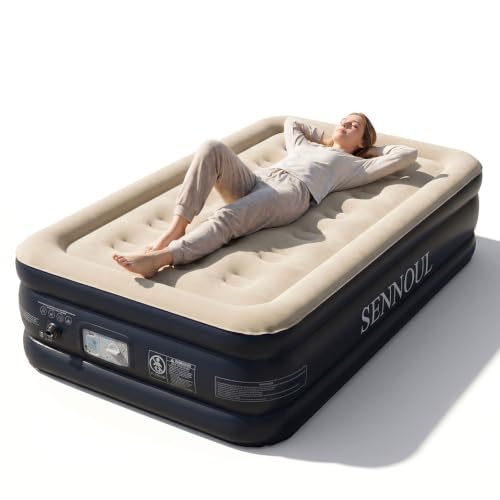
SENNOUL Twin Air Mattress 18″ Raised
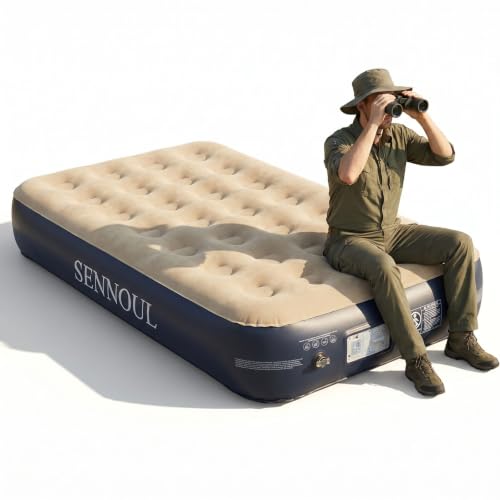
SENNOUL Twin Air Mattress with Built-in Pump
SENNOUL Twin Air Mattress 16″ Raised

Elegear 4″ Thick Sleeping Pad, 9 R-Value
More Details On Our Top Picks
Car campers who roll in with a full-size tent and expect hotel-grade sleep find a real ally in this queen-sized self-inflating mattress. Open the valve and the open-cell foam (a foam with connected air pockets that expands when unrolled) pulls air in on its own, so setup is mostly hands-off after you unroll it.
The 4.5-inch profile keeps hips and shoulders off the ground on uneven tent floors, which matters more than people expect when car camping at sites with roots and rocks beneath the footprint. The queen footprint gives two adults room to stretch out without elbows touching.
A Few Highlights
- 13-pound foam core spreads body weight evenly across the sleeping surface
- Self-inflating design cuts setup time at the campsite
- Queen dimensions fit standard two-person tent footprints comfortably
- 440-pound weight capacity handles two sleepers or gear stored on top
Points To Note
- 13 pounds of foam makes this a car-camping item rather than a backpacking one
- Larger packed size means you’ll need real trunk space
Feature Snapshot
Whose Tent It Belongs In
Couples and friend duos car camping at developed sites who want real sleeping comfort without inflating anything by mouth.
Look Elsewhere When
You camp solo and prefer a smaller packed footprint, in which case the Lost Horizon Option3 Self-Inflating Mattress, Twin is the better match.
Cold nights drain your energy long before morning, so the R-value (a measure of how well a pad blocks heat flow into cold ground; higher means warmer) on this mat earns attention fast. A 9.5 R-value puts it well into four-season territory, meaning it insulates you from frozen ground or snow.
The built-in electric pump changes the setup experience, since you skip the lung-power routine entirely and let the pump handle inflation in roughly a minute. The integrated pillow saves you from packing a separate one, which is one less thing to forget at home.
What Pays Off
- Built-in electric pump inflates and deflates in about a minute
- 9.5 R-value handles cold ground conditions
- Integrated pillow eliminates packing a separate cushion
- 4-inch foam core cushions hips and shoulders
Trade Offs
- Electric pump needs a power source, which limits remote trips
- First-time use requires a full inflation and 30-minute rest to reach final firmness
- Heavier than pad-only options at this thickness
Best Suited To
Campers heading into shoulder-season or winter conditions who camp near a power outlet or carry a portable battery.
A Better Fit Elsewhere
Backpackers counting every ounce should look at the Elegear 4″ Thick Sleeping Pad, 9 R-Value for a comparable warmth rating in a simpler package.
Solo tent sleepers get the same foam-comfort story as the queen version, just sized down for one person. The 4.5-inch profile lifts you off roots and rocks the same way, and the self-inflating foam means no manual pumping at the end of a long driving day.
The lighter foam weight (around 8.5 pounds) makes the twin easier to handle solo, though it still belongs in car camping rather than backpacking territory. Solo campers who occasionally host a child or pet appreciate the 300-pound capacity.
The Upside
- Self-inflating foam simplifies setup at camp
- 4.5-inch profile cushions pressure points through the night
- Twin footprint fits standard solo tents
Small Caveats
- Not insulated like the LLUAII pad; best for mild-season camping
- Still bulky in a backpack; car camping recommended
Made For
Solo car campers who want foam-level comfort without inflating anything by hand.
Where Another Pick Suits Better
Two sleepers sharing a tent will be happier with the Lost Horizon Option3 Self-Inflating Mattress, Queen.
Parents setting up sleepovers or backyard camping nights for kids get an all-in-one package here. The integrated tent and air mattress combo means one setup step instead of three, and the fine mesh mosquito netting addresses the two biggest outdoor-sleep complaints at once.
The fast electric pump inflates the mattress quickly, so the tent-to-bed transition stays short enough to hold a tired child’s attention. The breathable sunshade fabric above keeps harsh sun off sleeping kids during daytime naps or morning lie-ins.
Practical Pluses
- Integrated tent and mattress eliminate matching components
- Mosquito netting keeps bugs out during outdoor sleepovers
- Electric pump shortens setup time considerably
- Suitable for ages 3 and up
Honest Caveats
- Designed for kids; adult sleepers will find it too small
- Electric pump requires access to a power outlet
- Outdoor use needs dry ground for stability
Who Should Grab It
Families with kids age 3 and up planning backyard camping nights, sleepovers, or travel naps where a self-contained sleep pod simplifies everything.
Reach For A Different Pick When
Adults want a sleeping pad for their own camping trips, in which case the Elegear 4″ Thick Sleeping Pad, 9 R-Value is the right category fit.
Campers who find a twin too narrow but a queen too wide for their tent will appreciate the full-size middle ground. The 12-pound foam fill sits between the twin and queen weights, giving you the same self-inflating setup with a more manageable packed size.
The 440-pound weight capacity handles two sleepers or a single adult plus a dog sprawled across the foot of the bed. The 4.5-inch profile performs the same job on uneven ground as its queen sibling.
What Helps Most
- Full-size footprint fits mid-sized tents that queen pads crowd
- Self-inflating foam keeps setup effort minimal
- 440-pound capacity suits adults plus gear or pets
Things To Consider
- Bulkier than dedicated backpacking pads; car camping only
- 12-pound foam weight still requires vehicle transport
Right Fit For
Solo sleepers or pairs wanting more elbow room than a twin without committing to a full queen footprint.
Swap It Out When
Two adults want maximum stretch-out space, in which case the Lost Horizon Option3 Self-Inflating Mattress, Queen is the better call.
Guests staying over, or campers who want bed-height sleep instead of ground-level, get the right profile here. The 18-inch raised height mimics a traditional bed frame, so getting in and out feels familiar rather than tent-specific.
The built-in 110V pump cuts setup time to roughly two minutes, and the 650-pound capacity handles adults, kids, and pets without sag. In our view, the raised design also makes air-seam leaks easier to spot during inflation.
A Favorable Mix
- 18-inch raised height replicates traditional bed feel
- 650-pound capacity handles heavier sleepers
- Built-in pump completes inflation in about two minutes
- Lower noise output compared to older air pump designs
Worth Noting
- Taller profile requires more storage space when deflated
- Air mattresses need occasional top-offs over multi-night use
Who It Suits Best
Hosts furnishing a guest room or campers who prefer traditional bed height over ground-level sleeping.
Where Another Pick Suits Better
You want a lower-profile mattress for tighter tent spaces, in which case the SENNOUL Twin Air Mattress with Built-in Pump offers similar specs in a shorter form.
Versatility matters when one piece of gear pulls duty at home, on camping trips, and for visiting guests. This twin air mattress handles all three scenarios with the same built-in pump and 550-pound capacity.
You may find the 13-inch height a useful middle ground, raised enough to feel bed-like but lower than the 18-inch sibling for tighter storage closets. Owners commonly appreciate the all-night stability claim, which addresses the most common complaint about budget air beds.
Everyday Perks
- Built-in pump finishes inflation in roughly two minutes
- 550-pound weight capacity handles most adult sleepers
- Mid-height profile fits standard closets when deflated
- Designed for camping, home, and guest use
Room For Improvement
- Lower profile than raised alternatives for bed-feel preference
- Air construction requires occasional top-offs
Perfect Match For
Multi-use households needing one mattress for guest stays, camping, and travel without dedicated specialty gear.
Not Your Match When
You want maximum raised height for traditional bed feel, in which case the SENNOUL Twin Air Mattress 18″ Raised fits better.
Sleepers who find 18-inch mattresses too tall for comfort but want more rise than 13-inch models hit a sweet spot here. The 16-inch profile delivers bed-like entry height without requiring a step stool.
The 650-pound capacity matches the taller sibling, so capacity isn’t sacrificed for the shorter form. The internal coil-beam construction (air channels running the length of the bed that add structure) is the same across the SENNOUL twin line.
Points In Its Favor
- Mid-range 16-inch height suits a wide range of sleepers
- 650-pound capacity handles heavier users
- Built-in pump completes inflation in two minutes
Some Limits To Know
- Air construction requires periodic re-inflation
- Higher than low-profile pads, so storage demands more closet room
Built With In Mind
Anyone wanting raised-bed comfort at a moderate height for home, guest, or camping use.
Consider Something Else When
Maximum bed height matters for mobility reasons, in which case the SENNOUL Twin Air Mattress 18″ Raised is the better pick.
Winter campers and shoulder-season adventurers need insulation from frozen ground, and that’s exactly where a high R-value pad earns its place. The 9 R-value here handles sub-freezing ground conditions that defeat summer-rated pads.
The 4-inch thickness balances insulation with packability, since serious cold-weather sleeping pads tend toward thinner profiles to save weight. Single-person dimensions work for solo backpackers and winter tent sleepers alike.
Real Benefits
- 9 R-value rating handles cold ground and winter conditions
- 4-inch foam core cushions hips and shoulders
- Single-person footprint suits solo backpackers
Potential Drawbacks
- Insulation-focused design adds weight compared to summer pads
- Single-person size won’t work for couples
Key Product Details
Who Will Love This
Four-season campers and backpackers needing insulation in cold conditions without switching to a full inflatable mattress system.
Where A Sibling Pick Shines
Two sleepers want shared insulation on cold nights, in which case the LLUAII Self Inflating Sleeping Pad with Electric Pump covers that profile.
What To Weigh Before Choosing Air Mattress Tents
Sleeping setup choices for camping split along a few practical lines, and getting them right matters more than any single feature.
Intended Use and Season. Cold-weather trips demand higher R-values, while summer camping at developed sites needs less insulation and more focus on cushioning and setup speed. Car camping and backpacking pull in opposite directions on weight, so picking the right category up front saves you from carrying the wrong pad to the trailhead.
Size and Capacity. Solo sleepers can choose single or twin pads and still sleep well, while couples need at least a queen or full to avoid touching elbows all night. Weight capacity matters if you’re sharing the bed with kids, pets, or stored gear, since foam mats and air beds both sag under excess load.
Inflation Method. Self-inflating foam pads cut setup effort but rely on the foam expanding after you open the valve. Built-in electric pumps inflate quickly but need a power source, which limits remote trips unless you carry a portable battery.
Storage and Transport. Foam-filled pads compress for transport but stay bulky and heavy compared to air-only designs. Air mattresses deflate flatter for storage but require a pump at every setup, and taller raised models demand more closet space when not in use.
Key Considerations Across These Picks
Where Shoppers Go Wrong
The biggest mistake is choosing a summer-rated pad for a shoulder-season trip, then wondering why you wake up cold at 3 a.m. R-value ratings exist for a reason, and matching them to your expected ground temperature matters more than thickness alone. Another common slip is picking a queen-size pad for a tent that barely fits a twin, leaving no room for gear inside the tent. Measure your tent floor before committing to a mattress size, and leave space for backpacks and boots at the foot of the bed.
Where The Extra Money Goes
Higher-tier pads earn their keep through better insulation, denser foam, and more reliable internal construction that resists sagging through the night. The difference between a budget pad and a premium one often shows up on multi-night trips, when cheaper foam loses firmness and air beds lose air faster. For occasional weekend use, a mid-range option handles the job well. For regular camping in cold conditions, premium insulation pays for itself in better sleep and fewer cold wake-ups.
Frequently Asked Questions
How thick should a camping air mattress be?
Most campers find 4 to 4.5 inches comfortable for car camping, since that lifts pressure points off the ground without adding excessive weight. Backpackers typically choose thinner pads in the 2 to 3 inch range to save weight.
What R-value works for cold weather camping?
An R-value of 4 or higher handles most three-season conditions, while winter camping demands R-values above 6 for reliable insulation from frozen ground. The Elegear 4″ Thick Sleeping Pad, 9 R-Value sits well into winter-ready territory.
Are self-inflating foam pads better than air mattresses?
Foam pads offer more consistent firmness through the night and better insulation, while air mattresses feel more like a traditional bed and inflate faster with electric pumps. Foam suits rougher terrain, air suits guests and casual car camping.
Can kids use adult camping mattresses?
Adult-sized pads work for older teens, but younger kids do better with age-appropriate products like the QPAU Inflatable Kids Air Mattress with Tent, which combines a smaller mattress with integrated mosquito netting.
How do you store a foam camping mattress between trips?
Roll it tightly with the valve open to release trapped air, then store it unstrapped or loosely strapped to let the foam decompress. Storing foam compressed for months can reduce its loft over time.
The Takeaway
Your sleep system is one of the few camping variables you control completely, and matching it to your actual conditions makes every other part of the trip easier. Pick by season and use case first, then by size and inflation method, and you’ll end up with gear that earns its place in the car for years of trips to come.