
Airing down for sand or rock is half the fun. Airing back up on a remote trail with no service station in sight is the part that gets you home. Off-road rigs run bigger rubber at lower pressures, and recovery situations can flatten a tire long before you hit pavement again. A compressor built for trail duty needs serious airflow, the kind of tank-filling speed that doesn’t leave you idling in the dust while your buddies wait. This lineup covers portable cordless options, vehicle-mounted 12V workhorses, and dual-head setups for air lockers and on-board tanks. Pick the one that matches your rig, your tire size, and how often you leave the pavement behind.
A Closer Look At The Lineup

ETENWOLF VORTEX S6 Cordless Air Compressor

ETENWOLF VORTEX S7 Heavy-Duty Tire Inflator
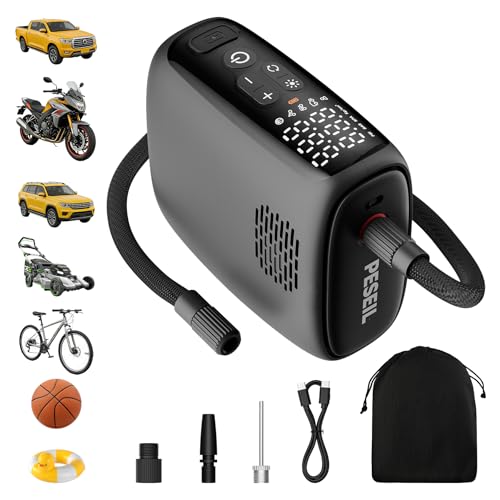
Anthalo 2026 Portable Tire Inflator 40L/min

VIAIR 300P Portable Offroad Air Compressor

VIAIR 450P Automatic Portable Compressor
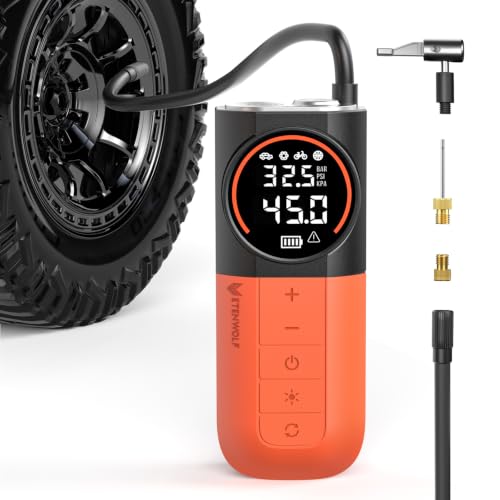
ETENWOLF S1 Cordless Air Pump 160PSI

VIAIR 88P Portable Compressor Kit 120PSI

VIAIR 400P Automatic Portable Compressor

ARB CKMA12 On-Board 12V Air Compressor

VIAIR 444C Dual Air Compressor Pair
Meet The Standout Selections
Trail heads rarely have outlets. That’s the whole reason cordless compressors matter for off-roaders, and the ETENWOLF VORTEX S6 takes that idea further than most by pairing a 19200 mAh battery with airflow rated at 1.5 CFM, fast enough to seat a 31-inch tire from low pressure to street pressure in roughly a minute.
Compared with the smaller S1 further down this list, the S6 trades some portability for real heavy-duty muscle. Owners running 33- to 35-inch tires at trail pressure find it handles four-tire airing without needing a recharge, and the 160 PSI ceiling covers bead-seating jobs that smaller cordless units can’t touch.
Everyday Advantages
- True cordless freedom means airing up at the trailhead with no jumper cables and no idling engine.
- 1.5 CFM airflow keeps a four-tire airing session under ten minutes for most 33-inch setups.
- 160 PSI ceiling handles bead seating and recovery situations beyond simple top-offs.
- Built-in gauge with reported +/-1 PSI accuracy takes guesswork out of remote airing.
Things To Consider
- Heavier than compact cordless options like the ETENWOLF S1, so backpack storage gets tight.
- Cold-weather battery capacity drops noticeably, a common limitation of lithium packs.
Who It Suits Best
Off-roaders running 33- to 35-inch tires who want cordless trail airing without dragging jumper cables.
Where Another Pick Suits Better
Daily drivers and road-tire commuters get faster top-ups from the Anthalo 2026 Portable Tire Inflator, a lighter cordless unit tuned for smaller rubber.
Sometimes one battery isn’t enough. The ETENWOLF VORTEX S7 doubles down on the S6 formula with a 38400 mAh pack and dual-motor drive, built for the kind of repeated trail sessions where a single-unit compressor runs dry before the group is done airing.
Where the S6 already covers most weekend warriors, the S7 targets owners who lead group runs or drive oversized rigs. The extra capacity also matters for recovery work, where multiple bead seats and pressure adjustments can drain lesser batteries fast.
Features That Help
- 38400 mAh battery covers four large tires with capacity left for a recovery bead seat.
- Dual-motor setup moves air noticeably faster than single-motor cordless options.
- Heavy-duty orientation handles 35-inch and up tire sizes without thermal throttling.
Worth Noting
- Noticeably bulkier than the VORTEX S6, so cargo space planning matters.
- Premium positioning means paying for capacity most casual users won’t tap into.
- Recharge time is meaningful between sessions if you run the pack fully down.
Quick Facts
Made For
Trail leaders and overlanders running group trips or oversized rigs that drain smaller compressors dry.
Not Your Match When
Solo weekend warriors with 33-inch tires get plenty from the lighter VORTEX S6 and may not need the S7’s extra battery bulk.
Not every off-roader runs 35-inch mudders. Plenty of weekend adventurers stick closer to stock tire sizes, and for them the Anthalo 2026 Portable Tire Inflator delivers the right amount of speed without overkill. The 40 L/min airflow and two-stage compression refill a typical passenger tire in roughly fifty seconds.
This is the compressor that lives in the trunk rather than strapped to a tire carrier. If your idea of off-roading means forest-service roads and the occasional graded trail, the Anthalo covers the airing-down-and-back-up routine without weighing down your rig.
Notable Gains
- 40 L/min steady output makes quick work of passenger and light-truck tire top-offs.
- Compact footprint stores in a trunk cubby without eating cargo space.
- Two-stage compression keeps the unit cool during multi-tire sessions.
Trade Offs
- Airflow is sized for road tires, so heavy 35-inch mudders will feel the limitation.
- Not a substitute for a hard-mounted 12V rig compressor on serious trail builds.
Right Fit For
Daily drivers and SUV owners who want fast cordless top-ups without hauling trail-rated gear.
Skip It When
Full-size off-road trucks with 35-inch tires get better-matched output from the VIAIR 400P.
Some products earn their reputation the slow way. The VIAIR 300P has been a fixture of trail rigs and overland builds for years, and its gearless direct-drive motor paired with a 150 PSI ceiling covers the airing-up-after-the-trail routine that defines most weekend off-roading.
Unlike the cordless options earlier in this list, the 300P clamps to your battery, which means unlimited runtime as long as the engine is running or the rig is idled. For truck and SUV owners who don’t mind the cable management, it’s a proven platform with deep aftermarket support.
A Strong Showing
- 150 PSI ceiling handles tire top-offs and bead-seating on most light-truck setups.
- Battery-clamp power means unlimited runtime when the engine is running.
- Gearless motor design delivers the maintenance-free longevity VIAIR is known for.
Room For Improvement
- Alligator-clamp power requires direct battery access, which adds setup time per use.
- Airflow rating sits below the larger 400P and 450P in the same family.
Feature Snapshot
Best Suited To
Truck and SUV owners who want a proven 12V platform and don’t mind clamping to the battery each outing.
Look Elsewhere When
Riggers wanting auto shutoff and tank-filling speed will appreciate the VIAIR 450P more.
Standing next to a tire watching a gauge climb is part of the off-road ritual, but it’s also the part most people would rather skip. The VIAIR 450P solves that with a built-in pressure cut-off sensor: dial in your target PSI, clamp to the battery, walk away, and the unit shuts itself off when it hits the number.
The 100% duty cycle rating sets the 450P apart from entry-level 12V compressors. For overlanders and expedition builders who run a tank setup, that continuous-duty capability matters more than peak airflow numbers.
Key Advantages
- Automatic shutoff removes the need to babysit the gauge during airing.
- 100% duty cycle supports long run times for tank filling and tire-to-tire work.
- 150 PSI ceiling and 1.80 CFM output handle 35-inch tire top-offs with margin.
Small Caveats
- Auto shutoff requires the user to pre-set pressure correctly each session.
- Battery-clamp power source limits use to situations where the vehicle is accessible.
Who Will Love This
Overlanders and expedition-builders who value set-and-forget inflation and tank-filling duty cycles.
Another Choice May Suit
Cordless-first shoppers who don’t want to mess with battery clamps get more freedom from the ETENWOLF VORTEX S6.
Trail compressors don’t have to be heavy. The ETENWOLF S1 drops the bulk of its larger siblings while keeping a useful 160 PSI ceiling and a 5200 mAh battery that handles smaller tire setups without weighing down your pack.
Think of it as the grab-and-go backup rather than the primary trail tool. ATV riders, side-by-side owners, and anyone running lighter off-road rubber get a compressor small enough to stash in a cubby yet capable when the moment calls.
The Helpful Details
- Compact body fits storage cubbies and backpacks where larger units won’t.
- 160 PSI ceiling covers car, motorcycle, and bicycle inflation needs.
- 5200 mAh battery handles passenger-tire top-offs on a single charge.
- Cordless operation removes cable clutter for quick roadside fixes.
A Few Limitations
- Smaller battery means limited capacity for repeated 35-inch tire cycles.
- Not a substitute for the VORTEX S6 or S7 on heavy-duty trail rigs.
Perfect Match For
ATV and small-rig owners who want a pocketable backup rather than a primary trail compressor.
Reach For A Different Pick When
Full-size off-roaders with big tires need the muscle of the ETENWOLF VORTEX S6 or S7.
The VIAIR 88P hits a sweet spot that heavier off-road compressors sometimes miss. Rated for tires up to 33 inches and topping out at 120 PSI, it’s a portable 12V unit that doesn’t demand permanent mounting space yet still delivers the gearless-motor reliability VIAIR builds around.
For weekend trail runners who don’t want a compressor bolted to their frame, the 88P offers a familiar battery-clamp routine and storable footprint. It’s the unit that lives behind the seat rather than under the hood.
What Helps Most
- 120 PSI ceiling covers 33-inch tire top-offs in typical trail scenarios.
- Compact housing stores in a seatback pocket or small cargo cubby.
- Gearless motor design delivers maintenance-free long-term operation.
Points To Note
- Battery-clamp power requires direct battery access each time you use it.
- Not sized for tires above its rating, so 35-inch owners will want more output.
Technical Highlights
Whose Shelf It Belongs On
Weekend warriors with 33-inch tire setups who want portable 12V inflation without permanent mounting.
Swap It Out When
35-inch tire owners and group-run leaders should size up to the VIAIR 400P for the extra headroom.
The VIAIR 400P sits in the middle of the VIAIR family, and that’s exactly the point. Rated for tires up to 35 inches and built around the same gearless motor platform as the smaller 88P, it covers most full-size truck and SUV off-roaders without the cost jump to the 450P.
Where the 88P runs out of headroom on 35-inch setups, the 400P keeps going. Automatic shutoff adds the same set-and-forget convenience the 450P offers, just with slightly less airflow.
A Few Strong Suits
- 35-inch tire rating covers most full-size off-road trucks on the market.
- Automatic function supports unattended airing when pressures are pre-set.
- 12V heavy-duty motor design delivers the longevity VIAIR is known for.
- Storable in its own carrying case for tidy cab or cargo area placement.
Honest Caveats
- Battery-clamp power source means engine runtime is required.
- Larger than the 88P, so storage planning matters in smaller cabs.
- Higher-tier 450P offers more airflow for tank builds and group runs.
Built With In Mind
Full-size off-road truck owners running 35-inch tires who want automatic inflation without stepping up to the 450P.
A Better Fit Elsewhere
Owners building on-board air systems will want the VIAIR 444C dual pair for continuous-duty output.
On-board air is a different category entirely. The ARB CKMA12 bolts into the engine bay or chassis and delivers sealed, moisture-resistant compression for both tire inflation and air locker differentials. Engineering-grade materials and a hard-anodized cylinder bore target the long-term durability serious overlanders expect.
This isn’t a grab-and-go compressor. It’s an investment that lives on the rig year-round, ready for air locker engagement on a rock garden or quick tire pressure changes at a vista. The heavy-duty maxi-fuse in-line protection adds the kind of circuit safety pros look for.
Positive Takeaways
- Hard-anodized cylinder bore reduces friction and extends service life.
- Sealed construction resists moisture and dust intrusion on dusty trails.
- Dual-purpose design supports both tire inflation and ARB air locker differentials.
- Heavy-duty in-line fuse protects the vehicle’s electrical system under load.
Practical Considerations
- Permanent mounting requires installation planning and wiring work.
- Positioned as an investment piece, not a casual upgrade.
The Right Fit
Overlanders with ARB air locker differentials who want a permanently mounted, sealed compressor ready at the flip of a switch.
Where A Sibling Pick Shines
Shoppers wanting portable cordless freedom without permanent install get more flexibility from the ETENWOLF VORTEX S6.
Two compressors, one continuous-duty system. The VIAIR 444C dual pack delivers the kind of sustained airflow that single units can’t touch, rated for 200 PSI service and 100% duty cycle at 100 PSI. Builders running on-board tanks, air horns, or bag suspensions look to this configuration.
Compared with the single VIAIR 400P earlier in this list, the 444C trades grab-and-go portability for tank-fill speed and continuous run capability. The chrome finish and dual-head layout signal a serious install rather than a casual addition.
Benefits That Matter
- Dual compressor setup fills large on-board tanks noticeably faster than singles.
- 200 PSI ceiling supports air suspension, air horns, and tank-fed accessories.
- 100% duty cycle rating handles sustained run times for demanding builds.
- Chrome finish suits show-truck and overland rig aesthetics.
Some Limits To Know
- Not a portable solution; permanent mounting and plumbing are part of the package.
- Higher-tier investment sized for full builds rather than simple inflation needs.
Who Should Grab It
Builders running on-board air tanks, air suspension, or air horns who need continuous-duty twin-compressor output.
Consider Something Else When
Off-roaders wanting simple tire inflation without tank plumbing get more straightforward value from the VIAIR 400P.
Factors To Weigh Before Choosing Off-Road Air Compressors
A trail compressor earns its place when it matches your tire size, your power source, and the way you actually use it. PSI ceiling, airflow (CFM), and duty cycle each tell part of the story. Understanding how those numbers translate to real airing-up time keeps you from overbuying or under-equipping.
Matching Compressor Output To Tire Size
Airing up a 31-inch tire from trail pressure (around 12-15 PSI) back to street pressure (around 30-35 PSI) takes noticeably less air than doing the same on a 35-inch tire. The CFM rating, or cubic feet per minute, determines how fast the compressor moves air, while the PSI ceiling sets the maximum pressure it can deliver. For most 33- to 35-inch setups, 1.5 CFM at free flow keeps four-tire airing under a reasonable window. Smaller tires and road-tire top-offs tolerate lower CFM ratings.
Cordless Versus 12V Wired Platforms
Cordless compressors like the ETENWOLF VORTEX series trade unlimited runtime for grab-and-go freedom. Battery capacity (mAh rating) and motor power determine how many tires you can air before recharging. 12V wired units like the VIAIR 400P and 450P draw from the vehicle battery, offering effectively unlimited runtime as long as the engine runs, but require alligator-clamp access each session.
Duty Cycle And Continuous Run Capability
Duty cycle describes how long a compressor can run within a given period without overheating. Entry-level 12V units often sit in the 25-40% duty cycle range, fine for topping off a tire but limiting for tank filling. Continuous-duty ratings like the 100% cycle on the VIAIR 450P and 444C pair suit builders running on-board tanks, air horns, or air suspension.
Portability, Mounting, And Storage
A compressor that lives in a trunk cubby sees different use than one bolted to the frame. Cordless units favor portability, while 12V wired platforms work best with permanent mount or stowage planning. Consider available cargo space, mounting locations, and how often you’ll move the unit between rigs.
Key Considerations Across These Picks
Common Shopping Slip Ups
Underestimating tire size is the most common mistake. A compressor rated for 33-inch tires will feel painfully slow on a 37-inch setup, even if the PSI ceiling looks adequate on paper. Match the compressor to your actual tire, not the tire you might run someday. Ignoring duty cycle ratings causes overheating on tank builds, where compressors cycle for extended periods. Forgetting power source compatibility strands you at the trailhead with clamps that don’t reach or batteries that drain before the last tire.
Where The Extra Money Goes
Higher-tier compressors add capacity where it counts. Dual-motor cordless units like the ETENWOLF VORTEX S7 double battery capacity for group runs. Automatic shutoff on the VIAIR 450P removes babysitting during airing. Continuous-duty ratings and dual-head configurations on the VIAIR 444C support tank builds and air suspension that single units can’t sustain. The upgrade pays off when your use case demands the extra capability, and falls flat when simple top-offs are all you need.
Frequently Asked Questions
What PSI do off-road tires typically need aired back up to?
Most off-roaders air down to 12-20 PSI for traction, then return to manufacturer-recommended street pressure (usually 30-35 PSI for light-truck tires) once back on pavement. Higher-psi setups like 35-inch mudders may push toward 40 PSI for highway use, so a compressor with at least 150 PSI ceiling covers the routine comfortably.
How long does it take to air up four tires on the trail?
For a 33-inch tire aired from 15 PSI back to 35 PSI, expect roughly 2-3 minutes per tire with a 1.5 CFM compressor. A full four-tire session lands in the 10-15 minute window. Larger tires and lower-output compressors stretch that timeline noticeably.
Cordless or 12V wired compressor for off-roading?
Cordless units favor quick grab-and-go convenience and work well for solo trips where tire pressure is the main task. 12V wired compressors offer unlimited runtime and higher airflow, suiting group runs, tank builds, and rigs with permanent mounting. Match the platform to your power access and how often you’ll use it.
Can a portable compressor seat a tire bead?
Seating a bead requires high-volume airflow in a short burst, often 100+ PSI delivered fast. Heavy-duty cordless units like the ETENWOLF VORTEX S6 and S7, plus 12V compressors with sufficient CFM, can handle light bead seating. Tank-fed systems do this more reliably than bare portables.
What’s the difference between CFM and PSI on compressor specs?
CFM (cubic feet per minute) measures airflow volume, which determines how fast a tire fills. PSI measures pressure, which sets the maximum output. A compressor with high PSI but low CFM takes forever to fill a tire, while one with high CFM but low PSI can’t reach bead-seating pressure. Both numbers matter for off-road use.
Bottom Line
The right compressor depends on tire size, trail frequency, and how much permanent mounting you’re willing to commit to. Cordless heavy-duty options like the ETENWOLF VORTEX S6 and S7 lead for grab-and-go trail sessions, while 12V wired platforms like the VIAIR 400P and 450P deliver proven runtime for truck and SUV owners. On-board builds call for the ARB CKMA12 or VIAIR 444C pair. Match the platform to your rig, and the trail stops being a tire-pressure problem.