
A good ice chest keeps ice frozen through a long afternoon at the lake, fits behind your truck seat without a fight, and survives being loaded into the back of an SUV. The trick is matching the size and construction to how you actually use it, not just chasing a big-quart number. This guide sorts eight accessible picks by use case, from wheeled tailgate haulers down to compact lunchbox-style dryboxes, so you can spend once and stop juggling warm drinks.
A Side-By-Side Look

YETI Tundra Haul Portable Wheeled Cooler

YETI Roadie 24 2.0 Hard Cooler

Stanley Adventure Outdoor Cooler 16 qt

Engel 19qt Leak-Proof Drybox Cooler
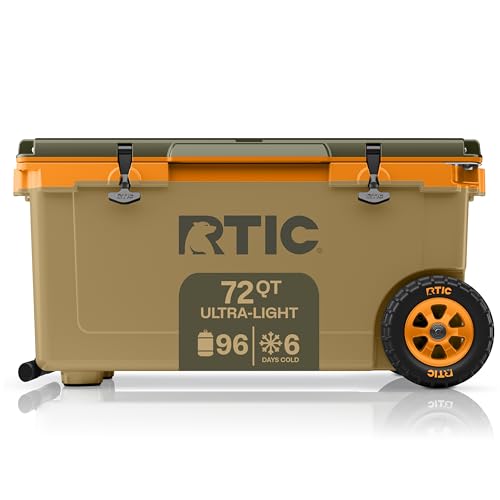
RTIC 72 QT Ultra-Light Wheeled Hard Cooler

Igloo Profile Series Hard Cooler

VINGLI Rolling Patio Party Cooler Cart

Lifetime 65 Quart Hard Cooler
Inside Each Recommended Option
The Tundra Haul is the wheeled take on YETI’s tank-style Tundra line, designed for people who would rather roll a heavy load than dead-lift it into a truck bed. A welded aluminum arm, branded the StrongArm Handle, telescopes and locks into place so you can pull the cooler with one hand across gravel, grass, or a parking lot. The single-piece wheels are built to resist flats, which matters more than you might think at a long campsite pull.
Compared to the smaller Roadie 24 below, the Haul earns its keep on group trips, full-day tailgates, and base-camp setups where you’re unloading gear once and parking the cooler near the chairs. If you host large cookouts or you camp with a crew, the rolling format takes the backache out of an otherwise tough carry.
Bright Spots
- NeverFlat-style single-piece wheels handle rough terrain without airing up.
- Rotomolded shell shares the toughness of the Tundra line, so it shrugs off bumps in truck beds.
- Telescoping aluminum handle saves your shoulders over long walks from the car.
- Roomy interior holds a full day of food and drinks for a small group.
- Wide footprint gives plenty of base for standing on to pop a beer.
Things To Consider
- Empty weight is substantial, so loading and unloading a tailgate still takes two hands.
- Larger footprint than the Roadie 24, which means less trunk space for passengers.
- Wide-body design may feel oversized for solo day trips.
Key Specs
Built With In Mind
Tailgaters, group campers, and anyone hauling food across a long parking lot will appreciate the rolling design.
Reach For A Different Pick When
Solo road-trippers who want a tight seat-friendly cooler should look at the YETI Roadie 24 2.0 instead.
The Roadie 24 2.0 is the slim-and-tall sibling to the Tundra Haul, and its whole pitch is fitting behind a truck seat without wedging it sideways. The updated shell is thinner and lighter than earlier Roadies while keeping the rotomolded toughness that YETI built its reputation on. A DoubleDuty shoulder strap turns a one-handed carry into a hands-free hike from the parking lot to the picnic table.
Where the Tundra Haul is a tailgate-and-base-camp workhorse, the Roadie 24 is built for two-lane drives and quick stops. You can pack it in the morning with sandwiches and drinks, drop it behind the seat, and forget about it until you reach the trailhead.
Practical Advantages
- Tall, narrow profile slides behind most front seats.
- DoubleDuty strap doubles as a tie-down handle when you need to anchor it.
- Drain plug speeds the post-trip melt-water purge.
- Lighter rotomolded shell is easier to carry to the picnic table than older Roadies.
Worth Noting
- Capacity runs small for big groups, so it suits two-to-four-person outings best.
- Shoulder strap adds comfort but the cooler is still heavy when fully loaded.
Whose Shelf It Belongs On
Road-trippers, beach-goers, and small families who want a cooler that fits behind the seat will appreciate this Roadie.
Swap It Out When
Anyone hosting a larger tailgate should look at the YETI Tundra Haul Portable Wheeled Cooler for more capacity.
The Stanley Adventure 16 is the kind of cooler you grab for one specific reason: it doesn’t fight you. It’s lighter than the rotomolded heavyweights, the top handle feels solid in hand, and the lid bungee doubles as a place to clip a water bottle. Foam insulation runs thicker than a generic 16-quart cooler, which is what lets it hold ice past sundown for a daytime festival or fishing trip.
For day trips where you don’t want a wheeled cooler on a strap or a giant cooler in the trunk, this Stanley hits a useful middle ground. Compared to the Engel 19 below, it has a softer shell and more foam, so it trades a little ruggedness for an easier carry.
The Helpful Details
- Lighter carry weight than rotomolded options in the same size class.
- Bungee system on the lid secures small items without extra straps.
- BPA-free construction for food-contact peace of mind.
- Compact size fits on a back porch shelf when not in use.
Honest Caveats
- Thinner shell means rougher treatment can dent or scratch faster than a rotomolded cooler.
- Smaller capacity caps out for groups beyond two or three people.
Feature Snapshot
The Right Fit
Festival-goers, day hikers, and casual anglers who want one cooler for short outings will enjoy the balance here.
Not Your Match When
Anyone wanting a hard-wearing workhorse for boat decks should look at the Engel 19qt Leak-Proof Drybox Cooler.
The Engel 19 reads like a tool more than a picnic cooler. The hard outer shell clamps down with stainless steel latches that feel like they belong on a marine box, and the foam insulation is molded high-grade polystyrene that holds ice for a full workday in most climates. Where the Stanley Adventure plays the casual-day-trip role, the Engel leans into boat-deck abuse and rough work sites.
It also works as a lunchbox for people who treat their lunches like field gear. The drybox-style seal helps with leaks on bumpy rides, which is a quieter benefit until you have a cooler full of water and ice on the back seat.
The Good Stuff
- Stainless steel latches hold up to salt, sweat, and repeated opening.
- Molded foam insulation retains ice longer than soft-shell lunchboxes.
- Hard outer shell doubles as a seat or stand for a small tackle tray.
- Leak-resistant seal helps keep car trunks drier during melt cycles.
Points To Note
- Hard shell has more weight than a soft lunch cooler, so it isn’t ideal for hiking in.
- Industrial styling may look out of place at a backyard birthday party.
Quick Facts
Who Should Grab It
Boaters, trades workers, and anyone who treats a lunchbox like a piece of gear will appreciate the rugged build.
Consider Something Else When
Family picnic folks who want a softer, lighter carry should consider the Stanley Adventure Outdoor Cooler 16 qt.
The RTIC 72 is the answer to a specific problem: you want Tundra-class ice retention but you don’t want a Tundra-class dead lift. The all-terrain wheels are puncture-resistant and the telescoping handle makes this 72-quart cooler feel smaller than the number suggests. It handles gravel roads, boat ramps, and uneven campsite ground without dragging or tilting.
Where the YETI Tundra Haul is a workhorse for medium groups, the RTIC 72 stretches into multi-day camping trips and group cookouts. The bigger capacity also makes it the right call for hunters packing out meat, since you can fit a meaningful load without making three trips to the truck.
Where It Helps
- 72-quart capacity fits a full weekend of food and drinks for a family.
- Puncture-resistant wheels handle dirt roads and boat ramps.
- Telescoping handle keeps the rolling gait comfortable for taller users.
- Hard shell construction supports stacking gear on top during transport.
Things To Weigh
- Full size means it dominates a small trunk or back seat.
- Empty weight is still substantial, even with the wheels.
- Overkill for solo day trips or short drives.
Best Suited To
Multi-day campers, hunters, and anyone hosting big weekend cookouts will find the capacity and wheels useful.
Look Elsewhere When
Quick grocery-grab or picnic use is better served by a smaller, lighter cooler like the YETI Roadie 24 2.0.
The Igloo Profile Series plays a different angle than the rotomolded giants: a tall, vertical body that fits longnecks and 2-liter bottles standing upright. Cool Riser Technology lifts the base slightly off hot surfaces, which on a black truck bed or a picnic table can buy you a few hours of extra ice life. The bail handle folds flat against the lid so the cooler stacks cleanly against the wall in a garage.
Compared to the RTIC 72 above, the Profile trades bulk for a slimmer silhouette that suits backyards and porch parties. It’s the right shape when you mostly carry drinks, snacks, and a tray of lunch meat rather than a multi-day meal plan.
Noteworthy Benefits
- Vertical profile keeps tall bottles standing without rolling around.
- Cool Riser base helps with airflow on hot surfaces like tailgates.
- Folding bail handle keeps the silhouette low for storage against a wall.
- Liner pouring channels make purging melt water easier at the end of a day.
Some Limits To Know
- Less rugged than rotomolded coolers for rough terrain or heavy hauling.
- Ice retention won’t match premium tier over multiple hot days.
Made For
Backyard hosts and small families who mostly need drink storage and a portable snack station will appreciate the upright shape.
A Better Fit Elsewhere
Anyone running a multi-day camp kitchen should look at the RTIC 72 QT Ultra-Light Wheeled Hard Cooler.
The VINGLI Rolling Cooler is less “ice chest” and more “rolling bar cart with a built-in cooler tub.” The stainless body holds drinks, snacks, and a bottle opener on the side, with a lower shelf for cups or a trash bin. Two directional wheels let you steer it across a patio and stop without it drifting on a sloped driveway.
Compared to a closed cooler like the Igloo Profile, this one is built for hosting rather than transporting. The trade-off is that it isn’t really a camping cooler. It’s the right call for patio parties, pool decks, and tailgate spots where the cooler stays put once you wheel it over.
Strengths Worth Knowing
- Built-in bottle opener removes one item from your hosting kit.
- Lower shelf adds staging space for cups and snacks.
- Stainless steel body wipes clean after sticky drink spills.
- Directional wheels lock in place for stable serving.
Practical Considerations
- Open-top design loses ice faster than a closed hard cooler.
- Cart form factor makes it awkward to load into a vehicle for travel.
Who Will Love This
Hosts who want a patio bar centerpiece, and tailgaters parking in one spot for an afternoon, will find it practical.
Skip It When
Anyone heading to a campsite or boat ramp should grab a sealed hard cooler like the Engel 19qt Leak-Proof Drybox Cooler.
The Lifetime 65 sits in the middle of the size ladder, big enough for a long weekend of food but not so large that it eats your back seat. The advertised ice-retention figure is the headline feature, and the insulated lid and body are designed to hold ice for multi-day trips without constant refills. For hunters and campers who count on a cooler to keep meat and game cold, that combination of size and claimed retention is the whole point.
Against the wheeled RTIC 72, this Lifetime gives up the rolling handle in exchange for a simpler, lighter dry weight. If you mostly load it into a vehicle and unload it once at camp, that trade works in your favor. For long walks from the car, the RTIC wheels start to earn their price.
What Pays Off
- 65-quart capacity fits a family weekend or several hunting trips.
- Insulated lid and body target multi-day ice retention.
- Hard shell construction supports standing on the lid at a campsite.
- Simpler form factor is easier to clean and dry than rolling models.
Less Ideal Details
- No wheels, so it requires lifting for any distance beyond a tailgate.
- Larger footprint than a casual picnic cooler.
Perfect Match For
Hunters, cabin-goers, and weekend campers who need long ice life without the rolling-cart footprint will like this format.
Where Another Pick Suits Better
Hosts who park the cooler in one spot and want to roll it around the yard should look at the VINGLI Rolling Patio Party Cooler Cart.
What To Match Up Before You Pick
A few attributes quietly decide whether a cooler feels right or feels like the wrong shape. Think through how you’ll actually carry it, where it lives when it’s not in use, and what kind of abuse it will see, because the answers steer every other choice.
Capacity vs. Real Use
A 70-quart cooler sounds generous until you add ice on top of food and drinks, and the usable volume drops fast. As a rule, plan on roughly one-third of the listed capacity going to ice. Solo day-trippers rarely need more than 16 to 24 quarts, while a family weekend lands closer to 50 to 70 quarts. Oversizing wastes space and weight, and undersizing means refilling ice mid-trip.
Build Style and Where You Take It
Rotomolded shells (a process where plastic is rotated inside a heated mold to form a seamless, thick-walled body) like those on the YETI Tundra Haul and RTIC 72 are heavier but shrug off drops and rough terrain. Injection-molded and blow-molded shells are lighter and friendlier on the back, but they dent and scuff more easily. A boat deck or a job site rewards the rotomolded end of the spectrum, while a porch party does not.
Wheels, Handles, and the Last Ten Feet
The “last ten feet” is where most cooler regret starts. A cooler that’s perfect in the driveway becomes a curse fifty yards from the parking lot. Wheeled options like the Tundra Haul and RTIC 72 solve this for larger sizes, while shoulder straps on the Roadie 24 cover smaller loads. Consider how far the cooler travels from car to camp, because that distance decides whether wheels are worth the trade in weight and trunk space.
Drain Plugs, Latches, and Day-Two Realities
After the first trip, drain plugs and latch quality start to matter. A reliable drain plug speeds up the messy end-of-trip melt-water purge. Stainless or reinforced latches resist the slow corrosion that cheaper plastic hardware develops over a couple of summers. These details feel minor on day one and important by the third family cookout.
What Most People Overlook
Mistakes Worth Dodging
Picking by quart size alone is the most common trap. Bigger isn’t always better, and a half-empty giant cooler loses ice faster than a packed smaller one, because more air volume means more warm space to chill. Another frequent miss is ignoring trunk fit. Measure your cargo space before settling on a wheeled 70-quart model, since “fits in the truck” is a real spec.
Why Top Tier Costs More
Premium rotomolded coolers earn their keep with thicker walls, better gaskets, and stainless hardware. Those details translate into longer ice retention, fewer cracks after a drop, and latches that still snap shut after a few summers of sun. The upgrade is worth it for multi-day trips, harsh environments, and anyone who hates replacing gear every few years. For backyard-only use or a single summer of festivals, the savings on a mid-tier cooler usually make more sense.
Frequently Asked Questions
How long should ice last in an affordable cooler? Most hard-shell coolers in this list hold ice for one to three days in moderate heat, depending on how often the lid opens and how full the cooler stays packed.
What size cooler do most families need? A 40 to 65-quart cooler fits a typical family weekend of food and drinks, while a 16 to 24-quart cooler covers day trips for two or three people.
Are rotomolded coolers worth the extra cost? Rotomolded shells handle drops and rough use better than lighter molded shells, so they pay off for campers, hunters, and anyone hauling gear over uneven ground.
Can I use dry ice in any of these coolers? Most hard-shell coolers in this list can handle dry ice for short periods, but you should check the manufacturer’s guidance because trapped gas can build pressure without a vent.
How do I clean and store my cooler between trips? Air-dry the interior with the lid cracked, wipe seals with mild soap, and store the cooler out of direct sunlight to slow UV damage to plastic parts.
Closing Thoughts
A good cooler is the one that matches the trip, not the one with the biggest spec sheet. Start with how you’ll carry it, decide on a size that fits the group, then pick a build tough enough for where it goes. Any of the picks above will get the job done, and the right one is whichever one you’ll actually pack without a fight.