
Cooking outdoors doesn’t have to mean choosing between a hot meal and a reasonable gear budget. The current class of affordable camping stoves spans everything from featherweight backpacking rigs to two-burner basecamp kitchens, and most perform well enough that you don’t need to overspend to eat well outside. Solo hikers, weekend car campers, and overlanders all face different trade-offs around weight, simmer control, and fuel choice, so this list pairs each cooker with the kind of trip it actually suits.
A Fast Comparison Of The Options

Jetboil Flash Portable Fast Boil Stove

Jetboil Stash Ultralight Cooking System

Jetboil MightyMo Ultralight Stove
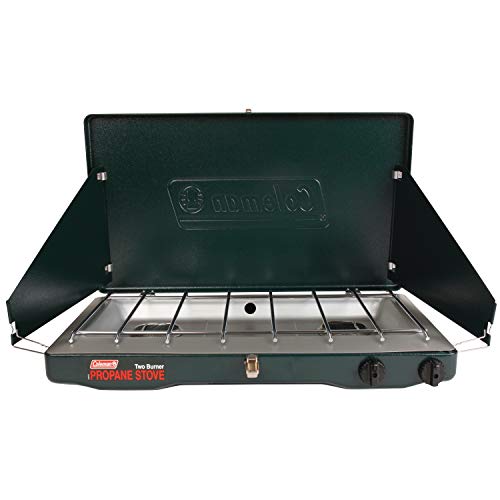
Coleman Classic Propane Stove 2 Burner


Camp Chef Explorer Two Burner Stove

Jetboil HalfGen Basecamp Cooking System

Bonnlo 2 Burner Portable Propane Stove

Jetboil Flash 1.0L Stove (Ocean Topo)

GasOne GS-1000G Butane Stove with Griddle
Why These Options Stand Out
The Flash has earned its reputation as the no-fuss choice for morning coffee at altitude. An integrated 1.0L FluxRing cup (that’s Jetboil’s finned aluminum pot that wraps around the burner for efficiency) threads onto a propane/isobutane burner, and a turn-and-click igniter fires it up without matches. A thermochromatic indicator on the cozy changes color as water heats, so you know when to pull the pot off without watching a gauge.
Compared to the Stash below, the Flash trades a few ounces of weight for a bigger cup, a color-changing heat cue, and a slightly wider stance that feels steadier on uneven ground. For three-season campers who mostly boil water for freeze-dried meals, pour-over coffee, and dehydrated soup, it remains a hard argument to beat.
Real-World Strengths
- Heat indicator stripe that turns color near boiling, removing guesswork at altitude
- Insulating neoprene sleeve keeps the cup handleable right after boil-off
- Threaded pot-to-burner connection locks tight during transport in a pack
- Auto-igniter means one fewer tool to forget on a chilly morning
- Stable base that holds up on rocky tent pads better than ultralight pot-only rigs
Things To Consider
- Pot size caps meal ambitions; rehydrating dinner for two means two boils
- Burner head sits deep inside the cup, so sautéing in the pot is awkward
Feature Snapshot
Right Fit For
Solo backpackers and casual car campers who prioritize hot drinks and quick rehydrated meals over true simmer cooking.
Consider Something Else When
Pick the Jetboil MightyMo instead if you actually want to simmer sauce or sauté vegetables, since its regulator handles lower heat much more gracefully.
The Stash is the Flash’s pack-conscious sibling, with the same FluxRing heat-exchanger philosophy wrapped in a lighter titanium burner. At 7.1 oz for the full cooking system, it shaves meaningful weight for thru-hikers counting every gram. The 0.8L pot handles a single generous meal or a small coffee pour, and the whole kit nests down to roughly the size of a Nalgene.
Compared to the Flash’s 1.0L neoprene-coated cup, the Stash trades heat retention and a color-changing indicator for a noticeably smaller packed footprint. If your trips skew toward long miles between resupplies, that trade usually favors the Stash.
The Case For It
- Full system weight under 8 oz without sacrificing Jetboil’s signature boil speed
- Titanium burner resists corrosion after years of canister swaps
- Nests inside the pot for a tidy pack profile on long traverses
- FluxRing pot base spreads heat efficiently across the pot bottom
Worth Noting
- Smaller 0.8L pot means two boils for two freeze-dried meals
- Lacks an insulating cozy, so the bare aluminum gets hot fast
Who Should Grab It
Thru-hikers and gram-counting backpackers who want Jetboil-class boil speed without the bulk.
A Better Fit Elsewhere
Choose the Jetboil Flash 1.0L Portable Fast Boil Stove if you’re mostly car-camping or doing short overnights, since its insulating sleeve and bigger pot are easier to live with.
The MightyMo is Jetboil’s answer to backpackers who got tired of “boil-only” cooking and wanted real meal options on trail. A four-turn regulator lets you walk the flame down from a rolling boil to a low simmer, which is where this stove earns its keep. Sautéed vegetables, risotto, and pan-fried fish all sit comfortably in its range without scorching.
Source data claims roughly half the fuel consumption of older Jetboil models for a rolling boil, which adds up on longer trips where canister weight matters. The trade-off, compared to the Flash, is a slightly bulkier pot and no auto-igniter, so you’ll want to pack a lighter.
Useful Highlights
- Four-turn regulator that adjusts cleanly from simmer to boil
- Reportedly cuts fuel use nearly in half versus older can-style systems
- Open-platform design accepts wider pans for real cooking
- Compatible with standard Jetboil-thread fuel canisters
Minor Gripes
- No built-in igniter, so a backup sparker belongs in your kit
- Slightly heavier than the Stash for thru-hikers chasing ounces
Feature Rundown
Best Suited To
Backpackers who actually cook on trail, not just boil, and want fuel-efficient heat control.
Skip It When
Go with the Jetboil Flash if you only ever rehydrate meals, and you’d rather have an auto-igniter and a sleeker pot.
Few stoves carry the cultural weight of the Coleman two-burner, and the current Classic edition keeps that legacy alive. Two independently controlled burners, wind-blocking side panels, and a stable 4.1 x 21.9 x 13.7-inch footprint turn any picnic table into a working kitchen. It fits a 12-inch and a 10-inch pan side by side, which matters when breakfast includes both pancakes and bacon.
Output lands at up to 20,000 total BTUs, and a built-in pressure regulator keeps flame behavior steady as the cylinder chills. Against the Jetboils above, the trade is weight and pack size for actual two-zone cooking. Run on a standard 16.4 oz propane cylinder for roughly an hour on high.
Key Advantages
- Two independently adjustable burners handle breakfast and coffee at once
- Wind-blocking panels keep flames steady on breezy tailgates
- Pressure regulator tames flame drop-off as the canister cools
- Stable footprint that resists tipping when kids and dogs are nearby
Points To Note
- Propane cylinder sold separately, an easy thing to forget at home
- Heavy and bulky; not a candidate for backpack carry
Who It Suits Best
Car campers, tailgaters, and basecamp families who want a familiar two-pan setup without complications.
Reach For A Different Pick When
Look at the Camp Chef Explorer if you cook for bigger groups and want higher BTU output and a detachable-leg design that stores flatter.
Not a stove, but a 24-pack of butane canisters earns its slot for anyone running tabletop butane burners like the GasOne GS-1000G-KIT further down. Each cartridge is UL Listed as a Recognized Safety Container, and an RVR system scores the dome seam so over-pressured cans vent before they rupture. The safety logic kicks in as backup to standard pressure relief.
As anyone who has scrambled for fuel on Saturday morning knows, the bigger win here is the bulk format. Twenty-four cartridges cover a full season of weekend trips for a small family, and sealed butane holds its charge across storage better than aerosol-propelled cans. Owners commonly report a noticeable lifespan edge over generic brands.
Strong Points
- UL Listed canisters with RVR over-pressure venting for added safety
- Bulk 24-pack format cuts mid-season fuel runs to zero
- Recognized safety container rating suits use around tents and vehicles
Trade Offs
- Butane performance drops in cold weather, so winter trips still call for isobutane mixes
- Never refuel hot or burning devices, a real risk worth respecting every time
Feature Card
Perfect Match For
Families and frequent campers running tabletop butane burners who want a season’s worth of fuel on hand.
Not Your Match When
Skip these for high-altitude winter camping; Jetboil-style isobutane canisters handle cold much better.
The Camp Chef Explorer is what happens when a tailgate stove takes itself seriously. Two 30,000 BTU cast-aluminum burners deliver enough heat to sear a steak, boil a large pot of water, or run a full griddle. The cooking surface measures 14 x 32 inches, and a three-sided windscreen keeps the flame honest on gusty afternoons.
Detachable steel legs and an included propane hose make setup straightforward, and the whole thing folds down for transport in a truck bed. Compared to the Coleman Classic above, the Explorer trades compact tabletop convenience for higher per-burner output and a wider cooking platform that accepts oversized pans.
Reasons It Performs
- High-output burners handle searing, frying, and boiling simultaneously
- Wide cooking platform accommodates large griddles and stockpots
- Three-sided windscreen maintains flame stability in real outdoor conditions
- Detachable legs and included hose simplify truck-bed transport
Room For Improvement
- Heavier than a basic two-burner, so it really wants a vehicle
- Cooking griddle and accessories are typically sold separately
Made For
Overlanders, tailgaters, and basecamp cooks who want serious heat output and room to spread out.
Swap It Out When
Pick the Coleman Classic Propane Stove if you need something lighter that still sets up on a picnic table for casual family trips.
The HalfGen is Jetboil’s play for car-camp cooks who appreciate brand consistency. It runs standalone as a 10,000 BTU basecamp burner, or it links via Jet Link-compatible ports to other Jetboil stoves, building out a real outdoor cooking range. Water reaches boil in roughly three minutes, which is fast for snow-melting duty at altitude.
The proprietary regulator walks incrementally from simmer to full heat, making it useful for more than just boiling. That puts it somewhere between the MightyMo’s backcountry-friendly simmer control and the Coleman Classic’s two-burner convenience, with the added trick of expanding into a multi-burner setup when paired.
Everyday Perks
- Modular Jet Link port scales into a multi-burner cooking range
- Boils water for melting snow or coffee in just over three minutes
- Incremental regulator control covers simmer and full boil
- Solid basecamp alternative for groups who already own Jetboil gear
Honest Caveats
- Costs more than a basic two-burner propane stove
- Linking potential only matters if you already own compatible Jetboil stoves
Feature Snapshot
Whose Shelf It Belongs On
Car campers who already use Jetboil stoves and want a modular basecamp cooking hub.
Where A Sibling Pick Shines
Go with the Coleman Classic Propane Stove if you want a simpler two-burner layout with no linking cables to manage.
The Bonnlo brings cast-iron muscle to the propane stove category. A heavy cast iron burner head and adjustable firepower up to 150,000 BTU across two burners handle everything from fish boils to crawfish pots. Detachable stand legs set up quickly on grass, gravel, or patio concrete, and the bracket accepts a range of pot sizes for one-pot dinners.
Where the Jetboils above focus on light-and-fast backpacking, the Bonnlo is built for serious outdoor cooking. It’s a different class of gear than the Coleman Classic too, trading that stove’s portability for higher output and the rugged feel of cast iron cookware.
Why It Works Well
- Cast iron burner head resists warping under repeated high-heat use
- High total output handles large stockpots and seafood boils
- Detachable legs make transport and storage manageable
- Pot bracket accommodates various pot diameters for one-pot meals
Things To Weigh
- Heavier than aluminum two-burners, so it really lives outside the car
- Cast iron requires drying and oiling to avoid rust after wet trips
Built With In Mind
Outdoor cooks running crawfish boils, fish fries, and large-batch stews for friends and family.
Look Elsewhere When
The Camp Chef Explorer is a better call for general two-burner cooking at altitude, where cast aluminum is easier to haul.
The Ocean Topo variant of the Flash 1.0L delivers identical performance to the standard Flash with a coastal-inspired graphics package on the cup. That includes the same one-step auto ignition, 1.0L FluxRing cooking cup, and thermochromatic heat indicator. For anyone who cares about the look of gear as much as the function, this is the Flash in a different paint job.
Performance specs match the original Flash, so the practical differences come down to aesthetics and limited-edition availability. If you like the Flash’s blend of speed and stability but want something a little more distinctive on the picnic table, the Ocean Topo is a clean swap.
A Few Highlights
- One-step auto ignition fires up without matches or lighters
- Thermochromatic heat indicator confirms a real boil
- Distinctive graphics package sets it apart from the standard Flash
- Same proven 1.0L FluxRing cooking cup for fast boil times
A Few Limitations
- Limited-edition graphics may not appeal to everyone
- Same single-pot simmer limits as the standard Flash
Who Should Grab It
Flash fans who want the same reliable performance with a distinctive visual style on the trail or at basecamp.
Swap It Out When
Go with the Jetboil MightyMo if real cooking with a wide skillet matters more than visual style.
The GS-1000G-KIT pairs a diecast aluminum butane burner with a non-stick flat-top griddle, making it a pancake-and-bacon specialist. A piezo-electric igniter lights the stove without matches, and an adjustable heat dial walks the flame from low to high for different foods. The included griddle slides off for pot-and-pan cooking too, so it’s more flexible than a dedicated griddle.
Running on standard 8 oz butane canisters keeps the rig portable for car camping or tent-side cooking, and the small footprint fits a tailgate or picnic table. Pair it with the butane 24-pack above and you’ve got a complete breakfast station for a season.
Points In Its Favor
- Included flat-top griddle expands meal options beyond boiling
- Piezo-electric igniter means one less tool to pack
- Adjustable heat dial gives smooth flame control across cooking tasks
- Diecast aluminum body holds up to repeated transport
Softer Spots
- Butane runs weaker in cold weather than propane or isobutane
- Butane canisters sold separately, so factor that into planning
The Right Fit
Campers who want griddle-cooked breakfasts and tent-side meals without hauling a full two-burner rig.
Another Choice May Suit
Pick the Coleman Classic Propane Stove for bigger meals and bigger groups where two simultaneous burners matter more than a flat-top surface.
Picking The Right Stove For The Way You Actually Camp
Match The Stove To The Trip, Not The Other Way Around
Solo backpackers benefit from integrated systems like the Jetboil Flash or Stash, where the pot nests on the burner and the whole kit weighs under a pound. Weekend car campers usually want two-burner versatility, which is where the Coleman Classic and Camp Chef Explorer shine. Overlanders and tailgaters running big pans want cast iron or cast aluminum output, which points toward the Bonnlo.
Fuel choice matters too. Isobutane and propane blends stay efficient at altitude and in cold weather, butane drops off fast below freezing, and propane cylinders keep flowing reliably in shoulder seasons. Match your fuel to your climate and your trip length, and check canister availability at your destination before you drive out.
Heat Control Separates Boil-Only From Real Cooking
A stove that only boils forces freeze-dried meals, instant noodles, and pour-over coffee. A stove with a precision regulator like the Jetboil MightyMo or the Jetboil HalfGen opens up sautéed vegetables, pan-fried proteins, and risotto-style dishes on the trail. Decide how much cooking you actually want to do before paying for simmer capability you might never use.
Build Quality Tells In The Field
Cast aluminum and steel bodies hold up to years of truck-bed travel, while thin stamped steel and plastic components tend to loosen over time. Detachable legs, sealed regulators, and wind-blocking panels are the features that separate a one-season stove from a ten-season workhorse. Reading manufacturer support documentation also helps, since coverage for accidental damage and 24/7 support varies widely across brands.
Key Considerations Across These Picks
Common Shopping Slip Ups
Choosing a backpacking stove for car camping leaves you without enough burners to cook a real meal, and choosing a heavy two-burner for the trail adds pounds you’ll resent by mile eight. Fuel compatibility trips up first-timers too: not every stove runs on every canister, and not every canister is available at every trailhead. Match the format, the fuel, and the destination before clicking buy.
Why Top Tier Costs More
Higher-tier stoves earn their premium through precision regulators, lighter titanium components, and integrated safety systems like the RVR over-pressure vent on those butane canisters. Modular features like the Jetboil HalfGen’s Jet Link ports also add cost, but they let a single stove scale from solo trips to group basecamps. For weekend warriors, the extra spend usually isn’t worth it. For thru-hikers and basecamp hosts, those upgrades often pay for themselves in fuel savings, durability, and meal quality.
Frequently Asked Questions
Are butane stoves safe to use inside a tent?
Butane stoves should never be used inside a closed tent, because combustion consumes oxygen and produces carbon monoxide. Use them only in open air or under a rain fly with significant ventilation.
Can I use propane canisters with a Jetboil stove?
Jetboil stoves run on standard threaded isobutane or propane/isobutane blend canisters. Pure propane cylinders typically use a different fitting and need an adapter for backpacking-format stoves.
How long does a fuel canister usually last?
A 100-gram isobutane canister typically covers four to six boils in an integrated system, while larger 230-gram canisters stretch to a full weekend of cooking. Actual runtime varies with temperature, wind, and how often you simmer versus boil.
Do I really need a regulator for backcountry cooking?
A regulator matters once you want more than instant noodles. Without one, low-flame cooking means the burner either roars or clicks off, so any real meal prep pushes you toward stove designs with incremental valves.
How do I clean a camping stove?
Allow the stove to cool fully, then wipe the burner head with a dry brush to clear soot. Avoid water on regulator components, and store canisters separately in a dry bag so valve seals stay clean.
Wrap Up
The right affordable camping stove depends entirely on how you camp. Solo backpackers chasing low weight will feel at home with the Jetboil Flash or Stash, while car campers feeding a family will appreciate the Coleman Classic and Camp Chef Explorer. Specialty cooks and big-batch hosts should look at the Bonnlo or the GasOne griddle combo. Pick the format that fits your trip, match the fuel to your climate, and you’ll spend less time fussing with the stove and more time eating well outside.