
Group camping throws a lot at your tent: overnight gear for a dozen friends, gear piles by the door, kids darting in and out, and a parent trying to change clothes without taking down the whole structure. An 8 person tent should feel like a small cabin, not a sardine can. The eight options below span canvas family lodges, inflatable air tents, and classic cabin-style shelters, so you can match the build to your crew, your climate, and your comfort tolerance.
A Quick View Of The Lineup

Coody Premium Inflatable Tent for Camping, Canvas Air Tent

Flex-Bow Deluxe Canvas Camping Tents
KTT Extra Large Tent 8-10 Person (Style A)

KTT Extra Large Tent 12-14 Person
KTT Extra Large Tent 10-12-14 Person

KTT Extra Large Tent 10-12 Person
KTT Extra Large Tent 10-12-14 Person (Style B)

KTT Extra Large Tent 10-12-14 Person (B)
More Details On Our Top Picks
If your family has outgrown the ritual of threading poles through fabric sleeves, the Coody Premium Inflatable Tent skips that step entirely. Air beams replace the rigid frame, so the shelter pitches with a pump rather than a fistful of fiberglass. The integrated stove jack opens the door to shoulder-season camping, which is something the standard KTT cabin tents in this list do not offer.
Where the Kodiak Flex-Bow leans on traditional cotton canvas, the Coody leans on a TC blend that balances breathability with weather resistance. For a base-camp family with one or two kids in tow, the inflatable pitch removes the worst part of tent setup, and the stove compatibility makes cool nights far more pleasant.
Points In Its Favor
- Air-beam frame removes pole threading, which usually cuts setup time dramatically for first-time users
- Built-in stove jack supports a wood or gas heater for cold-weather shoulder seasons
- TC canvas blend manages interior moisture better than standard polyester shells
- Spacious layout supports small families looking for a true living-room feel
Things To Consider
- Air beams need a pump and can require on-trip reinflation if a valve loosens
- Canvas plus inflatable frame weighs more than the KTT polyester cabins and packs larger
- Stove use demands careful ventilation planning and a compatible stove footprint
Feature Snapshot
Right Fit For
You camp across three seasons and want a shelter that pitches fast and handles a wood stove on chilly nights.
Where Another Pick Suits Better
Shoppers who camp mostly in mild summer weather and want a lighter polyester cabin should look at the KTT Extra Large Tent 10-12-14 Person (Style B) instead.
The Kodiak Canvas Flex-Bow Deluxe is the kind of tent that gets handed down. Its 100% cotton duck canvas with Hydra-Shield treatment is the heaviest fabric in this roundup, and that weight is the point: it stands up to UV, wind, and the kind of multi-week base-camp use that chews through lighter shelters. Walk-around 6’6″ ceilings are rare at this size, and adults will not duck through the door.
Two large D-shaped doors with #10 YKK zippers (heavy-duty zippers rated for repeated high-stress use) sit at the front and back, so foot traffic doesn’t bottleneck in the middle of the night. Compared to the KTT cabins lower in this list, the Flex-Bow trades lightweight convenience for raw durability, and for some families that trade is exactly right.
Notable Gains
- Hydra-Shield 100% cotton duck canvas handles long-term sun and rain exposure
- 6’6″ walk-around ceiling keeps taller campers from hunching over the cooler
- Two D-shaped doors with #10 YKK zippers keep entry and exit friction-free
- Flex-Bow frame allows one-person setup, which is rare for a shelter this size
Worth Noting
- Cotton canvas adds significant pack weight and demands a larger vehicle for transport
- Higher price tier than most KTT polyester cabins in this lineup
- Canvas needs thorough drying before storage to prevent mildew on long trips
Best Suited To
You run a recurring base camp or seasonal property and want a canvas tent that lasts for many seasons.
Swap It Out When
You need a lighter polyester cabin for occasional weekend trips, where the KTT Extra Large Tent 10-12-14 Person (B) fits better.
For most families dipping into group camping, this Style A KTT cabin is the practical starting point. The straight-wall design, where the sidewalls rise vertically before the roof, gives more usable floor space than a dome of the same footprint. Inside dimensions of roughly 12.5 by 8.5 feet comfortably fit four air mattresses side by side, which is the real test of any 8-10 person family tent.
The two-room layout, separated by a curtain divider, gives parents a quiet side and kids a play side. Three doors and three mesh windows handle summer ventilation, and the mesh keeps the no-see-um insects (tiny biting midges that slip through standard mosquito netting) out on humid evenings. Compared to the Kodiak Flex-Bow above, this is a lighter, easier-to-transport polyester shelter built for warm-weather family camping.
Advantages To Know
- Straight-wall design maximizes floor area and lets cots line the walls without wasted corner space
- Two-room divider creates privacy between parents and kids on shared weekends
- Three doors reduce the in-and-out bottleneck common in single-door family tents
- Repair patches included for quick field fixes on small punctures
Trade Offs
- 6.2 ft ceiling is the lowest in this group, so taller adults will need to mind their heads near the walls
- Polyester shell does not insulate like the canvas Flex-Bow, so cold nights feel colder
- Setup benefits from two adults working together due to the long pole runs
Quick Facts
Whose Shelf It Belongs On
You camp four to six weekends a year in moderate weather and want a balanced family cabin that pitches in under 30 minutes.
Reach For A Different Pick When
You need extra headroom or more floor area for a multi-family group, in which case the KTT Extra Large Tent 10-12-14 Person is the better fit.
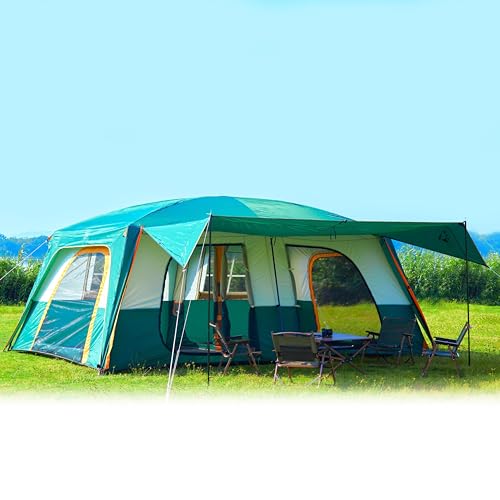
This is the cabin tent you reach for when grandparents, cousins, and a dog are all sharing one shelter. Inside dimensions of 16 by 11 feet turn the interior into something that feels closer to a dorm room than a tent, with room for four full air mattresses plus a gear wall. The straight-wall design keeps the side space usable, which matters once you start piling duffels against the canvas.
Two bay windows, which are angled outward-facing window panels that protrude from the tent wall for extra interior room and better views, give the interior a small nook each side of the divider. Where the smaller Style A above forces trade-offs, this shelter just adds volume. For a multi-generational family, that extra space pays off the first time it rains and everyone is inside for eight hours.
Key Advantages
- Generous 16 by 11 ft floor swallows four mattresses and still leaves gear lanes
- Two bay windows add depth and a small shelf feel on either side of the divider
- Three mesh windows plus a large rear window support cross-breeze in summer humidity
- Eight corner hooks plus a middle hook handle lantern and clothing lines
Honest Caveats
- Larger footprint demands a flat, roomy site, which rules out many small tent pads
- Packed size and weight make solo transport impractical for most campers
- Setup time stretches beyond an hour for first-timers learning the pole layout
Perfect Match For
You host multi-family gatherings or reunions and need a shelter that swallows a dozen sleeping bags without crowding.
Not Your Match When
Your usual sites are small or wooded, where the more compact KTT Extra Large Tent 8-10 Person (Style A) is easier to place.
Among the KTT cabins in this lineup, this 10-12-14 model carries the tallest ceiling at roughly 7.4 feet. That extra foot changes the inside feel: adults can walk the center aisle without hunching, and freestanding shelves or hanging organizers stop looking absurd. The 16 by 11 ft footprint matches the 12-14 person sibling above, so capacity is identical and the difference is really about ceiling height and airflow.
Two rooms with a divider, three doors, and a large rear window give the same ventilation story as the smaller Style A but on a bigger scale. Compared to the Flex-Bow, this shelter is heavier in the bag but far cheaper, and most weekend campers will find the height advantage worth more than canvas durability.
Where It Delivers
- 7.4 ft center height is the tallest of any tent in this roundup
- Same generous 16 by 11 ft floor handles a full family plus overnight guests
- Large rear window plus three mesh windows keep the interior from feeling stuffy
- Eight corner hooks and a middle hook create solid lantern placement
Points To Note
- Packed weight and bulk require an SUV or truck for comfortable transport
- Wind performance drops without proper staking on exposed sites
- More interior volume means longer drying time if rain gets in
Feature Card
Who It Suits Best
You want the most walk-around comfort in a cabin layout and have a vehicle large enough to haul the packed tent.
Look Elsewhere When
Your camping is mostly hot, dry summer trips where the breathable Kodiak Flex-Bow canvas would feel more comfortable.
Somewhere between the Style A and the larger 10-12-14 model sits this 10-12 person KTT cabin. Inside dimensions of 14.1 by 10 feet strike a useful balance: room for four air mattresses, but a footprint that fits more state-park tent pads than the bigger siblings above. The straight-wall design preserves shoulder space, which is the main reason anyone buys this shape.
Two bay windows are the standout detail, adding small interior alcoves where kids can pile their toys or you can stash a diaper bag out of the walkway. Compared to the Coody inflatable tent at the top of this list, this is a much more traditional cabin build, easier to repair in the field and lighter on the wallet.
The Helpful Details
- Two bay windows add interior depth and create cozy alcoves along the divider wall
- 14.1 by 10 ft floor fits most family car-camping sites without crowding
- Three doors and three mesh windows support flexible ventilation
- Straight-wall sides keep cots and air mattresses wall-hugging, not center-cluttering
Soft Spots
- 6.58 ft ceiling is taller than Style A but still requires a small stoop near the walls
- Polyester build means rain noise is louder than the canvas Kodiak shelter
- Stitching around the bay windows can wear faster than flat wall panels over time
Made For
You want a flexible family cabin that handles two parents and two to three kids without dominating the campsite.
Where Another Pick Suits Better
You camp in shoulder seasons with cool nights, where the insulated Coody Premium Inflatable Tent handles temperature swings better.
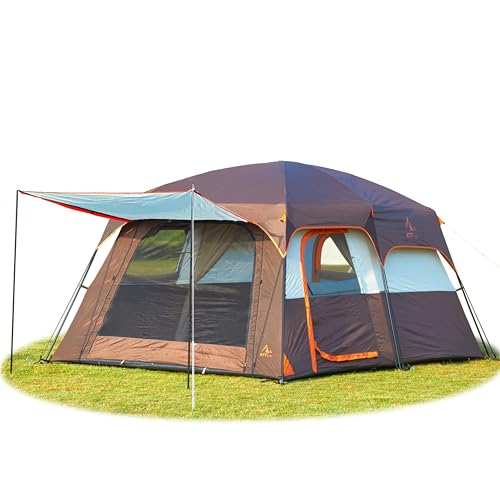
Style B is the smallest of the KTT cabins here by footprint, and that smaller footprint is the selling point. Inside dimensions of 12.5 by 8.5 feet match the Style A above, so you are not losing interior space, but the Style B is generally positioned as the lower-cost entry into KTT’s family-cabin line, and the included repair patches signal that the brand expects first-time users to test the fabric.
Two rooms, three doors, and three mesh windows stay consistent with the rest of the line. For a family trying group camping for the first time, this is a low-risk way to learn what matters before upgrading to the larger 10-12-14 sibling with the taller ceiling.
What Works In Its Favor
- Lower-cost entry into the KTT cabin family, which lowers the risk for first-timers
- Two-room divider still gives parents and kids separate spaces
- Repair patches ship with the tent for small field fixes
- Compact packed size fits in smaller vehicles than the larger KTT siblings
Room For Improvement
- Six corner hooks plus a middle hook is fewer than the eight-hook layout on the larger KTT models
- Same 6.2 ft ceiling as Style A, so headroom remains limited near walls
- Lower-cost build means checking seam tape before each trip is wise
The Right Fit
You are new to family camping and want an affordable cabin that handles a typical summer weekend without overcommitting.
Consider Something Else When
Your family is taller or larger than average, where the KTT Extra Large Tent 10-12-14 Person’s 7.4 ft ceiling is worth the upgrade.
Closing out the list is the (B) variant of the 10-12-14 cabin. Its 14 by 10 ft floor lands between the compact Style A and the larger 16 by 11 ft siblings, which makes it the most flexible of the KTT cabins by site fit. The straight-wall layout keeps shoulder space usable, and eight corner hooks plus a middle hook handle lights, clothing, and small organizers.
Compared to the 12-14 person model earlier in this list, the (B) variant gives up some floor area but keeps the same two-room layout and three-door access. For extended-family weekends where you want room to spread out without claiming the largest pad in the campground, this is the version most people will actually pick.
Reasons It Performs
- 14 by 10 ft floor fits more sites than the larger 16 by 11 ft KTT cabins
- Two-room divider preserves the privacy that makes family camping work
- Eight corner hooks plus a middle hook add real hanging-storage capacity
- Polyester rainfly handles standard summer storms without fuss
Small Limitations
- 6.58 ft ceiling is shorter than the 7.4 ft 10-12-14 sibling
- Capacity rating (12 person) is lower than the larger cabin variants
- Polyester shell demands proper seam sealing after heavy rain seasons
Spec Overview
Who Should Grab It
You want the middle path between compact and massive, with enough room for a multi-night family stay on a typical camp pad.
A Better Fit Elsewhere
You regularly camp in shoulder seasons and want four-season comfort, where the canvas Kodiak Flex-Bow Deluxe is the stronger choice.
Matching Capacity To Your Crew
An 8 person tent label rarely means comfortable sleep for eight adults. Most rated capacities assume slim sleepers on pads, so plan for one queen air mattress per two campers as a rough sizing rule, then add a gear zone along one wall. The straight-wall cabin designs in this list use their footprint more efficiently than domes, which is why a 12.5 by 8.5 ft KTT cabin can sleep a family of four on full air mattresses.
Climate And Season Match
Hot, humid summers reward polyester cabins with large mesh windows, while shoulder seasons and high-altitude camping call for canvas breathability or a stove jack. The Coody inflatable and Kodiak Flex-Bow serve cold-weather campers, while every KTT cabin here targets three-season family use.
Setup Realities To Plan Around
Inflatable air beams (the Coody) cut pole confusion but require a pump. Flex-Bow frames claim one-person setup but expect a learning curve. Standard cabin tents with rigid poles really do go faster with two adults, so build in extra time on first use.
Build Quality And Weather-Readiness
Look for taped seams (seams sealed with waterproof tape rather than just stitched), reinforced stress points at guy lines, and rainfly coverage that reaches low on the walls. Heavier denier fabric (the yarn thickness used in the weave, where higher numbers mean tougher material) resists punctures from pine needles and kids’ toys but adds pack weight. Canvas handles UV far better than polyester, which matters for long-term base camps.
Site Footprint And Transport
The largest KTT cabins need a flat 16 by 11 ft site, while the more compact Style A and B variants fit tighter state-park pads. Pack size matters more than most shoppers expect; measure your cargo area before you commit.
Key Considerations Across These Picks
Where Shoppers Go Wrong
The most common mistake is trusting the capacity label too literally and ending up with a tent where gear lives in the doorway. Second is ignoring ceiling height: a 6.2 ft cabin feels fine for sitting but frustrates anyone over 5’10” who tries to change a shirt standing. Third is buying a polyester cabin for shoulder-season use and discovering the condensation runs down the walls overnight.
Why Top Tier Costs More
Canvas like the Kodiak Hydra-Shield, inflatable air-beam frames like the Coody, and stove-jack integration each add real engineering cost. You pay for materials that last longer, insulation properties that standard polyester cannot match, and frames that remove the worst part of setup. For weekend summer use, the upgrade rarely pays back. For cold-weather, long-term, or repeat base-camp use, it usually does.
Frequently Asked Questions
How many people actually sleep comfortably in an 8 person tent?
For full comfort with gear stored inside, plan for about half the rated number, so an 8 person rated tent works well for four adults with bags and coolers inside. Families with kids can push closer to the rated number.
Are inflatable tents harder to repair in the field?
Air-beam tents ship with repair patches and valve spares, but a slow leak can be harder to find than a broken pole. The Coody’s included support helps when an issue appears during a trip.
What ceiling height matters most for a family tent?
Anything under 6.5 ft forces taller adults to crouch in the center, which gets old fast on a rainy day. The KTT 10-12-14 Person model at 7.4 ft is the comfortable end of this list.
Do canvas tents really handle rain better than polyester?
Canvas breathes and absorbs small amounts of water without leaking, while polyester rainflies must stay perfectly tensioned to avoid pooling. Cotton is heavier and slower to dry, though, which is the real trade-off.
How long does setup actually take for a cabin tent of this size?
Expect 30 to 60 minutes for two adults on a first pitch, dropping to 15 to 25 minutes once the routine is learned. The Kodiak Flex-Bow with one-person setup is the fastest of the canvas options in this list.
The Takeaway
The right 8 person tent is the one that matches your crew size, your climate, and the sites you actually book. Canvas and inflatable builds reward campers who push past summer, while the KTT cabin family delivers dependable family weekends at a more approachable cost. Measure your vehicle, check your typical site footprint, and pick the shelter that fits how you camp, not the one with the biggest label.