
A weekend with the family hits differently when nobody’s fighting for elbow room or waking up in a puddle. The right shelter turns a damp, cramped trip into a base camp where kids sprawl, gear has a place, and a rainstorm is background noise rather than a crisis. Pick the wrong one, and a two-night trip feels longer than a week.
This roundup looks at six shelters sized to swallow a family plus all the coolers, cots, and chaos that come with them. Some inflate in minutes, some pitch like old-school cabins, and one even welcomes a wood stove. Whatever your crew looks like, there’s a fit below.
The Lineup, Simplified

Coody Premium Inflatable Canvas Tent with Stove Jack

Coleman Sundome Tent

Naturehike Village Instant Cabin Tent
Naturehike Cape Instant Tunnel Tent
Naturehike KOTA Double Layer Family Tent
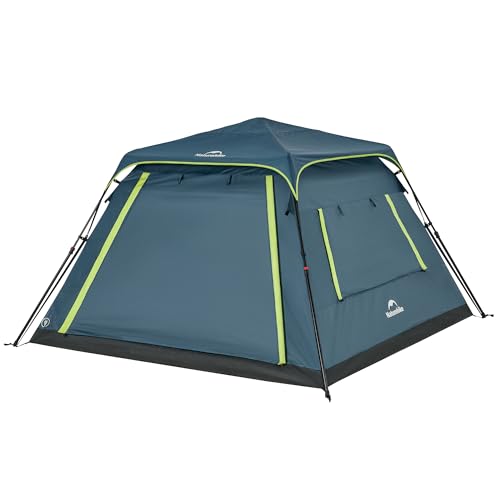
Naturehike Cape Lite Instant Cabin Tent
More On The Choices That Made The List
The Coody Premium Inflatable Canvas Tent leans into the glamping side of camping rather than the lightweight backpacking side. Instead of bending poles through sleeves, you inflate the frame and step inside a breathable canvas shelter built for longer stays. The included stove jack opens up cold-weather and shoulder-season trips, which most cabin-style options skip entirely.
For families who tow a trailer to a fixed base camp, the extra weight and bulk hardly matter. Compared with the Coleman Sundome below, the Coody offers a much more livable interior and real four-season potential.
Notable Upsides
- Air-frame design means no bent poles or tangled shock cord after a long drive
- Canvas construction breathes better than polyester, cutting down morning condensation
- Stove jack supports a wood burner for cold nights or early-spring trips
- Floor footprint gives adults space to stand and dress without crouching
- Heavier fabric handles wind and UV exposure better than thin nylon shelters
Things To Consider
- Inflatable frame requires a pump, adding one more thing to remember at home
- Canvas dries slowly, so packing it wet after a rainy trip can invite mildew
- Total packed weight makes it impractical for anything beyond car camping
Feature Snapshot
Who Should Grab It
Families with a truck or SUV who camp in one spot for a week or more and want a tent that feels closer to a cabin than a bivy.
Look Elsewhere When
The Naturehike KOTA suits you better if you want a tent you can split into a mesh inner for summer and a fly for shoulder seasons.
The Sundome line is the tent many people first learned to camp in, and the current version keeps that reputation intact. Available in 2- and 3-person footprints, this shelter pitches quickly with snag-free continuous pole sleeves and uses Coleman’s WeatherTec system for rain protection. The dome shape holds up in light wind without complicated guying.
It lacks the standing height of the Naturehike Village cabin tents below, but for a couple of adults and a kid or two, the Sundome is a straightforward entry point. It’s a sensible choice for families easing into camping or anyone who wants a no-fuss shelter for short weekend trips.
Well-Handled Touches
- Snag-free pole sleeves shorten first-time setup frustration
- WeatherTec seams and rainfly keep gear dry through typical summer storms
- Multiple size options let you match capacity to your actual crew
- Compact packed size fits easily in a small car trunk
Points To Note
- Dome ceiling means most adults can’t stand upright inside
- Limited mesh ventilation can trap heat on muggy nights
- Floor area fills up fast once you add sleeping pads and gear
Who It Suits Best
First-time family campers who want a familiar name, a short learning curve, and a tent that disappears into the garage until needed.
Consider Something Else When
The Naturehike Cape Lite gives you full standing height and a faster pitch if you’d rather stand up to change shirts at camp.
The Village Instant Cabin Tent trades the slim dome profile of the Coleman Sundome for a near-vertical cabin shape that feels like a small room. With pre-attached poles and an automatic structure, the tent unfolds in roughly a minute, which is a meaningful upgrade for families managing tired kids at sunset.
Two size options cover 4- and 8-person needs, both using 150D Ti Black fabric rated UPF 12500+ and a PU 2000mm+ waterproof coating (UPF measures ultraviolet protection for fabric, and PU ratings in millimeters indicate how much water pressure a coating can handle). The full-coverage rainfly reaches close to the ground, so driving rain stays outside where it belongs.
Bright Spots
- Near-vertical walls create usable space for cots, coolers, and a central camp chair
- Setup time of about 60 seconds removes the bedtime bottleneck
- Higher UPF rating offers stronger sun protection for late-summer trips
- Large windows and door improve cross-ventilation compared with a dome
Honest Caveats
- Cabin shape catches more wind than a low dome, so staking matters in gusty weather
- Bigger packed size eats trunk space; measure before you pack
- Heavier fabric holds more warmth, which can feel stuffy in calm, humid air
Feature Card
Built With In Mind
Car-camping families who set up camp the same way every weekend and want standing room to dress and play cards inside.
Skip It When
The Naturehike KOTA fits better if you camp across multiple seasons and want a shelter you can reconfigure as conditions change.
The Naturehike Cape lineup uses a tunnel-shape footprint that stretches length rather than height, giving families separate rooms in a single structure. The instant-pitch design uses pre-attached poles that unfold the tent in about a minute, which feels almost unfair to anyone who’s ever argued with a tangled shock cord.
The 190T polyester shell carries a PU waterproof coating, and the long, low profile handles wind better than the upright cabin of the Village above. Multiple sleeping zones let parents and kids claim their own space, which is a quiet luxury on a three-night trip.
Useful Highlights
- Tunnel shape divides cleanly into a sleeping room and a gear area
- Fast pitch keeps arrival energy focused on dinner, not the tent
- Lower profile handles gusty campsites better than upright cabins
- Wide door makes loading air mattresses and cots much easier
Practical Considerations
- Lower peak height means most adults can’t stand in the center
- Tunnel design needs proper staking at both ends to stay taut
- Storage bag is tight; folding the tent neatly takes a few practice rounds
Whose Shelf It Belongs On
Families who arrive late on Friday and want camp ready before the kids finish their first s’more.
Where Another Pick Suits Better
The Naturehike Village Instant Cabin Tent makes more sense if standing headroom matters more to you than room separation.
The KOTA is the most flexible shelter in this roundup because it splits in two. The inner mesh tent stands alone on warm summer nights for stargazing and airflow, while the outer rainfly works as a canopy or sun shelter on its own, or pairs with the inner for full coverage in shoulder-season weather. The 75D 210T polyester carries a 3000mm+ waterproof rating, so the fabric can handle heavier, more sustained rain than thinner coatings.
Vestibules and a porch area add a covered space for boots, packs, and a camp chair, which is something the simpler Coleman Sundome simply doesn’t offer. For families who camp in spring rain and autumn chill alike, the modular approach feels almost designed for that exact stretch of the calendar.
What Works In Its Favor
- Two-layer design adapts to summer bugs, winter cold, and shoulder rain
- Higher waterproof rating handles steady precipitation without leaking seams
- Vestibule and porch create a transitional space between dirt and sleeping bag
- Mesh inner alone works for clear nights in mild weather
Where It Is Less Suited
- Two-piece setup takes longer than single-shell instant tents
- Modular pieces mean more components to track over the years
- Heavier than single-layer shelters in the same footprint
Key Product Details
The Right Fit
Year-round family campers in regions with wet springs, hot summers, and cool falls who want one tent that flexes with the calendar.
Swap It Out When
The Coody Premium Inflatable Tent suits you better if cold-weather camping with a wood stove is the priority over modular summer use.
The Cape Lite trims the full-size Cape down to a footprint small families can actually manage. The floor measures roughly 101.5 by 101.5 inches, which fits a queen mattress with room to spare, and the 62-inch peak height lets adults stand upright in the center. Setup uses the same pre-attached pole approach as the larger Cape, landing in about a minute from bag to standing.
For small families who don’t need the extra room of the 8-person Village or the dual-layer flexibility of the KOTA, the Lite strikes a usable middle ground. It’s also a friendlier size for first-time setup practice on the driveway before a real trip.
What Makes Sense
- Compact floor fits a queen mattress without wasted space
- Standing-height center makes changing and moving around much easier
- Instant pitch simplifies arrival for new campers
- Lighter packed weight than larger cabin alternatives
Some Limits To Know
- 4- to 6-person capacity crowds quickly with full-size gear
- Smaller vestibule offers limited covered storage outside the sleeping area
- Single-wall design provides less weather redundancy than the KOTA
Made For
Two parents and one or two kids who want a manageable, mid-size shelter that pitches fast and doesn’t take over the campsite.
Not Your Match When
The Naturehike Cape Tunnel Tent suits you better if room separation and a longer sleeping layout matter more than compact floor space.
What To Weigh Before Picking Your Family’s Tent
Capacity numbers lie a little. A “6-person” tent fits four adults sleeping shoulder-to-shoulder, not six adults with cots and gear. For real family comfort, drop one capacity tier from the headcount you actually have. A family of six usually wants a tent rated for eight to nine, which is why the roundup leans toward larger shelters.
Floor shape matters as much as square footage. Cabin designs like the Naturehike Village and Cape Lite give near-vertical walls that hold cots, coolers, and a camp chair. Tunnel designs like the Cape trade that standing height for length, which works well if your crew sleeps in a line rather than a cluster.
Season rating is the easy spec to overstate. A tent labeled “3-season” handles summer, spring, and fall at most campgrounds, but it doesn’t mean serious snow loading. The KOTA’s double-layer modular design is the closest thing in this list to a true four-season option for families, while the Coody with its stove jack covers cold-weather camping in a different way.
Setup time decides how a Friday evening feels. Instant tents using pre-attached poles collapse the pitch to about a minute, which is the difference between greeting your campsite with energy or greeting it with arguments. For first-time family campers, that single spec is worth more than any fabric weight number.
Points Worth Weighing Across These Picks
Wrong Turns To Avoid
The most common misstep is buying a tent rated for the exact headcount and assuming the family fits comfortably. Real family camping adds cots, pads, a dog, and gear bags, and that extra square footage disappears fast. Buy one size up from your actual group, and you’ll use the tent more often because nobody dreads the cramped night.
Another pitfall is chasing the lightest packed weight when car camping removes that constraint. Lighter fabric often means thinner denier ratings, lower waterproof coatings, and more careful handling. The KOTA’s heavier 75D fabric, for example, outlasts thinner shells on repeated family trips.
Where The Extra Money Goes
Premium family tents put the budget into thicker fabric, higher waterproof coatings, and sturdier zippers and pole joints. A PU 3000mm+ rating like the KOTA’s handles steady rain better than a PU 1500mm rating, because the higher number reflects greater water pressure resistance before the coating fails.
Upgraded tents also tend to add features you’ll actually use: real vestibules, multiple doors for privacy, and modular setups that adapt across seasons. The Coody’s stove jack or the KOTA’s split inner are the kinds of details that turn a tent from a one-trip shelter into a multi-season base camp. For a family that camps more than twice a year, those upgrades earn their keep quickly.
Frequently Asked Questions
How many people does a 6-person family tent actually fit? A 6-person tent fits four adults comfortably with sleeping pads and modest gear. For a family of six with kids, expect to use it as a sleep-only space and store bags in a vestibule or vehicle.
Are instant tents durable enough for regular family trips? Yes, when the tent uses reasonable denier fabric and quality pole joints. The Naturehike instant models use pre-attached poles that reduce wear from repeated setup, which actually extends tent life over time.
What’s the difference between a cabin tent and a tunnel tent? A cabin tent has near-vertical walls and a tall, square profile that allows standing room, while a tunnel tent stretches lengthwise with a lower profile that handles wind well but offers less headroom in the center.
Do I need a rainfly in dry climates? Yes. A full-coverage rainfly adds UV protection, manages morning dew, and keeps sap and bird droppings off the inner tent. The full rainflys on the Village and KOTA tents extend close to the ground for better coverage.
How do I store a family tent to make it last? Dry the tent fully before folding, store it loosely in a breathable bag rather than the original compression sack, and keep it out of direct sunlight in a garage or closet. Tight compression and damp storage are the two fastest paths to mildew and seam failure.
The Takeaway
The best family tent is the one that fits your car, your climate, and the way your crew actually sleeps. For glampers and cold-weather campers, the Coody Premium Inflatable Canvas Tent earns its place. First-timers and casual weekend families will find the Coleman Sundome or the Naturehike Cape Lite honest, low-friction options. Larger families who camp often get the most from the Naturehike Village, Cape, or KOTA, depending on whether they prioritize standing room, room separation, or four-season flexibility. Match the tent to your real trips, and the shelter becomes the easy part of the weekend.