
A solid 6-person, 3-season tent earns its place at basecamp when it disappears into the background. You stop thinking about wet seams, saggy vestibules, and the friend sleeping on a slope, and start thinking about coffee and the trail ahead. The six picks below cover weekend car-camping trips, casual paddling basecamps, and warm-weather family outings where rain, sun, and bugs are the real variables, not sub-zero windchill.
A Quick View Of The Lineup


Naturehike Village Instant Tent 4/8 Person
Naturehike Cape 4/6/8 Person Tent
Naturehike KOTA 4/6/8 Person Tent
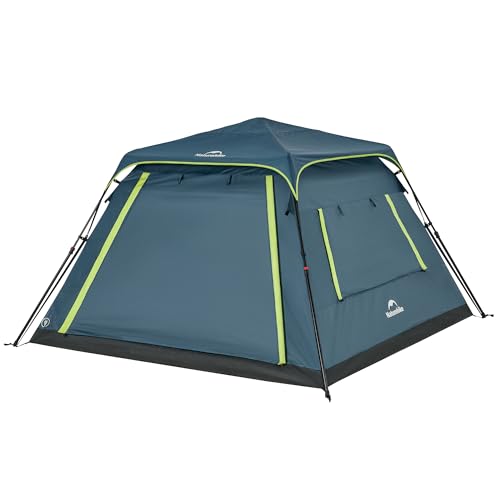
Naturehike Cape Lite 4-6 Person Tent

Catnaoa Inflatable 4-Season Tent
More On The Choices That Made The List
The Sundome is the tent many people cut their camping teeth on, and that reputation is not accidental. Its familiar dome shape, fiberglass poles, and small footprint make it one of the least intimidating shelters to pitch at a crowded state park loop. Six people technically fit, but you will be much happier in the 6-person version with a mix of adults and kids, or three adults who do not mind cozying up.
Coleman’s WeatherTec design, the inverted seams and welded floors you have probably seen advertised, is the Sundome’s quiet superpower. Day-long drizzle tends to bead off rather than wick through, and the wide door makes moving a coolers-worth of gear in and out less of a chore. Compared with the Naturehike Village in this list, the Sundome feels old-school in a good way: it has no instant-pitch cleverness, but most people can have it standing in under fifteen minutes.
Features That Help
- Simple dome geometry that handles gusts better than tall cabin shapes
- Welded, inverted-seam floor that keeps pooled rain from creeping inside
- Mesh ceiling panels that pull warm air upward on muggy summer nights
- Two available sizes (2- and 3-person) let you match the trip, not overpack
Things To Consider
- Fiberglass poles can splinter if stored damp and stuffed back in the bag
- The listed capacity is tight for six adults, plan on a smaller load for comfort
Who Will Love This
First-time family campers and weekend car-campers who want a predictable, easy-to-replace shelter that handles spring and summer weather without drama.
Skip It When
You want standing-room headroom and a fast pitch: the Naturehike Village Instant Tent serves late-arrival road trippers much better.
The Naturehike Village is what you pull out of the trunk after sunset, rain tapping on the roof of the car. Pre-attached telescoping poles unfold the cabin shape in roughly a minute, which sounds like a gimmick until you have pitched a traditional tent in the dark with a headlamp dangling from your teeth. It comes in 4-person and 8-person layouts, so you can scale it to your group without buying a tent you only ever half-fill.
The fabric is the bigger story: 150D Ti Black Technology with a UPF 12500+ rating and a 2000mm waterproof PU (polyurethane) coating, which for everyday use means the canopy blocks a serious dose of UV and shrugs off moderate rain. The full-coverage rainfly is a genuine asset in shoulder seasons where a sudden storm rolls through after dinner. Compared with the older-school Coleman Sundome, this is a tent for people who camp less than they want to wrestle with pole segments.
Reasons It Performs
- About one-minute pitch thanks to pre-attached, telescoping poles
- Tall cabin walls give adults room to stand and dress without hunching
- Heavy 150D fabric with strong UV and waterproof ratings for sun-baked sites
Worth Noting
- Tall, flat panels catch wind harder than domes, so stake and guy it well on exposed ground
- Heavier packed weight than traditional pole tents, a real consideration for short carries
Feature Snapshot
Built With In Mind
Late-arrival road trippers, families with kids, and anyone who values setup speed over shaving pack weight.
Look Elsewhere When
You camp in truly exposed alpine basins: the Naturehike KOTA’s modular double-layer build handles gusty, changeable weather more confidently.
The Cape is the Village’s bigger, slightly more grown-up sibling. Same minute-or-so pitch, but stretched into a long tunnel shape with three sizes: roughly 8.3 square meters for the 4-person and 12.9 square meters for the 6- to 8-person layouts. That footprint matters when you are splitting a tent between two couples or a family of five plus gear.
The 190T polyester shell (a 190-thread-count weave that balances weight and durability) carries a 3000mm PU waterproof rating, a meaningful step up from the Village. In practice, that translates to confidence during the kind of steady overnight rain that wets out lesser canopies. The tunnel shape sheds wind from the side better than a cabin, though you trade some standing height for the longer floor plan. If you want one roomy tent that covers most of your car-camping trips, the Cape earns its place near the top of the shortlist.
What Pays Off
- Large floor plan handles sleeping pads, dogs, and duffels without Tetris
- 3000mm waterproof rating for steady rain rather than just showers
- Pre-attached poles keep pitch time in the one-minute neighborhood
- Tunnel shape tends to handle crosswinds better than upright cabins
Trade Offs
- Longer footprint needs a genuinely flat, obstacle-free site
- Tunnel designs often sleep warmer in summer without extra mesh ventilation
Made For
Group basecamps and families with a mix of kids, dogs, and gear who want standing height plus elbow room on longer layovers.
Not Your Match When
You camp solo or as a couple: the Naturehike Cape Lite is a tighter, lighter cabin that suits smaller groups better.
The KOTA is the most versatile tent in this lineup because it is really two shelters in one. The inner mesh tent is a free-standing bug dome that works on its own for hot, dry summer nights. The outer rainfly becomes a large canopy or sun shelter when you want shade without walls. Run them together and you get a proper double-layer tent with a 75D 210T polyester shell (a thicker, more abrasion-resistant weave than the Cape’s 190T) and a 3000mm+ waterproof rating.
Available in 4-, 6-, and 8-person sizes, the KOTA stretches to fit a group rather than forcing you into a single capacity. The vestibules and porch area are genuinely useful for stashing muddy boots and backpacks out of the rain. The honest read is that this is the pick for campers who treat one tent as a long-term investment and want it to adapt across summer road trips, shoulder-season weekends, and backyard sleepovers.
Bright Spots
- Modular design lets the inner and outer layers stand alone or together
- 75D fabric is a meaningful toughness upgrade over lighter competitors
- 3000mm+ waterproof rating holds up under sustained, soaking rain
- Vestibule and porch space keep muddy gear out of the sleeping area
Honest Caveats
- More parts to track and dry before packing than a single-layer instant
- Pitch time is longer because you are essentially building two structures
Technical Sheet
Best Suited To
Adaptable warm-weather campers who want one shelter that flexes between summer basecamp and shoulder-season weekends.
Another Choice May Suit
You mostly do quick overnighters and care more about setup speed than modularity: the Naturehike Cape serves faster-pitching groups more directly.
The Cape Lite is what happens when you trim the bigger Cape down to the essentials. Floor plan around 101.5 by 101.5 inches, which comfortably swallows a queen air mattress, plus a 62.2-inch peak height that lets you sit upright without stooping. Pre-attached poles hold setup time around a minute, same as its bigger siblings.
This is the smart pick for people who like the Cape idea but rarely camp with more than four people. Couples, small families, and a friend plus a dog fit comfortably, and the cabin shape keeps the floor usable rather than dead space in the corners. The trade-off is capacity, plain and simple: six adults would be miserable here. You may find it perfect for your actual trips, though, which is the point.
What It Does Well
- Compact cabin footprint fits small state-park pads comfortably
- Queen-size air mattress fits with room to spare for bags
- About a minute from bag to standing thanks to pre-attached poles
Minor Gripes
- Six-person rating is aspirational for adult groups
- Lighter shell fabric is easier on the wallet but less forgiving on sharp branches
Whose Shelf It Belongs On
Couples and small families who want a quick-pitch cabin that does not dominate the campsite or the car trunk.
A Better Fit Elsewhere
You host a rotating cast of friends on group trips: the Naturehike Cape 6-/8-person layout handles bigger crews without anyone sleeping under a tarp.
The Catnaoa inflatable is the wildcard of the bunch. Instead of poles, you inflate a network of reinforced PVC air beams with the included hand pump, and the tent stands up like magic. The 210D Oxford shell (a dense, canvas-like weave prized for toughness) carries a 3000mm PU waterproof rating, and the whole package is rated for four-season conditions rather than three.
Two features set it apart for the right crowd: a skylight panel for stargazing from your sleeping bag, and a stove jack for safely running a tent stovepipe through the wall. For winter campers, that combination is genuinely rare at this level. The honest caveat is that inflatable tents demand more care around sharp objects and need slightly more patience during inflation than instant-pitch cabins. If you want a shelter that handles shoulder-season cold snaps without buying a dedicated winter tent, this is the pick.
The Case For It
- Inflatable air beams replace fiddly pole assembly
- Skylight and stove jack enable winter and shoulder-season use
- 3000mm waterproofing holds up under serious weather
- 210D Oxford fabric resists abrasion on rough ground
Practical Considerations
- Air beams are vulnerable to punctures from sharp sticks or careless storage
- Hand pump inflation takes longer than a telescoping-pole instant
- Heavier packed weight than a comparable pole tent for the same capacity
Feature Snapshot
Perfect Match For
Off-grid campers and four-season users who want stove compatibility and air-beam convenience over traditional setup.
Reach For A Different Pick When
You camp only in mild three-season conditions and want the lightest, fastest setup: the Naturehike Cape Lite delivers that with less fuss.
Picking The Right Shelter For Your Trips
Capacity claims are usually optimistic, so a real “sleeps six” tent fits four adults comfortably. Plan on roughly twenty square feet of floor per adult for true comfort, which is why most six-person tents feel tight when fully loaded.
Weather rating matters more than people think. A 3-season tent balances ventilation and rain protection for spring through fall. Look for a waterproof PU (polyurethane) coating of 2000mm or higher and a full-coverage rainfly that reaches the ground on the windward side.
Material weight, expressed in denier (D), predicts durability. Higher denier numbers like 75D or 150D mean thicker threads and more abrasion resistance, which matters on rocky ground.
Setup style defines the trip. Instant and pre-attached-pole tents trade a heavier pack weight for minute-long pitch times. Traditional pole tents are lighter but ask for more patience and daylight.
Where Shoppers Go Wrong And When To Pay More
The most common slip-up is trusting the headline capacity. Six-person ratings usually assume a mix of adults and kids or a willingness to leave gear in the car. Measure the floor plan and add your typical group before committing.
A second trap is ignoring site conditions. Tall cabins feel roomy until the wind picks up on an exposed ridge. Match the tent shape to your usual campground rather than your dream trip.
Higher-tier models earn their keep through thicker fabric, stronger waterproof coatings, and modular double-layer construction that handles shoulder-season rain. For weekend summer camping, the extra spend rarely matters. For three or more trips a year across varied weather, the upgrade pays for itself in fewer soggy nights and a longer-lasting shelter.
Frequently Asked Questions
What does a 3-season tent actually cover? A 3-season tent handles spring, summer, and fall conditions: rain, wind, sun, and insects. It is not designed for heavy snow loads or sustained sub-freezing temperatures.
How many people does a 6-person tent really fit? For most adults, a true 6-person tent sleeps four comfortably with gear, or six in a pinch with no interior storage. Treat the rating as an upper limit.
Can 3-season tents handle heavy rain? Most handle steady rain without issue if the PU waterproof rating is at or above 2000mm and seams are sealed. Full-coverage rainflies make a real difference in downpours.
Is an instant tent worth it for casual campers? Yes, especially for late arrivals or campers who pitch in the dark. The trade-off is a heavier pack and slightly less wind-friendly geometry than a traditional dome.
How do I store a tent so it lasts longer? Dry the tent fully before folding, store it loosely in a breathable bag rather than the tight stuff sack, and keep it away from direct sunlight in storage.