
A 5 by 7 tarp hits that sweet spot between handiness and footprint. It covers a woodpile, shelters a motorcycle, doubles as a ground sheet, and folds small enough to keep in a garage shelf. Picking the right one means matching material, thickness, and edge construction to what you’re actually covering, which is where most shoppers end up guessing. Below, ten options cover the common jobs this size handles well.
How The Shortlist Stacks Up

Better Blue Poly Tarp 8′ x 10′ (2-Pack) by Xpose Safety

Better Blue Poly Tarp 8′ x 12′ (2-Pack) by Xpose Safety

Clear Tarp 5 x 7FT, 20 Mil Clear Vinyl by LTCANOPY
6X8FT Heavy Duty Clear Greenhouse Tarp 16 Mil by ANGAR

Canvas Tarp 5×7, 350 GSM Heavy Duty by MERUYOO

12X16FT Heavy Duty Clear Greenhouse Tarp 16 Mil by ANGAR

Better Blue Poly Tarp 5′ x 7′ (2-Pack) by Xpose Safety
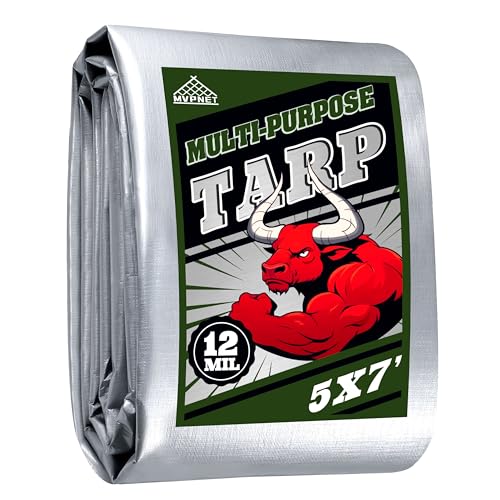
5x7Ft Waterproof Tarp 12mil Green & Silver by MVPNET

16X20FT Heavy Duty Clear Greenhouse Tarp 16 Mil by ANGAR
8X10FT Heavy Duty Clear Greenhouse Tarp 16 Mil by ANGAR
More On The Choices That Made The List
Even though it’s labeled 8 by 10, this Xpose Safety tarp often fills the role people expect from a 5 by 7, and the 2-pack format is what really sells it. You get two lightweight polyethylene covers for general-purpose duty around the yard, garage, or job site, all at a thin 5 mil wall that handles rain and dust without much fuss.
The material is the kind you can fold, drag, and re-use without babying it, and most people using it for woodpiles, patio furniture, or short-term equipment covers report it does the job. Compared to the heavier canvas option later on this list, this one trades rugged feel for easy handling. It may not be the right call where tearing is a real concern.
Strong Points
- 5 mil polyethylene keeps weight down for one-person setup
- 2-pack value covers two separate jobs or a backup
- Waterproof enough for short-term outdoor exposure
- Multi-purpose sizing fits woodpiles, gear, and furniture
Points To Keep In Mind
- 5 mil is on the thin side for sharp edges or rough surfaces
- Storage in direct summer sun tends to shorten service life
- Listed as 8×10, so measure your project before ordering
Key Attributes
Whose Shelf It Belongs On
Homeowners who want a grab-and-go tarp for patio furniture, light woodpiles, or quick outdoor fixes will get the most out of this 2-pack.
Look Elsewhere When
Shoppers needing a real 5×7 canvas tarp with breathable weave should consider the MERUYOO Canvas Tarp 5×7 instead.
Think of this 8×12 from Xpose Safety as the older sibling to the first pick on this list. Same 5 mil polyethylene build, same 2-pack format, but with a longer profile that handles slightly larger projects like a small boat, a stack of lumber, or a longer roof patch.
For most backyard tasks the extra length is welcome, and the lightweight material still goes up solo without needing a second pair of hands. You may find the thinness limiting where abrasion or punctures are likely, but for rain and dust over a defined footprint, it does what it claims.
The Upside
- Extra length covers longer stacks, boats, or vehicles
- 2-pack gives flexibility for split projects
- Polyethylene handles folding and reuse with no fuss
Trade Offs
- 5 mil wall can tear against rough framing lumber
- UV exposure in full sun is the main wear concern
- Wind catches the larger surface unless tied down firmly
Made For
Shoppers covering a small boat, a longer woodpile, or a row of patio furniture where a 5×7 footprint runs short.
Skip It When
Anyone needing a transparent cover for plants should reach for the LTCANOPY Clear Tarp 5 x 7 instead.
This is the first true 5 by 7 on the list, and it’s built for a different job than the blue poly options above. The LTCANOPY clear tarp uses a thick 20 mil PVC (polyvinyl chloride) sheet that’s fully transparent, so sunlight still passes through while rain, snow, and wind stay out.
Double-stitched edges and grommets (the metal-rimmed holes you feed rope or bungee through) make it easy to lash down over a cold frame or a small greenhouse patch. Where the Xpose Safety options above are general-purpose, this one is purpose-built for plant and animal shelter through all four seasons.
Where It Helps
- 20 mil PVC resists tearing and abrasion under tension
- Transparency keeps photosynthesis going under cover
- Reinforced edges and grommets hold lashing well
- Year-round weather protection in one sheet
Practical Considerations
- Heavy for its size and harder to fold small
- PVC can cloud slightly after long UV exposure
- Stiffer material needs careful handling in cold weather
Quick Facts
Best Suited To
Backyard growers and small-animal keepers who need a transparent cover that lets light through while blocking weather.
Reach For A Different Pick When
Shoppers wanting opaque protection for firewood or machinery should pick the MERUYOO Canvas Tarp 5×7 instead.
ANGAR’s 6×8 sits between the LTCANOPY 5×7 above and its larger siblings further down. It’s a three-layer composite film (a sandwich of polyethylene plies bonded for extra strength) at 16 mil, so it’s noticeably thicker than a standard blue poly tarp yet still clear enough to admit sunlight.
The edges get a high-strength nylon rope wrap and rust-proof aluminum grommets every 35 inches, plus wrapped corners for tension points. For workshop dust walls, chicken-coop roofs, or a winter garden enclosure, that reinforcement matters more than the raw thickness.
Positive Takeaways
- Three-layer composite film boosts tear resistance
- Nylon-wrapped edges stand up to repeated tie-downs
- Aluminum grommets resist rust in wet conditions
- Works for shelters, coop covers, and pool-side use
Worth Noting
- Listed at 6×8, slightly larger than a true 5×7
- Stiffer than vinyl, needs warm-weather folding
- Heavier than economy blue poly tarps
Who It Suits Best
DIY builders putting up a small greenhouse, coop roof, or dust-wall where reinforced edges matter more than transparency rating.
A Better Fit Elsewhere
Anyone needing a breathable fabric rather than film should look at the MERUYOO Canvas Tarp 5×7 instead.
Canvas changes the conversation. The MERUYOO 5×7 is a 350 GSM (grams per square meter) tightly woven cotton-poly blend at about 12 oz weight, putting it in a totally different category from the plastic sheets earlier on this list.
The key trade-off is breathability. Canvas sheds rain thanks to its tight weave but lets trapped moisture escape, which matters for firewood covers, machinery, and anything that could sweat under a sealed plastic tarp. It’s heavier and rougher to handle, but it outlasts thin poly by a wide margin in most reported uses.
Benefits That Matter
- Tightly woven 350 GSM canvas for tear resistance
- Breathable weave prevents moisture buildup underneath
- Water-resistant yet not fully waterproof by design
- Grommets support secure tie-down for outdoor use
Honest Caveats
- Heavier than poly and harder to deploy solo
- Not fully waterproof in standing rain
- Canvas needs dry storage between uses to avoid mildew
Feature Snapshot
Right Fit For
Homeowners stacking firewood, protecting machinery, or covering patio furniture where trapped moisture would be a problem.
Swap It Out When
Shoppers who need a transparent greenhouse cover should pick the LTCANOPY Clear Tarp 5 x 7 instead.
The 12×16 in this ANGAR line is where the brand’s reinforced-edge design starts to pay off on a bigger scale. Same three-layer 16 mil film and nylon-wrapped perimeter as the 6×8 above, just with enough material to enclose a full greenhouse frame or a long canopy run.
For serious gardening setups, this size covers the full footprint of a small walk-in greenhouse. It also works for boat covers and patio enclosures where you’d otherwise stitch multiple smaller tarps together. Owners commonly report that the reinforced corners survive repeated tension cycles better than economy tarps.
The Case For It
- Large 12×16 coverage in a single sheet
- Reinforced corners handle tension points well
- Three-layer film rated for multi-year outdoor use
- Same edge construction as smaller ANGAR sizes
Practical Considerations
- Bulk and weight make solo deployment a workout
- Overkill for typical 5×7 projects
- Wind load increases with the larger surface
Made For
Garden builders erecting a walk-in greenhouse or anyone wanting one seamless sheet rather than overlapping smaller panels.
Look Elsewhere When
Anyone covering a small, defined footprint should save effort with the ANGAR 6X8FT instead.
This is the one true 5×7 in the Xpose Safety blue poly family and the most direct match for the keyword shoppers are searching. You get a pair of 5 mil polyethylene covers cut to that exact small-footprint size, which fits a grill, a small stack of cushions, or a child’s outdoor toy pile.
The trade-off versus the 8×10 option earlier is footprint, not material. Same wall thickness, same general construction, just smaller dimensions that match the most common 5×7 use cases. It’s the practical pick when size matters more than girth.
Features That Help
- True 5×7 size fits the most common small-cover jobs
- 2-pack value covers two projects or a spare
- Lightweight 5 mil poly handles rain and dust
Trade Offs
- 5 mil wall is light-duty against sharp edges
- Long-term sun exposure shortens service life
- No reinforcement details specified for grommets
Best Suited To
Anyone wanting an exact-match 5×7 cover for a grill, compact woodpile, or small storage area at the lowest complexity.
Not Your Match When
Shoppers needing breathable fabric for moisture-sensitive loads should pick the MERUYOO Canvas Tarp 5×7 instead.
The MVPNET 5×7 lands right in the middle of the weight spectrum on this list. Its 12 mil polyethylene build is more than twice the thickness of the Xpose Safety 5 mil options earlier, which gives it a stiffer hand and noticeably better tear resistance. The green-and-silver laminate reflects heat and resists UV (ultraviolet) damage better than solid blue.
For camping, hunting blinds, or any small-footprint job where the tarp will see repeated handling, that extra thickness is where it counts. You may find it heavier than expected for one-person carry, but the rugged feel is the point.
What Pays Off
- 12 mil poly offers rugged tear resistance
- Green-and-silver laminate reflects sunlight
- UV-resistant for longer outdoor service
- Waterproof laminate sheds standing water
Room For Improvement
- Stiffer than 5 mil poly, less forgiving to fold
- Heavier weight complicates solo deployment
Perfect Match For
Campers, hunters, and outdoor users who want a true 5×7 in a tougher build than the typical economy blue tarp.
Consider Something Else When
Shoppers needing a transparent cover for plants should pick the LTCANOPY Clear Tarp 5 x 7 instead.
The 16×20 is the largest ANGAR on this list and brings the same three-layer composite film, nylon-wrapped edges, and rust-proof aluminum grommets as the smaller sizes, just scaled up to a 16 by 20 footprint. That covers a full walk-in greenhouse, a long canopy, or a sizeable outdoor shelter without seams.
Where most shoppers run into trouble is solo handling, since 16 by 20 of reinforced film is a real chore to lift and position. With two people and a calm day, the install goes smoothly and the result is one continuous, clear cover that handles wind tension better than patchwork alternatives.
Points In Its Favor
- Largest clear sheet on this list
- Reinforced edges hold up to repeated tension
- Three-layer film for multi-year outdoor use
- Single sheet avoids overlap leak points
Practical Considerations
- Heavy and unwieldy without a helper
- Wind load increases with size, anchoring matters
- Far more than typical 5×7 projects require
Who Should Grab It
Greenhouse builders and shelter constructors who want a single large sheet rather than stitching smaller tarps together.
Reach For A Different Pick When
Anyone covering a small defined area should choose the ANGAR 6X8FT or the LTCANOPY 5×7 instead.
Rounding out the list, the ANGAR 8×10 sits between the 6×8 and 12×16 in the same product family. Same three-layer 16 mil composite film, same nylon-wrapped edges and aluminum grommets, sized for projects that need a step up from a 5×7 without committing to a full walk-in greenhouse.
It’s the versatile middle child, useful for covering patio furniture groupings, a small trailer, or a longer coop run. The honest read is that the 8×10 hits a sweet spot for multi-use coverage where neither the smallest nor the largest size quite fits.
What It Does Well
- Mid-range size covers furniture or trailer loads
- Three-layer 16 mil film for rugged outdoor use
- Reinforced corners handle tension points
- Versatile across garden, garage, and job sites
Small Caveats
- Stiffer than economy blue poly
- Heavier than 5 mil options by a wide margin
Built With In Mind
Shoppers who want a clear, mid-size cover for a patio set, small trailer, or garden shelter that exceeds a 5×7 footprint.
Another Choice May Suit
Anyone covering a true 5×7 area should pick the LTCANOPY Clear Tarp 5 x 7 for a better size match.
What Matters Most Before Choosing a 5 X 7 Tarp
The first decision is material, and it usually comes down to plastic versus fabric. Polyethylene and PVC (polyvinyl chloride) tarps are waterproof and lighter to handle, but they trap moisture against anything underneath, which can cause mildew on firewood, rust on metal, or rot on cushions. Canvas and woven blends breathe, which is why wood-stackers and machinery owners tend to favor them despite the extra weight.
Thickness matters more than most shoppers expect. A 5 mil tarp handles dust and brief rain on a defined footprint, while a 12 to 20 mil build survives sharp edges, repeated folding, and longer outdoor exposure. For anything that needs to last more than a season, jumping to 12 mil or thicker is the usual upgrade path.
Edge construction is the third filter. Reinforced hems, nylon rope wraps, and rust-proof grommets every couple of feet are what keep a tarp anchored when wind picks up. Skipping reinforcement is the most common way budget tarps fail early, and it shows up fast in coastal or open-exposure yards.
Lastly, match size to the actual job. A true 5 by 7 fits a grill, a small stack of cushions, or a child’s outdoor toy pile. Step up to 6×8 or 8×10 when you need to cover a patio set, and reach 12×16 or larger only for full greenhouse or shelter builds where seams would otherwise leak.
Key Considerations Across These Picks
Pitfalls Shoppers Hit
The most common trap is buying the cheapest 5 mil poly and expecting it to survive a winter outdoors. Most economy poly tarps start cracking under UV (ultraviolet light) within a season of full sun, so plan to replace them or rotate them under shade. Another mistake is matching size loosely. An 8×10 is not a 5×7, and a 6×8 covers more ground than people expect, so measure the actual project footprint before ordering.
Where The Extra Money Goes
Higher-tier tarps spend the budget on three things: thicker film or canvas, reinforced edges with rust-proof hardware, and UV-stabilized material. That translates to longer service life, fewer mid-season replacements, and better performance under wind load. For seasonal or one-off projects, economy works fine, but for anything permanent, the upgrade usually pays for itself by skipping the replacement cycle.