
A 40°F night on a trail is a strange kind of cold, too warm for a winter mummy, too brisk for a summer sheet. Your layering matters, your pad matters, but the bag ties it together. This roundup cuts through the clutter with four workhorse bags tuned to shoulder-season trips, scout weekends, car-camp layovers, and a few impromptu sleepovers. Read on to find the right balance of warmth, weight, and durability for the way you actually camp.
A Snapshot Of The Selections
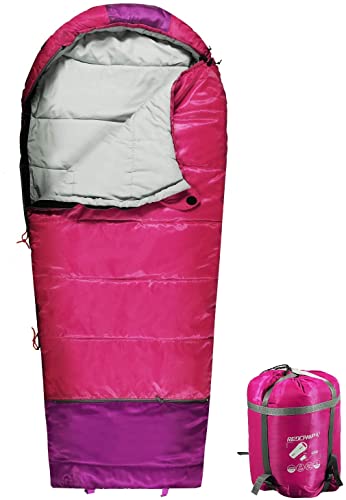
REDCAMP Kids Mummy Sleeping Bag for Camping (Blue/Rose Red)

PTEROMY Sleeping Bags for Adults, Lightweight and Machine Washable

REVALCAMP Ultralight and Compact Sleeping Bag for Indoor & Outdoor Use

Columbia 40 Degree Coalridge Hooded Sleeping Bag (80)
A Closer Look At Each Pick
REDCAMP built this bag for the child who insists on packing their own kit. The mummy shape trims excess air around a smaller body, so warmth stays where it counts instead of drifting into dead space. Polyester construction keeps the weight manageable for a kid hauling it to a cabin or a backyard tent.
At roughly 67 by 25.5 inches, it fits preteens and most teens without leaving feet dangling in the chill. Compared to the adult-oriented PTEROMY bag below, this one trades length for a snugger, kid-friendly profile. Bright blue and rose red options also make it easy to spot in a shared gear pile.
Bright Spots
- Mummy cut minimizes empty space, helping younger bodies stay warm on cool evenings
- Polyester shell is light enough for a child to carry their own pack
- Two color options help families assign bags without mix-ups at camp
- Three-season rating covers spring scout trips and autumn backyard sleepovers alike
- Compact stuff-friendly shape packs into a typical weekend backpack
Worth Noting
- Polyester shells tend to feel clammy against bare skin in humid weather, so a liner or sleepwear helps
- Length runs short for taller teens, who may outgrow it within a season or two
Who Will Love This
It suits kids and preteens heading to scout camps, family cabin weekends, and backyard overnight adventures.
Look Elsewhere When
The REVALCAMP Ultralight and Compact Sleeping Bag below fits adults up to roughly six feet, making it the better family-shared option for households mixing teens and grown-ups.
PTEROMY sized this bag for grown-up bodies without piling on weight. A 7-foot-2 length and 2-foot-7.5 width fits most adults up to around 6’7″, which matters when shoulder seasons stretch your sleeping hours past the warmth of a campfire. The listed comfort range runs roughly 50°F to 80°F with a recommended lower limit near 40°F, putting it squarely in 40 Degree Sleeping Bags territory.
Double S-shaped stitching and a hollow-fiber fill help the loft hold up over a long trip. Unlike the kid-focused REDCAMP bag, this one targets backpackers and hostel-hoppers who need a washable, packable option. You may find the bulk modest enough for short treks, though it isn’t the lightest option on the market.
Everyday Advantages
- Adult-length dimensions fit taller sleepers who usually outgrow standard bags
- Machine-washable shell simplifies post-trip cleanup after dusty trail days
- Water-resistant outer fends off damp grass and surprise condensation
- Comfort range covers typical spring, summer, and fall shoulder-season nights
Honest Caveats
- At its lower 40°F limit, cold-sensitive sleepers may want to layer in a liner
- Loft can flatten with heavy compression, so storing it loosely between trips helps longevity
- Water resistance handles drizzle, not prolonged rain without a tent fly
Feature Snapshot
Right Fit For
Adult backpackers, hostel travelers, and weekend campers who want an easy-care bag sized for taller bodies.
Skip It When
The Columbia 40 Degree Coalridge below suits car campers who prioritize rugged ripstop fabric and a hood for restless sleepers.
REVALCAMP leans into flexibility. Around 2 pounds on the scale, this bag slides into daypacks, duffels, and closet storage without hogging space. Polyester keeps the price approachable and the cleaning simple, which matters when the bag doubles as guest bedding.
The 30 by 71 inch cut fits sleepers up to about 6’1″, bridging the gap between the kid-focused REDCAMP and the longer PTEROMY. It targets comfort above 40°F, so it lands in the 40 Degree Sleeping Bags neighborhood for spring through autumn. For indoor sleepovers, that threshold is rarely an issue.
Strengths Worth Knowing
- Lightweight build suits hikers counting ounces and parents hauling gear to a car
- Polyester shell wipes clean after dusty indoor use
- Compact stuff size stashes in small closets between trips
- Works for both sleepovers and trail nights, reducing the need for two bags
Points To Keep In Mind
- Comfort rating above 40°F means chilly shoulder nights may need an extra blanket
- Rectangular cut feels roomy but lets warm air escape around the shoulders
Best Suited To
Families hosting sleepovers, casual campers, and anyone who wants one bag that does double duty indoors and out.
A Better Fit Elsewhere
The REDCAMP Kids Mummy Sleeping Bag above offers a snugger mummy shape that holds heat better for younger sleepers on cooler nights.
Columbia built the Coalridge for campers who treat gear roughly. Ripstop fabric, a weave reinforced with thicker threads at regular intervals, resists small tears from turning over on rocky ground, while hollow core fiber fill stays loftier when wet than standard solid fills. The hood is a quiet upgrade, sealing in warmth on restless nights.
At a 40°F rating, this bag sits at the warmer end of 40 Degree Sleeping Bags, ideal for spring and fall car camping where temperatures dip but rarely plunge. Compared to the lighter REVALCAMP, the Coalridge trades weight for durability. You may find the extra heft worth it on longer trips.
Noteworthy Benefits
- Ripstop shell shrugs off scrapes from camp furniture
- Hollow core fiber holds thermal loft when damp, easing worry about morning dew
- Attached hood reduces heat loss through the head during chilly nights
- Durable construction suits frequent weekend use over multiple seasons
Trade-Offs
- Heavier than ultralight picks, making it less appealing for long-distance backpacking
- Coated ripstop can feel stiff until broken in over several trips
Feature Card
Whose Shelf It Belongs On
Weekend car campers and scout leaders running spring or fall trips who value a tougher shell over minimum weight.
Reach For A Different Pick When
The PTEROMY Sleeping Bag above is friendlier for backpackers counting every ounce and needing a washable, longer-length option.
Matching The Bag To Your Trip
Three-season sleeping bags earn their keep when temperatures hover near 40°F, but the right pick depends on how, where, and with whom you camp. Think about the warmth rating first, since a “40 degree” label usually means a lower survival limit rather than a comfort limit. If you sleep cold, plan to layer in a liner or choose a bag rated slightly warmer.
Shape affects heat retention more than many shoppers expect. A mummy cut trims dead air around the body, while a rectangular bag feels roomier but lets warmth leak around the shoulders. Hoods add real value for restless sleepers and early-morning campers who want to step outside without losing all their heat.
Weight matters most for backpackers hauling gear over distance. A two-pound rectangular bag works for campground trips and sleepovers, but a heavier ripstop model trades ounces for durability on rough car-camp weekends. Materials tell a similar story: polyester cleans easily and stays affordable, while ripstop shells resist abrasion on rocky terrain.
Sizing deserves attention too. A bag that fits an adult up to 6’7″ may feel short for someone 5’10”, and a kid-sized mummy can leave a teen’s feet in the cold. Matching the bag to the tallest sleeper in your group keeps cold spots out of the equation.
Key Considerations Across These Picks
Where Shoppers Go Wrong
Treating the temperature label as a comfort guarantee is the most common slip. A 40°F rating typically reflects a survival threshold, not a toasty night’s sleep, and cold-sensitive sleepers often need a thermal liner to feel comfortable at the edge. Ignoring body shape leads to the second mistake, because a rectangular cut feels spacious but loses warmth faster than a snug mummy.
Where The Extra Money Goes
Higher-tier bags tend to spend the budget on better fabrics, such as ripstop shells that resist tearing, and smarter insulation, like hollow core fibers that hold loft when damp. They also add features like attached hoods, draft collars, and anti-snag zippers that quietly extend a bag’s lifespan. For car campers and frequent trippers, those touches add up to fewer replacements over the years.
Frequently Asked Questions
What does a 40 degree sleeping bag actually mean? The label marks the lowest temperature at which the bag keeps the average sleeper alive, not comfortable. Most people sleep warmer in a 40°F-rated bag with thermal underwear or a liner.
Are 40 Degree Sleeping Bags warm enough for winter camping? For most campers, no. Winter trips below freezing usually demand a bag rated 20°F or lower, paired with an insulated sleeping pad and a tent that blocks wind.
Can kids use adult 40 Degree Sleeping Bags? Yes, with room to spare. A youth mummy bag like the REDCAMP option fits smaller bodies more efficiently, but an adult rectangular bag works for sleepovers and mild nights.
How do you clean a sleeping bag without damaging it? Most polyester bags handle a gentle machine wash with mild detergent, then air dry on a flat surface or hang-dry. Avoid hot dryers unless the care label specifically allows them.
Do these bags need a sleeping pad underneath? Always. A pad insulates from cold ground and adds comfort, and even the warmest bag loses much of its effectiveness without one beneath you.
Final Verdict
The right 40 Degree Sleeping Bags come down to who is using them and where they end up. Families with young campers get the most mileage from a kid-sized mummy, backpackers prefer a washable, longer cut, and car campers lean toward tougher ripstop shells with hoods. Pick the option that matches your usual trip, and your shoulder-season nights will feel a lot less complicated.