
Sleeping six or eight in a single shelter changes how a campsite runs. Parents get real bedrooms, kids stop crawling over each other at 2 a.m., and gear finds a corner instead of becoming a tripping hazard. A proper 4 room camping tent turns a chaotic weekend into something that actually feels like a base camp, with walls between the parents, the kids, and the communal living area in the middle.
You’re looking at cabin-style tents with near-vertical walls, instant setup frames, lantern packs, and a versatile canopy that pulls double duty at the picnic table. Each option here solves a different problem, so the right choice depends on how your crew travels.
A Side-By-Side Look

MFSTUDIO 10×10 Pop up Canopy Tent

EZORKAS 4 Pack Camping Lanterns

Naturehike Village Instant Tent 4/8 Person
Naturehike Cape 4/6/8 Person Instant Tent
Naturehike KOTA 4/6/8 Person Double Layer Tent
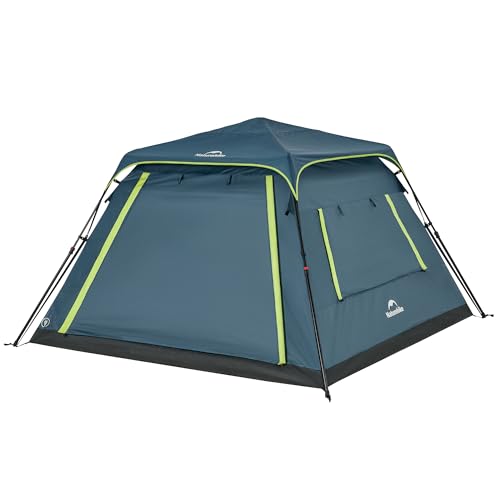
Naturehike Cape Lite 4-6 Person Tent
Meet The Standout Selections
A 4 room camping tent handles sleeping, but a campsite also needs a covered outdoor living space where rain won’t end the cookout. The MFSTUDIO 10×10 pop-up canopy pulls double duty as that shaded patio, fitting right beside the sleeping tents in the Naturehike lineup.
Built around a single push-button center and no-pinch height adjusters, the frame opens with one hand and the legs lock at your preferred height. The fabric top carries a UPF 50+ rating and resists water, while the powder-coated steel frame handles repeated weekend setups. Where the Naturehike tents handle nighttime, this canopy handles everything between breakfast and bedtime.
Strengths Worth Knowing
- One-person setup means a single adult can deploy the full 10×10 footprint without help, freeing the rest of the crew for tent pitching.
- UPF 50+ fabric (a measure of how much ultraviolet radiation the material blocks) keeps kids and pets safe during long afternoons at the picnic table.
- 100 square feet of covered space holds a full family table plus chairs, doubling your usable campsite footprint.
- Adjustable leg height lets you match the canopy to uneven terrain, which is common at rustic state park sites.
- Pairs naturally with the Naturehike Village or Cape tents reviewed below, extending your covered living area well beyond the sleeping footprint.
Things To Consider
- Owners commonly report that staking every leg is essential in any wind, since a freestanding canopy can catch gusts like a sail.
- The carry bag tends to run tight, so folding the fabric evenly during teardown saves real frustration at pack-up time.
Who Will Love This
Families running a multi-tent base camp who need a covered gathering spot for meals, games, and gear staging.
A Better Fit Elsewhere
Solo backpackers should skip this and consider the Naturehike Cape Lite, which keeps weight and footprint far smaller for mobile trips.
A 4 room camping tent gets dark fast once the sun drops, and one lantern on the picnic table leaves the kids’ bedroom pitch black. The EZORKAS 4 Pack solves the multi-room lighting problem by giving you one lantern per zone, which matches the cabin-style layout of the Naturehike tents reviewed below.
Each unit uses COB LEDs (Chip-On-Board light-emitting diodes packed tightly together for a brighter, more even beam than older bulb designs) with 360-degree output, four lighting modes including a red SOS setting, and a collapsible body that shrinks the lantern for packing. The rechargeable battery keeps the camp lit through several nights, and the four-pack approach means each sleeping room plus the central living area gets its own dedicated light source.
Features That Help
- Four-pack distribution matches a 4 room layout, putting a dedicated lantern in each sleeping pod plus the communal space.
- Red SOS mode preserves night vision during bathroom runs and signals for help in emergencies.
- Collapsible design fits in a side pocket of most tent carry bags without taking up floor space.
- Rechargeable battery eliminates the cost and waste of disposable batteries across a season of trips.
Points To Note
- Runtime varies with brightness setting, so high mode may not last a full weekend without a power bank top-up.
- Plastic housing can scratch if tossed loosely in a gear bin, so a small pouch helps during transport.
Quick Facts
Best Suited To
Group campers running a multi-room tent who want dedicated lighting in each zone without buying separate units.
Consider Something Else When
Ultralight hikers should look at the Naturehike Cape Lite instead, since lantern weight matters more than lantern count on foot-powered trips.
Where the MFSTUDIO canopy handles the outdoor living area, the Naturehike Village handles the sleeping quarters, and it does so with a setup that barely qualifies as work. Pre-attached poles unfold the cabin in roughly 60 seconds, so the whole tent stands before the kids finish picking their sleeping spots.
The cabin shape gives nearly vertical walls, which means adults can stand to change clothes and air mattresses slide in without Tetris-level planning. The 150D Ti Black Technology fabric (a densely woven polyester treated with a titanium-infused coating for UV and water resistance) carries a UPF 12500+ rating and pairs with a PU 2000mm+ waterproof coating (a polyurethane layer rated to withstand a 2000mm column of water before leaking) and a full-coverage rainfly. Available in 4-person and 8-person versions, it scales to family size without forcing a layout change.
Everyday Wins
- One-minute setup eliminates the argument over who reads the instructions, which matters most on late-arrival nights.
- Vertical walls let you stand up to dress and let air mattresses lay flat without squeezing into dome corners.
- Full rainfly and Ti Black fabric offer serious rain protection for shoulder-season trips at higher elevations.
- Both 4-person and 8-person configurations share the same frame design, simplifying future upgrades.
Trade Offs
- The instant frame folds to a long, narrow package that takes up significant trunk space compared to traditional pole bags.
- At 8-person capacity, interior weight climbs fast, so the carry bag tends to feel heavier than the listed capacity suggests.
Feature Snapshot
Made For
Car camping families who want a stress-free pitch after dark and a roomy interior that handles real sleep setups.
Look Elsewhere When
Four-season mountain campers should consider the Naturehike KOTA for stronger weather performance and vestibule space.
The Cape takes a different approach than the Naturehike Village reviewed above. Instead of a single cabin block, the tunnel-style layout splits the interior into distinct zones with a central living area between two sleeping rooms, which mirrors how most families actually use a 4 room camping tent.
Total floor space runs between 8.3 and 12.9 square meters depending on size, and the 190T polyester fabric carries a PU 3000mm waterproof rating for serious rain performance. Pre-attached poles still deliver the roughly 60-second pitch, so the structural difference doesn’t add setup time. For groups that want physical separation between parents and kids, the tunnel design delivers more privacy than the Village’s open cabin layout.
Why It Works Well
- Tunnel layout creates real room separation rather than one open space, which helps with bedtime routines and early risers.
- Higher waterproof rating than the Village handles multi-day storms at higher elevations.
- Three size options (4, 6, and 8 person) cover everything from a couple with gear to a large family.
- Same instant-frame design philosophy as the Village, so setup habits transfer between models.
Honest Caveats
- Tunnel tents need more staking than cabin designs, so a quality mallet and stake kit earn their keep on harder ground.
- The longer footprint requires a flatter site than the more compact Village, which can be tricky on sloped tent pads.
The Right Fit
Large families who want separate sleeping rooms for parents and kids without giving up the instant setup convenience.
Not Your Match When
Backpackers and weight-conscious travelers should pick the Naturehike Cape Lite instead, since the Cape’s tunnel frame runs noticeably heavier.
The KOTA is the most modular tent in the Naturehike 4 room lineup. The inner mesh tent and outer rainfly separate into two standalone shelters, so on a calm summer night you can pitch just the mesh pod for stargazing, or run the rainfly alone as a sun shade over the picnic area.
Built from 75D 210T polyester (a mid-weight denier fabric, where higher denier means thicker yarn and better durability) with a PU 3000mm+ waterproof coating, the KOTA handles the same rain load as the Cape but adds true four-season versatility. Vestibules and a front porch give you covered gear storage that keeps boots and packs dry through overnight storms. The trade-off is weight and packed size, which rules out hiking but pays off for extended base camp stays.
Good Reasons To Consider
- Two-layer design runs as three separate configurations, covering warm nights, cold nights, and rain-only setups.
- Vestibules plus porch create dry storage for muddy boots, packs, and camp chairs that would otherwise crowd the sleeping rooms.
- High waterproof rating holds up through multi-day Pacific Northwest or Appalachian rain events.
- Full 4-season rating extends the useful camping window into early spring and late fall trips.
Possible Compromises
- Heavier than the single-layer Cape or Village, so it targets car campers rather than backpackers.
- Two-layer construction takes longer to dry after a wet trip, so home storage needs airflow to prevent mildew.
Technical Reference
Built With In Mind
Year-round car campers and base-camp families who want one shelter that adapts to every season and weather pattern.
Skip It When
Weekend-only summer campers will do fine with the lighter Naturehike Village and skip the KOTA’s extra weight and complexity.
The Cape Lite sits at the lighter end of the Naturehike 4 room camping tent family. Floor space measures roughly 101.5 by 101.5 inches, which swallows a queen air mattress with room for gear around the edges, and the 62.2-inch peak height lets most adults kneel or crouch without stooping.
Same pre-attached pole design as the Cape above, so the roughly 60-second pitch survives into the Lite trim. Cabin shape trades the Cape’s tunnel layout for a simpler footprint that’s easier to site on smaller tent pads. The trade-off shows up in interior zoning, since the Lite runs closer to a single open room divided by optional dividers rather than the Cape’s hard room separations.
Notable Upsides
- Queen mattress fit eliminates the puzzle-piece layout that plagues smaller 4-person tents.
- Lighter carry weight than the full Cape makes it more manageable for one person to transport and pitch.
- Smaller footprint works on tighter state park pads where the larger Cape won’t fit.
- Same instant-setup DNA transfers easily if your family upgrades to a bigger Naturehike later.
Less Ideal Details
- Open cabin layout offers less room separation than the Cape’s tunnel design, which can matter with mixed-age groups.
- Smaller size means less gear storage inside, so vestibules or vestibule extensions become more important.
Feature Card
Whose Shelf It Belongs On
Small families and couples who want a quick-pitch cabin tent that doesn’t dominate the garage between trips.
Where Another Pick Suits Better
Large families needing real room walls between parents and kids will find the Naturehike Cape a better structural fit.
Matching Room Count To Real Camping Habits
A 4 room camping tent only earns its keep when the room count matches how your group actually sleeps. Families with mixed-age kids usually need hard walls between parents and children so bedtime routines don’t collide with movie time in the central area. Couples traveling light can usually skip the dividers and treat the extra square footage as gear space.
Cabin-style tents with vertical walls, like the Naturehike Village or Cape Lite, win on livability but pack longer than dome tents. Tunnel designs like the Cape and KOTA give better room separation but demand flatter, larger tent pads. Weighing that trade-off before you buy prevents the awkward moment when the tent won’t fit on the only available site.
Material weight and denier ratings matter more than most shoppers expect. Higher denier (the unit measuring yarn thickness, where higher numbers mean thicker and more durable fabric) and a waterproof rating measured in millimeters (the height of a water column the fabric withstands before leaking, where 3000mm handles serious storms) both translate directly into how many seasons you’ll actually use the tent.
Key Considerations Across These Picks
Pitfalls Shoppers Hit
The most common mistake is trusting the listed person capacity as a sleeping number. A “4 person” tent sleeps two adults and a small child comfortably, not four full-size adults with gear. Measure the floor dimensions against your air mattress size before you commit, and remember that the Naturehike Cape Lite’s 101.5-inch square footprint is what makes the queen mattress fit feel honest.
Where The Extra Money Goes
Premium models like the Naturehike KOTA earn their step up through double-layer construction, vestibules, and higher waterproof ratings. That translates into multi-season use and dry gear storage, which matters most for base-camp families who camp more than four weekends a year. Weekend-only summer campers rarely recover the extra spend, while year-round travelers usually find the upgrade pays for itself in fewer replacement purchases.
Frequently Asked Questions
How big is a 4 room camping tent in actual floor space?
Floor space varies widely across the Naturehike lineup. The Cape Lite runs about 101.5 by 101.5 inches, while the Cape and Village step up to roughly 12.9 square meters in their larger sizes. Always check the listed dimensions against your mattress size.
Can a 4 room tent actually fit four separate sleeping rooms?
Most cabin-style “4 room” tents use divider curtains rather than solid walls, which gives a sense of separation without full privacy. The Naturehike Cape tunnel design offers the closest thing to true room separation, while the Village and Cape Lite lean more toward open zones.
Are instant setup tents strong enough for heavy rain?
Modern instant tents from Naturehike use the same fabric and coating technology as traditional pole designs. The Village carries PU 2000mm+ waterproofing, and the Cape and KOTA push that to PU 3000mm+, which handles multi-day storms at higher elevations.
How long does it actually take to pitch an instant tent?
The Naturehike instant models in this list advertise roughly 60-second setup, which holds true for the actual frame unfolding. Plan an extra five to ten minutes for staking, rainfly adjustments, and gear placement before the tent is camp-ready.
Do I need a separate canopy in addition to the tent?
A separate canopy like the MFSTUDIO 10×10 extends your usable covered space beyond the sleeping footprint, which helps during rain or harsh midday sun. It’s not required, but car campers with family-sized groups usually appreciate the extra dry zone for cooking and gathering.
Final Verdict
The right 4 room camping tent comes down to how your crew travels and where you pitch. The Naturehike Village covers most car camping families with its quick pitch and rain-ready fabric, and the Cape adds real room separation for groups that want privacy. Add the MFSTUDIO canopy and EZORKAS lantern pack to round out a campsite that handles weather, light, and shade without overcomplicating the weekend. Pick the configuration that matches your usual trip, and the rest of the gear falls into place.