
You picked the dates, packed the cooler, and promised the kids a real adventure, then spent two hours wrestling poles in a windy parking lot. A good 4 person tent changes that story entirely. This roundup focuses on shelters that pitch fast, hold up to rain, and give four adults room to actually stand up, stretch out, and sleep without elbows in ribs. Every pick here is built around a specific kind of camper, so you can match the tent to your trip, not the other way around.
The Picks In Brief

Coody Premium Inflatable Tent with Stove Jack

Gazelle T4 Waterproof 4 Person Pop Up Tent

Naturehike Village Instant 4 Person Cabin Tent
Naturehike Cape 4/6/8 Person Instant Tent
Naturehike KOTA Double Layer 4 Person Tent
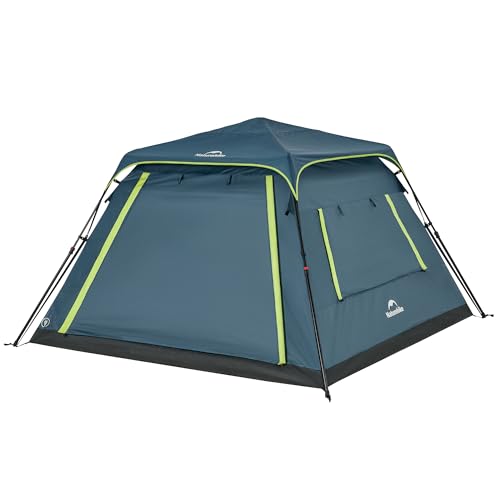
Naturehike Cape Lite 4-6 Person Cabin Tent
Why These Options Stand Out
The Coody Premium Inflatable Tent steps outside the usual “sleeping box” idea and leans into a canvas shelter you can actually live in. Rather than traditional fiberglass or aluminum poles, it relies on inflatable tubes (air beams that you pump up instead of threading through sleeves) to hold its shape, which shortens pitch time considerably. A built-in stove jack turns it into a four-season basecamp, letting you run a wood stove safely through the wall for shoulder-season and winter trips.
For glampers, hunters, or anyone running a base camp in cold weather, the breathable cotton-blend canvas (a tightly woven poly-cotton fabric that handles condensation better than thin nylon) and the stove compatibility change the equation. Compared to the pop-up shells on this list, this one trades pure speed for genuine year-round comfort.
What Pays Off
- Inflatable frame speeds setup and removes the risk of snapped poles in cold or windy conditions.
- Integrated stove jack supports safe wood stove use, opening up cold weather and shoulder-season camping.
- Canvas construction moderates interior temperature and reduces the heavy morning condensation common with thin synthetic tents.
- Standing room and a true living area make it usable for multi-day stays, not just overnight trips.
Things To Consider
- The pack weight and bulk are noticeably higher than ultralight backpacking options, so it suits car campers over hikers.
- You will need a compatible wood stove and proper venting accessories to use the jack safely.
Who It Suits Best
Glampers, hunters, and base-camp families who camp in shoulder seasons or cold weather and want a shelter that feels like a small cabin rather than a bivy.
Consider Something Else When
Backpackers and warm-weather weekend campers will find the Gazelle T4 a much friendlier setup for short, summer-style trips.
The Gazelle T4 is the closest thing on this list to “instant camping.” Its pre-assembled hub design (a folding center mechanism that the tent expands from) pops out, up, and into shape in around 90 seconds, which is a meaningful advantage for first-time campers, parents wrangling kids, and anyone arriving at camp after dark. The removable floor, mesh screens, and rain fly round out a thoughtful package.
The trade-off is pack size: the folded footprint is heavier and bulkier than a traditional pole tent. For car camping, festival weekends, and short family trips, that compromise is usually worth it.
Points In Its Favor
- Near-instant setup removes the steepest learning curve for new campers.
- Mesh walls and removable floor make it genuinely versatile for warm nights and bug-heavy environments.
- Full-coverage rain fly handles typical summer storms without fuss.
Worth Noting
- Packed weight and bulk run higher than pole-style tents, so it is best for car-based trips.
- Storage space inside is comfortable for four, but tight for four adults plus full gear loads.
- Like most instant tents, it is a three-season shelter, so plan accordingly for snow or sub-freezing nights.
Right Fit For
First-time campers, families with small kids, and festival or beach campers who want to skip the setup learning curve.
Look Elsewhere When
Cold-weather and shoulder-season campers will get more value from the Coody Premium Inflatable Tent with its stove jack.
The Naturehike Village leans into vertical living space. Its cabin-style walls (near-vertical sides that maximize floor area instead of the usual sloped dome) and a generous full-coverage rainfly make it a comfortable base for a small family on a car camping weekend. The 150D Ti Black Technology fabric (a dense oxford-style polyester with a black titanium-dioxide coating that blocks UV and adds tear resistance) carries a UPF 12500+ rating and a PU 2000mm+ waterproof coating, which translates to serious UV and rain protection for sunny desert trips and wet shoulder weekends alike.
Setup uses pre-attached poles, so you are looking at roughly a minute from bag to standing tent. Compared to the Gazelle T4 above, this is a taller, more livable footprint at the cost of slightly more weight.
Reasons It Performs
- Near-vertical walls open up usable floor space, making it easier to fit cots, a queen mattress, or a pack-and-play.
- Full rainfly delivers dependable wet-weather protection for typical storm conditions.
- High UV protection matters in alpine, desert, and high-elevation environments where sun damage hits fabrics hard.
- Pre-attached poles keep setup around the one-minute mark for most campers.
Honest Caveats
- The taller cabin profile catches more wind than lower-profile dome tents, so pick sheltered pitches on exposed sites.
- Packed weight is on the heavier side for hikers, which is why it suits car camping more than backpacking.
Feature Snapshot
Made For
Small families and couples car camping who want walk-around headroom and reliable wet-weather protection in a quick-pitch package.
A Better Fit Elsewhere
Solo backpackers and weight-conscious travelers will be happier with the lighter Naturehike Cape Lite 4-6 Person Cabin Tent.
The Naturehike Cape takes the instant-tent playbook and stretches it. Available in 4, 6, and 8 person footprints, it gives campers a flexible shelter that grows with the group. The 190T polyester fabric (a mid-weight polyester commonly used in family tents) carries a PU 3000mm waterproof coating, which is on the higher end for this category and reassuring for wet weekends.
Pre-attached poles cut setup down to roughly 60 seconds. It is a practical step up from the Gazelle T4 if you want a slightly taller, roomier interior without jumping to the heavier Village cabin.
Useful Touches
- Multi-size availability means you can size up without switching brands or learning a new setup pattern.
- Higher PU 3000mm waterproof rating handles heavier rain events than typical entry-level tents.
- One-minute setup with pre-attached poles reduces camp-day friction, especially with kids around.
- Mid-range price point makes it a reasonable pick for first-time family tent investments.
Points To Note
- The larger 6 and 8 person versions get genuinely heavy, so keep that in mind if you ever plan to haul them from a parking lot.
- Condensation management is good for a synthetic tent but not in canvas territory, so expect some morning moisture in cool, humid conditions.
Best Suited To
Families and friend groups who want one tent that scales across trip sizes and value quick setup above ultralight weight.
Swap It Out When
Cold-weather base campers will prefer the Coody Premium Inflatable Tent and its stove jack for shoulder-season use.
The Naturehike KOTA is the modular thinker in the group. Its double-layer design (an inner mesh tent plus a separate rainfly) can be used together for weather protection or independently: the inner mesh tent works on its own for stargazing on dry summer nights, and the rainfly alone becomes a sun or rain canopy. That flexibility makes it a useful basecamp tool beyond a basic sleep system.
The 75D 210T polyester with a PU 3000mm+ coating (a thicker, more abrasion-resistant fabric than the standard 190T) is a noticeable step up in durability. With vestibules (covered porches outside the sleeping area that protect gear from rain) and a porch area, it leans toward organized campers who like their entry space and dry boot storage.
Real Benefits
- Three configurations (full tent, mesh inner only, rainfly only) stretch the value across seasons and trip styles.
- Thicker 75D fabric handles abrasion and rougher sites better than entry-level 190T shells.
- Vestibule and porch keep muddy boots, packs, and cooking gear out of the sleeping area.
- PU 3000mm+ coating supports extended wet-weather use.
Trade-Offs
- Heavier packed weight than single-layer instant tents, so it is firmly a car-camping shelter.
- Modular design means a slightly longer teardown and more pieces to dry before storage.
Who Will Love This
Year-round campers and organized basecampers who like keeping a tidy entry area and want one shelter that flexes between summer and shoulder-season use.
Reach For A Different Pick When
Travelers who want the absolute fastest pitch should consider the Naturehike Village Instant Tent instead.
The Naturehike Cape Lite is the friendliest entry point on this list. Its 101.5 by 101.5 inch floor fits a queen mattress comfortably, and the 62.2-inch peak height lets most campers sit upright, change clothes, and move around without hunching. Setup stays in the one-minute range thanks to pre-attached poles.
It does not have the heavier fabric or extra features of the KOTA, but for casual summer weekends, beach trips, and family overnights at established campgrounds, it does the job with minimal fuss.
Good Reasons To Consider
- Compact cabin footprint fits established tent pads and small sites without crowding.
- Queen-mattress-friendly floor simplifies sleeping setup.
- Lightweight within the cabin category, helpful if you carry gear from the car to the site.
- One-minute pitch removes the setup frustration that turns first-timers off tent camping.
Factors To Consider
- Best for fair-weather use; storm performance is solid for typical rain but not extreme weather.
- Limited vestibule space means packs and boots end up inside on wet nights.
Perfect Match For
Casual weekend campers and families who camp in mild conditions and want a low-effort shelter that still feels roomy.
Skip It When
Campers heading into shoulder seasons or wet, windy regions will appreciate the heavier fabric and vestibules on the Naturehike KOTA.
What To Weigh Before Picking Your 4 Person Tent
Capacity And Real Floor Space
Manufacturer “4 person” ratings assume slim pads and tight quarters, so the actual fit for four adults depends on floor dimensions and wall shape. Cabin-style tents with near-vertical walls feel much roomier than sloped domes of the same nominal capacity, which matters when you are adding cots, a pack-and-play, or a dog bed.
Setup Style And Trip Frequency
Instant tents with pre-attached poles trade slightly more pack weight for one-minute pitch, a meaningful win for families with kids and weekend warriors. Pole tents pack smaller and lighter, which fits hikers and weight-conscious travelers. Match the setup style to how often you actually camp and how patient you are with assembly.
Weather And Seasonal Use
Look at the waterproof rating, expressed as a hydrostatic head in millimeters (a measure of how much water pressure the fabric resists before leaking; 1500mm and up handles most rain). For sun-intense environments, high UPF-rated fabrics like the Village’s 150D Ti Black Technology coating help protect both campers and the tent itself. Year-round and cold-weather campers should look for double-layer designs or stove-jack compatibility.
Materials, Weight, And Storage
Higher denier ratings (a thread-thickness measurement, where larger numbers mean tougher fabric) like 75D polyester resist abrasion better than standard 190T. Heavier fabrics last longer but pack larger, so consider where you store the tent between trips and how far you carry it from the car.
Smart Considerations Before You Buy
Mistakes Worth Dodging
Trusting the headcount rating is the most common error. A true “4 person” tent is comfortable for two adults and gear, snug for four adults. Measure the floor and check the peak height before deciding. Overlooking vestibules and storage space also causes frustration: rainy nights without a covered entry mean wet boots and muddy packs inside the sleeping area.
When Paying More Pays Off
Higher-tier models in this category typically invest in thicker fabrics (75D rather than 190T), better waterproof coatings, true double-layer construction, and modular features like stove jacks or removable inner tents. The upgrade pays off when you camp more than a few weekends a year, push into shoulder seasons, or simply want a tent that holds up to rougher sites and longer trips.
Frequently Asked Questions
How big is a 4 person tent?
A typical 4 person tent runs roughly 8 by 7 feet of floor space, with peak heights between 52 and 75 inches depending on dome versus cabin design.
Are 4 person tents big enough for a family of four?
For two adults and two small children, yes. For four older kids or four adults, expect snug sleeping and limited gear space inside.
What is the easiest 4 person tent to set up?
Instant tents with pre-attached poles, like the Gazelle T4 and Naturehike Cape Lite, generally pitch in around 60 to 90 seconds without a learning curve.
Can a 4 person tent fit a queen air mattress?
Most cabin-style 4 person tents fit a queen mattress comfortably, while dome tents may require a narrower or shorter mattress to leave standing or gear room.
Are 4 person tents good for car camping?
Yes, car camping is actually the sweet spot for most 4 person tents, since pack weight matters less and interior room matters more when you can drive right up to camp.
Final Verdict
Match the tent to your trip style rather than chasing specs on paper. Casual summer campers get the best experience from a quick-pitch cabin like the Cape Lite or Village. Families and groups who camp often should look at the Cape or KOTA for stronger fabric and storage. Anyone heading into cold or shoulder-season weather will find the Coody Inflatable Tent and its stove jack a meaningful upgrade. The right shelter turns camping from a chore into the part of the trip you actually look forward to.