
Wet weather is the fastest way to ruin a weekend outdoors. A tent that leaks, puddles on the floor, or flaps itself apart in the wind turns a simple trip into a long, miserable night. The right shelter keeps the rain out, breathes well enough to avoid heavy condensation, and still stands up after the third season of use. This roundup looks at six current options aimed at small families and groups of friends who want predictable, dry shelter without overthinking the setup. Each pick below balances waterproofing, ease of pitching, livable space, and durability, with honest notes on what each design gives up.
A Closer Look At The Lineup

Coody Premium Inflatable Canvas Tent with Stove Jack

Gazelle T4 Waterproof 4 Person Pop Up Tent

Naturehike Village 4 Person Instant Tent
Naturehike Cape 4/6/8 Person Instant Tent
Naturehike KOTA 4/6/8 Person Double Layer Tent
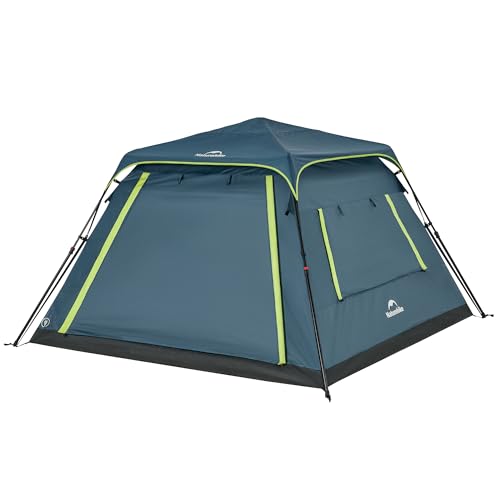
Naturehike Cape Lite 4-6 Person Cabin Tent
Taking A Closer Look At The Options
The Coody sits in a different category than the lighter nylon shelters further down this list. Its inflatable air-beam frame replaces traditional poles, so you pump up the structure instead of feeding poles through sleeves, and the cotton-blend canvas body breathes far better than coated polyester in long, humid stretches.
Where the design earns its keep is in cold and shoulder-season use. A built-in stove jack lets you safely pipe a small wood stove through the roof, which extends the camping year into real winter. For a small group that treats camping like a basecamp rather than a quick overnight, the Coody offers a livable, almost room-like feel.
Standout Benefits
- Air-beam inflation removes most of the fiddly pole work you fight with on traditional family tents
- Breathable canvas walls cut down on the heavy condensation that plagues coated nylon
- Integrated stove jack opens the door to genuine four-season use with a proper flue
- Heavier canvas fabric handles wind abrasion better than thin polyester over the long run
- More upright interior walls feel closer to a cabin than a typical dome
Things To Consider
- Canvas adds real weight and pack size, so this is a car-camping shelter, not a backpacker’s option
- Air-beam valves and pumps benefit from an annual check before shoulder season
- Drying time after a rain event is longer than for synthetic fabrics
Key Specs
Who It Suits Best
Small groups, couples, and glampers who camp from a vehicle and want a real living space through fall, winter, and early spring.
Where Another Pick Suits Better
The Gazelle T4 is a smarter match if you want pop-up speed and a lighter pack for short summer weekends.
The Gazelle T4 takes aim at the single biggest pain point for casual campers: setup. Its pre-assembled hub design pops into shape in well under two minutes, and the integrated rain fly pulls over the top without any separate pole assembly.
Compared with the heavier Coody above, the Gazelle is built for short, repeatable trips where you spend more time at the lake than wrestling with guylines. Mesh windows and a removable floor add genuine ventilation for warm-weather camping, and the bright orange shell is easy to spot in a crowded campground.
Positive Points
- Pop-up hub frame gets the tent standing in roughly 90 seconds from the bag
- Attached rain fly saves the easy-to-forget step of a separate fly setup
- Mesh windows and removable floor help air move through on muggy nights
- Polyester shell dries quickly after a rain shower
Worth Noting
- Lower ceiling height than cabin-style tents further down this list
- Polyester shell is not as breathable as canvas for multi-day humid stays
- Pop-up design needs enough open space to expand properly
Made For
Families new to camping who want to skip the long setup and get straight to the campfire on weekend trips.
Consider Something Else When
Reach for the Naturehike Village 4 Person Instant Tent if you want a taller cabin ceiling and more standing room inside.
The Naturehike Village trades some of the Gazelle’s ultra-quick pop-up action for a noticeably taller cabin profile, which is the part that matters when you’re changing a toddler’s clothes or sorting gear at 7 a.m. Pre-attached poles still unfold the body in around a minute, so you give up almost nothing on speed.
The shell uses 150D Ti Black fabric with a PU 2000mm+ coating (a polyurethane waterproof layer rated to withstand a 2000mm water column), which is a meaningful step up from the thin 75D found on many budget tents. That extra fabric weight makes the Village better suited to repeated weekend use and rougher campsites than a featherweight cabin.
The Value In It
- Near-instant setup keeps arrival-day stress low for families juggling kids and gear
- 150D Ti Black shell fabric resists abrasion from sand, pine needles, and rough pads
- 2000mm+ PU waterproof rating handles sustained rain rather than just a passing shower
- Full-coverage rainfly leaves few exposed seams along the roofline
- Steep cabin walls give a more useful interior than a low dome shape
Trade Offs
- Larger packed size than ultralight options, so it suits car camping more than backpacking
- Polyester fabric runs warmer than mesh-dominant tents in summer
- Heavier shell needs full staking in gusty conditions
Feature Snapshot
Best Suited To
Parents and small groups who want fast pitching, more standing room, and a tent that survives sloppy weather without drama.
Look Elsewhere When
Pick the Naturehike KOTA instead if you camp through real cold and want a double-layer shell for serious weather.
The Naturehike Cape is what happens when you strip an instant cabin down to its most useful bones. The 60-second pre-attached pole system gets the body in shape fast, and the taller-than-average peak height makes the interior feel less cramped than classic low-profile pop-ups.
Where the Cape separates itself from the Village above is in flexibility. The same shell is offered in 4, 6, and 8 person configurations, so you can scale the footprint to your crew without learning a new tent. For frequent family trips where the same rig gets loaded and unloaded ten times a summer, that consistency matters.
What Helps Most
- 60-second pitch keeps setup consistent across an entire summer of trips
- Taller peak height adds comfortable headroom for sitting and changing
- Multiple size options let you match capacity to your actual group
- Waterproof coating is rated for real rain, not just dew
Honest Caveats
- Polyester shell can feel hot under direct sun without the fly vented open
- Heavier packed weight than a true backpacking tent
- Floor space gets tight at the stated four-person capacity for adults with gear
Who Will Love This
Repeat car campers who value a familiar, fast pitch and the option to grow the tent with their group over time.
A Better Fit Elsewhere
Choose the Naturehike Cape Lite if you want a lighter pack and smaller footprint for shorter trips.
The KOTA is the most weather-focused shelter on this list. Its double-layer design pairs a mesh inner tent with a separate 75D 210T polyester rainfly rated at waterproof 3000mm+, and the two layers can be used independently depending on conditions. In warm, dry weather the mesh inner stands alone for stargazing; in cold rain you button everything up and add a real thermal buffer.
That modularity makes the KOTA genuinely useful across more of the calendar than single-layer cabins. Vestibules and a porch extend dry storage space outside the sleeping area, which is the difference between dry boots and soggy boots on a multi-day trip.
Advantages To Know
- 3000mm+ waterproof rating handles sustained heavy rain without seepage
- Detachable inner mesh tent doubles as a stand-alone shelter in warm months
- Outer fly can be used alone as a sun canopy or rain shelter over a picnic table
- Vestibules and porch add protected storage for boots, packs, and cooking gear
- Stiffer double-layer structure resists wind deformation better than single-wall tents
Points To Note
- Two-layer design takes longer to fully set and strike than an instant cabin
- Heavier packed weight than the single-layer Cape Lite
- More parts to dry and inspect before long-term storage
Feature Card
Right Fit For
Year-round campers who face rain, wind, and cooler nights and want a shelter that flexes with the forecast.
Reach For A Different Pick When
Skip the KOTA in favor of the Naturehike Cape Lite if you only camp in mild summer weather and value a small, simple cabin.
The Cape Lite rounds out the list as the most portable cabin-style option. It pitches in around a minute using pre-attached poles, and its compact footprint fits comfortably in the back of a small car or on a short hike to a sheltered campsite. Peak height lands at roughly 62 inches, so sitting up inside feels natural.
The floor measures around 101.5 by 101.5 inches, which is enough for a queen mattress plus a little gear. For scout troops, young families, and couples heading out for a quick overnighter, the Cape Lite covers the basics without the bulk of the heavier KOTA above.
Real-World Strengths
- Small packed size is realistic for short carries from the parking area
- Cabin-style walls give better usable space than a low dome
- Quick pitch frees up evening time for cooking and campfire
- Compatible with a queen mattress for genuine sleeping comfort
Small Limitations
- Four-person rating feels optimistic for adults with full gear
- Single-layer shell offers less weather headroom than the KOTA
- Lightweight fabric benefits from careful site selection away from sharp ground
Quick Facts
Who Should Grab It
Casual campers, scouts, and couples who want a lighter cabin-style shelter for short trips in fair weather.
Not Your Match When
Step up to the Naturehike KOTA if you camp through shoulder seasons and want stronger waterproofing for tougher storms.
What To Weigh Before Choosing Your 4 Person Tent Waterproofs
A waterproof rating tells you how much water pressure the fabric can take before it starts leaking. Most quality family tents fall between 1500mm and 3000mm+ on the hydrostatic head scale. Lower numbers handle light rain and brief showers, while higher ratings keep you dry through sustained downpours. Match the rating to the climate you actually camp in.
Setup style changes the entire arrival experience. Instant cabins with pre-attached poles get the body in shape in about a minute, which matters more than people expect on Friday evenings. Traditional pole designs take longer but tend to pack smaller and weigh less. Inflatable air-beam frames, like the Coody above, fall somewhere in between.
Breathability matters as much as waterproofing. Coated polyester keeps water out but traps moisture inside, which leads to heavy condensation on cool nights. Cotton-blend canvas or double-layer designs let water vapor escape, so you wake up to drier walls and drier sleeping bags. For multi-day stays, that breathability is the difference between comfortable and clammy.
Capacity labels are optimistic. A “four-person” tent typically fits four adults on sleeping pads with little room left for packs, dogs, and boots. Most groups sleep more comfortably with a tent rated for one or two people above their actual count. Floor dimensions and peak height matter more than the number on the box.
Smart Considerations Before You Buy
Mistakes Worth Dodging
The most common misstep is trusting the printed capacity without checking floor dimensions. A tent rated for four can still feel like a closet if the peak height is low or the walls slope aggressively. Measure the actual floor space and peak height against your sleeping pads before committing. Another slip is ignoring the rainfly. Tents marketed as waterproof usually depend on a full-coverage fly to keep seams dry. Skipping the fly or leaving vents open during a storm invites leaks where the body and fly meet.
Where The Extra Money Goes
Higher-tier shelters tend to spend the budget on thicker denier fabric, stronger waterproof coatings, and better seam sealing rather than on extra features. Double-layer designs, higher hydrostatic head ratings, and tougher floor materials all add cost but extend the tent’s useful life and improve storm performance. The upgrade pays off most for campers who face real weather, camp often, or want a single tent that survives multiple seasons of family use.
Frequently Asked Questions
What waterproof rating do I really need for a 4 person tent?
A PU coating of 1500mm handles light rain and dew, while 2000mm to 3000mm+ handles sustained storms. For most weekend campers, 2000mm is a sensible baseline, with 3000mm+ worth it if you face heavy regional rainfall or shoulder-season weather.
Are instant tents as waterproof as traditional pole designs?
Yes, in practice. The waterproofing lives in the fabric and seam tape, not the pole type. Instant cabins like the Naturehike Village use the same coated polyester shells and full-coverage rainflies as pole-driven tents, so dry performance is comparable when the fly is properly attached.
Can a 4 person tent actually sleep four adults?
Four adults on sleeping pads is realistic in genuine 4-person designs, though gear space gets tight. Most groups sleep more comfortably treating a 4-person tent as a 3-person setup with room for packs, or sizing up to a 6-person model if you camp with gear-heavy kids or dogs.
How do I dry and store a tent to make it last?
Pitch the tent in a dry, shaded spot after each trip and let it air out completely before folding. Storing a damp tent breeds mildew that degrades coatings and seam tape over time. A loose storage sack beats a tight stuff sack for long-term fabric health.
Is a double-layer tent worth the extra weight?
For multi-day trips, shoulder-season camping, and wet climates, yes. Double-layer designs reduce condensation, add wind stability, and let you adapt the tent to conditions by using the inner or outer layer alone. In dry summer-only use, a single-layer cabin is lighter and simpler.
The Takeaway
The right shelter depends less on specs on paper and more on how you actually camp. Quick weekend trips favor fast-pitch cabins like the Gazelle T4 or Naturehike Village. Year-round and stormy conditions push you toward the double-layer KOTA or the canvas Coody. Lighter fair-weather outings fit the Cape Lite. Match the tent to your climate, your group size, and the trips you really take, and a dry, comfortable night follows naturally.