
Camping with a partner or a small crew means balancing shelter weight against livable space, and four-season duty raises the stakes. A 4 person 4 season tent has to handle wet snow, biting wind, and long shoulder-season nights without turning the interior into a condensation box. Group campers, winter backpackers, and overlanders who refuse to quit at the first cold front will find their match in the picks below.
A Snapshot Of The Selections

Coody Premium Inflatable Canvas Air Tent

Gazelle T4 Portable Pop-Up Camping Tent

Naturehike Village Instant Cabin Tent
Naturehike Cape 60S Instant Cabin Tent
Naturehike KOTA Double Layer Family Tent
Naturehike Cape Lite Instant Cabin Tent
The Details Behind The Selections
The Coody Premium Inflatable swaps flexible air beams for rigid poles, which matters more than it sounds on a windy ridge or a frozen alpine meadow. Canvas breathes differently than coated nylon, so humidity and condensation behave better during long winter stays. A built-in stove jack turns the shelter into a genuine basecamp for shoulder-season hunters, ice fishermen, and couples who treat cold nights as a feature.
For groups who value livable square footage and warmth over pack weight, this is the standout of the list. It earns its place among 4 person 4 season tents because it is built like a small wall tent rather than a backpacking shelter.
A Strong Showing
- Air-beam frame pitches in minutes without metal pole sequencing
- Canvas body moderates interior humidity across long stays
- Stove jack enables a safe wood or tent stove install for cold weather
- Standing room interior supports cots, chairs, and gear storage
- Heavy denier fabric resists abrasion in rocky or wooded sites
Things To Consider
- Pack weight is significant compared to trekking-style shelters
- Canvas needs full drying before storage to prevent mildew
- Air pump and repair kit should travel with the tent
Key Specs
Who Should Grab It
Glampers, hunters, and couples who split time between a vehicle and a remote wall-tent site will get the most out of this shelter.
Look Elsewhere When
Solo backpackers counting every ounce should look at the Naturehike KOTA instead, since its modular design handles weight better on long carries.
The Gazelle T4 flips the usual tent experience on its head. A pre-assembled hub system lifts the roof and walls in one motion, so you spend the first hour of the trip fishing or starting dinner instead of sorting poles. Compared to the heavier Coody above, this one is much friendlier for parents wrangling small kids at a crowded state park.
Polyester fabric sheds light rain well and the removable floor makes cleanup easy after sandy beach weekends. The orange color helps locate the site in dense forest, which matters when you walk back from the latrine at midnight.
Bright Spots
- Hub design reaches camp-ready state in well under two minutes
- Mesh screens and removable floor add real airflow on hot nights
- Rain fly handles typical summer storms without issue
- Polyester dries quickly after morning dew
Worth Noting
- Not engineered for heavy snow loads or true winter use
- Hub weight and packed size eat cargo space in smaller vehicles
Quick Facts
Made For
Families and casual campers who want a fast, frustration-free pitch at a drive-up campground will appreciate this setup.
Swap It Out When
Anyone planning serious winter trips should pick the Naturehike KOTA, since its double-layer build handles snow and cold far better.
The Naturehike Village treats tall ceilings as the headline feature, which is a real gift for anyone who hates crawling to the vestibule at night. The cabin shape keeps wall space open for cots and gear, and the dark fabric, which Naturehike calls Ti Black Technology with a UPF (ultraviolet protection factor) rating of 12500+, blocks early morning sun for late sleepers.
Pre-attached poles and an automatic structure aim for roughly a one-minute pitch, a real perk after a long drive. The full-coverage rainfly and a waterproof rating listed at PU 2000mm give the shell confidence against sustained downpours. The trade-off shows up in packed size: this is a car-camping tent, not a trail companion.
Useful Touches
- Vertical walls maximize interior space and standing room
- Dark fabric blocks sunlight for late risers and naps
- Pre-attached pole system shortens setup time
- Full rainfly offers broad weather coverage in heavy storms
Trade Offs
- Packed weight and bulk limit use to drive-in sites
- Larger footprint needs a generous campsite pad
At A Glance
Best Suited To
Families running a base camp with a packed SUV will use this tent’s cabin space well, especially in shoulder-season rain.
Reach For A Different Pick When
Winter expedition campers will find the Naturehike KOTA more capable in snow and cold given its modular double-layer setup.
The Naturehike Cape leans into the same one-minute pitch the Village uses, but the tunnel layout changes the room. A long rectangular floor plan fits two queen pads with leftover aisle space, and the tall peak lets most adults stand near the center. 190T polyester (a light-to-midweight fabric, with the higher number indicating thicker threads) keeps weight reasonable for a cabin-style tent of this size.
For car-based trips where everyone wants their own corner, this layout beats a square cabin. The waterproof rating listed at PU 3000mm gives the shell a stronger weather rating than the Village above, which helps when storms settle over a campsite overnight.
Good Reasons To Consider
- Pre-attached poles aim for a roughly 60-second pitch
- Tunnel layout creates separate sleep and gear zones
- Waterproof rating supports heavy rain conditions
- Tall center peak suits standing and changing clothes
Honest Caveats
- Tunnel shape catches crosswinds more than low domes
- Stakes and guy lines deserve attention on exposed ground
Feature Snapshot
Right Fit For
Road-tripping couples or families with two older kids will appreciate the divided layout and quick pitch on arrival.
Skip It When
Exposed ridge or alpine campers should consider the Coody Premium Inflatable Tent instead, since its air-beam and canvas build handle sustained wind better.
The Naturehike KOTA earns the four-season label honestly. A double-layer design separates the inner mesh tent from the rain shelter, which lets you drop the fly on clear summer nights for stargazing and reattach it when weather rolls in. The two parts also stand alone, so the shell becomes a sun canopy at a tailgate or a covered cook space on a hot afternoon.
The 75D 210T polyester body and a waterproof rating listed at PU 3000mm+ target the wet, snowy conditions that wreck single-layer tents. Vestibules and a porch give gear and boots a covered home, which matters when snow is melting off your boots overnight.
The Good Stuff
- Modular layers run as two separate shelters in summer
- Mesh inner supports airflow and stargazing on clear nights
- Vestibules keep wet boots and packs out of the sleeping area
- Waterproof rating supports serious rain and snow
- Family-scale interior with multiple size options
Points To Keep In Mind
- Packed weight and volume exceed single-layer cabins
- Pitching both layers takes longer than instant tents
Feature Rundown
Whose Shelf It Belongs On
Year-round family campers and shoulder-season overlanders who camp through snow and rain will find the KOTA well matched to their calendar.
Consider Something Else When
Strict summer-only campers looking to save weight should look at the Naturehike Cape Lite, which handles warm trips at a lighter carry.
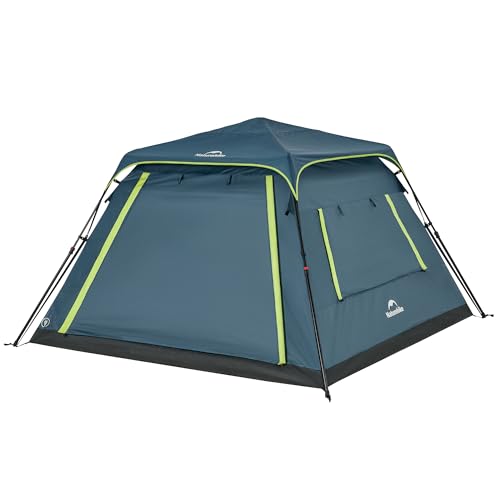
The Naturehike Cape Lite rounds out the list as a beginner-friendly cabin. The floor measures roughly 101.5 by 101.5 inches, which swallows a queen mattress with room for bags and a dog bed, and the 62.2-inch peak gives average-height adults head clearance. Compared to the Cape model above, this one is shorter and easier to handle on a small campsite pad.
Pre-attached poles keep the pitch in the one-minute range, which helps anyone new to tent camping. The honest read is that this is a fair-weather shelter first, with enough rain resistance for typical summer storms, though it lacks the heavier fabric and modular layering of a true four-season pick.
Everyday Advantages
- Compact footprint fits tight or reserved campsites
- Pre-attached pole system supports a quick pitch
- Queen mattress compatibility suits couples and small families
- Center peak height eases standing and changing
Soft Spots
- Not designed for snow loads or freezing overnight use
- Ventilation can lag on hot, still nights without mesh windows open
Who It Suits Best
First-time family campers and warm-weather road trippers will find this tent’s pitch and footprint easy to live with.
Where Another Pick Suits Better
Anyone needing winter capability should swap to the Naturehike KOTA, since its double-layer build is rated for genuine four-season conditions.
Picking A Four-Season Shelter That Actually Works For Your Crew
Buying a 4 person 4 season tent is less about hero specs and more about matching the shelter to the way you actually camp. A canvas wall tent with a stove jack earns its weight for hunters and cold-weather glampers, while a cabin-style instant tent makes more sense for a family running a single basecamp out of an SUV.
Start with weather reality. A “four-season” label can mean a true expedition shelter or a beefy three-season tent with a heavier fabric, and that gap matters. Double-layer construction, where an inner mesh tent hangs inside a separate rainfly, helps manage condensation in cold air where trapped moisture freezes on contact. Single-layer tents are lighter and faster to pitch but run damper inside.
Next, weigh the setup story honestly. Instant and hub-style tents take the friction out of arrival, which is why they dominate family car camping. Pre-attached pole systems cut a real twenty to thirty minutes off pitch time, and that time matters when small kids are running loose or weather is moving in.
Finally, check the floor plan against your gear. A tunnel layout divides sleep and living zones, while a square cabin gives a more open feel. Vestibules, porches, and awnings keep muddy boots and wet packs out of the sleeping area, which pays off across a long trip more than the spec sheet suggests.
Things Worth Knowing Before You Commit
Where Shoppers Go Wrong
Treating any tent with a “4 season” tag as an alpine shelter is the most common mistake. Most generalist family tents handle shoulder-season cold but not sustained winter storms, so match the build to your worst realistic trip, not your best-case one. A second trap is undercounting space: a four-person rating assumes tight sleeping pads, not cots, dogs, and gear, so going one size up rarely hurts.
When Paying More Pays Off
Higher-tier models in this category earn their cost through heavier denier fabric (the thread weight that signals durability), better waterproof coatings, and modular layer systems that extend use across seasons. The premium also buys sturdier poles and reinforced seams, which show up over years rather than weekends. For campers who use a tent more than a handful of times a year, that upgrade tends to outlast the savings of a cheaper option.
Frequently Asked Questions
What Is A True 4 Person 4 Season Tent?
A true four-season tent uses a double-layer or single-skin weather build, stronger pole geometry, and fabrics rated to handle snow load and sustained wind, rather than just an extra-thick three-season shelter.
How Many People Actually Fit In A 4 Person Tent?
A four-person rating fits four sleeping pads with little room for gear, so most couples and small families find a six-person size more comfortable for actual trips.
Can A 4 Season Tent Be Used In Summer?
Yes, especially modular double-layer designs like the Naturehike KOTA, where the mesh inner can run alone on warm nights and the rainfly reattaches when weather shifts.
What Does A Stove Jack Do?
A stove jack is a reinforced, fire-resistant opening in the tent wall that lets a tent stove pipe vent safely outside, which is what makes wood heat possible in cold-weather shelters like the Coody Premium Inflatable.
How Do You Store A Canvas Tent Properly?
Canvas tents need to be fully dry before folding and stored in a breathable bag in a cool, dry space to prevent mildew and fabric breakdown over time.
The Takeaway
Your best pick comes down to how you actually camp, not the spec with the biggest number. Canvas and air-beam shelters like the Coody handle serious cold, while instant cabins like the Naturehike Cape Lite trade winter duty for a faster pitch and lighter carry. Match the shelter to your worst realistic trip, and the rest of the decision tends to fall into place.