
A 4-cycle gas string trimmer trades a little extra weight for something most weekend yard warriors end up caring about: no oil mixing, lower noise, and longer engine life under real workload. The picks below cover a range of budgets and yard sizes, from lightweight walk-behind edging to brush-clearing power.
The Main Contenders

WILD BADGER POWER 26cc 3-in-1 String Trimmer/Edger
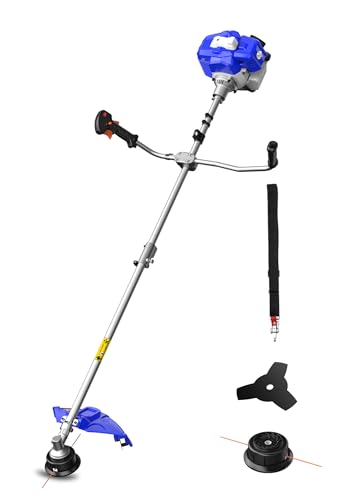
Wild Badger Power 52cc 2-Cycle String Trimmer 3-in-1

Wild Badger Power 26cc 4-in-1 Gas Weed Wacker Kit

Wild Badger Power 31cc 4-Cycle Walk-Behind Lawn Edger

Wild Badger Power 40V 16-in Brushless Cordless Mower

Echo 21.2cc Straight Shaft String Trimmer PAS-225VPB
What Each Pick Brings To The Table
This 3-in-1 trimmer covers the three jobs most homeowners actually tackle on a Saturday morning: trimming along fence lines, edging the driveway, and clearing brushy patches that the mower leaves behind. The 17-inch string trimmer head handles everyday lawn edges, while the 10-inch brush cutter blade chews through thicker stems. It runs on a 26cc full crank engine, meaning the crankshaft extends across the whole case rather than just the lower half.
That full crank design matters because it tends to outlast the half-crank style you’ll find on budget models, which is a real advantage for anyone storing a trimmer in an unheated shed through winter. The rubber handle and shoulder strap reduce arm fatigue during longer sessions, and the quick-start system is built to fire up within a handful of pulls.
A Favorable Mix
- Three functions in one tool cut down on storage clutter and gear swaps mid-yard
- Full crank 26cc engine holds up better under repeated weekend use than half-crank designs
- Rubber grip plus shoulder strap helps on bigger lots where arm fatigue builds fast
- 10-inch brush blade handles woody growth that would tangle or stall a string-only head
Trade Offs
- As a 2-cycle engine, you still need to mix oil into the fuel, which adds a step at fill-up
- Heavier than battery alternatives, so lighter users may find longer sessions tiring
- Attachment swaps require some effort compared to a dedicated single-purpose trimmer
Quick Facts
Made For
Homeowners with quarter-acre lots who want one gas tool that handles trimming, edging, and light brush without juggling separate machines.
Consider Something Else When
If you’d rather skip fuel mixing entirely, the Wild Badger Power 40V Brushless Cordless Lawn Mower down the list runs on battery power with zero gas prep.
When a standard trimmer bogs down in tall weeds or thick brush, this 52cc step-up gives you the displacement to push through. The package pairs an 18-inch string trimmer/edger head with a 10-inch brush cutter, and the full crank engine design (crankshaft running the full width of the housing rather than just the lower half) is meant to extend working life compared to cheaper half-crank layouts.
For anyone reclaiming a neglected lot, this kit covers the workload without forcing you to buy a dedicated brush mower. Tool-free air filter access is a small but welcome touch for anyone who’d rather not hunt for screwdrivers between sessions, and the quick-pull start aims to keep cold mornings from becoming a wrestling match with the cord.
Where It Delivers
- 52cc displacement chews through saplings and tall weeds where smaller engines stall out
- Full crank layout extends engine life for users who log serious hours each season
- Tool-free air filter cover speeds routine maintenance between jobs
- Wider 18-inch trimmer swath reduces passes on larger properties
Worth Noting
- Still requires fuel-oil mixing, which adds a step each fill-up
- Heavier than the 26cc Wild Badger above, so smaller-framed shoppers may find it tiring over long sessions
- Overkill for a tidy suburban lawn that never sees brush growth
Whose Property It Belongs On
Rural property owners, hobby farmers, and anyone tackling an overgrown half-acre who wants gas power without stepping up to a dedicated brush mower.
Look Elsewhere When
For a quieter block-friendly yard, the Echo PAS-225VPB lower in this roundup delivers pro-grade trimming without the heavier brush-cutting focus.
This kit pushes versatility further by adding four interchangeable heads on a single 26cc power unit. Where the 3-in-1 above covers trim, edge, and brush, this version adds a pole saw attachment for reaching branches without climbing a ladder, plus a hedge trimmer for shaping shrubs along the property line.
It uses the same engine platform as the 3-in-1 Wild Badger, so the start-up behavior and fuel-mixing routine stay familiar. The trade-off is storage: four attachments need somewhere to live, but the pole-saw option genuinely replaces a separate tool for homeowners who otherwise wouldn’t own one.
What Earns Its Place
- Four-in-one design covers trimming, edging, brush cutting, and overhead branch work from a single powerhead
- Pole saw attachment replaces a separate tool for occasional limb trimming
- Hedge trimmer head handles shrubs that hand shears make tedious
- Same reliable 26cc engine platform as other Wild Badger units, simplifying ownership
Points To Note
- More attachments mean more storage space required in your shed or garage
- Each swap still takes a few minutes, so back-to-back tasks slow down compared to dedicated tools
- Same fuel-mixing step as other 2-cycle picks in this roundup
Feature Snapshot
Right Fit For
Homeowners who want one gas powerhead handling everything from driveway edges to overhead branches, without buying and storing separate dedicated tools.
Skip It When
If you only need straight trimming and edging without pole-saw or hedge-trimmer work, the simpler 3-in-1 Wild Badger above is the better match.
This is a purpose-built lawn edger, not a string trimmer at all, but it earns its place in any 4-cycle gas conversation. The 31cc four-cycle engine runs on straight gasoline, meaning no oil mixing, which is the headline advantage over the 2-cycle trimmers elsewhere in this list. Four-cycle engines also tend to run quieter and produce fewer fumes at the operator’s working height.
The 9.5-inch steel blade cuts a clean groove along sidewalks, driveways, and curbs where a string trimmer leaves ragged edges. For homeowners obsessed with that sharp lawn-edge look, a walk-behind edger actually delivers straighter lines than swinging a handheld trimmer by eye.
Strong Points
- Four-cycle engine runs on straight gas, skipping the oil-mixing step entirely
- 9.5-inch blade produces cleaner, straighter edges than a swinging trimmer head
- Walk-behind design reduces wrist and arm strain during long edging sessions
- Quieter operation than comparable 2-cycle trimmers at the operator position
Things To Weigh
- Single-purpose tool, so you’ll still need a trimmer for grass and brush work
- Heavier than a handheld trimmer and harder to maneuver around tight curves
- Less useful on lawns without defined hardscape edges to follow
Built With In Mind
Homeowners with long concrete driveway or sidewalk edges who want crisp, professional-looking lines without the fatigue of hand-held edging.
Not Your Match When
If your yard is mostly open lawn with no hardscape borders, you’ll get more use from the multi-function Wild Badger 3-in-1 string trimmer above.
This entry breaks the gas-only rule on purpose, because the cleanest argument against 2-cycle trimmers is what happens when you replace the whole gas fleet with battery. The 40V brushless motor reaches up to 3,400 RPM, and the brushless design (meaning no physical brush contacts wearing out inside the motor) generally outlasts brushed motors in this category.
The 16-inch deck suits small-to-medium lawns, and five cutting heights let you adjust for seasonal growth patterns. There’s no fuel mixing, no pull-cord, and dramatically lower noise, which matters on suburban blocks where early-morning mowing draws complaints.
Points In Its Favor
- Zero fuel mixing, no pull-cord starting, and almost no engine maintenance
- Brushless motor tends to outlast brushed alternatives in this price bracket
- Five height settings handle seasonal growth changes without extra tools
- Significantly quieter than any gas mower in this roundup
Honest Caveats
- Runtime is capped by battery capacity, so very large lawns may need a recharge mid-job
- Not a string trimmer, so it pairs with, rather than replaces, the trimming tools in this list
- Less cutting power than gas mowers in heavy, wet, or overgrown grass
Feature Rundown
Who Should Grab It
Small-lot homeowners who want quiet, low-maintenance mowing and either already own a trimmer or plan to pair this with one of the gas trimmers above.
A Better Fit Elsewhere When
For a single all-gas solution covering mowing, trimming, edging, and brush work, the Wild Badger 3-in-1 string trimmer near the top of this list is the more capable pick.
Echo has built its reputation on commercial-grade handheld equipment, and the PAS-225VPB kit carries that DNA into a homeowner-accessible package. The 21.2cc 2-stroke engine is smaller on paper than the Wild Badger units, but commercial engineering typically extracts more usable work per cc than budget brands.
The straight shaft design reaches under decks and shrubs more comfortably than curved-shaft alternatives, and the Speed-Feed head lets you reload line in seconds without disassembly. The included 100 MPH leaf blower attachment rounds out a kit that genuinely replaces two separate tools for tidy weekend cleanup.
A Few Highlights
- Commercial-grade Echo engineering tends to outlast budget trimmers under heavy use
- Straight shaft reaches under decks, fences, and low shrubs with less wrist strain
- Speed-Feed head reloads trimmer line without taking the unit apart
- Bundled 100 MPH leaf blower attachment handles post-mowing cleanup
Possible Compromises
- 2-stroke engine still requires fuel-oil mixing at every fill-up
- Smaller 21.2cc displacement struggles in the thick brush the 52cc Wild Badger clears easily
- Premium commercial positioning commands a higher price than homeowner-grade alternatives
Best Suited To
Landscaping crews and serious homeowners who run their trimmer weekly and value long-term durability over upfront savings.
Reach For A Different Pick When
For weekend-only suburban use without commercial workloads, the Wild Badger 26cc 3-in-1 above delivers comparable trimming with more attachment variety for less.
Choosing The Right 4-Cycle Gas String Trimmer For Your Yard
Engine cycle comes down to one practical trade-off. A 4-cycle engine (which uses separate oil and fuel reservoirs) runs on straight gasoline, produces less exhaust smell at the operator’s position, and generally runs quieter, but adds weight and complexity to the powerhead. A 2-cycle engine is lighter and simpler mechanically, but requires you to pre-mix oil into the fuel at a specific ratio before every fill-up, which trips up first-time owners.
Shaft shape affects how the trimmer feels in use. Curved shafts tend to be lighter and cheaper, while straight shafts reach further under decks and shrubs and typically transfer vibration less. For most homeowners with mixed terrain, straight shaft is the more forgiving choice.
Cutting swath (the diameter of the area the trimmer clears in a single pass) matters more than raw horsepower for everyday use. A 17 to 18 inch swath covers typical residential edges in fewer passes, while anything below 15 inches means more walking for the same yard.
Attachment support turns a single tool into a yard-care system. Three-function kits cover trim, edge, and brush. Four-function kits add a pole saw or hedge trimmer for users who’d rather not store multiple dedicated tools. Walk-behind edgers serve a different job entirely, namely crisp hardscape borders, and pair well with a handheld trimmer rather than replacing it.
Smart Choices Across These Picks
Wrong Turns To Avoid
Most first-time trimmer shoppers grab the highest cc (cubic centimeter) number they see, assuming more displacement always equals better results. A 52cc engine on a tidy quarter-acre lawn is wasted power and extra weight you’ll feel on every pass. Match displacement to workload: 21 to 31cc handles typical suburban grass, 52cc earns its place on overgrown lots and brush.
Another common slip is buying a curved-shaft trimmer for tall users. Straight shafts accommodate a wider range of heights and reach further under obstacles, so households with multiple users tend to get more out of that geometry. Finally, skipping the fuel-mixing reality is a setup for frustration. Two-cycle engines need pre-mixed fuel at the manufacturer’s ratio, and using straight gas will destroy the engine within minutes.
Where The Extra Money Goes
Premium trimmers like the Echo in this list command higher prices partly because of brand reputation, but mostly because commercial-grade components last longer under repeated use. That shows up in the carburetor design, the clutch system, and the quality of the bearings in the trimmer head. For someone who trims once a month, the value math rarely justifies the premium. For a landscaper trimming eight hours a day, the math flips hard.
The other place higher tiers invest is vibration dampening and ergonomic grips. Cheap trimmers transmit engine vibration directly into your hands and forearms, which adds up across a Saturday’s worth of work. Mid-tier and above add isolation mounts and softer grip materials that genuinely change how the tool feels after an hour of use.
Frequently Asked Questions
What does “4-cycle” mean on a gas string trimmer?
A 4-cycle engine uses four piston strokes per power cycle and keeps oil in a separate reservoir, so you pour straight gasoline into the tank. Two-cycle engines combine oil and fuel before each fill-up.
Are 4-cycle trimmers quieter than 2-cycle models?
Generally yes. The separate oil reservoir and lower operating RPM of most 4-cycle designs produce less high-pitched noise at the operator’s position, though they still aren’t silent.
Can a 4-cycle trimmer use the same attachments as a 2-cycle?
Not always. Attachment mounts and shaft diameters vary by brand, so swapping heads between cycle types and across manufacturers usually requires adapter kits or simply isn’t supported.
How often does a 4-cycle trimmer need oil changes?
Most 4-cycle handheld engines recommend an oil change every 25 to 50 operating hours, which works out to roughly once per season for typical residential use.
Is a brushless motor worth the upgrade?
For battery-powered tools, brushless designs (which use electronic switching instead of physical brush contacts) typically run cooler, draw less battery per cut, and last longer before service. The benefit is less dramatic on occasional-use tools than on daily-use ones.
Closing Remarks
The right pick depends less on specs and more on how often you’ll actually use it, how big your yard runs, and whether the smell and noise of gas power bother you. Match the tool to the workload and the rest tends to work itself out.