
Three hikers sharing a shelter means splitting weight, splitting cost, and splitting comfort decisions in a small space. A tent that feels roomy for one often turns cramped with three sleeping pads and a pile of backpacks. The picks below balance interior space, packed weight, weather handling, and pitch time, because the right fit depends on your mileage, climate, and how often you set up after dark. You will find options for ultralight trips, family basecamps, and everything between.
The Shortlist At A Glance

Naturehike Village Instant Tent 4/8 Person Cabin

Forceatt 2/3 Person Waterproof Backpacking Tent
Naturehike Cape 4/6/8 Person Instant Camping Tent

Coleman Sundome 2/3/4/6 Person Camping Tent
Naturehike KOTA 4/6/8 Person Double Layer Tent
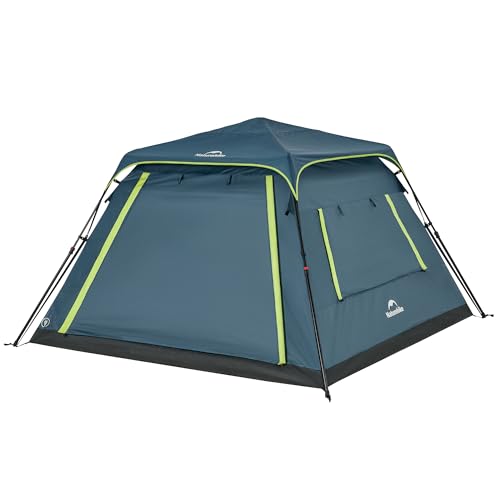
Naturehike Cape Lite 4-6 Person Instant Cabin
Inside Each Recommended Option
Car campers pulling into a site after dark appreciate a tent that is standing before the cooler gets cold. The Naturehike Village uses pre-attached poles and an automatic structure aimed at roughly sixty-second setups, which removes the worst part of arriving tired. Unlike the backpacking-focused Forceatt below, this model leans into cabin geometry with near-vertical walls, so you walk in upright and gain usable floor space that dome tents waste on sloped ends.
The Ti Black fabric (a titanium-coated weave that reflects sunlight and boosts UV protection) is rated UPF 12500+ and pairs with a PU 2000mm+ waterproof coating (a polyurethane layer measured by how many millimeters of water pressure the fabric resists before leaking). For a long weekend at a state park with mixed sun and drizzle, that combination covers most bases. You may find the packed size bulky for any trip where the tent rides in a backpack rather than a trunk.
Where It Excels
- Pre-attached poles shorten pitch time when hands are cold or daylight is short.
- Cabin-style walls feel more like a small room than a wedge, helpful for changing clothes standing up.
- Ti Black fabric delivers strong UV and heat reflection for sunny desert or open-lake sites.
- Two available sizes let you size up when kids, dogs, or extra gear join the trip.
Things To Consider
- Packed dimensions lean toward car-camping bulk rather than backpack-friendly packing.
- Owners commonly recommend seam-taping at the factory stitch points before the first wet trip.
- Fewer mesh panels than the Cape Lite mean warmer interior airflow in still, humid weather.
Key Specs
Whose Trail It Belongs On
You mostly camp from a vehicle, want standing headroom, and care more about fast pitch than light pack weight.
Swap It Out When
You are counting ounces for a multi-day backpacking route, where the Forceatt 2/3 Person Waterproof Backpacking Tent is the better trail partner.
Backpackers carrying every gram in their shoulders want shelter that disappears on the scale. The Forceatt keeps that math friendly with aluminum poles (lighter and cooler to the touch than fiberglass, though more expensive) and a footprint roughly 225 by 185 centimeters, which fits three narrow sleepers but lives more comfortably as a two-person tent with generous gear space. Compared to the cabin-style Naturehike Village above, this is a true trail shelter, prioritizing pack size over interior volume.
Double-wall construction (an inner mesh tent plus a separate rainfly, which reduces condensation drip) and dual doors keep the setup practical for shared sleeping without crawling over a partner at 2 a.m. The tent is rated for three to four seasons, though you will want to push into truly harsh winter conditions only with extra care. In shoulder-season rain or summer thunderstorms, it handles the job without complaint.
Well-Handled Touches
- Aluminum poles cut weight without sacrificing the stiffness needed for wind resistance.
- Two doors mean no human hurdle when someone needs to step out mid-night.
- Pack size fits alongside a backpacking pack rather than dominating it.
- Three-season versatility covers most spring through fall hiking windows.
Honest Caveats
- Interior height is shorter than the cabin tents, so sitting upright is fine, standing is not.
- Three sleepers with full pads leave almost no vestibule space for packs.
- Like most lightweight tents, careful seam-sealing improves real-world rain performance.
Made For
You log long trail miles, rotate between two and three campers, and care more about pack weight than standing headroom.
Reach For A Different Pick When
You car-camp with kids and want room to stand and move around, where the Naturehike Village Instant Tent 4/8 Person Cabin fits the bill.
Basecamp tents live a different life than trail shelters. They sit for a weekend in one spot, host cooking gear, kids, and a dog, and rarely need to fit inside a backpack. The Naturehike Cape handles that role with a tunnel layout (a long, arched structure rather than a single-peak dome, which spreads space evenly across the floor) and a roughly sixty-second pre-attached pole setup, similar in spirit to the Village above but stretching wider for larger families.
The 190T polyester shell (a tightly woven polyester measured in “tex,” where higher numbers mean thicker, tougher fabric) carries a PU3000mm waterproof rating, which handles steady overnight rain without stress. Three available sizes (4, 6, and 8 person) let you scale up without changing the feel of your setup routine. If your trips include a cooler, a camp chair, and a duffel, the Cape gives that gear room to breathe.
Everyday Perks
- Tunnel shape spreads usable space across the length, not just the center peak.
- Instant-pole design removes the steepest part of the learning curve for new campers.
- PU3000mm coating outpaces many cabin tents in sustained wet weather.
- Multiple size options keep the same tent family in play as your group grows.
Worth Bearing In Mind
- Tunnel tents catch wind along their long axis, so guylines (extra tension cords anchored to the ground) earn their keep in exposed sites.
- Packed size and weight target vehicle storage, not long trail mileage.
- Higher peak height makes it feel roomy but also demands level ground to avoid a sloping sleep.
Quick Facts
Best Suited To
You camp with a family group, prioritize floor space and standing headroom, and stay mostly in one place per trip.
Look Elsewhere When
You are heading into alpine terrain with high winds, where the Naturehike KOTA 4/6/8 Person Double Layer Tent offers stronger seasonal flexibility.
Coleman built its reputation on tents that forgive first-timer mistakes, and the Sundome continues that pattern. Continuous pole sleeves (fabric tubes you slide poles through, with no separate clips to lose) and Insta-Clip pole attachments make a roughly ten-minute pitch achievable even if your crew has never set up a tent before. Where the Naturehike Cape above leans into the instant-pole idea, the Sundome uses a more traditional dome frame that stays approachable for everyone.
The WeatherTec system is Coleman’s umbrella term for a set of waterproofing tricks. Its welded corners and inverted seams (seams sewn so the stitching faces inward, hiding the needle holes from rain) keep water out better than budget dome tents without those details. For festival weekends, backyard sleepovers, and casual car camping, that mix is hard to beat at the price tier.
Advantages To Know
- Snag-free pole sleeves speed setup and prevent the mid-pitch fabric jam nobody enjoys.
- Welded corners and inverted seams boost rain performance over similarly priced domes.
- Available in 2, 3, 4, and 6 person sizes so the same model scales with your plans.
- Lower price tier leaves budget for pads, lanterns, and the rest of the kit.
Some Limits To Know
- Lower peak height than cabin-style picks, so standing inside is not realistic.
- Limited vestibule space means rain-day entry needs a tarp or sheltered cooking spot.
- Mesh-heavy design runs cooler in shoulder-season cold snaps without an extra liner.
Feature Snapshot
Who Should Grab It
You are new to camping, want a forgiving dome that pitches in any weather, and value proven brand support over ultralight specs.
Skip It When
You need standing headroom and a true vestibule, where the Naturehike Cape 4/6/8 Person Instant Camping Tent serves family-style trips better.
Most family tents commit to one climate window and force you to plan trips around it. The KOTA takes a different path with a double-layer system where the inner mesh tent and outer rainfly (the separate waterproof cover that drapes over the inner tent) work together or independently. In warm months the mesh inner stands alone for stargazing, while the fly alone becomes a canopy or sun shelter on day trips. That modular approach lets one shelter serve shoulder-season camping and hot-summer basecamps without buying extras.
The 75D 210T polyester fabric is paired with a 3000mm+ waterproof coating, which lines up with the Cape above for rain performance but adds the all-season flexibility. Available in 4, 6, and 8 person layouts, plus a vestibule porch that extends covered space outside the sleeping area, the KOTA feels aimed at campers whose calendar crosses more than one season.
What Stands Out
- Inner tent and fly operate independently, doubling as a screen room or sun canopy.
- 3000mm+ waterproof coating handles heavy rain without complaint.
- Vestibule porch adds covered dry space for boots, packs, and cooking gear.
- Multiple size options suit a couple or a full family with the same tent family.
Trade-Offs
- Modular setup means more pieces to track than the single-frame Sundome above.
- Packed weight targets car campers, not backcountry travelers.
- Larger footprints need level ground to fully use the vestibule porch.
The Details
Right Fit For
You camp across multiple seasons, want a shelter that adapts to weather and trip style, and value extra covered living space.
Consider Something Else When
You want a single-pole instant pitch for casual weekends, where the Naturehike Cape Lite 4-6 Person Instant Cabin is the simpler tool.
Weekend campers who split time between two adults and occasional guests want enough room for a queen mattress without paying for a six-person palace. The Cape Lite answers that with a roughly 101-by-101-inch floor and 62.2-inch peak height, sized to swallow a queen bed plus a dog bed or duffel. Compared to the larger Naturehike Cape above, this model trims the footprint for smaller crews while keeping the instant-pole setup intact.
Pre-attached poles and an intuitive pop-up design target roughly sixty seconds from bag to standing, similar to the Village and Cape. For car-camping trips where the schedule is “arrive, eat, sleep, repeat,” that kind of pitch time keeps the fun ahead of the assembly.
Why It Works Well
- Queen-mattress-compatible floor suits couples who do not want to sleep shoulder-to-shoulder.
- Sixty-second instant pitch keeps arrival energy on dinner, not on tent parts.
- Compact cabin footprint fits tighter campsites than full six-person layouts.
- Cabin-style walls let two adults sit up and move without ducking.
Points To Note
- Designed for car camping, so pack weight rules out backcountry use.
- Smaller floor than the larger Cape means less room for a third adult plus gear.
- Factory seams benefit from a quick tape pass before the first rainy weekend.
Built With In Mind
You camp as a couple or with one extra guest, want a fast pitch, and prefer a queen-sized sleep setup over a sprawling family layout.
A Better Fit Elsewhere
You regularly host three adults or a family with kids, where the Naturehike Cape 4/6/8 Person Instant Camping Tent gives the extra space.
What Matters Most Before Choosing 3 Person Hiking Tents
Weight And Pack Size For Your Route
Backpacking trips live and die by the ounces in your pack. A tent under five pounds leaves room for food, water, and a warmer sleeping bag, while a ten-pound cabin tent forces trade-offs you may regret on day two. For weekend car camping, that math matters far less, and bulk gives way to interior space and comfort.
Interior Volume And Sleeping Geometry
Three narrow sleepers on small pads fit a tight two-person tent, but three wide sleepers with full-size pads need a true three-person floor. Peak height decides whether you can sit upright for cards and whether you need to crawl to dress. Cabin walls create more usable space per square foot than domes with steeply sloped sides.
Weather Handling For Your Climate
Waterproof coatings are measured in millimeters of pressure resistance, and higher numbers beat lower numbers in steady rain. Double-wall construction adds condensation control in cool, humid nights, while single-wall tents shed weight at the cost of interior drip. Wind-rated poles and full-coverage rainflies matter most on exposed ridge lines and open meadow camps.
Setup Speed And Pitch Simplicity
Instant tents with pre-attached poles pitch in roughly a minute, ideal for late arrivals and tired crews. Traditional domes take longer but repair more easily in the field and pack smaller. Match the system to the frequency of post-dark setups and the patience of your camping partners.
Key Considerations Across These Picks
Where Shoppers Go Wrong
Treating “person” ratings as gospel leads to cramped trips, since most manufacturer ratings assume tight sleeping pads and minimal gear storage. Buying a backpacking tent for car camping wastes interior space and comfort, while choosing a cabin tent for trail use turns every mile into a slog. Match the tent category to how you actually travel, and size up when your group includes kids, dogs, or generous gear.
Where The Extra Money Goes
Higher-tier tents invest in stronger fabrics, better pole materials, and proven waterproof systems. A 75D or 150D shell outlasts thin no-name fabric over repeated seasons, and aluminum poles resist wind and weight better than fiberglass. Double-wall construction and welded seams cost more to build but reduce leak points and condensation, paying off across years of wet weekends rather than a single season.