
A weekend at the trailhead can go sideways fast without shade on the truck. Your cab gets unbearably hot, the cooler works overtime, and any time you spend outside feels like you’re roasting. A proper 270-degree awning solves all of it in one deployable wing that wraps around your rig. The picks below cover rooftop tents, side tarps, and full-driver-side enclosures for trucks, SUVs, vans, and Jeeps, so you can match your setup to your truck and your camping style.
A Fast Comparison Of The Options
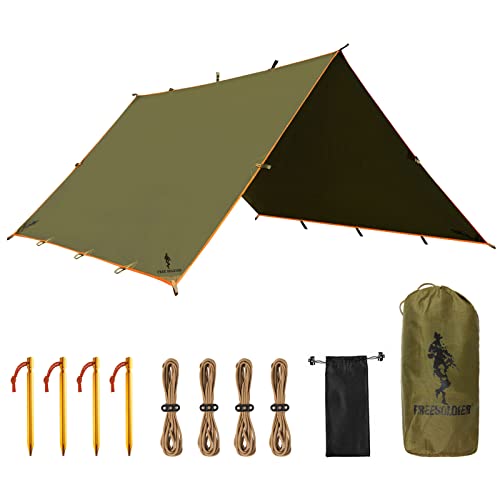
FREE SOLDIER Waterproof Camping Tarp Shelter Awning

Naturnest 270 Car Awning Plus with Access (LED)

Naturnest 270 Car Awning Plus with LED

Rough Country 270-Degree Awning (Driver Side)

TOPOAK 270 Degree Awning, 83 in (Passenger Side)

Overland Vehicle Systems HD Nomadic 270 LTE Awning

Timber Ridge Car Awning 8.2×6.5 ft (Beige)
A Deeper Look At The Lineup
Strictly speaking, the FREE SOLDIER tarp isn’t a vehicle-mounted awning. It’s a hammock rain fly that works as a wide utility tarp, hung from trees, poles, or a parked rig. For backpackers or anyone running a hammock setup on a budget, that flexibility is the whole point.
It’s built from 210T ripstop polyester (a tight weave that resists tearing and water penetration) with a PU-2000 waterproof coating (a polyurethane layer that sheds rain). Lightweight enough to throw in a pack, and depending on your tree spacing, it spreads enough cover for a hammock plus a small cooking area.
Practical Advantages
- Lightweight enough to backpack into a campsite
- Doubles as a sunshade, rain fly, or ground tarp
- Tear-resistant ripstop holds up to wind and branch rub
- Cheaper than most vehicle-mounted 270s in this list
Points To Note
- Requires trees, poles, or a roof rack to set up properly
- Doesn’t mount to a vehicle like true 270-degree awnings do
- Coverage shape depends on your rigging skill
Made For
Backpackers and hammock campers who want lightweight shelter without committing to a full rooftop setup.
Look Elsewhere When
You want a true vehicle-mounted awning, in which case the Timber Ridge or TOPOAK models will serve you far better.
Naturnest’s passenger-side Plus version adds a built-in access panel and an integrated LED strip. For SUV owners who climb in and out of the cargo area to grab gear, that walk-in entry matters more than you’d expect, especially at night.
It’s framed in aluminum and wrapped in 280G ripstop fabric (a medium-weight canvas that balances durability and packability). The whole shelter is waterproof, UV-resistant, and claims up to 12 square meters of shade when fully deployed.
A Favorable Mix
- Built-in access panel removes the need for zipping in and out
- LED light strip saves you from fumbling for a lantern
- Aluminum frame keeps weight manageable on the roof rack
- Single-person setup based on the manufacturer description
Trade Offs
- Passenger-side only, so drivers-side shoppers need its sibling (Item 3)
- Access panel adds moving parts that may need re-tensioning
Key Specs
Right Fit For
Passenger-side SUV and Jeep owners who want integrated lighting and easy cabin access on every deployment.
Another Choice May Suit
If your rig demands driver-side coverage, the Naturnest Plus with LED on the driver’s side (Item 3) is the obvious swap.
The driver-side counterpart to Item 2, this Naturnest Plus trades the access panel for a simpler top design while keeping the integrated LED. For drivers who sleep with their cab doors on the curb side of the campsite, driver-side deployment just makes more sense logistically.
Same aluminum frame, same 280G ripstop cover, same retractable manual setup. Owners commonly report it’s a quicker deploy than comparable passenger-side rigs because the panel-free design has fewer zippers to wrestle.
What Stands Out
- Driver-side mounting matches curb-side camping layouts
- Simplified top without access panel reduces setup steps
- LED strip keeps the camp visible after sunset
- Universal fit for trucks, SUVs, Jeeps, and vans
Honest Caveats
- No walk-in access panel compared to its passenger-side sibling
- Manual retract means you crank it back in yourself each morning
Built With In Mind
Drivers of trucks, Jeeps, and vans who camp with their driver’s side facing the action and want quick shade.
Skip It When
You specifically need a built-in access entry, in which case the Naturnest Plus with Access (Item 2) is the better pick.
Rough Country leans into the off-road crowd with this driver-side 270. The manufacturer claims up to 70 square feet of coverage and a PU-2000 waterproof rating (a polyurethane coating that handles heavy rain) with a 50+ UV protection rating. For trail runs and dusty desert camps, that combination is the realistic spec set most overlanders want.
The build feels aimed at people who already run Rough Country suspension and bumpers. If your rig is already kitted out, the visual and functional consistency is a real benefit.
What It Does Well
- 70 sq ft of shade handles a full campsite footprint
- 50+ UV rating protects against strong desert sun exposure
- PU-2000 waterproofing holds up to real rainstorms
- Matches the brand’s broader off-road ecosystem for cohesive builds
Worth Noting
- Driver-side only, so left-side curb setups won’t fit this one
- Larger footprint demands a strong roof rack to support it
Quick Facts
Best Suited To
Off-road overlanders running trucks and SUVs who want rugged, full-coverage shade on the driver’s side.
Reach For A Different Pick When
You need passenger-side coverage or larger family-sized shade, where the TOPOAK 270 (Item 5) makes more sense.
TOPOAK goes wide. The 83-inch awning extends from the front to the rear of the vehicle and claims up to 172 square feet of shaded area. For a family basecamp with chairs, a table, and a dog crate, that’s the kind of footprint you actually use.
The cover is 420D poly-cotton ripstop (a heavy cotton-blend weave with a black coating that absorbs UV rather than letting it pass through) with a black coating for heat reduction. Six aluminum support poles and extra-long steel pegs keep it taut in moderate wind. The retractable poles fold on invisible hinges, so pack-up is fast.
A Few Highlights
- 172 sq ft of shade covers a full family setup
- Poly-cotton fabric reduces heat transfer underneath
- Retractable aluminum poles fold on hidden hinges for fast tear-down
- Awning can stand without poles for super-quick deployment
Soft Spots
- Larger fabric means more surface area to keep clean and dry before storage
- Heavier than smaller awnings, so check your roof rack’s weight limit first
Who It Suits Best
Families and group campers running SUVs, trucks, or vans who need genuine basecamp coverage on the passenger side.
A Better Fit Elsewhere
Solo travelers or those running smaller racks may find the Timber Ridge awning (Item 7) easier to manage day to day.
The HD Nomadic 270 LTE ditches traditional poles entirely. Reinforced oversized hinges and heavy-duty rafters hold the canopy in place, with twist-and-lock hardware that locks the awning open without you wrestling with separate support poles. For one-person setup at the end of a long drive, that matters.
The 280G poly-cotton ripstop cover has heat-sealed seams to resist leaks. The whole package stores in a 1000g PVC travel cover (a thick vinyl sleeve that protects the fabric during transit). Universal “L” brackets fit a wide range of roof rack profiles.
Why It Works Well
- No-pole setup saves time and removes lost-hardware headaches
- Heat-sealed seams reduce leak points compared to stitched construction
- Universal mounting brackets fit most aftermarket roof racks
- PVC travel cover protects the fabric on long road sections
Points To Keep In Mind
- Higher price point reflects the premium hardware inside
- Twist-and-lock components need occasional cleaning to stay smooth
At A Glance
Perfect Match For
Overlanders who camp solo or in pairs and want fast, pole-free deployment on a premium roof rack.
Not Your Match When
You need maximum square footage for a family setup, where the TOPOAK 270 (Item 5) wins on raw coverage.
The Timber Ridge awning is a more traditional 270-degree wraparound, with an adjustable height range of roughly 4 to 7 feet, three ventilated walls for airflow, and a setup footprint of 8.2 by 6.5 feet (about 53.3 sq ft of shade). It mounts to nearly any vehicle with a roof rack, so it’s a sensible first awning for anyone new to the overland scene.
The PU-10000mm waterproof rating (a hydrostatic-head measure of how much water pressure the fabric withstands before leaking) is unusually high for the category, and the UV50+ rating blocks most sun exposure. For unpredictable weather, that combination is reassuring.
Points In Its Favor
- Adjustable 4-7 ft height fits most SUVs, trucks, and vans
- Three ventilated walls improve airflow on hot days
- PU-10000mm rating handles heavier rain than typical awnings
- Universal fit works on most existing roof racks
Some Limits To Know
- Smaller footprint than the TOPOAK, so families may outgrow it
- Beige fabric shows dirt and tree sap more visibly than darker covers
Who Should Grab It
First-time awning owners who want an approachable, rack-mountable shelter without committing to a premium price.
Where Another Pick Shines
If you want a faster, pole-free setup, the Overland Vehicle Systems HD Nomadic (Item 6) is the logical upgrade.
Matching An Awning To Your Rig And Routine
Coverage area is the first number to pin down. Solo campers running a tailgate setup usually find 50 to 70 square feet comfortable. Family basecamps with chairs, a table, and a kitchen zone benefit more from 120+ square feet, which is where the TOPOAK stands apart. Coverage claims assume flat ground, so sloped campsites may give you slightly less usable square footage than advertised.
Fabric weight and coating drive real-world durability. Heavier deniers (the yarn-thickness unit used to gauge fabric toughness) like 280G to 420G resist tearing better than ultralight covers, and polyurethane coatings rated PU-2000 or higher handle sustained rain without leaking. Poly-cotton blends breathe better than pure polyester, which cuts down on the muggy, stagnant feel underneath during still, warm afternoons.
Mount side matters more than people expect. Pick the side that faces the curb or the campsite’s natural gathering zone. Buying a passenger-side awning and then realizing your awning deploys over the road instead of the picnic table is a common first-timer regret.
Setup style is where 270-degree awnings actually diverge. Pole-based systems take a few minutes longer but cost less and pack tighter. Pole-free systems with twist-and-lock hardware (like the Overland Vehicle Systems HD Nomadic) trade a higher price for one-person deployability, which pays off the longer you camp.
Roof rack compatibility is non-negotiable. Most of these rigs assume a crossbar-style rack with a minimum dynamic load rating. Check your rack’s weight capacity before mounting any 270-degree awning, since the heavier the fabric and frame, the more stress on long, washboard roads.
Key Considerations Across These Picks
Where Shoppers Go Wrong
The biggest mistake is choosing a mount side by instinct rather than by campsite layout. Awning arms swing outward and need clearance, so parking near trees, rock walls, or other vehicles can block full deployment. Measure your typical campsite, not just your driveway, before committing to a side.
Another common slip-up is underestimating the stored weight. A 270-degree awning with a poly-cotton cover and aluminum poles can easily exceed 40 pounds, and that’s before the mounting brackets. That weight sits up high on your roof, which affects your vehicle’s center of gravity (the balance point that determines how stable the rig feels in crosswinds and corners) more than a low-mounted cargo box would.
Where The Extra Money Goes
Premium 270-degree awnings spend the upgrade on hardware that you interact with every single trip. Twist-and-lock rafters, oversized arm hinges, and universal “L” mounting hardware speed up deployment and remove weak points where cheaper awnings eventually fail. Higher-denier poly-cotton fabric and heat-sealed seams extend service life in real sun and rain, which compounds over years of weekend trips.
The honest read is that budget awnings cover you fine on fair-weather weekends. Frequent travelers and full-time overlanders recover the premium quickly through fewer replacement cycles and faster camp setup.
Frequently Asked Questions
How much coverage do 270-degree awnings actually provide?
Most vehicle-mounted 270s deliver between 50 and 75 square feet, though larger family-sized models like the TOPOAK claim up to 172 square feet. Actual usable coverage depends on terrain and how flat your campsite is.
Do 270-degree awnings need a roof rack?
Yes, almost all of them mount to crossbars on an aftermarket or factory roof rack. Confirm your rack’s dynamic weight rating supports the awning plus mounting hardware before installing.
Are 270-degree awnings waterproof or just water-resistant?
Most use a polyurethane coating rated PU-2000 or higher, which handles rain rather than just drizzle. Poly-cotton covers with heat-sealed seams offer the best leak protection in this category.
How long does setup take?
Pole-based 270s usually take 5 to 10 minutes for one person with practice. Pole-free models with twist-and-lock hardware, like the Overland Vehicle Systems HD Nomadic, deploy in roughly half that once you’re familiar with the sequence.
Can 270-degree awnings handle wind?
They handle moderate breezes fine when properly staked, but owners commonly pull them down in sustained gusts above 25 mph. The fabric acts like a sail, and even strong aluminum poles can’t compensate indefinitely for a full 270 wrap in heavy wind.
Closing Thoughts
The right 270-degree awning turns a parked truck into a livable outdoor room, whether you’re tailgating, basecamping, or staging a trail run. Match the mount side, the footprint, and the fabric to your routine, and you’ll spend less time fiddling with the gear and more time enjoying the shade. Pick the rig that fits your truck, and the rest of the campsite falls into place.