
You pulled off the trail, the sun is low, and your campsite turns into a slow-bake oven in minutes. The right 270 awning flips that around, turning the side of your rig into a shaded patio where chairs, coolers, and kids all fit without anyone retreating to the cab. The picks below lean into different priorities: lightweight packability, roomy coverage, quick solo deployment, and modular wall setups. Each one solves the same core problem, getting out of the sun fast, just in a slightly different way.
The Leading Options At A Glance
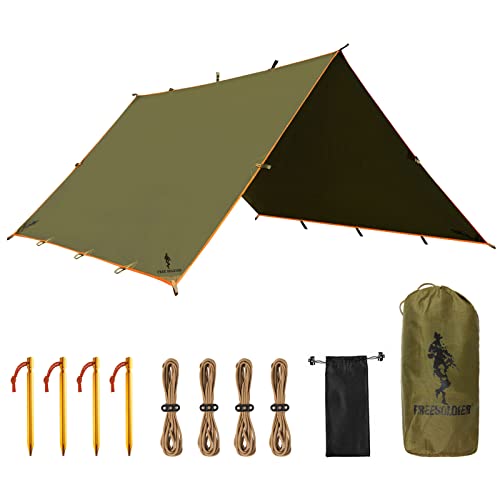
FREE SOLDIER Waterproof Camping Tarp Shelter Awning

Naturnest 270 Car Awning Plus with Access (Passenger Side)

Naturnest 270 Car Awning Plus with LED (Passenger Side)

Rough Country 270-Degree Awning (Drivers Side)

TOPOAK 270 Degree Awning, 83 in Passenger Side

Overland Vehicle Systems HD Nomadic 270 LTE Awning (Passenger Side)

Overland Vehicle Systems HD Nomadic 270 Drivers Side Walls Kit

Nomadic OVS Awning 270 (Passenger Side, Universal Mount)
The Details Behind The Selections
Picture a hammock strung between two trees, with rain rolling in and nowhere to hide. The FREE SOLDIER tarp steps into that exact gap, pulling double duty as a rainfly above a hammock or a sun-blocking awning over a picnic table. Built from 210T ripstop polyester (a tightly woven fabric designed to resist tearing, with threads reinforced in a crosshatch pattern) and rated to PU-2500 (a polyurethane waterproof coating measured against a 2,500 mm hydrostatic head, meaning the fabric can hold back a 2,500 mm column of water before leaking), it shrugs off steady rain without much fuss.
Unlike the vehicle-mounted 270 awnings further down this list, this one is genuinely packable. You can stuff it into a backpack and still have room for a stove and sleeping bag. Backpackers, ultralight weekenders, and hammock enthusiasts who don’t drive a rig will appreciate how little space it eats.
Well-Handled Touches
- PU-2500 waterproof rating holds up against steady downpours, not just drizzle
- Ripstop 210T polyester resists small punctures from branches and pine needles
- Pulls double duty as a hammock rainfly or ground-level tarp shelter
- Packs small enough to slot into a standard 60L backpack without much fuss
Things To Consider
- Tie-out points and ridgeline cordage may need upgrading for serious wind
- Not a 270-degree vehicle-mounted awning, so coverage is limited to the tarp’s footprint
Who It Suits Best
Hammock campers, ultralight backpackers, and anyone setting up a quick shade fly without a roof rack benefit most.
Look Elsewhere When
You drive a truck or SUV and want full 270-degree coverage, in which case the Rough Country 270-Degree Awning offers a vehicle-mounted solution.
Most 270 awnings turn your campsite into a wide-open patio, which is great until you want to change clothes, screen the morning sun, or keep dogs from wandering. The Naturnest 270 Car Awning Plus with Access answers that gap by adding a zippered entry point into the wraparound canopy. You get the same broad shade as a standard 270, plus a more enclosed feel when you want it.
Where this model separates itself from the FREE SOLDIER tarp is scale. With six aluminum support arms and a 280G (grams per square meter, a fabric density measurement where higher numbers mean thicker material) tear-resistant fabric, it spans the side of a truck, SUV, or Jeep and covers up to roughly 12 square meters of ground. Solo campers, small families, and overlanders who treat their rig like a base camp will appreciate the privacy and the reach.
What It Does Well
- Built-in access door creates a more enclosed, room-like feel under the canopy
- Six aluminum arms and 280G fabric give the frame real rigidity in moderate wind
- Wraps roughly three-quarters of the vehicle for wide sun and rain coverage
- Manual retraction keeps things simple, no motor or wiring to troubleshoot
Points To Keep In Mind
- Heavier than a tarp-style shelter, so you’ll need a sturdy roof rack rated for the load
- Access door adds bulk when packed, which may matter on smaller rigs
Made For
Privacy-focused campers, families with kids, and overlanders who treat their rig like a base camp will find the access door genuinely useful.
Consider Something Else When
You camp mostly solo and want the lightest setup possible, in which case the Overland Vehicle Systems HD Nomadic 270 LTE drops the poles entirely.
The sister model to the Naturnest above, this Plus version swaps the access door for an integrated LED strip. The light runs along the frame’s interior edge, casting an even glow over your chairs, table, and camp kitchen without needing a separate lantern rig. Evening cooks and late-night card players get usable light right where it counts.
Like its sibling, the canopy spans a wide 270-degree arc from the passenger side of the vehicle. The 280G fabric is fully waterproof and UV-resistant, meaning the material is treated to block ultraviolet radiation so it doesn’t degrade quickly in harsh sun. Where it pulls ahead of the Rough Country entry later in this list is the integrated lighting, no fumbling for headlamps or stringing work lights after dark.
The Case For It
- Integrated LED light turns the awning into a usable evening workspace
- 280G tear-resistant canopy handles wind gusts better than thinner fabrics
- Manual retract design means fewer moving parts that can fail over time
- Mounts on trucks, SUVs, Jeeps, and vans with standard roof rails
Honest Caveats
- LED strip typically needs a 12V source or portable power station, which adds a small extra piece of gear to your kit
- Manual deployment is fast but still requires two hands and a clear parking spot
Right Fit For
Campers who cook dinner outside, work on laptops at the campsite, or just prefer not to fumble with a headlamp after sunset.
A Better Fit Elsewhere
Privacy ranks higher than lighting for you, in which case the Naturnest 270 Car Awning Plus with Access covers the same footprint with a door instead.
There are 270 awnings, and then there are the kind you can park a truck under and still have room for chairs, a cooler, and a couple of dogs. The Rough Country 270 swings out across roughly 70 square feet of shade from the driver’s side, which is a serious footprint. The PU-2000 waterproof rating (a polyurethane coating measured against a 2,000 mm water column, slightly below the Naturnest’s PU-2500) and 50+ UV rating mean it shrugs off rain and resists sun damage across many seasons.
Compared to the TOPOAK option below, this one is built for trucks and full-size SUVs. Weekend trail rigs, hunters staging out of a pickup, and families running a base camp will find the coverage generous without requiring a permanent roof tent setup.
Everyday Advantages
- 70 square feet of shade handles a full table setup plus standing room
- PU-2000 waterproof coating keeps rain from pooling on the canopy surface
- 50+ UV rating helps the fabric last through harsh summer sun without cracking
- Driver-side mounting suits US-parked vehicles on standard campsites
Trade Offs
- Heavier than smaller-footprint awnings, so your roof rack needs a real crossbar setup
- Larger packed dimensions eat into storage for other recovery or camping gear
Key Specs
Best Suited To
Group campers, hunters, and weekend trail-rig owners who want broad shade without committing to a full permanent awning room.
Not Your Match When
You camp solo from a smaller SUV and want minimal packed weight, in which case the Overland Vehicle Systems HD Nomadic 270 LTE has a lighter twist-and-lock frame.
For SUV owners who count every kilogram in the cargo bay, fabric weight matters more than people realize. The TOPOAK 270 uses a 420D poly-cotton ripstop (a “denier” count measuring the thickness of individual threads, so 420D is midweight; “ripstop” means a reinforcing crosshatch is woven in to halt small tears) with a black coating that blocks UV without piling on the grams. The 83-inch body is sized for SUVs and vans rather than full-size trucks, which keeps the bulk reasonable.
Compared to the heavier Nomadic OVS at the bottom of this list, the TOPOAK uses six adjustable aluminum poles and stainless pegs for stability, and it folds down into a tight package thanks to retractable pole hinges. SUV weekenders and van-lifers who chase varied terrain will like the balance between coverage and packability.
Practical Pluses
- 420D poly-cotton fabric is lighter than 600D alternatives without sacrificing strength
- Black inner coating cuts UV glare and reduces the heat trapped under the canopy
- Six adjustable aluminum poles let you tune the canopy to uneven ground
- Invisible hinge design lets the poles fold flush for compact stowage
Less-Strong Areas
- Lightweight fabric can flutter noisily in steady wind without proper guy lines
- Manual setup still needs both hands free and a level parking spot
Who Should Grab It
SUV and van owners who want meaningful shade without loading down the roof rack will appreciate the lighter footprint.
Skip It When
You need the broadest possible coverage from a full-size truck, in which case the Nomadic OVS Awning 270 stretches wider with heavier 600D material.
The LTE version of OVS’s Nomadic 270 makes one specific promise: no poles required. A twist-and-lock hinge system opens the canopy to 65 square feet of shade without the usual bag of aluminum rods and pegs. For solo travelers arriving at camp after dark or in wind, that simplicity carries real weight.
Where it edges ahead of the Rough Country option above is the heat-sealed seam construction on the 280G poly-cotton fabric, which is a step up from stitched-and-sealed seams in heavy rain. Reinforced oversized hinges and heavy-duty rafters add confidence when the weather turns. Solo overlanders and quick-camp enthusiasts get a premium experience at the cost of more involved mounting.
The Helpful Details
- Twist-and-lock poles mean setup without digging through a parts bag
- 65 square feet covers a generous cooking and lounging area
- Heat-sealed seams reduce leak points compared to stitched construction
- 1000g PVC travel cover (a thick, abrasion-resistant protective sleeve) keeps the canopy clean on long drives
Potential Compromises
- Universal “L” mounting brackets may require drilling or custom fitting on some racks
- Premium build adds weight that lighter roof racks may not love
Quick Facts
Perfect Match For
Solo travelers, quick-camp enthusiasts, and anyone who values a fast pole-free setup over the absolute lightest fabric.
Reach For A Different Pick When
You want the maximum coverage area at a tighter budget, in which case the Nomadic OVS Awning 270 offers a wider 129 square foot canopy.
An open 270 awning is great for shade, but the moment wind kicks up sideways or rain rolls in at an angle, an enclosed setup saves the night. This three-wall kit snaps onto an existing OVS HD Nomadic 270 awning via velcro and zippers, turning an open canopy into a fully walled shelter. The walls use 280G poly-cotton ripstop with heat-sealed seams for the same waterproof confidence as the main awning above.
Unlike the Naturnest Plus Access earlier in this list, these walls are a separate accessory rather than a built-in feature. OVS owners who already run the Nomadic 270 will see an obvious upgrade path here, especially for shoulder-season camping where weather shifts quickly.
A Few Highlights
- Velcro and zipper attachment makes the wall setup genuinely fast once you know the sequence
- 280G poly-cotton fabric matches the main awning so there are no weak seam points
- Three-wall coverage creates a wind-buffered cooking or sleeping space
Practical Considerations
- Only fits the OVS HD Nomadic 270 Drivers Side awning, so it’s a niche upgrade
- Owners commonly report needing a second person to hold walls steady during initial velcro alignment
Who Will Love This
Existing OVS HD Nomadic 270 owners who camp in shoulder seasons or windy sites will get the most out of these walls.
Where A Sibling Pick Shines
You don’t already own an OVS awning, in which case the Naturnest 270 Car Awning Plus with Access delivers built-in privacy out of the box.
The original Nomadic 270 that helped define this category. It spans 129 square feet of coverage, which is the largest footprint in this roundup, supported by pivoting aluminum poles and 600D poly-cotton ripstop (a heavier thread count than the TOPOAK’s 420D, so it handles abrasion better but adds weight) with heat-sealed seams. The dark gray canopy with a black PVC travel cover looks understated on any rig.
Compared to the LTE version further up, this one uses traditional poles rather than twist-and-lock hinges, which means slightly more parts to manage but a lower entry barrier for first-time owners. Full-size truck and SUV owners who want the broadest possible base of shade will find this hard to beat.
Positive Takeaways
- 129 square feet of coverage is the widest footprint on this list
- 600D poly-cotton ripstop handles abrasion from branches and grit
- Pivoting aluminum poles deploy quickly with a one-person routine once practiced
- 1000D PVC travel cover (a thick, abrasion-resistant protective sleeve) protects the canopy on long highway stretches
Worth Bearing In Mind
- Heavier than the LTE and TOPOAK options, so smaller SUVs may struggle with the load
- Pole-based deployment takes longer than twist-and-lock alternatives in heavy weather
Feature Card
Built With In Mind
Full-size truck and SUV owners who want the widest 270-degree shade coverage available, and who don’t mind a slightly heavier packed weight.
Swap It Out When
You want a faster pole-free deployment, in which case the Overland Vehicle Systems HD Nomadic 270 LTE cuts setup steps with twist-and-lock hardware.
What To Weigh Before Choosing Your Awning
A 270 awning looks similar in photos, but the differences show up the second you deploy it at a campsite. The right pick depends on your rig, your group size, and how often you actually want to set things up solo.
Coverage Footprint Versus Rig Size
Coverage numbers range from about 65 to 129 square feet across this list, which sounds like a small gap but plays out very differently. A solo SUV owner pulling into tight dispersed camps doesn’t need 129 square feet of shade, and the bulk that comes with it. Smaller rigs benefit more from the 65-square-foot LTE or the mid-sized TOPOAK. Full-size trucks and families running base camp setups get obvious value from the wider Nomadic OVS or Rough Country footprints.
Mounting Style And Roof Rack Strength
Every 270 awning in this roundup depends on a roof rack or crossbar system. The LTE uses universal L-brackets that fit most aftermarket setups, while heavier options like the Nomadic OVS put more stress on crossbars over time. Before committing, check your rack’s dynamic weight rating (the maximum load the rack is engineered to handle while driving on uneven terrain) and consider how often you’ll be loading and unloading. For dedicated overlanders, integrated roof rack platforms handle these awnings more confidently than basic crossbars.
Fabric Weight And Climate
Fabric denier ratings matter more than most shoppers realize. Lighter 280G and 420D fabrics are easier to deploy solo and pack smaller, but they flutter in steady wind. Heavier 600D poly-cotton stays taut longer and resists abrasion from grit and branches, which matters for desert and forest travel. Climate plays into this: dry, sunny sites favor lighter fabric with strong UV coatings; wet, coastal, or alpine trips reward the heavier heat-sealed options.
Practical Add-Ons And Modularity
Built-in features like the Naturnest access door and LED strip add real convenience, but modular kits like the OVS wall system let you build out gradually. If you don’t already own a compatible awning, that modular path means extra cost down the line. Decide upfront whether you want a complete out-of-the-box experience or a system you can expand as your rig evolves.
Key Considerations Across These Picks
Common Buying Slip Ups
The most common mistake is choosing a 270 awning purely on coverage without checking roof rack capacity. A 129-square-foot canopy sounds appealing until you realize the packed weight pushes your crossbars past their dynamic rating. Another misstep is overlooking the LED or access door as a small feature, when in practice these details reshape how the awning works day-to-day. Measure twice, especially the rack width and the awning’s body length, before committing.
Where The Extra Money Goes
Premium options like the OVS HD Nomadic 270 LTE charge more for the twist-and-lock hinge system and the heavier travel cover, which together speed up setup and extend service life. Mid-tier picks often skip those refinements to hit a friendlier budget. The honest read is that the upgrade pays off for campers who deploy weekly or in mixed weather; occasional weekend users may not notice the difference enough to justify the step up.