
A 20-foot flagpole turns a plain front lawn into a statement, but only if it survives the first thunderstorm. You want something that stands straight through coastal gusts, holds a finish after years of UV, and doesn’t require a handyman every time you swap out a flag. This guide covers telescoping and sectional aluminum poles designed for in-ground residential install, sorted by what they actually deliver on wind rating, build quality, and everyday handling.
The Shortlist At A Glance

IIOPE 20FT Telescoping Flag Pole 9 Gauge Aluminum

IIOPE 20FT Heavy Duty Flag Pole 12 Gauge Aluminum

IIOPE 20FT Heavy Duty Flag Pole 90MPH Wind Tested

IIOPE 20FT Heavy Duty Flag Pole 10 Gauge Aluminum
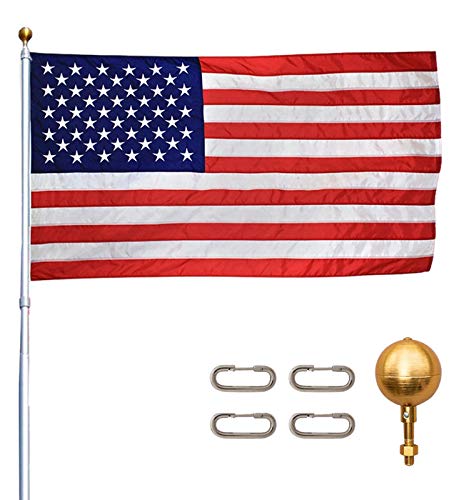
TITAN Telescoping Flagpole 20ft Silver USA Made

IIOPE 20FT Heavy Duty Tapered Flag Pole Kit 100MPH

IIOPE 20FT Flag Pole with Solar Light 10 Gauge

IIOPE 20FT Telescoping Flag Pole Extra Thick with US Flag

Service First Silver 20FT Telescoping Flagpole Kit
The Strengths Of Each Pick
If you live somewhere the wind treats fence posts like chew toys, this IIOPE pole earns its place. The 9-gauge aluminum (a thicker wall measurement than the 14- or 15-gauge poles you’ll see on bargain listings) holds shape when gusts stack up, and the telescoping design collapses down for off-season storage without dragging out a toolbox.
It’s the kind of pole you set once, flag the dog days of summer, and largely forget about. Compared to the heavier 12-gauge option further down the list, this one trades a little raw stiffness for easier daily handling, which matters when you’re raising and lowering on your own.
Features That Help
- True 9-gauge aluminum wall thickness resists bending under repeated gust cycles
- Wind-rated design tolerates sustained 120 MPH conditions
- Twist-lock mechanism lets you raise or lower sections by hand, no tools required
- Corrosion-resistant finish holds up to multi-year sun and rain exposure
- Telescoping sections shorten storage footprint to roughly 4 feet when collapsed
Things To Consider
- Aluminum finish can scuff during shipping, so inspect the tubes before install
- Installation depth depends on your soil; rocky ground may call for a sleeve
Feature Snapshot
Who Will Love This
Homeowners in coastal or storm-prone regions who want a pole they can leave up year-round.
A Better Fit Elsewhere
Skip this if you want a bundled flag and hardware kit out of the box; the IIOPE 20FT Telescoping Flag Pole Extra Thick with US Flag ships ready-to-fly.
Step up from the 9-gauge pole and you land on this 12-gauge wall, the thickest aluminum in the lineup. Lower gauge numbers mean thicker walls, so this is the choice when your yard sits on an exposed hilltop or you fly a heavier flag year-round. The wider 2.0-inch bottom tube adds real ground stability, which keeps the pole from rocking in sustained crosswinds.
It’s noticeably stiffer than the entry-level telescoping picks, and that stiffness cuts both ways: more confident in storms, slightly more awkward to telescope solo. For most residential lawns the trade-off feels right.
The Value In It
- 12-gauge aluminum outguns typical 15- or 16-gauge competitor poles on dent resistance
- 2.0-inch base tube anchors firmly in standard in-ground sleeves
- Tested to handle 100 MPH winds without permanent deformation
- Rust-resistant aluminum keeps its silver finish across multiple seasons
Trade Offs
- Heavier gauge makes solo installation a two-person job in softer soils
- Stiffer tubes mean less forgiveness if a basketball hits the lawn
- Higher-end wall thickness comes at a cost premium over thinner options
Made For
Owners of open-lot or hilltop properties where wind exposure is the daily reality.
Consider Something Else When
If you want a sleeker silhouette and don’t need maximum stiffness, the IIOPE 20FT Heavy Duty Tapered Flag Pole Kit 100MPH trades raw gauge for an aero-friendly taper.
Not every yard needs a coastal-grade pole. This 13-gauge aluminum model targets the middle: strong enough to shrug off 90 MPH gusts, lighter than the 12-gauge flagship, and easier on the budget. The Brinell hardness rating (a standardized scratch-resistance score, where higher numbers mean tougher surfaces) hits 55, which puts the surface in the same league as some hard-anodized cookware.
Compared to the 9-gauge pick above, you give up a little wall thickness but gain a sleeker black finish that blends into landscaping. It’s the everyday workhorse choice.
Everyday Wins
- Brinell hardness of 55 resists scratches during routine flag changes
- 90 MPH wind tolerance covers most non-coastal storm events
- Black powder-style finish hides minor dust and pollen between cleanings
- 13-gauge aluminum balances stiffness and manageable weight for solo install
Room For Improvement
- Wind rating trails the 100- and 120 MPH models in extreme conditions
- Black finish can show hard-water spots if you rinse without drying
Right Fit For
Suburban homeowners who want storm-rated durability without stepping up to commercial-grade gauge.
Look Elsewhere When
Skip this if you fly flags through nor’easter season; the IIOPE 20FT Heavy Duty Flag Pole 12 Gauge Aluminum is rated for stronger gusts.
The 10-gauge wall sits one step thicker than the 9-gauge entry pole, which sounds subtle until you remember the joints on telescoping poles take the most abuse. This one adds a reinforced anti-break ring at the connection points, the spots where thinner poles tend to crack after a few seasonal cycles of raising and lowering.
For homeowners who raise and lower their flag two or three times a week, those reinforced joints matter more than headline wind numbers.
Where It Excels
- Anti-break ring design targets the most common telescoping failure point
- 10-gauge aluminum balances daily handling with dent resistance
- Rust-resistant treatment suits humid Gulf and Atlantic climates
- Smooth-glide section locks prevent the mid-flagpole drift thinner poles develop
Honest Caveats
- Wind rating sits below the 100 and 120 MPH specialty poles
- Locking mechanism can stiffen in extreme cold, so winter installers may need patience
Quick Facts
Best Suited To
Frequent flag changers who raise and lower poles more often than seasonal decorators.
Reach For A Different Pick When
If you rarely touch the pole after install, the IIOPE 20FT Heavy Duty Flag Pole 12 Gauge Aluminum delivers thicker walls at a higher tier.
TITAN ships a complete turnkey kit, which separates it from the bare-pole options elsewhere in this list. You get the anodized aluminum telescoping pole (anodizing is an electrochemical finish that bonds color into the metal surface), a 4×6 American flag, hardware for two flags, and assembly instructions that don’t assume you’re a contractor. For someone installing their first pole, that bundle saves a weekend of separate orders.
The anodized silver finish holds its color longer than paint, and the kit has been around long enough that replacement parts and accessories are easy to source.
Where It Delivers
- Complete kit includes pole, 4×6 American flag, and dual-flag hardware
- Anodized aluminum resists fading better than painted finishes
- Domestic assembly simplifies warranty and replacement-part questions
- Telescoping design collapses for hurricane-season takedown
Points To Note
- Wall gauge is lighter than the IIOPE heavy-duty options for raw wind tolerance
- Bundle price reflects the included flag and hardware, so comparison shopping needs the full picture
Spec Overview
Who Should Grab It
First-time installers and holiday decorators who want a complete bundle in a single delivery.
Swap It Out When
For maximum storm rating, swap to the IIOPE 20FT Heavy Duty Flag Pole 12 Gauge Aluminum, which trades the bundled flag for thicker aluminum walls.
Most residential flagpoles are straight cylinders, which is fine until physics reminds you that uniform tubes catch uniform wind. This IIOPE design tapers from a 2.4-inch base down to 1.72 inches at the top, and that gradual taper sheds wind pressure that would stress a uniform pole. The result is a profile that looks more architectural than utilitarian.
For prairie homes or open coastal lots, that geometry is doing real work, not just looking nice.
What Stands Out
- 2.4-inch oversize base tube resists wobble during squall lines
- Gradual taper from 2.4 to 1.72 inches reduces wind drag at the top of the pole
- 100 MPH wind-tested rating covers serious storm exposure
- Tapered silhouette looks more substantial than uniform-cylinder competitors
Small Limitations
- Tapered profile can complicate finding replacement finials (top ornaments)
- Larger base tube may not fit standard off-the-shelf sleeves from other brands
Built With In Mind
Homeowners in wind-exposed regions who care about both performance and a more architectural yard silhouette.
Where Another Pick Suits Better
If you want a uniform cylinder and the broadest accessory compatibility, the IIOPE 20FT Heavy Duty Flag Pole 12 Gauge Aluminum keeps things standard.
Most flagpoles disappear after sunset, which is a missed opportunity if your flag is the focal point of the front yard. This IIOPE model integrates a solar cap light that charges during the day and illuminates the flag after dark, no wiring, no electrician, no trenching across the lawn.
The pole itself uses the same 10-gauge aluminum as the non-lit sibling, so you’re not trading structural integrity for the lighting feature.
Useful Highlights
- Integrated solar cap light illuminates flags from dusk through the night
- 10-gauge aluminum wall matches the structural rating of the standard model
- No external wiring simplifies installation in finished landscaping
- Solar charging works through cloudy stretches common in northern climates
Practical Considerations
- Solar panel needs direct daytime sun; shaded installs reduce night brightness
- Battery replacement eventually required, though typically after several seasons
- Lighted top adds a small amount of weight to the upper section
Whose Shelf It Belongs On
Homeowners who want the flag visible around the clock for curb appeal and security awareness.
Not Your Match When
If your pole sits under heavy tree canopy, the IIOPE 20FT Telescoping Flag Pole 9 Gauge Aluminum skips the solar feature entirely.
First flagpole install? This is the path of least resistance. The kit ships with a US flag, the 14-gauge aluminum pole, and a smooth-glide telescoping lock that’s noticeably more forgiving than the twist-lock systems on some heavier picks. Where the 9- and 12-gauge poles assume you’ve read a manual, this one walks you through it.
For a yard with mild wind exposure and a one-flag-per-season routine, it covers the basics without overbuilding.
Advantages To Know
- Bundle includes a US flag, so you skip the separate accessory order
- Smooth-glide telescoping sections lock without the pinch risk of twist designs
- Fade-resistant coating keeps the silver finish presentable across seasons
- 14-gauge aluminum keeps total weight manageable for solo installers
Where It Is Less Suited
- 14-gauge wall is thinner than the 9- and 12-gauge heavy-duty options
- Wind tolerance lags behind the storm-rated 100 and 120 MPH poles
- Coated finish can show wear sooner than anodized alternatives
Perfect Match For
New flag owners setting up their first pole in a calm suburban yard.
Skip It When
For high-wind locations, jump to the Service First Silver 20FT Telescoping Flagpole Kit, which includes the anti-tangle swivel ring.
There’s a specific frustration that flag owners know: the halyard (the rope that runs up the pole to raise and lower the flag) wraps around the shaft after a windy week, and suddenly your flag is tangled at half-mast. The Service First kit solves this with a swivel ring design that lets the rope rotate freely around the pole, so a stiff breeze won’t lock the flag in a knot.
The brand is veteran-owned and runs US-based support, which helps when a part needs replacing rather than a full swap.
Real-World Strengths
- Anti-tangle swivel ring prevents halyard wrap during sustained wind
- 100 MPH wind-tested rating covers most residential storm exposure
- US-based company offers installation guidance and warranty support
- Telescoping aluminum collapses for seasonal storage or storm prep
Some Limits To Know
- Swivel ring adds moving parts that may need occasional lubrication
- Wall gauge is lighter than the 9- and 12-gauge heavy-duty IIOPE options
Key Product Details
The Right Fit
Homeowners in consistently windy spots who have battled halyard tangles on previous poles.
Another Choice May Suit
If you prefer the absolute thickest wall and don’t mind occasional halyard maintenance, the IIOPE 20FT Heavy Duty Flag Pole 12 Gauge Aluminum is the stiffer pick.
What To Weigh Before Choosing 20ft Flag Poles
Aluminum Wall Gauge And Wind Rating
Gauge determines how the pole feels in a gale. Lower numbers mean thicker walls, and thicker walls mean less flex, less dent risk, and longer service life. Most residential buyers don’t need 12-gauge commercial-grade aluminum, but anything thinner than 14-gauge can feel flimsy in steady 30 MPH gusts.
Match the wind rating to your region rather than chasing the highest number. A 90 MPH tested pole handles most inland storms; coastal and hilltop installs justify the 100 and 120 MPH options.
Telescoping Versus Sectional Assembly
Telescoping poles nest inside each other for compact storage and ship in shorter boxes, which matters for tight driveways and apartment delivery. Sectional poles screw together with threaded joints and tend to feel more rigid once installed, but they take longer to raise and lower.
For most homeowners, telescoping wins on convenience. Sectional makes sense if your pole never comes down once installed.
Finish, Coatings, And Halyard Hardware
Anodized finishes (electrochemically bonded color) outlast painted and powder-coated surfaces over multi-year sun exposure. Solar cap lights, swivel halyard rings, and gold ball finials are all worthwhile upgrades if the bundle includes them. The halyard rope is the most common replacement part, so a kit with a quality rope saves a future order.
Soil, Sleeves, And Installation Reality
In-ground installation depth varies by soil type. Sandy or loose soil calls for a sleeve or concrete collar; clay and rocky ground can anchor a pole with less fuss. A 2.0-inch or larger base tube gives the sleeve more surface area to grip, which reduces wobble over time.
Common Ground Before You Buy
Where Shoppers Go Wrong
The most common mistake is matching pole height to the house and ignoring the tree line. A 20-foot pole tucked between two mature oaks loses visual impact and catches branches in storms. Walk the yard at different times of day to confirm the pole will have open sky above it before ordering.
The Case For Spending Up
Higher-tier poles earn their keep on three points: thicker aluminum that resists denting from falling branches, anodized finishes that hold color across a decade of UV, and reinforced joint hardware that survives frequent telescoping. Pay more if your flag comes down for winter or hurricane warnings; save if the pole lives in the ground undisturbed for years at a stretch.
Frequently Asked Questions
How deep should a 20ft flag pole be set in the ground?
Most residential in-ground flagpoles need a sleeve or collar extending roughly 18 to 24 inches into the soil, with concrete around the base for stability in loose or sandy ground. Always check your local frost line if you live in a region with deep winter freezes.
Can a 20ft flagpole handle a 3×5 foot American flag?
A 3×5 foot flag pairs comfortably with a 20-foot residential pole, and the proportions look right from the curb. Heavier or double-sided flags may warrant thicker gauge aluminum for everyday use, especially in wind-prone regions.
How often should you raise and lower a telescoping flagpole?
For seasonal flags, raising and lowering two or four times a year is typical. Daily raisers should look for reinforced anti-break joint designs, since thinner telescoping seams wear faster under frequent section movement.
Do solar flagpole lights work in cloudy climates?
Solar cap lights charge through overcast skies, though brightness and runtime drop on consecutive gray days. Northern homeowners may notice shorter illumination in winter compared to summer months.
What’s the difference between anodized and painted aluminum finishes?
Anodizing bonds color into the metal surface at a chemical level, while paint or powder coat sits on top as a separate layer. Anodized finishes resist UV fade and chipping longer, which matters for a pole that sees years of direct sun.
Wrap Up
A 20-foot flagpole earns its keep by staying straight through weather and looking sharp from the curb. The right pick depends on your wind exposure, how often you swap flags, and whether you need a complete bundle or just the pole itself. Match the gauge and wind rating to your region, and you’ll have a setup that flies clean for many seasons to come.