
A reel mower trades engine noise for a quieter, lighter workout and a noticeably cleaner cut on small lawns. If your yard sits under a quarter acre and you’d rather skip gas, oil, and the pull-start routine, this category rewards a closer look. The ten picks below cover everything from a 14-inch strip cutter to a 20-inch workhorse, with cutting widths chosen to match common lawn sizes and stride lengths.
Your Options, Compared

LawnMaster LMRM1401 Push Reel Lawn Mower 14-Inch 5-Blade

LawnMaster LMRM1602 Push Reel Lawn Mower 16-Inch 5-Blade

LawnMaster LMRM1801 Push Reel Lawn Mower 18-Inch 5-Blade

American Lawn Mower 1304-14GC 14-Inch Reel Mower with Grass Catcher
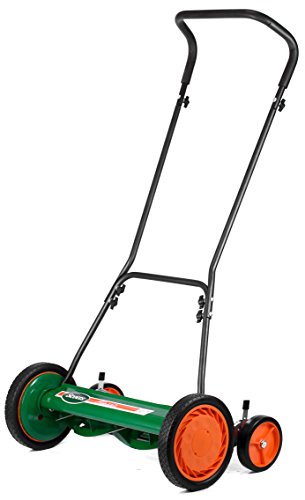
Scotts 2000-20S 20-Inch 5-Blade Push Reel Lawn Mower

American Lawn Mower 1815-18 18-Inch 5-Blade Push Reel Lawn Mower
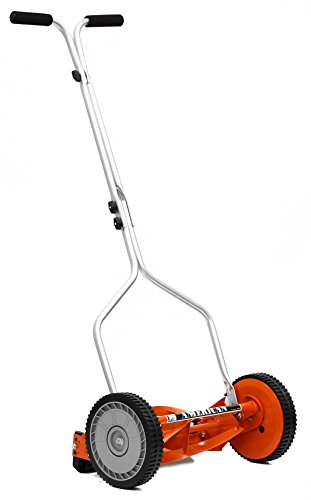
American Lawn Mower 1204-14 14-Inch 4-Blade Push Reel Lawn Mower

Earthwise 2001-20EW 20-Inch 5-Blade Push Reel Lawn Mower

20-Inch Push Reel Mower with 9 Height Adjustments

LawnMaster LMRM2001 20-Inch 5-Blade Push Reel Lawn Mower
A Deeper Look At The Lineup
LawnMaster’s 14-inch entry is built for narrow side yards, townhouse strips, and any lawn where you end up backing up and repositioning more than you mow. The 14-inch cutting width keeps the frame compact, which pays off around landscaping beds and tight corners. Compared to the 16-inch LMRM1602 later in the lineup, you’ll take more passes but gain easier handling.
Cut height runs from about 1 inch to 2.5 inches across four positions, so it handles common cool-season turf without issue. The 10-inch front wheels roll over small bumps without dragging, and the motorless design means no pull cord, no gas can, and very little noise. You may find the narrow deck means extra walking on yards bigger than roughly 1,500 square feet, but for tight spaces that’s a fair trade.
Where It Helps
- Narrow deck navigates tight corners and narrow gates with little repositioning.
- Four cut-height steps cover the most common lawn preferences for cool-season grass.
- Zero fuel or cord maintenance means storage is as simple as leaning it in a shed corner.
Trade-Offs To Consider
- More passes mean longer mowing sessions on anything bigger than a small patch.
- Reel blades cut best when grass is dry and not overgrown; very tall grass may need a second pass.
Whose Lawn It Belongs On
Best suited to a townhouse or small urban lot under about 1,500 square feet with mostly flat ground.
A Better Fit Elsewhere
The LawnMaster LMRM2001 covers a wider path for shoppers with a flatter, larger yard.
The 16-inch LMRM1602 sits in the comfortable middle of LawnMaster’s reel lineup, and for most small backyards that balance is the point. Two extra inches of deck over the LMRM1401 trim your mowing time without making the mower feel bulky. Push effort stays manageable, and the frame still slips past most gates and along fence lines.
Cut height runs across four positions from about 1 inch to 2.5 inches, matching the smaller sibling. The 10-inch front wheels track the same as the 14-inch model, so handling feels familiar if you’ve used a reel mower before. For most suburban lawns under roughly 2,000 square feet, the extra width is meaningful without overcommitting to a heavier deck.
The Case For It
- Wider deck shaves time off weekly mowing without bulking up the frame.
- Same proven height range as the 14-inch model, simplifying grass-length choices.
- Motorless operation keeps neighbors happy on early-morning mow days.
Honest Caveats
- Still not wide enough to keep up with larger yards without serious walking.
- Polymer tread can slip on damp, sloped turf if pushed too fast.
Best Suited To
A typical suburban yard around 1,500 to 2,000 square feet with mostly flat ground and a few garden beds.
Reach For A Different Pick When
The Scotts 2000-20S is worth a look for shoppers with broader, open lawns who want a 20-inch path.
The LMRM1801 steps up the cut-height flexibility while widening the deck to 18 inches, which makes it the most adjustable of LawnMaster’s smaller models. Nine height positions from roughly 1.1 inches to 2.5 inches let you dial in everything from a tight summer cut to a slightly taller mid-spring length. That’s a meaningful upgrade from the four-step LMRM1602 if your lawn care routine changes with the season.
The frame still rides on 10-inch front wheels, so maneuverability stays close to the rest of the LawnMaster family. Owners commonly report that the wider deck starts to feel like work past roughly 2,500 square feet, but for mid-size yards it’s a sweet spot. Compared to the 16-inch sibling, you’re trading a touch of agility for noticeably fewer passes.
What Helps Most
- Nine height positions handle seasonal changes and mixed turf types.
- Wider deck reduces mowing time on small-to-mid lawns without a heavy frame.
- Same low-noise, motorless design as the rest of the LawnMaster line.
Where It Falls Short
- Push effort increases on slopes, especially when grass is tall and damp.
- Storage footprint grows enough to matter in a narrow shed or garage corner.
The Right Fit
Yard owners who rotate between shorter summer cuts and longer spring growth on a small-to-mid lawn.
Consider Something Else When
The American Lawn Mower 1815-18 fits shoppers who need a wider height range, including very short cuts.
The 1304-14GC is the only reel mower in this roundup that ships with a grass catcher, and that single addition changes the post-mow routine for many shoppers. Clippings drop into the catcher instead of staying on the lawn, which is helpful if you mow frequently and want a tidy look without raking. Heat-treated alloy steel blades hold their edge across many seasons of regular use.
The deck is a compact 14 inches, with cut heights from about 1 inch to 2.25 inches, narrower than the LawnMaster models. Polymer wheels keep the frame light and resistant to rust. For shoppers who care more about clean appearance than cutting speed, the catcher alone makes this a practical pick.
Features That Help
- Built-in catcher collects clippings, reducing raking time after each mow.
- Alloy-steel reel resists dulling across seasons of weekly use.
- Lightweight polymer wheels stay rust-free and roll quietly on paved paths.
Softer Spots
- 14-inch deck means more passes than the wider picks in this list.
- Catcher adds bulk that may not fit standard mower-storage hooks.
Who It Suits Best
Yard owners who mow for appearance and prefer clippings collected rather than left on the lawn.
Look Elsewhere When
The LawnMaster LMRM2001 covers more ground per pass for shoppers with a wider flat lawn.
The Scotts 2000-20S is the classic wide-deck reel mower, and it has earned that reputation over years of service in flat, open yards. A 20-inch cutting width and ball-bearing reel keep push effort low while trimming mowing time substantially. The dual tracking wheels give it a straight, predictable path that helps when laying clean stripes.
Cut height runs from about 1 inch to 3 inches using a quick-snap adjustment, which is the widest range in this roundup. That span handles everything from a tight bentgrass cut to a longer summer length. For shoppers with a roughly 3,000 to 5,000 square foot lawn, the 20-inch deck is where reel mowing starts to feel genuinely efficient.
Notable Upsides
- Wide 20-inch deck reduces mowing time on larger small lawns.
- 1- to 3-inch height range covers the broadest grass-length range in this list.
- Ball-bearing reel keeps the cut smooth and the push easy for a wide-deck design.
Points To Keep In Mind
- Wider deck is harder to maneuver in tight landscaped yards.
- Sharp reel blades are great for grass, less great for small stones left on the lawn.
Feature Snapshot
Made For
Homeowners with flat, open lawns up to roughly 5,000 square feet who want a wide, efficient cut.
Skip It When
The American Lawn Mower 1204-14 suits shoppers with very small lawns who need a lighter frame.
The 1815-18 sits in a useful middle ground between narrow 14-inch reels and full 20-inch workhorses. Its 18-inch deck cuts mowing time noticeably without giving up much in tight spaces. The standout feature is the unusually wide cut-height range, going from a half inch up to about 2.75 inches.
That low end of the range is what really differentiates this model, and it lets shoppers tackle very short warm-season turf like Bermuda or Zoysia at their tightest setting. Five heat-treated blades keep the cut clean, and the smooth polymer wheels handle paved paths without complaint. The manufacturer pairs the mower with a multi-year protection plan that helps if anything goes wrong in early seasons.
Bright Spots
- Half-inch minimum height opens the door to short-cut warm-season turf.
- 18-inch deck balances speed and maneuverability for mid-size lawns.
- Manufacturer protection plan adds a layer of confidence after purchase.
Small Caveats
- Very low cut heights require a flat, well-maintained lawn to look right.
- Push effort rises noticeably when grass is wet or the reel needs cleaning.
Who Should Grab It
Shoppers with warm-season grass who want the shortest possible cut without switching to a power mower.
Swap It Out When
The LawnMaster LMRM1801 fits shoppers who want a wider height range without going quite as short.
The 1204-14 is the lightest reel mower in this roundup at roughly 19 pounds, and that weight matters when the mower has to come out of a tight closet or up basement steps. The 14-inch deck is small, but for genuinely compact lawns that’s a feature, not a compromise. Polymer wheels measure 8.5 inches, slightly smaller than the other models, which keeps the footprint tight.
Cut height runs from about 0.5 inches to 1.75 inches, designed for shorter turf kept under 4 inches tall. Four blades instead of five means slightly fewer cutting edges per rotation, which is fine on well-tended grass but less ideal for neglected lawns. Compared to the heavier 1304-14GC with the catcher, this is the bare-bones, easy-to-store option.
Useful Strengths
- Around 19-pound frame makes it easy to carry and store in tight spots.
- Compact 14-inch deck fits narrow gates and tight side-yard entries.
- Short minimum cut height handles tidy, low-cut turf varieties well.
Factors To Consider
- Eight-and-a-half-inch wheels can sink into soft ground more than larger wheels.
- Limited height range rules it out for shoppers who like a longer summer cut.
Perfect Match For
Apartment dwellers, retirees, or anyone with a very small patch of well-kept grass.
Consider Something Else When
The Scotts 2000-20S suits shoppers with broader lawns who can use a wider 20-inch deck.
Earthwise’s 2001-20EW sits in the wide-deck category right alongside the Scotts 2000-20S, with a 20-inch deck and 5-blade reel built for efficient, quiet mowing. There’s no motor, no oil, and no fumes, which is the core appeal for shoppers wanting to skip the maintenance of a gas mower. The polymer wheel design rolls smoothly on paved paths and resists rust over time.
The Earthwise model is well-suited to flat lawns where the wide deck pays off in fewer passes. Push effort is moderate on level ground but climbs on slopes or in tall grass. For shoppers who value quiet operation and a clean cut over raw speed, this is a sensible alternative to the Scotts classic.
Noteworthy Benefits
- 20-inch deck cuts mowing time on mid-to-larger small lawns.
- Motorless design keeps noise low for early-morning mowing.
- Polymer wheels resist rust and roll quietly on hard surfaces.
Points To Note
- Wide deck is harder to steer around dense landscaping.
- Tall, wet grass can clog the reel until cleaned and dried.
Built With In Mind
Shoppers with flat, open lawns who want a quiet alternative to a gas mower without sacrificing deck width.
Not Your Match When
The American Lawn Mower 1204-14 is a better choice for very small lawns where a lighter frame matters more than width.
This Gagalayong 20-inch reel mower leans heavily into cut-height adjustability, with nine positions spanning roughly 1.33 inches to 2.51 inches. For shoppers who fine-tune their grass length through the year, that range opens up more dialing than most reel mowers in this price bracket. A simple lever-style handle switches positions without tools.
The 20-inch deck matches the Scotts and Earthwise models for coverage, which puts this pick in the wide-deck category rather than the small-lawn one. The internal blade structure is designed to resist jamming from clippings during normal use. Owners commonly find it works best on flat ground where the wide deck can track in straight, even lines.
Reasons It Performs
- Nine-step height range gives finer seasonal control than most rivals.
- Wide 20-inch deck handles mid-size lawns efficiently.
- Lever adjustment makes height changes quick and tool-free.
A Few Limitations
- Wide deck is harder to maneuver around dense flower beds.
- Less established brand presence than Scotts or American Lawn Mower Company.
Quick Facts
Who Will Love This
Yard owners who like to fine-tune their grass length across spring, summer, and fall.
Look Elsewhere When
The Scotts 2000-20S is worth a look for shoppers who want a longer-established name with a similar deck width.
The LMRM2001 caps LawnMaster’s reel lineup with a 20-inch deck and nine cut-height positions running from roughly 1.3 inches to 2.6 inches. That combination is a natural fit for shoppers who want the brand’s modern frame with the time savings of a wider deck. Compared to the LMRM1801, you’re trading a touch of agility for noticeably fewer passes.
The 10-inch front wheels handle small bumps and turns without drama, and the motorless design keeps storage and maintenance simple. For flat lawns up to roughly 4,000 square feet, this is the size where reel mowing stops feeling like a workout. The build leans toward consistent weekly use rather than heavy reclamation of overgrown grass.
Key Advantages
- 20-inch deck and 9-step height range balance coverage and fine adjustment.
- Modern frame design feels easier to push than older wide-deck reels.
- Motorless operation means storage is just a corner of the shed.
Some Limits To Know
- Wide deck demands more open space for tight turning patterns.
- Not built for tall, neglected grass; weekly maintenance cuts work best.
Feature Snapshot
Made For
Homeowners with mid-size flat lawns who want a wide deck with flexible height adjustment.
Skip It When
The American Lawn Mower 1815-18 fits shoppers who want a shorter minimum cut height for warm-season grass.
What To Weigh Before Choosing A 20 Reel Mower
Cutting width is the first number to match against lawn size. A 14-inch deck makes sense up to roughly 1,500 square feet, while 18 to 20 inches starts to pay off once you cross about 2,000 square feet. Going wider shortens mowing time but makes tight beds and narrow gates harder to navigate.
Cut-height range matters more than most shoppers expect. A 1-inch to 2.5-inch range handles most cool-season turf, but if you grow Bermuda or Zoysia, look for a minimum setting below 1 inch. Nine-step adjustments are noticeably more flexible than four-step designs, especially for seasonal transitions.
Wheel size and material influence the push. Larger polymer wheels (10 inches) roll over small bumps and damp grass better than 8.5-inch wheels, which can dig into soft soil. Alloy-steel reel blades hold an edge longer than basic steel, reducing how often you’ll need a sharpening.
The reel-mower category has no engines, no oil, and no batteries, so storage is simpler than for powered mowers. The honest trade-off is that reel mowers work best on grass kept under 4 inches tall, and they demand more frequent cutting than rotary mowers. Shoppers who let grass grow long between cuts will find reel mowing more frustrating than helpful.
Common Buying Slip Ups To Avoid
Wrong Turns To Avoid
Don’t pick a deck width based on price alone. A 14-inch model saves money upfront but adds walking time on anything bigger than a postage-stamp yard. Equally, a 20-inch deck on a tiny lot is just harder to steer without giving back much in time saved.
Where Shoppers Go Wrong
Ignoring grass type is a frequent miss. Reel mowers excel on cool-season grasses like fescue and bluegrass, and they handle warm-season turf like Bermuda well only if the model goes below 1 inch. Mismatched height range is the most common reason a reel mower feels underwhelming after a few weeks.
Frequently Asked Questions
How often should you mow with a reel mower?
Most cool-season lawns do best with a reel mow every 5 to 7 days during the growing season. Cutting more often keeps grass short enough that the reel can slice cleanly rather than bend taller blades over.
Can a reel mower handle tall grass?
Reel mowers work best on grass kept under about 4 inches. For taller, overgrown grass, expect to make a second pass or raise the cut height for the first pass and then lower it a day later. Pushing through very tall grass strains the reel and dulls blades faster.
Do reel mowers work on uneven lawns?
Small bumps and mild undulations are fine, but a reel mower struggles on deeply uneven ground because the reel-to-bedknife contact depends on consistent height. For rough terrain, a rotary mower is the more practical tool.
How do you sharpen a reel mower blade?
Most home owners send the reel to a sharpening service or use a reel-sharpening kit with lapping compound. The process involves back-spinning the reel with abrasive paste across the bedknife until the cutting edges meet cleanly across the full width.
Are reel mowers quieter than electric mowers?
Yes, by a wide margin. A reel mower makes only the soft sound of blades slicing grass and wheels rolling over the lawn, which is why they’re common in noise-restricted neighborhoods and early-morning mowing routines.
Wrap Up
A good reel mower rewards frequent, light mowing with a clean, scissor-like cut and almost no maintenance overhead. Match the deck width to your lawn size, check the cut-height range against your grass type, and confirm the wheels and build suit your terrain. Any of the ten picks above will keep a small lawn tidy, quiet, and easy to manage, so the right one comes down to your yard’s shape and your preferred grass length.