
Camping with family or friends gets tricky when everyone’s piled into one space. A 2 room tent solves that by splitting sleepers from gear, kids from parents, or dining from sleeping zones. The right shelter depends on group size, climate, and how often you actually set it up versus leave it at a basecamp. This list covers inflatable canvas options, large cabin-style family tents, and a specialty accessory that rounds out the category.
The Picks In Brief

Coody Premium Inflatable Canvas Air Tent with Stove Jack
KTT Extra Large Tent 8-10-12-14 Person (A) Family Cabin

KTT Extra Large Tent 12-14 Person Family Cabin
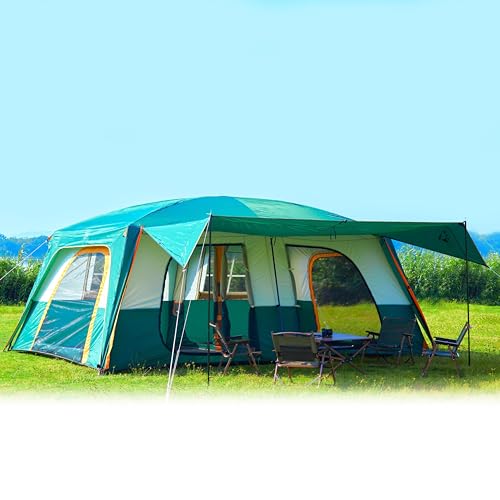
KTT Extra Large Tent 10-12-14 Person Family Cabin

KTT Extra Large Tent 10-12 Person Family Cabin
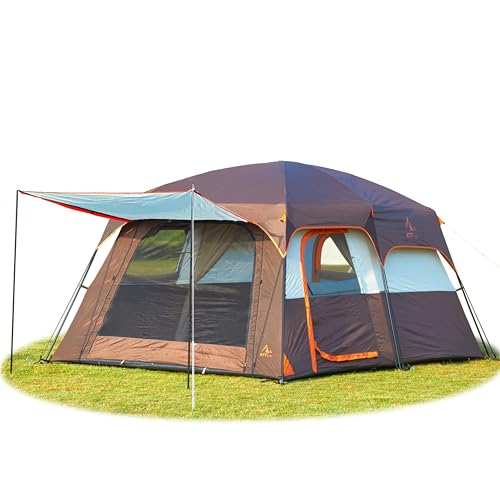
KTT Extra Large Tent 10-12-14 Person (Style-B) Family Cabin

Snow Peak 2 Person 3 Season Tent Mat and Sheet Set

KTT Extra Large Tent 10-12-14 Person (B) Family Cabin
The Strengths Of Each Pick
The Coody stands apart from every other shelter on this list because it uses inflatable beam architecture instead of rigid poles. Setting it up means pumping air into tubes rather than threading fiberglass through sleeves, which changes the entire camp experience for families tired of wrestling with parts.
The canvas construction (a breathable cotton-poly blend known as TC fabric) handles temperature swings and condensation better than thin nylon, so it suits extended basecamp stays. A built-in stove jack turns the shelter into a cold-season tent with a real wood burner inside, and the two-room layout separates sleeping from cooking. For most family campers, this is more tent than needed for a weekend.
What Works In Its Favor
- Inflatable beam setup removes the pole assembly headache
- Stove jack enables safe indoor wood heat in cold weather
- Canvas blend manages condensation during temperature swings
- Two-room divider supports sleeping and living zones
- Higher durability than nylon for long-term ownership
Things To Consider
- Heavier and bulkier than ultralight nylon tents
- Requires a compatible stove and proper flue installation
- Higher cost than basic family cabin options below
Feature Snapshot
Built With In Mind
Extended-stay basecamp campers who camp in shoulder seasons and want canvas comfort without pole-frustration.
Consider Something Else When
Lightweight weekend trippers should consider the KTT cabin tents, which are simpler to transport and pitch on quick overnights.
This KTT cabin uses a straight-wall geometry, meaning the walls rise vertically instead of sloping inward like a traditional dome. You get usable floor space plus a 6.2-foot ceiling, so adults can stand to dress and kids can move without hunching.
The two-room split comes from a divider curtain rather than a rigid wall, which keeps things light but still creates separation. Three mesh doors and three mesh windows give cross-ventilation during hot summer nights. Compared to the Coody above, this is a simpler polyester shelter without the canvas comfort or stove capability.
A Few Strong Suits
- Straight-wall design expands interior standing room
- Divider curtain creates two usable zones
- Three doors and windows aid cross-breeze in summer
- Oxford polyester shell resists light rain
- Fits four full air mattresses for family sleep setups
Worth Noting
- Curtain divider offers less privacy than a hard wall
- Larger packed size requires a roomy vehicle
- Not designed for cold-weather or stove use
At A Glance
Whose Shelf It Belongs On
Mid-size families camping in mild three-season weather who want standing headroom without paying canvas-tier prices.
Look Elsewhere When
Larger groups of a dozen or more will find more breathing room in the KTT 12-14 Person model further down this list.
This is the largest KTT in the family, stepping up to a 16-by-11-foot footprint with a 7.4-foot peak. Two bay windows and three mesh doors turn the cabin into a fortress against summer heat, which is the main complaint families raise about big tents.
The two-room split, three doors, and three windows keep the layout flexible for different sleeping arrangements. Compared to the 8-10 Person model above, this is a step up in scale rather than a leap in design philosophy. For most family reunion trips, the extra floor area is the selling feature.
Standout Benefits
- 7.4-foot peak allows comfortable standing
- Two bay windows brighten the interior
- Three-door layout simplifies multi-family access
- 16-foot length handles four full air mattresses
- Mesh coverage supports hot-weather comfort
Trade Offs
- Bulky packed size needs SUV or truck transport
- Larger setup footprint demands a spacious campsite
- Heavier than smaller cabin options
Made For
Big families, reunions, and group camping trips that need generous standing room and flexible airflow control.
Skip It When
Smaller households should look at the KTT 8-10-12-14 Person (A) instead, which packs down tighter for weekend trips.
This model shares the same 16-by-11 footprint and 7.4-foot ceiling as the 12-14 Person version above, but with a 10-12-14 Person framing. You get the same straight-wall cabin feel, three-door layout, and double-layer build without climbing to the largest tier.
The trade-off shows up in capacity framing rather than physical space, since the interior dimensions are equivalent to the bigger model. For most family campers who don’t need a true 14-sleeper, this hits the value sweet spot between size and practicality.
The Value In It
- Same cabin footprint as the top-tier 12-14 model
- Three doors and three windows for airflow
- Straight-wall geometry maximizes usable space
- Divider curtain separates zones for family sleep setups
- Stronger value positioning than the largest tier
Room For Improvement
- Capacity label suggests more space than actual interior
- Same transport challenges as the 12-14 model
- Curtain divider instead of solid wall
Quick Facts
Who Should Grab It
Large families who want max cabin space without paying the absolute top-tier label.
Reach For A Different Pick When
The Snow Peak mat and sheet set is a better fit if you already own a compatible Snow Peak shelter and need interior flooring.
This mid-size KTT cabin measures 14.1 by 10 feet with a 6.58-foot peak. The standout feature is two bay windows with mesh, which is rare among family tents in this size bracket and dramatically improves the indoor feel.
Three doors and three windows with mesh paneling give you serious ventilation options on muggy summer nights. The divider curtain splits the space, and the straight-wall design keeps corners usable. Compare this to the 8-10 Person (A) model above: it’s bigger, has bay windows, but packs down slightly larger.
Bright Spots
- Bay windows add light and openness
- Three-door design supports multi-family camping
- Straight walls expand usable floor area
- Mesh coverage improves hot-weather comfort
- Balanced size for typical four-person households
Points To Note
- Capacity label can mislead on actual interior comfort
- Bulkier packed size than smaller cabins
Best Suited To
Regular family campers who want bay-window ambiance without scaling up to the largest 14-person models.
Swap It Out When
Need a smaller cabin for quick weekend trips? The KTT Style-B further down offers a tighter footprint.
Style-B is the more compact cabin option in the KTT family, sharing the 12.5-by-8.5-foot footprint and 6.2-foot peak of the original 8-10 Person (A). It’s the same physical shelter but framed for slightly higher capacity labeling.
The Oxford polyester shell, mesh panels, and PE-coated floor are shared with its sibling. Three doors and three windows with mesh provide airflow. For most campers, the practical difference comes down to which ASIN your retailer stocks.
Everyday Wins
- Smaller packed profile than the 16-foot models
- Straight-wall cabin feel with manageable size
- Includes buckles and repair patches in accessories
- Mesh doors and windows for ventilation
- Compatible with four full air mattresses
Honest Caveats
- Capacity labeling can be aspirational
- Curtain divider is light, not private
- Same weather rating as the 8-10 model
Feature Card
Right Fit For
Family campers who want a cabin tent that fits smaller campsites and tighter vehicles.
A Better Fit Elsewhere
Heads up: the KTT 10-12 Person with bay windows offers brighter interiors if you have the storage space.
This isn’t a tent at all, it’s a purpose-built mat and sheet set designed exclusively for the Snow Peak Entry 2 Room Elfield. The set insulates the tent floor and protects against abrasion, ground moisture, and grit.
For most campers on this list, this product won’t apply directly because it requires the specific Snow Peak shelter to function. That said, it’s an important category inclusion because it shows what proper 2-room tent ownership looks like once you’ve committed to a shelter system.
Advantages To Know
- Custom fit for the Snow Peak Entry 2 Room Elfield
- Adds insulation layer against cold ground
- Protects tent floor from wear and dirt
- Maintains interior cleanliness over time
Practical Considerations
- Not compatible with the KTT or Coody tents in this list
- Requires the matching Snow Peak shelter to use
Key Attributes
Perfect Match For
Snow Peak Entry 2 Room Elfield owners who want a tailored interior floor system.
Where Another Pick Suits Better
Anyone shopping for an actual shelter should look at the Coody or KTT cabins above, since this is an accessory, not a standalone tent.
The (B) variant measures 14 by 10 feet with a 6.58-foot peak, splitting the difference between the smaller and larger KTT cabins. The double-layer build, where a separate rainfly covers an inner tent, is the key difference from single-layer shelters.
Three doors and three windows with mesh cover ventilation needs, and a divider curtain handles the 2-room separation. The double-layer design adds weather protection and reduces condensation drip, which matters most during rainy shoulder-season trips.
Good Reasons To Consider
- Double-layer build reduces condensation issues
- Rainfly shields inner tent during storms
- Straight-wall layout maximizes usable area
- Three doors simplify group movement
- Roomy enough for four full air mattresses
Less Ideal Details
- Dry weight is heavier than single-layer tents
- Setup takes longer with two-layer assembly
Who Will Love This
Rainy-weather campers who prioritize condensation control and double-layer weather protection.
Not Your Match When
Need stove-heat capability in cold weather? The Coody Premium Inflatable Canvas Air Tent is the better upgrade path.
What To Weigh Before Choosing A 2 Room Tent
Capacity Versus Real Space
Manufacturer capacity labels are aspirational, often based on tight sleeping pads rather than comfortable family camping. A 12-person tent typically sleeps four adults plus gear with breathing room, while 14-person labels can push that to six adults. You benefit most from a tent rated roughly double your actual group size.
Straight-Wall Versus Dome Geometry
Straight-wall designs (the KTT cabin family) push walls vertically, giving you usable corners and standing headroom. Dome tents slope inward, trading interior space for wind resistance. Family basecamping favors straight walls, while alpine or storm-prone camping favors domes.
Material And Weather Build
Polyester (like the KTT shells) is lightweight and budget-friendly but offers less breathability. Canvas blends (like the Coody TC fabric) breathe better and handle temperature swings but weigh significantly more. Double-layer tents add a rainfly over the inner shelter, which reduces condensation drip during humid nights.
Two-Room Division Method
Most 2 room tents use a fabric divider curtain rather than a rigid wall. That keeps weight down but offers limited privacy between rooms. If you need hard separation, expect to look at higher-end shelters or add your own hanging systems.
Pitfalls Shoppers Hit And When Paying More Pays Off
Common Shopping Slip Ups
The biggest mistake is sizing based on the label rather than the floor plan. A 12-person tent with a 14-by-10 footprint sleeps far fewer people comfortably than you’d expect, especially once you add cots, chairs, and gear. Another trap is underestimating packed size; large family tents often require an SUV or truck to transport.
Where The Extra Money Goes
Higher-tier models like the Coody bring canvas breathability, inflatable beam setup, and stove compatibility, all of which transform how the shelter performs in real conditions. The upgrade pays off when you camp in shoulder seasons, stay multiple nights at one site, or want setup speed. For occasional summer weekends, the value tier cabins deliver most of the comfort at a fraction of the cost.
Frequently Asked Questions
How big should a 2 room tent be for a family of four?
Most families of four fit comfortably in a tent with a 12-by-9-foot or larger interior floor. That gives room for two queen air mattresses plus gear storage along the walls.
Can 2 room tents handle rain?
The KTT family uses waterproof Oxford polyester with a rainfly, which handles moderate rain well. The Coody’s canvas blend sheds rain effectively once the fabric has weathered in. Heavy prolonged storms test any family tent, so seam-sealing and proper fly tension matter.
Are 2 room tents easy to set up alone?
Straight-wall cabin tents with multiple poles take 20-40 minutes solo for first-timers. The Coody’s inflatable beam design shortens that dramatically. Practicing the pitch at home before a trip saves frustration at the campsite.
What is a stove jack and do you need one?
A stove jack is a reinforced port in the tent wall that allows a wood-burning stove pipe to pass safely through. You need one only for cold-weather or winter camping where you want indoor heat; summer family trips don’t require it.
How do you clean and store a 2 room tent?
Most manufacturers recommend sweeping out debris, wiping down with mild soap and water, and fully drying before storage to prevent mildew. Long-term storage in a cool, dry place in a breathable sack extends tent life significantly.
Bottom Line
The right 2 room tent depends on how you camp: extended basecamp stays point toward the Coody’s canvas comfort and stove jack, while weekend family trips align with the KTT cabin family’s straight-wall geometry and mesh ventilation. Snow Peak owners should grab the matching mat set. For most households, a mid-size KTT cabin hits the balance between space, transport, and cost. Pick the shelter that matches your group size, climate, and how often you actually want to wrestle with poles.