
Camping with kids, a partner, or a buddy means nobody wants to climb over each other at 2 a.m. A dedicated sleep room and a separate living room solve that problem, giving you privacy, gear space, and a real living area. The right 2 room tent turns a chaotic weekend into a comfortable basecamp where everyone actually sleeps.
This roundup focuses on spacious cabin-style shelters and a few specialized options for varied group sizes. Whether you’re car camping at a state park or settling into a month-long basecamp, these picks cover the range.
The Leading Options At A Glance

Coody Premium Inflatable Canvas Air Tent
KTT Extra Large Family Cabin Tent (A)
KTT Extra Large Cabin Tent Style-B
KTT Extra Large Cabin Tent 12-14 Person

KTT Cabin Tent with Bay Windows

Snow Peak Entry 2 Room Mat & Sheet Set

KTT Extra Large Cabin Tent (B)
What Each Pick Brings To The Table
Forget the usual tangle of poles: this RBM OUTDOORS canvas shelter inflates into shape, which means setup usually takes one person and a few minutes instead of a family wrestling match. The TC canvas fabric breathes better than standard polyester, cutting down on that muggy condensation that wakes you at dawn, and the integrated stove jack lets you run a wood stove for shoulder-season camping.
For glampers and extended-stay campers, the canvas body and inflatable frame change the whole ownership experience compared to the poly cabins further down this list. You may find the packed weight higher than typical family tents, so this one favors car campers over backpackers.
What It Does Well
- Air-frame inflation removes most pole-assembly frustration
- Breathable cotton-blend canvas regulates interior humidity better than polyester
- Stove jack supports safe indoor heating in cool weather
- Two-room layout gives a true living area separate from sleeping quarters
- Sturdy build suited to multi-week basecamp stays
Things To Consider
- Canvas adds weight and bulk versus lighter poly shelters
- Requires drying fully before long-term storage to prevent mildew
- Pump or inflator typically required and sometimes sold separately
Key Specs
Built With In Mind
Extended-stay campers, glampers, and anyone camping into shoulder seasons who wants canvas comfort without pole-construction headaches.
Reach For A Different Pick When
Lightweight weekend warriors should look at the KTT Cabin Tent (A) instead, since its poly construction is easier on portage and storage.
This KTT cabin is the smaller sibling in the family, hitting a sweet spot for four-to-six-person trips where you still want a real divider curtain. Inside dimensions of roughly 12.5 by 8.5 feet give enough room for four air mattresses, and the 6.2-foot peak height lets most adults stand in the center.
Three doors and three mesh windows keep cross-breezes flowing on summer nights, and an internal curtain splits the space into two rooms for nap-time privacy. Compared to the heavier canvas option earlier in this list, the Oxford poly body is lighter to carry and dries faster when you pack up after rain.
What Earns Its Place
- Three-door layout prevents tripping over each other at bedtime
- Divider curtain creates a true private sleep room
- Six top corner hooks plus a middle hook for lanterns and gear
- Lighter poly construction easier for one person to manage
Worth Noting
- Six-person capacity is tight if you also want a gear room
- Standard poly needs seam-sealing for consistent wet-weather performance
- Repair patches and buckles come included, a small but useful touch
Who It Suits Best
Families of four to six planning two-to-three-night trips at established campgrounds with mild-to-moderate weather.
A Better Fit Elsewhere
Multi-family or extended groups will find more breathing room in the KTT Cabin Tent 12-14 Person further down this list.
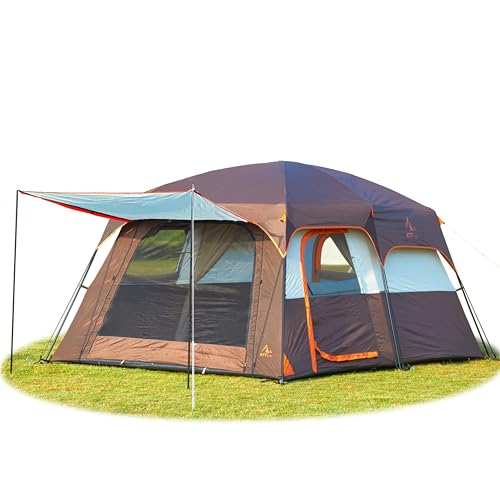
Style-B keeps the same generous 12.5 by 8.5-foot footprint and 6.2-foot ceiling as the KTT (A) but rolls out a different exterior profile for campers who care about looks. Underneath the styling differences, the inner architecture stays familiar: two rooms via a divider curtain, three mesh doors, and three mesh windows.
The PE-coated poly floor holds up well against rough ground and damp sites, while six corner hooks plus a middle hook give you hanging points for lights, fans, or clotheslines. You may prefer Style-B’s geometry if your group includes kids who want their own clearly defined space with a view out.
Bright Spots
- Distinct Style-B silhouette sets it apart at the campground
- PE-coated floor resists moisture from wet ground
- Repair patches and buckles ship in the box
- Same divider-curtain privacy as its Style-A sibling
Minor Gripes
- Capacity stays at eight to ten, so gear storage needs discipline
- Oxford poly construction requires seam-sealing for sustained rain
- Pole count runs higher than the inflatable RBM option
Made For
Style-conscious families and groups who want the same practical layout as Style-A but prefer a fresh visual look at the campsite.
Look Elsewhere When
Anyone camping through shoulder-season cold should consider the Coody Premium Inflatable Canvas Air Tent earlier in this list for its stove-jack heating capability.
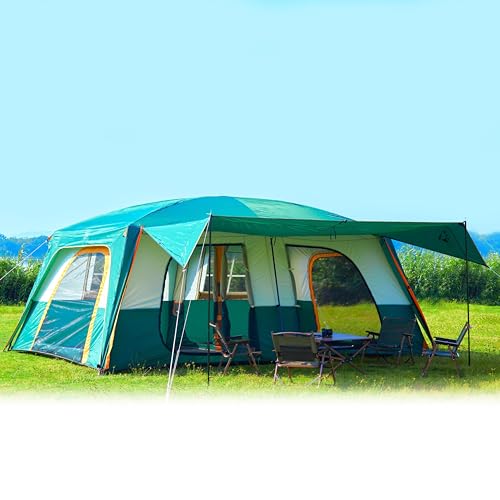
This is the biggest tent in the roundup at a 16 by 11-foot interior and a 7.4-foot peak height, roomy enough that even tall adults can stand comfortably across most of the floor. The straight-wall cabin design pushes the sidewalls up vertically, which means you actually use the perimeter instead of losing space to sloped ceilings.
A large back mesh window, two top mesh windows, and three mesh-paneled doors keep air moving through the two-room layout. Compared to the smaller KTT options above, this one is built for two families sharing a site or a big basecamp crew. You may need a larger tent pad and a second car to haul it.
Useful Highlights
- Spacious 16-foot length fits four air mattresses with room to spare
- Straight-wall design maximizes usable standing and sleeping area
- Big back window plus two top windows give genuine cross-ventilation
- Eight corner hooks and middle hook support lights, fans, and gear lines
Practical Considerations
- Footprint demands a sizable flat site and longer setup time
- Packed weight may require two people to carry comfortably
- More seams and panels mean more places to monitor after heavy rain
Feature Snapshot
The Right Fit
Two-family groups, reunion campers, and anyone hosting a multi-family gathering who values elbow room over packability.
Skip It When
Solo travelers or couples should consider the Snow Peak Mat & Sheet Set entry further down instead of dragging a 12-person shelter to a small site.
The signature detail here is a pair of mesh bay windows that prop outward, creating usable shelf space for books, water bottles, or a kid’s stuffed animal. Inside dimensions of 14.1 by 10 feet with a 6.58-foot peak height comfortably fit four air mattresses and gear for up to a dozen campers.
Two bay windows, three doors, and three regular windows give the best cross-breezes in the KTT family, and the divider curtain splits the interior into two rooms for sleeping and lounging. Compared to the 12-14 Person KTT earlier, this model trades a slightly smaller footprint for those clever bay features.
Notable Upsides
- Bay windows create shelf space and open views from inside
- Mesh on every opening supports airflow in warm weather
- Straight-wall geometry keeps usable floor area near the walls
- Two-room divider allows separate sleep and living areas
Trade Offs
- Bay windows add complexity when packing the tent back into its bag
- Poly build needs seam-sealing for confident wet-weather use
- Not the lightest option in this size class
Best Suited To
Warm-weather family campers who value ventilation, interior storage nooks, and the ability to lounge while watching the kids play outside.
Not Your Match When
Four-season or cold-weather travelers should look at the Coody Premium Inflatable Canvas Air Tent near the top of this list for stove compatibility.
This Snow Peak accessory is a different category entirely: a fitted mat and sheet set designed exclusively for the Entry 2 Room Elfield tent. It insulates the tent floor from cold ground, protects the inner tent fabric from abrasion, and adds a layer of comfort under sleeping pads.
Owners of the matching Snow Peak shelter get a tailored fit that generic tarps can’t match, and the sheet makes cleanup simpler since you can shake out debris rather than sweeping the bare floor. You may find this redundant if you already use thick sleeping pads, but for shoulder-season campers it makes a noticeable comfort difference.
Real-World Strengths
- Adds insulation against cold ground for three-season comfort
- Protects the tent floor from wear, grit, and moisture
- Tailored fit designed specifically for the matching Snow Peak shelter
- Easier cleanup than sweeping a bare tent floor
Points To Note
- Only compatible with the matching Snow Peak Elfield tent
- Not a standalone shelter solution for anyone else
- Premium pricing reflects the brand’s positioning
Perfect Match For
Existing owners of the Snow Peak Entry 2 Room Elfield who want to upgrade floor comfort and extend the shelter’s useful season.
Swap It Out When
Shoppers without a matching Snow Peak shelter should pivot to the KTT Cabin Tent (A), which arrives as a complete shelter ready to pitch.
Style-B rounds out the roundup with a 14 by 10-foot floor and the same 6.58-foot ceiling height as its bay-window sibling, minus the bay windows. Two rooms via divider curtain, three mesh doors, and three mesh windows give the standard cabin experience most family campers expect.
The Oxford poly rainfly and inner tent are familiar KTT territory, and eight corner hooks plus a middle hook keep lights and gear organized. Compared to Style-A covered earlier, this version trims some visual flair in exchange for a cleaner, simpler setup process. In our view, it suits campers who prefer function over form.
Advantages To Know
- Cleaner exterior geometry may speed up setup and takedown
- Spacious interior still fits four full air mattresses
- Mesh on all doors and windows supports good airflow
- Two-room divider allows separated sleep and living areas
- Standard poly build familiar to most family campers
Honest Caveats
- Same poly seam-sealing requirement as other models in this lineup
- Lacks the bay-window feature of the feature-rich sibling above
Feature Rundown
Whose Shelf It Belongs On
Standard family campers who want a reliable, no-fuss two-room shelter without paying for extra bay-window features.
Another Choice May Suit
Campers craving more interior storage nooks should consider the KTT Cabin Tent with Bay Windows a few picks above this one.
Picking The Right Shelter For Your Crew
Choosing 2 room tents for camping comes down to matching the shelter to your group size, your typical weather, and how you actually pack and drive. The interior dimensions drive everything else, since a “12-person” tent at a 7-foot peak height feels far different from a 6.5-foot version when adults try to stand up.
Start with capacity honesty. Manufacturers count sleeping space tightly, so expect a 10-person shelter to sleep four to six adults comfortably when you also stash gear inside. If your group splits between adults and kids, the divider curtain becomes the most-used feature: it gives parents a private sleep room while kids treat the second room as a play zone.
Material matters more than many shoppers expect. Standard polyester tents are lightweight, affordable, and dry fast, but they need seam-sealing for confident rain performance and tend to feel muggy in humid weather. Cotton or poly-cotton canvas breathes better and resists condensation, yet it weighs significantly more and demands thorough drying before storage.
Climate and season should drive your ventilation choices. Mesh doors and mesh windows let cross-breezes flow on hot nights, while rainflies and storm coverage protect you when weather turns. Look for a sewn-in or removable floor if you camp on rough ground, since a bathtub-style floor (raised edges) keeps seeping water out better than a flat-cut tarp.
Finally, think about setup and pack-down honestly. Inflatable air frames remove most pole-frustration but add a pump step and weight to the bag. Traditional pole cabins are familiar and field-repairable, but they take longer and break more often under stress. Match the shelter to your crew’s patience and physical strength.
Quick Spec Reading Guide
- “12-person” or “14-person” labels reflect tight sleeping counts, so plan extra space for gear.
- Peak height (H) determines whether adults can stand, while footprint (L x W) controls how many mattresses fit.
- “Straight-wall” or “cabin” designs keep more usable area near the walls than dome tents.
- TC canvas blends cotton and polyester for breathability, while PE-coated polyester floors resist ground moisture.
Key Considerations Across These Picks
Pitfalls Shoppers Hit
A common mistake is buying capacity by the headline number rather than measured interior dimensions. A 14-person label often means “fits four air mattresses” once you leave room for coolers, packs, and a lantern. Measure the L x W x H against your gear before committing, and check whether the divider curtain can be tied back fully so the shelter works as one big room when you need it.
Another slip is ignoring the seam-sealing step. Most poly family tents ship with taped seams these days, but a quick swipe of seam sealer before first use is cheap insurance against surprise rain. Skip that step and you may discover a leak at 2 a.m. on your second night.
The Upgrade Payoff
Higher-tier 2 room tents for camping typically earn the price through better ventilation, stronger pole systems, and smarter geometry. Canvas shelters cost more because the material breathes, regulates humidity, and lasts longer with care. Larger straight-wall footprints give you livable standing room that budget domes simply can’t match.
The upgrade pays off most for families camping multiple times per season, anyone heading into shoulder-season weather, and groups who want a basecamp feel rather than a sleep-only shelter. For occasional fair-weather trips, the standard poly cabins deliver plenty of value without the premium.
Frequently Asked Questions
How big should a 2 room tent be for a family of four?
For a family of four, a footprint around 12 by 9 feet usually gives enough room for two queen air mattresses plus a gear area, though you may want to size up if you carry coolers and chairs inside.
Are cabin-style tents harder to pitch than dome tents?
Cabin-style tents use more poles but assemble in intuitive sections, so most campers get the hang of it within two setups; inflatable models simplify this further by replacing poles with air beams.
Can 2 room tents handle rain and wind?
Most double-layer poly tents handle moderate rain well when seams are sealed, though heavy wind is a different story; look for guylines and stake out every loop for storm conditions.
Do I need to seam-seal a new tent?
New tents often come with factory-taped seams, but adding seam sealer at stress points is cheap insurance, especially around the floor corners and rainfly attachment points.
How do I clean and store a family cabin tent?
Sweep out debris, wipe down the floor, and make sure the tent is fully dry before folding it into its bag to prevent mildew; store the bag in a cool, dry place between trips.
Closing Remarks
A well-matched 2 room tent turns a crowded campsite into a comfortable basecamp where everyone gets real sleep and personal space. Match capacity, material, and ventilation to your typical trip rather than chasing the biggest footprint, and the rest of the weekend takes care of itself. The right pick here should serve your family well across multiple seasons of memory-making trips.