
A two-person tent with a vestibule solves one of camping’s most persistent annoyances: wet gear. That covered porch out front keeps boots, backpacks, and rain jackets from soaking the sleeping area on a rainy night. Backpackers heading into shoulder-season storms and car campers unloading a trunk full of kit both tend to appreciate the extra dry space, and the models below reflect that range, from ultralight trekking shelters to tall family cabins that pitch in under a minute.
The Choices Worth Comparing

ALPS Mountaineering Lynx 2-Person Backpacking Tent

ALPS Mountaineering Zephyr 2-Person Tent

Naturehike Village Instant Cabin Camping Tent
Naturehike Cape Instant Pop-Up Camping Tent
Naturehike KOTA Double-Layer Family Tent
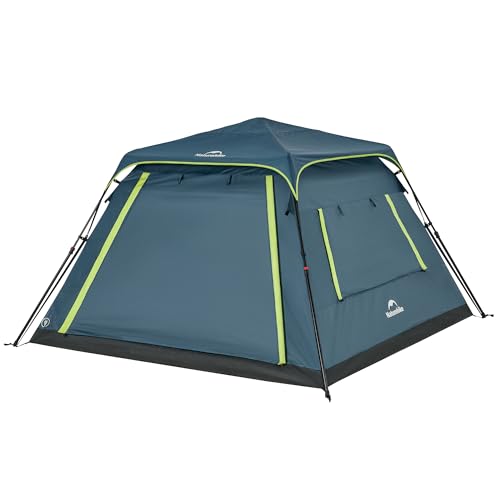
Naturehike Cape Lite Instant Cabin Tent
A Deeper Look At The Lineup
The Lynx is a classic freestanding dome that punches above its weight class. Aluminum poles, a mesh-heavy wall design, and a freestanding footprint make it a familiar entry point for anyone stepping up from a heavy budget shelter, and the rectangular floor plan feels noticeably more livable than a narrow A-frame.
On a three-season backpacking trip, you can usually have the Lynx pitched in well under five minutes, with pole clips snapping onto the fabric without any guesswork. The vestibule up front gives boots and a pack a sheltered spot, and the mesh body keeps condensation manageable on muggy nights.
Practical Advantages
- Aluminum pole structure stays lighter than fiberglass alternatives at a similar footprint.
- Mesh walls covering roughly half the body push air through during still, humid evenings.
- Freestanding rectangular dome sets up on platforms or rocky ground where staking is awkward.
- Pole clips speed pitch time, useful for late arrivals in fading light.
- Front vestibule stores boots and packs out of the rain path.
Things To Consider
- The included rainfly covers the body but leaves limited covered living space for cooking gear in heavy weather.
- Two-person width can feel snug for two wide sleeping pads; solo use is generous.
- Owners commonly reseal seams before long trips to keep the floor watertight under sustained rain.
Who It Suits Best
Entry-level backpackers and casual campers wanting a freestanding, three-season shelter that handles weekend trails and frontcountry sites alike.
Consider Something Else When
The Naturehike Village Instant Cabin Tent suits car campers who would rather skip pole assembly entirely.
The Zephyr takes the Lynx’s basic dome format and stretches the walls outward. Pre-bent aluminum poles (poles shaped with a curve baked into their structure) push the fabric into a more vertical shape, which adds shoulder room and lets two sleepers sit up without bumping the ceiling.
Full mesh walls keep the body breathable in steamy summer conditions, and the vestibule handles wet kit without crowding the door. Where the Lynx is a workhorse entry option, the Zephyr feels like a clear step up in livability for the same general trip profile.
Key Advantages
- Pre-bent pole geometry opens up elbow room compared to a standard dome.
- Full mesh body maximizes airflow, useful in coastal or humid inland sites.
- Two-person floor layout still fits two 20-inch pads side by side.
- Vestibule keeps rain-soaked jackets off the sleeping floor.
Worth Noting
- More mesh means less fabric insulation, so shoulder-season mornings run cooler.
- Vertical walls add a touch of weight and packed size over the Lynx.
Feature Snapshot
Right Fit For
Warm-weather backpackers and paddlers who prioritize airflow and headroom over cold-morning insulation.
Skip It When
The Naturehike KOTA Double-Layer Family Tent serves campers who run trips through spring frosts or high-elevation summer nights.
The Village drops the backcountry framing entirely. Pre-attached poles unfold into a tall cabin shape you can stand inside, and the full-coverage rainfly keeps the body dry through long, gray weekends at a state park.
The 150D Ti Black Technology fabric (a titanium-coated polyester) is rated at UPF 12500+ and waterproof PU 2000mm+ (a hydrostatic head rating meaning the fabric withstands a 2,000 mm water column before leaking), which sounds technical but really means strong sun blocking and rain handling. The instant-pitch design suits anyone rolling in after dark who doesn’t want to read instructions.
Positive Points
- Pitched in roughly 60 seconds by unfolding pre-attached poles.
- Vertical cabin walls let most campers stand to change clothes.
- Full rainfly seals the body against sustained summer storms.
- Ti-coated fabric blocks harsh midday sun at exposed sites.
Trade Offs
- Large packed size and heavier weight make it a poor backpacking choice.
- Cabin shape catches wind more than a low dome, so pick a sheltered pitch.
Made For
Car campers and festival-goers who value standing headroom and lightning setup over trail-friendly weight.
A Better Fit Elsewhere
The ALPS Mountaineering Lynx is the right call for backpackers who need the same vestibule concept in a much lighter package.
The Cape runs on the same instant-pitch idea as the Village but stretches the floor into a tunnel layout. Two sleeping pods sit end to end, leaving a central area that doubles as a living room, gear locker, and covered vestibule when you back a tarp off the door.
The 190T polyester (a lightweight, tightly woven polyester fabric) with a waterproof PU 3000mm (hydrostatic head rating of 3,000 mm, suited for sustained rain) coating handles heavier weather than entry-level family tents. The trade is bulk; this is firmly a drive-up pitch, not a hike-in shelter.
The Practical Payoff
- Pre-attached poles unfold into a usable shelter in roughly a minute.
- Tunnel layout separates sleep and living areas for two-couple trips.
- Higher waterproof rating than many instant tents in the same size class.
- Extra-tall peak height reduces the crouch factor when moving around inside.
Honest Caveats
- Packed length runs long, so it eats significant trunk space.
- Tunnel shapes need taut guylines (the cords anchored outward from the tent) to stay stable in wind.
Feature Card
Best Suited To
Families running weekend car-camp loops who want a quick pitch without sacrificing a real living area.
Not Your Match When
The Naturehike Cape Lite is lighter to haul and still family-friendly for shorter, simpler trips.
The KOTA is the only model here that earns a four-season label, and it does so by separating into two layers. The inner mesh room stands on its own for warm, dry nights, while the outer rainfly doubles as a freestanding canopy or sun shelter when you leave the mesh at home.
The 75D 210T polyester (a slightly heavier denier fabric, where denier measures fiber thickness) with a PU 3000mm+ coating shrugs off heavy weather, and the covered vestibule at the porch keeps wet boots out of the sleeping area. This is the model to consider for shoulder-season family trips.
Useful Highlights
- Inner mesh and outer shelter can be used together or separately, useful across seasons.
- Mesh inner stands alone for stargazing on calm summer nights.
- Higher denier fabric resists abrasion at gravel or pine-needle sites.
- Covered porch vestibule handles boots, packs, and a camp chair.
Points To Note
- Two-layer design adds real weight and packed size, so this stays a car-camp tent.
- Setup takes longer than the single-layer Cape or Village options.
Who Should Grab It
Family campers running shoulder-season basecamps who want one shelter that flexes across summer stargazing and spring rainstorms.
Another Choice May Suit
The ALPS Mountaineering Zephyr works better for backpackers covering the same shoulder season on foot.
The Cape Lite is the approachable end of the Naturehike instant line. The 101.5 x 101.5-inch floor fits a queen mattress with room to spare, and a 62.2-inch peak height gives most campers standing headroom for changing and sorting gear.
The instant cabin pitch makes it a sensible pick for first-time family campers who don’t want to memorize pole codes. The vestibule/porch area keeps muddy boots outside the sleeping footprint, which matters when kids track in half the trail.
What It Does Well
- Pop-up pitch that beginners can manage without reading instructions.
- Square floor plan simplifies pad and mattress layout.
- Peak height tall enough for standing changes.
- Queen-mattress compatibility covers most family sleeping setups.
Room For Improvement
- Less interior volume than the Cape tunnel layout for larger groups.
- Cabin profile still catches crosswinds at exposed sites.
Feature Rundown
Whose Shelf It Belongs On
First-time family campers who want a simple, roomy cabin with a vestibule for boots and packs.
Look Elsewhere When
The Naturehike Cape serves families needing a tunnel layout with separate living and sleeping zones.
What To Weigh Before Picking A 2-Person Vestibule Tent
Match the shelter to the trip style. Backpackers carrying everything on their back will struggle with the Naturehike instant cabins, no matter how easy they are to pitch. The ALPS Mountaineering Lynx and Zephyr stay closer to trail-friendly weights, while the Naturehike Village, Cape, Cape Lite, and KOTA are car-camp tools with much larger packed sizes.
Read the waterproof rating carefully. A PU 2000mm rating handles summer storms, while a PU 3000mm rating shrugs off sustained rain typical of shoulder seasons. Higher numbers do mean more weight in fabric, so the right pick depends on the climate you actually camp in.
Vestibule depth changes real-world usefulness. A small awning over the door keeps rain off your face when you unzip, while a full porch holds a camp chair, a dog crate, or a stack of coolers. The KOTA and Cape lean toward the porch end, the Lynx and Zephyr toward the lean-to end.
Headroom matters more than floor area. A 62-inch peak height changes how a tent feels at 7 a.m., when two adults need to dress without crawling. The Zephyr’s pre-bent poles and the Cape Lite’s cabin ceiling both address this in different ways.
Common Slip Ups And Upgrade Payoffs
Pitfalls Shoppers Hit
Choosing a two-person tent by the tag and not the actual interior dimensions. Manufacturer ratings often assume tight pads, so a model that comfortably sleeps two slim adults may feel cramped with two wide pads or a dog. Checking the listed floor width and length against your sleeping setup prevents the most common sizing regret.
Another trap is ignoring wind exposure. Cabin and tunnel shapes catch crosswinds that a low dome handles with ease. Campers at exposed ridgelines, beaches, or open meadows often overvalue headroom and undervalue wind profile.
Where The Extra Money Goes
Spending more on a vestibule tent typically buys heavier denier fabric, stronger pole materials, and better waterproof coatings. The ALPS Zephyr’s pre-bent aluminum poles and the Naturehike KOTA’s PU 3000mm+ coating both reflect that tier. For weekend summer trips at a sheltered campground, a lighter, lower-rated model will usually be enough. For shoulder-season storms or high-elevation sites, the upgrade tends to pay off fast.
Frequently Asked Questions
How big should a two-person vestibule tent actually be?
Look for a floor around 30 square feet minimum if you want room for two pads and a bit of gear. The Cape Lite’s near 7-by-7-foot footprint and the Zephyr’s rectangular layout both handle two sleepers without constant elbow contact.
Are instant pop-up tents strong enough for sustained rain?
Most handle summer storms fine if you stake every guyline and keep the rainfly taut. For multi-day rain or shoulder-season weather, the Cape or KOTA’s higher PU rating and heavier denier fabric offer more margin.
Can you use a vestibule for cooking?
A covered vestibule keeps rain off a small camp stove in calm conditions, but you need cross-ventilation to avoid carbon monoxide buildup. Many campers cook in the vestibule only with the door fully open and the rainfly rolled back.
How do aluminum and fiberglass poles compare?
Aluminum poles are lighter, stronger, and less prone to snapping in cold weather, which is why the Lynx and Zephyr lean on aluminum throughout. Fiberglass poles show up in budget tents, and they tend to be heavier and more brittle under stress.
What is a “freestanding” tent?
A freestanding tent stands up on its own with poles and minimal staking, which makes it easy to move around the site to find a flat spot. The Lynx, Zephyr, Cape Lite, and KOTA inner room are all freestanding; the Cape tunnel and Village cabin need guylines to lock in their shape.
Final Verdict
Start with the trip you actually run. Backpackers land on the ALPS Lynx or Zephyr for their weight and trail-friendly footprint. Car campers looking for the easiest pitch gravitate to the Naturehike Village, Cape, or Cape Lite. Families running shoulder-season basecamps get the most from the KOTA’s modular layers. Pick the shape that fits your trip, not the spec sheet that looks heaviest.