
Sharing a tent with a partner or a kid changes how you sleep outdoors. A solo pad leaves one of you propped against a cold sidewall, and two narrow pads slide around all night. A proper two-person pad solves that, and the current lineup spans everything from self-inflating foam to ultralight inflatable designs. The picks below cover car camping, SUV sleep setups, and backcountry trips, with thickness, materials, and inflation style matched to each scenario so you can stop reading and start packing.
Your Options, Compared
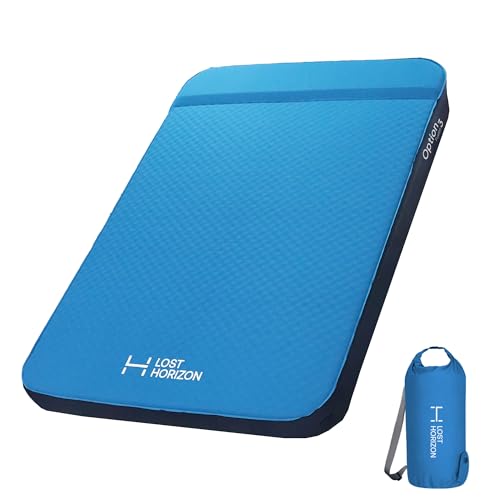
Lost Horizon Self-Inflating Foam Mattress 3″ Full

Lost Horizon Self-Inflating Foam Mattress for Tesla Model Y

Oramoose Double Sleeping Pad 6″ Extra Thick

DULCE DOM True 4″ Camping Sleeping Pad with Foot Pump

DULCE DOM True 4″ Double Pad with Built-in Pillow

DULCE DOM 4.7″ Extra Thick Inflatable Mattress

PineHike 2 Person Full Size Memory Foam Mat 4″

Hikenture Double Sleeping Pad Ultralight 4″

Lost Horizon Option3 Self-Inflating Foam Mattress 4.5″
The Details Behind The Selections
The Lost Horizon Full kicks off the list because it delivers the simplest possible setup story. Open the valve, let the foam pull air in for a few minutes, top it off with a couple of breaths, and you’re done. For weekend trips when you don’t want to wrestle with pumps at 10pm, that low effort is the whole point.
At 3 inches of loft and roughly 10 pounds of foam fill, this is a basic full-size pad sized for one generous sleeper or two smaller people who don’t mind contact. The internal foam spreads weight evenly, which helps with pressure points on hard-packed sites. Compared to the air-only designs further down the list, foam pads feel more stable but also heavier and bulkier when packed.
Practical Advantages
- Self-inflating foam core means no pump required
- Even weight distribution reduces pressure points
- Holds shape under movement, so partners don’t roll together
- Durable foam tends to outlast thin inflatable baffles on rough ground
Points To Keep In Mind
- Bulks up large in a trunk compared to inflatable options
- 3 inches may feel thin for dedicated side sleepers
Feature Snapshot
Made For
Car campers and casual weekend travelers who want zero-fuss setup and don’t mind the extra packed volume.
A Better Fit Elsewhere
Backpackers should reach for the Hikenture Double Sleeping Pad Ultralight 4″, which shaves serious weight off the trail.
Most sleeping pads assume a tent floor. This one assumes a Tesla Model Y cargo area with the rear seats folded, and the cut is the whole reason to consider it. Slap-in fit means you won’t spend 20 minutes arranging a generic pad to cover the gaps around the wheel wells.
The pad uses the same self-inflating foam concept as the standard Lost Horizon model, but layered thicker at 4.5 inches with around 9 pounds of fill. You get noticeably more cushion than the 3-inch standard pad, which helps when the cargo floor beneath isn’t perfectly flat. Capacity lands near 440 pounds, so two adults plus a dog or a kid on top should sit comfortably.
Everyday Wins
- Custom shape fits the Model Y cargo area without trimming
- 4.5 inches of foam handles uneven trunk contours
- No pump needed, which matters in a dark garage
- Stays put during the night, unlike generic pads that slide
Honest Caveats
- Only works for the 2-row Model Y, so reselling the pad is niche
- Foam fill makes it heavier than most trunk-friendly inflatables
Right Fit For
Model Y owners running road trips or weekend camping from the back of the SUV who want a tailored fit and don’t care about pack size.
Reach For A Different Pick When
Campers in a traditional tent should pick the Lost Horizon Self-Inflating Foam Mattress 3″ Full, which costs less and works on any flat surface.
Six inches of stacked cushion is not subtle, and that’s the appeal. The Oramoose pads out the loft in this roundup, which matters most for side sleepers whose hips and shoulders would otherwise press through thinner mats and hit the ground. Two layers of fabric build the stack, with a high-denier shell for puncture resistance.
Compared to the foam-heavy Lost Horizon entries, this is an inflatable design, so it deflates small for transport. The trade-off is inflation effort, which on a pad this thick can run a few minutes with the right pump. For car-based trips where volume in the trunk matters and ground conditions are unpredictable, the extra height tends to pay off.
Where It Helps
- Loft of 6 inches protects side sleepers from feeling ground
- Double-layer construction adds puncture margin
- Packs down smaller than foam options for the same thickness
- Wide format covers two adults without the squeeze
Trade Offs To Consider
- Higher air volume means longer inflation time than thinner pads
- Bulkier pack than the Hikenture ultralight design below
Who It Suits Best
Side sleepers and couples camping on rocky or root-covered ground who want the most cushion possible.
Swap It Out When
Backpackers counting every ounce will prefer the Hikenture Double Sleeping Pad Ultralight 4″, which trades some thickness for major weight savings.
Spec sheets love to inflate thickness numbers, and DULCE DOM leans into honesty here by calling out a real four inches of loft rather than a measured peak. The other stand-out is the shell material: 75D TPU-coated fabric is meaningfully tougher than the 40D nylon you see on budget pads, which translates to fewer pinhole leaks from pine needles or sharp grit.
The built-in foot pump eliminates the need to carry a separate inflator, which is a real convenience at the end of a long drive. The honeycomb air-cell structure distributes body weight across independent chambers, so when one person rolls over, the other doesn’t feel a wave. Owners in rocky desert sites commonly cite the fabric as the reason the pad survives season after season.
The Value In It
- Honest 4-inch loft without marketing exaggeration
- 75D TPU shell resists punctures far better than thin nylon
- Foot pump is built in, so nothing extra to pack
- Honeycomb cells keep motion transfer low between sleepers
Some Limits To Know
- Heavier than the Hikenture ultralight option
- Foot pump works best with shoes off, which matters in winter
Quick Facts
Built With In Mind
Frequent campers and desert or forest regulars who need a pad that survives rough ground without babying.
Not Your Match When
Counting grams for long-distance backpacking, in which case the Hikenture Double Sleeping Pad Ultralight 4″ is the better trail choice.
Same DULCE DOM build as the previous pad, but with an integrated pillow chamber at the head. The pillow isn’t a separate item to inflate, forget, or shove under a stuff sack, which is genuinely useful when you’re pulling into camp tired and don’t want to unpack the entire gear bin.
The 4-inch loft, 75D TPU shell, and honeycomb cell layout carry over, meaning you don’t trade durability for the pillow convenience. In our view, this is the most “move-in ready” pad in the lineup. The pillow does run a touch narrower than a standalone pillow, so stomach sleepers who tuck their arms around a cushion might still want a separate one.
Where It Excels
- Built-in pillow removes one more thing to pack and inflate
- Same tough 75D TPU shell as the standard DULCE DOM pad
- Foot pump keeps setup hands-free
- Pillow chamber sits at the right height for back sleepers
Worth Bearing In Mind
- Pillow is narrower than most standalone camp pillows
- Slightly heavier than the no-pillow sibling pad
Best Suited To
Couples who value minimum setup steps and don’t want to pack loose pillows that wander around the tent overnight.
Look Elsewhere When
Stomach sleepers or anyone with a specific pillow thickness preference should consider the PineHike 2 Person Full Size Memory Foam Mat 4″ for a quieter, foam-based night.
At 4.7 inches, this DULCE DOM pad gives up about three-quarters of an inch to the Oramoose 6-inch model, but uses that depth more efficiently through independent air chambers. Each chamber holds its own pressure, which means shoulder and hip cradles stay supported even when your partner shifts.
The elevated design and chamber structure target back and side sleepers specifically, which tends to come up in real-world feedback from people who switched from thinner pads. If you’ve ever woken up sore after a camping trip and blamed the mattress, this is the level of loft that often fixes that. The trade-off is a slightly longer inflation time on a pad this tall, so budget an extra minute or two at setup.
Reasons It Performs
- 4.7 inches of loft with independent air chambers
- Cradles shoulders and hips for side sleepers
- Stays supportive even with two adults moving around
- Comparable comfort to a home mattress in feel
Practical Considerations
- Tall stack means longer inflation time than 4-inch pads
- Higher price tier than the basic DULCE DOM models
Essential Details
Whose Shelf It Belongs On
Couples with pressure-sensitive sleepers who want the closest thing to a home bed without hauling an actual mattress.
Where A Sibling Pick Shines
Backpackers and weight-watchers will be happier with the Hikenture Double Sleeping Pad Ultralight 4″, which is significantly lighter to carry.
The PineHike stands out for the single biggest complaint most people have about inflatable pads: noise. The 50D sponge fill inside doesn’t crinkle or rustle when you roll over, which keeps both sleepers asleep through the night. For light sleepers or anyone camping next to a partner who moves a lot, that silence alone is worth considering.
It’s a self-inflating design with a one-button valve system that handles both inflation and deflation. The foam-based construction also handles temperature swings better than air-only pads, since the foam holds warmth. Memory foam does add weight, so this lives in car camping territory, not on a backpacker’s back.
Well-Handled Touches
- Sponge fill stays quiet during movement
- One-button valve simplifies setup and teardown
- Foam retains some warmth in cold conditions
- Full-size footprint covers two adults comfortably
Less Ideal Details
- Heavier than the inflatable options in this roundup
- Packed size is larger than air-only pads
Technical Snapshot
Who Will Love This
Couples and light sleepers who value quiet over weight savings and want a foam feel without the crinkle of inflatables.
Skip It When
Backpackers hauling gear over miles should look at the Hikenture Double Sleeping Pad Ultralight 4″ instead, which packs much smaller.
The Hikenture is the lightest pad in this roundup, which makes it the obvious choice when the trail is part of the trip. At a generous 79 by 55 inches inflated, it accommodates two adults without forcing anyone to sleep on the seam, but packs down to roughly the size of a water bottle.
Inflation uses a navy pumpsack rather than a built-in foot pump, which cuts a small amount of weight and bulk from the pad itself. The catch is that pumping takes a couple of minutes of bagging rather than stepping. For backpackers and thru-hikers who already own a stuff sack for other uses, this trade is usually worth it. The 4-inch loft matches most of the heavier pads above, so you don’t sacrifice sleep quality to save pack weight.
Everyday Perks
- Lightest two-person option in this lineup
- Packs to roughly a water bottle for tight backpack space
- 79 by 55 inch surface fits two tall adults
- 4-inch loft matches heavier car camping pads
Where It May Fall Short
- Pumpsack inflation takes a couple of minutes versus a foot pump
- Thinner shell fabric than the DULCE DOM TPU options
Perfect Match For
Backpackers, section hikers, and anyone carrying gear over distance who still wants a true two-person sleep surface at camp.
Where Another Pick Suits Better
Campers staying at one basecamp with a car nearby will find the DULCE DOM 4.7″ Extra Thick Inflatable Mattress more comfortable and just as easy to set up.
The Option3 rounds out the foam entries with the thickest foam profile Lost Horizon makes at 4.5 inches, paired with the heaviest foam fill on the list at around 12 pounds. That density is the trade-off: you trade packed size for a pad that feels like a real mattress even on bare ground or tent platforms.
The self-inflating mechanism still applies, so the setup story stays as easy as opening a valve. Capacity runs up to 440 pounds, comfortably handling two adults and a restless kid or dog without bottoming out. Compared to the slimmer 3-inch Lost Horizon at the top of the list, this is the option for campers who have already tried a thinner pad and decided they need more cushion underneath.
Useful Strengths
- 4.5-inch foam profile is the loftiest in the Lost Horizon range
- Dense 12 lb foam fill resists compression under movement
- Capacity supports 440 lb across two adults and gear
- Self-inflating setup stays pump-free
Trade-Offs To Consider
- Heaviest pad in the roundup, so not for distance carry
- Higher packed volume than inflatable alternatives
Who Should Grab It
High-mileage car campers and full-time RV-adjacent travelers who want the closest foam feel to a home mattress.
Consider Something Else When
Hikers will find the Hikenture Double Sleeping Pad Ultralight 4″ far easier to carry, even with slightly less loft.
Matching The Right Two-Person Pad To Your Camp Style
A two-person sleeping pad only earns its keep when the thickness, weight, and inflation style match how you actually camp. Run through these factors before you commit, since a great deal on the wrong pad is still the wrong pad.
Thickness And Loft
Thickness on a sleeping pad is the distance between your body and the ground. Anything under 3 inches feels thin for side sleepers, who press shoulders and hips into the pad and need clearance to avoid that “almost touching dirt” sensation. Pads in the 4 to 4.7 inch range hit the sweet spot for most adults, while 6 inches is reserved for those who want a near-mattress feel. Back sleepers get away with less, since weight spreads more evenly across the back.
Material And Durability
The shell fabric is the single biggest predictor of how long a pad survives in the wild. Look for denier ratings (a denier is a measure of fiber thickness) in the 50D to 75D range with TPU coating for puncture resistance. Thin 30D nylon feels light but tends to pick up micro-leaks from pine needles and grit. Foam-filled designs trade durability against weight, since foam rarely punctures but adds bulk.
Inflation Method And Storage
Self-inflating foam pads open a valve and slowly fill with air over a few minutes, requiring only a few breaths to top off. Air-only designs need a pump of some sort, whether built-in foot, external hand, or pumpsack. For car camping, the inflation time barely matters, but for backpackers, a built-in foot pump saves carrying a separate accessory. Storage size follows weight: foam pads are bulky when packed, while inflatables compress to roughly a water bottle.
Key Considerations Across These Picks
Common Slip Ups Worth Avoiding
The most common mistake is buying on thickness alone and ignoring the shell material. A 6-inch pad with a thin nylon shell will leak faster than a 4-inch pad with 75D TPU coating, especially on sites with sharp sticks or gravel. Another frequent miss is underestimating packed size for foam pads. They feel great at camp, but a self-inflating foam mattress can eat half your cargo area. Match the pad’s transport profile to your vehicle or backpack space before you commit.
Where The Extra Money Goes
Higher-tier pads in this category spend the budget on three things: tougher shell fabric, more sophisticated air-cell structures, and integrated features like built-in pumps or pillows. The DULCE DOM 4.7-inch model costs more partly because independent air chambers distribute pressure better than simple baffles. The PineHike memory foam design earns its price through the quieter sponge fill and one-button valve system. The upgrade is worth it when you camp often enough to notice the difference, but a casual weekend camper often doesn’t need the premium tier.
Frequently Asked Questions
How thick should a two-person sleeping pad be for side sleepers?
Side sleepers generally need at least 4 inches of loft to keep shoulders and hips from contacting the ground. The Oramoose 6-inch and DULCE DOM 4.7-inch options in this roundup are the strongest fits for that sleep style.
Are self-inflating foam pads quieter than inflatable ones?
Yes, foam-filled designs like the Lost Horizon and PineHike models stay nearly silent when you shift at night. Inflatable air pads can crinkle or pop softly depending on the shell material and baffle design.
Can one person use a two-person sleeping pad comfortably?
Absolutely. A two-person pad gives a solo sleeper room to stretch, roll, and stash gear beside them without it sliding off. The wider footprint also helps restless sleepers who move across the full surface during the night.
How do I clean and store a two-person sleeping pad?
Wipe the surface with a damp cloth and mild soap, then air dry fully before packing to prevent mildew. Store the pad unrolled or loosely folded in a dry place, since long-term compression can damage foam cells and air chambers.
What’s the difference between a built-in foot pump and a separate pump?
A built-in foot pump adds a small amount of weight to the pad itself but eliminates the need to carry or remember a separate accessory. Separate pumps tend to inflate faster but are easier to forget at home or in the car.
Closing Thoughts
Pick the pad that fits your camping style rather than the one with the loudest spec sheet. Backpackers should grab the Hikenture ultralight, side sleepers will sleep better on the Oramoose or DULCE DOM 4.7-inch, and car campers who want easy setup will appreciate the Lost Horizon foam entries. The right two-person pad turns shared tent nights from restless to genuinely restful, and the pad you actually carry is the pad that earns its place.