
Two-person shelters earn their keep in a surprising number of scenarios. Backpackers pair them with a single trekking partner for weekend loops, couples take them to drive-in campgrounds for car camping comfort, and parents use them as kid-friendly sleep setups on the lawn. The right tent handles weather, packs down small enough for your trunk or pack, and keeps two sleepers from elbowing each other at 2 a.m.
The lineup below mixes ultralight backpacking options, instant pop-up picks for casual campers, and larger cabin-style shelters that still fit two adults comfortably. Each entry comes with real specs from the source, an honest look at trade-offs, and a clear sense of who will actually enjoy it.
A Quick View Of The Lineup

ALPS Mountaineering Lynx 2-Person Backpacking and Camping Tent

KidzAdventure 2 in 1 Kids Tent for Camping / Kids Play Tent

Naturehike Village Instant Tent, 4 Person / 8 Person Camping Tent with Full Rainfly
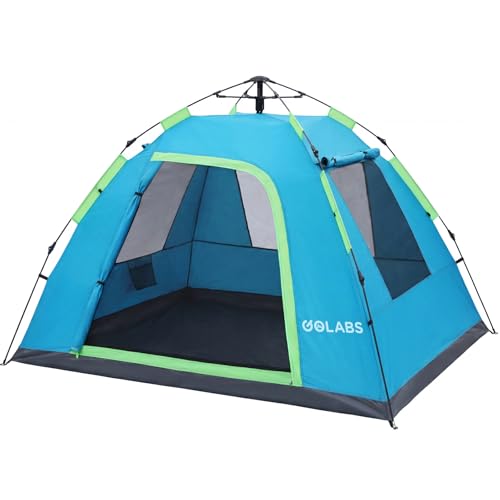
Golabs Pop Up Camping Tent for 2/3 Person, Quick Setup by Pre-Attached Pole

MSR Tents Elixir 2
Naturehike Cape 4/6/8 Person Camping Tent, 60S Easy Setup Instant Tent

Golabs CT1 2 Person Camping Tent, Easy Set Up in 3 Min, Mesh Top & Door
Naturehike KOTA 4/6/8 Person Camping Tent, Double Layer Waterproof Family Tent
More Details On Our Top Picks
The ALPS Mountaineering Lynx is a classic dome tent shaped for backpackers who’d rather shave ounces than sprawl out. Its two-pole rectangular design (a style that uses two crossed poles forming a low, wide rectangle) keeps weight low without giving up livable floor space. Aluminum poles instead of fiberglass (fiberglass poles are heavier and can crack in cold weather) make it lighter on the trail and tougher in cold shoulder seasons.
Half-mesh walls run along each side, letting humid air escape on muggy nights while the rainfly handles storms overhead. Setup is pole-clip based, so most campers get it standing without a manual in just a few minutes.
Reasons It Performs
- Aluminum pole structure drops pack weight compared to fiberglass alternatives.
- Mesh on roughly half of each wall improves airflow and reduces overnight condensation.
- Rectangular dome floor fits two standard sleeping pads without constant shifting.
- Free-standing design means you can pitch it on rocky or hard-packed sites.
- Budget tier pricing makes it approachable for newer backpackers.
Small Caveats
- Two-person rated tight, so two adults with gear may feel snug.
- Aluminum poles bend under heavy impact, so handle them with care during takedown.
- Mesh-heavy walls trade warmth for breathability on cold nights.
Key Specs
Best Suited To
Backpackers stepping into their first multi-night trip who want a lightweight, freestanding shelter under tight pack weight.
Look Elsewhere When
The MSR Tents Elixir 2 is a stronger match for multi-season backpackers who need a true rectangular floorplan and willing to invest in a heavier but more weather-rated build.
The KidzAdventure 2 in 1 doubles as both a backyard play tent and a real camping shelter. Designed with a bright theme aimed at younger campers, it sets up quickly enough that kids can run it themselves. The two-layer PU1500 waterproof coating (a polyurethane coating rated to withstand 1500mm of water pressure before leaking) gives it real rain performance, so it isn’t just a sunny-day prop.
Compared to the ALPS Mountaineering Lynx above, this shelter is far less technical, but it’s also lighter on the wallet and far easier for small hands to wrestle into shape.
The Value In It
- Pulls double duty as a play tent indoors and a camping shelter outdoors.
- Two-layer waterproof coating handles real rain, not just sprinkles.
- Easy setup process means less frustration for parents and kids.
- Lightweight enough to toss in the trunk for car camping trips.
Points To Keep In Mind
- Smaller footprint fits children comfortably, not two average adults.
- Themed graphics wear off gradually with heavy outdoor use.
Right Fit For
Parents running backyard sleepovers or short family car camping trips where kids want their own space to claim.
A Better Fit Elsewhere
The Naturehike Cape is a smarter pick when the family wants a tall, full-size shelter that two adults and several kids can share for an entire weekend.
The Naturehike Village Instant Tent swaps tent poles for a pre-attached frame that pops into shape in roughly a minute. Built as a cabin-style shelter (a tent with near-vertical walls that maximize interior space) rather than a sloped dome, it gives two adults room to stand and dress without crawling. The 150D Ti Black fabric (a dense 150-denier polyester with titanium-based UV coating) carries a UPF 12500+ rating, blocking intense midday sun when you’re camped without shade.
Where the Golabs Pop Up below is built for short festival stays, the Village aims at full-weekend family trips with a full-coverage rainfly.
Real-World Strengths
- Pre-attached poles let a couple pitch camp without swapping instructions at the trailhead.
- Cabin-style walls maximize interior standing height for changing clothes.
- UPF 12500+ fabric shields campers from harsh sun exposure.
- Full rainfly coverage protects gear stored along the tent’s edges.
- Available in 4-person and 8-person footprints to fit your group.
Softer Spots
- Heavier packed weight makes it a poor choice for backpacking trips.
- Crew size benefits from a second pair of hands during the first few setups.
Quick Facts
Whose Shelf It Belongs On
Car campers and new families who want a tall, easy-pitch shelter with enough room to keep kids entertained inside on rainy afternoons.
Where Another Pick Suits Better
The Golabs Pop Up is a better match for festival-goers who want pop-up speed in a smaller, more packable footprint.
The Golabs Pop Up is built for campers who’d rather unpack a beer than wrestle with poles. You lift the center pole, press down, and the frame locks into a low-profile cabin shape in roughly a minute. Exterior dimensions sit around 81.8 by 61.8 by 51.1 inches, so two adults fit, though three feels tight unless you and your friends travel ultralight.
Unlike the Naturehike Village above, this tent stays compact when packed, which is the whole point. Festival lots, scout troops, and one-night weekend trips are where it earns its keep.
Strengths Worth Knowing
- Lift-and-press setup eliminates pole sorting in the dark.
- Packs down small enough to slide behind a car seat.
- Pre-attached frame means no lost pole pieces between trips.
- Two-person capacity suits couples and parent-plus-child sleep setups.
Worth Bearing In Mind
- Low ceiling height forces adults to change clothes seated or on all fours.
- Lightweight fabric requires careful site selection away from sharp brush.
Made For
Festival campers, scout leaders, and weekend car campers who value one-minute setup over standing headroom.
Swap It Out When
The Golabs CT1 2 Person Camping Tent is a stronger pick when you’d rather have mesh-heavy airflow and a more traditional dome shape at a similar price.
The MSR Elixir 2 is a backpacking shelter aimed at campers who move often and deal with shifting weather. Its true rectangular floorplan and nearly vertical walls make the interior feel more like a small bedroom than a coffin, so two wide sleeping pads fit without overlap. The fabric blend runs 75% polyester and 25% nylon, balancing abrasion resistance with weight.
Compared to the budget ALPS Mountaineering Lynx earlier in the list, the Elixir 2 is heavier on the trail but markedly more weather-credible on shoulder-season trips.
Useful Strengths
- True rectangular floor fits wide, thick pads without diagonal gymnastics.
- Vertical walls gain usable shoulder and elbow room overnight.
- Mesh panels positioned for airflow reduce condensation in humid climates.
- Built-in gear loft keeps headlamps and maps off the tent floor.
- Polyester-nylon blend resists tearing on rocky alpine sites.
Honest Caveats
- Heavier than ultralight competitors, which adds up across multi-day routes.
- Premium tier pricing puts it out of reach for casual weekend use.
Feature Snapshot
Built With In Mind
Backpackers tackling shoulder-season routes who want rectangular livability and are willing to carry a heavier pack for the comfort.
Reach For A Different Pick When
The ALPS Mountaineering Lynx 2-Person Backpacking and Camping Tent is the right move when budget matters more than cold-season weather performance.
The Naturehike Cape is a tunnel-style family tent (a long, low tent supported by flexible poles forming a series of arches) that pairs one-minute setup with a generous footprint of roughly 8.3 to 12.9 square meters depending on size. Two adults stretch out comfortably, with extra floor space for duffel bags, a dog crate, or a couple of sleepover-age kids. The 190T polyester (a lightweight, tightly woven polyester fabric commonly used in tent construction) carries a waterproof PU3000mm coating (a polyurethane layer rated to resist 3000mm of water pressure).
Where the Naturehike Village above leans toward cabin shape, the Cape hugs a longer, lower tunnel profile that handles wind better on open prairie sites.
What Helps Most
- Tunnel shape handles crosswinds better than flat-walled cabin tents.
- Generous square footage fits sleeping pads, packs, and a family pet.
- Pre-attached poles shorten setup to roughly 60 seconds.
- PU3000mm waterproofing handles sustained rain on long trips.
- Multiple size options let you match the tent to your group.
Things To Weigh
- Tunnel tents need sturdy guy lines (taut cords anchored to the ground) to stay rigid in heavy weather.
- Low profile at the ends means adults crouch near doorways.
- Pack size grows with capacity, which challenges smaller car trunks.
At A Glance
Who Should Grab It
Families and small groups car camping on open, windy sites where extra floor space and fast setup matter more than compact pack size.
Not Your Match When
The Naturehike Village Instant Tent is a better fit when standing headroom and cabin-style walls take priority over wind-shedding tunnel design.
The Golabs CT1 is a classic dome tent aimed at warm-weather campers. Outer dimensions sit at 84.6 by 65 by 48.8 inches, with inner space close behind, giving two adults room to sit up without bumping the ceiling. Mesh covers the top and door, so cross-breezes move through the shelter on sticky summer nights. The whole package collapses into a roughly 20-inch carry bag for closet storage.
Compared to the Golabs Pop Up earlier, the CT1 trades pop-up speed for traditional pole structure and stronger airflow control.
Positive Points
- Mesh top and door promote airflow in humid summer conditions.
- Three-minute setup is manageable for first-time campers.
- Compact carry bag fits in apartment closets between trips.
- 190D polyester taffeta (a smooth, durable polyester weave) handles regular seasonal use.
Possible Compromises
- Fiberglass poles add weight and become brittle in extreme cold.
- Mesh-heavy design sacrifices warmth for breathability in shoulder seasons.
- Two-person rated tight when both campers bring full overnight packs.
Perfect Match For
First-time tent owners and warm-weather weekend campers who want classic dome geometry with strong airflow and easy storage.
Consider Something Else When
The MSR Tents Elixir 2 is the stronger pick for backpackers tackling cold or wet weather where polyester-nylon fabric and rectangular walls earn their keep.
The Naturehike KOTA is the most modular shelter on this list. Its double-layer design separates the mesh inner from the outer rainfly, so each piece works on its own. The 75D 210T polyester shell (a medium-weight 75-denier polyester woven to a 210-thread-count standard) carries a 3000mm+ waterproof rating, strong enough for storm-prone shoulder seasons. The inner mesh stands alone in summer for stargazing, and the fly alone works as a sun shelter or cook canopy.
Where the Naturehike Cape above is a single-purpose family tent, the KOTA earns its reputation for campers who treat their shelter like a base camp across multiple seasons.
Key Advantages
- Inner mesh and outer fly pitch independently for flexible trip planning.
- 3000mm+ waterproofing holds against heavy, sustained rain.
- Vestibule and porch extensions add covered storage for muddy boots.
- Multiple capacity sizes match small families to large groups.
- Modular setup supports summer stargazing and winter storm protection.
Less Ideal Details
- Heavier packed weight makes it unsuitable for backpacking routes.
- More pieces to track during the first few setups, depending on configuration.
Who Will Love This
Year-round base campers who want one shelter to handle summer mesh nights, winter storms, and everything between.
Where A Sibling Pick Shines
The Naturehike Cape 4/6/8 Person Camping Tent is a smoother match when tunnel shape and faster setup matter more than modular flexibility.
What Matters Most Before Choosing 2 Person Camping Tents
Capacity vs. Real Space
A “2-person” label rarely means two adults sleep like they sleep at home. Tent makers test capacity using backpack-sized bodies on thin pads, so two wide sleepers usually end up shoulder-to-shoulder. If you travel with a dog, a pack, or a partner who moves in their sleep, you may want a tent rated for three.
Weight and Pack Size
Backpackers count ounces. Car campers count trunk space. The ALPS Mountaineering Lynx and MSR Elixir 2 sit at the lightweight end, while the Naturehike Village, Cape, and KOTA target car camping where weight doesn’t matter but interior volume does. Match the tent to how you’ll actually carry it.
Weather Rating and Fabric
Polyester and nylon blends dominate this list. Coatings measured in millimeters (the higher the number, the more water pressure the fabric resists before leaking) tell you how the tent handles rain. A 2000mm rating handles steady drizzle, while 3000mm+ is safer for multi-day storms.
Setup Style and Pole Material
Instant pop-up tents trade traditional pole structure for pre-attached frames that snap into shape. Aluminum poles beat fiberglass for cold-weather durability and lower weight, though they cost more. Fiberglass poles are common in entry-level tents because they keep the price down.
Key Considerations Across These Picks
Where Shoppers Go Wrong
Most mismatches happen when someone buys a backpacking tent for car camping or vice versa. A 4-pound ultralight dome feels cramped and cold on a family trip, while a 15-pound tunnel tent is brutal on a multi-day trek. Decide first whether you carry it or drive it, then narrow from there.
The Upgrade Payoff
Stepping up to a higher tier in this category usually buys better weather fabric, stronger pole materials, and modular layouts. For backpackers, the MSR Elixir 2’s rectangular floorplan justifies the weight. For car campers, the Naturehike KOTA’s double-layer design pays off across seasons. The upgrade only makes sense when you’ll use the extra capability on real trips.
Frequently Asked Questions
How tight is a true 2-person tent for two adults?
Most 2-person tents fit two slim sleepers on standard pads with little room for gear. If you or your partner are wide, sleep restlessly, or bring duffel bags inside, a 3-person rated shelter gives breathing room.
Can these tents handle heavy rain?
Waterproof ratings vary across the list. Models rated at PU2000mm or higher handle steady rain well. Always seal seams with a compatible seam sealer (a liquid applied to stitching that closes needle holes) before a rainy trip, especially on budget tents.
Are instant pop-up tents hard to fold back up?
Most beginners struggle the first two or three times. Watch a quick video for your specific model before your first trip so the fold pattern is fresh in your mind. Practice at home saves real frustration at the campsite.
What’s the difference between fiberglass and aluminum poles?
Aluminum is lighter, stronger in cold weather, and resists bending under tension. Fiberglass is cheaper but heavier, and it can crack or shatter on hard impact. For backpacking, aluminum is worth the upgrade. For occasional car camping, fiberglass does the job.
Do I need a footprint or ground tarp?
A footprint (a custom-cut ground cloth that sits beneath your tent) protects the tent floor from abrasion and extends its lifespan. It’s optional on most casual trips, but worthwhile on rocky or thorny sites where the floor takes real punishment.
The Takeaway
Two-person tents come in more shapes than the phrase suggests, from ultralight backpacking domes to instant car camping cabins and kid-friendly play hybrids. Match the shelter to how you actually travel, and the rest of the decision gets easier. Browse the picks above, weigh the trade-offs that matter to your trips, and choose the one that fits your version of camping.