
A reliable 2 meter base antenna can make the difference between a static-filled contact and a conversation that flows like a phone call. Whether you run a dedicated ham shack, chase repeaters from a home office, or want a proper rooftop setup for emergency comms, the right antenna matters. This list covers fixed-station verticals, dual-band fiberglass columns, a directional Yagi for long-haul work, and a few mobile-leaning options that double as base gear.
The Choices Worth Comparing
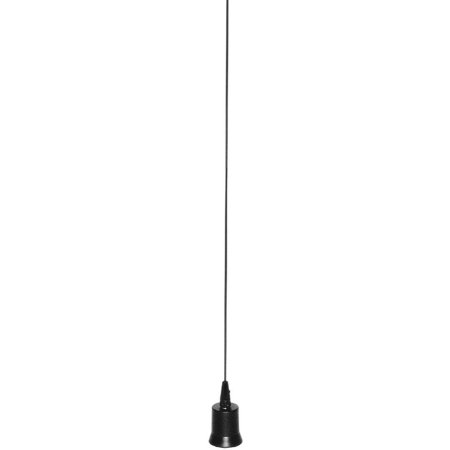
Larsen NMO 5/8 Wave Whip Antenna – Chrome

Fiberglass Dual Band Base Antenna 5.5/8.5dBi

FB17UV Dual Band 2M/70CM Fiberglass Antenna

HYS Pre-Tuned 2 Meter NMO Magnet Base Antenna

Eifagur Dual Band NMO Magnetic Mount Antenna Kit

Comet SBB-2 146/446 MHz Dual Band Mobile Antenna

Diamond A144S5 2 Meter Yagi Beam Antenna

HYS UHF Base Antenna 390-470MHz Adjustable

HzFitInc Dual Band VHF/UHF Fiberglass Base Antenna Kit
The Picks, Examined More Closely
The Larsen NMO150C is a 5/8-wave omnidirectional whip built for VHF operation across the 144 to 174 MHz range, which covers the 2 meter amateur band plus adjacent commercial frequencies. Pair it with any NMO mount and you get a clean, tunable radiator that has been a workhorse in commercial fleets for years. In most base-station setups, you mount the antenna on a rooftop or mast pipe and tune the whip length to land your standing wave ratio where you want it.
For dedicated VHF operators who want a single-band column they can adjust by hand, the value here is precision. Gain figures are tied directly to a 5/8-wave design, which typically outperforms quarter-wave whips on receive and transmit. The chrome finish holds up to weather well, and the NMO interface means you can move the antenna between vehicles, a shed mount, or a permanent pipe setup with the same base.
What It Does Well
- Covers the full 144 to 174 MHz band, useful for both ham and commercial VHF work.
- Field tunable, so you can trim the whip for the lowest SWR at your operating frequency.
- 5/8-wave design gives you stronger gain than a quarter-wave mobile whip.
- Standard NMO mount works with countless existing bases and cable assemblies.
- Durable chrome build, suitable for permanent rooftop or mast mounting.
Points To Note
- Single-band only, so 70cm operation requires a separate antenna.
- Requires a separate NMO mount and coax, which adds to the install cost.
- Roof or mast mounting usually needs basic weatherproofing on the connector.
Quick Facts
Right Fit For
VHF-focused operators who want a tunable, single-band antenna for repeater and simplex work on the 2 meter band.
Consider Something Else When
Pick the Eifagur Dual Band NMO Magnetic Mount Antenna Kit if you also want 70cm coverage from a single mount without swapping antennas.
This HYSHIKRA fiberglass column runs both 2 meter and 70cm at 5.5 and 8.5 dBi respectively, giving you dual-band coverage without a second antenna on the roof. The 86-inch length puts real height into your signal path, which helps when you are pushing through trees or urban clutter. You get an SO-239 connector at the base, which is a familiar standard for coax and the included mounting bracket keeps installation straightforward.
Compared to the Larsen whip above, this is a fixed-station vertical that trades omnidirectional coverage of mobile whips for higher gain and dual-band convenience. For most home shacks with a proper rooftop mount, that means fewer compromises when you switch between local repeaters on VHF and UHF. The fiberglass radome handles sun and rain well, and the three-piece assembly lets you break the antenna down for transport or storage during off-season.
Well-Handled Touches
- Dual-band coverage of 2m and 70cm from a single column, saving roof space.
- 5.5 dBi VHF gain and 8.5 dBi UHF gain, strong for a fixed-station vertical.
- Fiberglass construction handles weather and UV exposure well.
- Standard SO-239 connector, compatible with common coax and jumper assemblies.
- Three-piece design makes transport and storage manageable for most users.
Worth Bearing In Mind
- At 86 inches and 1.2 kg, you need a sturdy mount and clear overhead space.
- Vertical polarization only, so it is not a fit for cross-polarized experiments.
Who It Suits Best
Ham operators running a home base station who want strong dual-band coverage without stacking multiple antennas.
Reach For A Different Pick When
Choose the Diamond A144S5 2 Meter Yagi Beam Antenna if you need directional gain for DX contacts rather than broad omnidirectional coverage.
The FB17UV is the shorter sibling of the HYSHIKRA dual-band column above, coming in at 66 inches with 4.5 dBi on VHF and 7.2 dBi on UHF. That shorter profile is a real advantage when HOA rules or roof load capacity matter, and the 1 kg weight is friendly to standard mast clamps. It still hits the same 136 to 174 MHz and 400 to 470 MHz bands, so you do not give up the dual-band convenience.
For most operators, the trade-off shows up in raw gain numbers, since the longer 5.5 dBi fiberglass column wins about 1 dB on 2 meters. The honest read is that the FB17UV still performs well for repeater work in average suburban settings, where a clean signal often matters more than the last fraction of a decibel. The two-piece assembly and included bracket make weekend installs a realistic project.
Key Advantages
- Shorter 66-inch profile fits more rooftop and balcony installations.
- Dual-band coverage of VHF and UHF amateur segments with no retuning.
- Fiberglass radome stands up to sun, rain, and coastal conditions.
- SO-239 connector matches the common coax assemblies you likely already own.
- Bracket mount included, simplifying the install for first-timers.
Honest Caveats
- Lower VHF gain than taller dual-band columns like the 86-inch fiberglass option.
- 200-watt power limit means you cannot pair it with the heaviest amplifier setups.
Made For
Operators with limited roof space or HOA restrictions who still want a real dual-band base antenna.
Skip It When
Step up to the HYSHIKRA 5.5/8.5 dBi fiberglass column if maximum dual-band gain matters more than physical length.
This HYS antenna is a 1/4-wave VHF magnet mount that arrives pre-tuned, so you can stick it on a steel surface and get on the air without an analyzer session. The NMO interface means you can swap the whip into a permanent NMO base later if you decide to upgrade. It covers the full 136 to 174 MHz band, which is broader than some pre-cut whips and lets you roam across both amateur and commercial VHF channels.
For beginners setting up their first shack or operators who want a low-fuss temporary antenna, the value here is ease. The magnet base makes it portable, so you can move it from a car roof to a filing cabinet to a steel toolbox depending on the day. Compared to the Larsen whip reviewed earlier, you give up the field-tunable 5/8-wave gain for a simpler, magnet-mounted quarter-wave experience.
Everyday Advantages
- Pre-tuned design removes the guesswork for new operators.
- Magnetic base lets you install or remove the antenna in seconds.
- 1/4-wave length offers wider bandwidth than 5/8-wave alternatives.
- NMO mount is interchangeable with permanent installations later.
- Covers both 2m amateur and commercial VHF without retuning.
Trade-Offs To Consider
- Magnet base needs a flat steel ground plane for proper performance.
- Single-band VHF only, no 70cm coverage in the same package.
Quick Facts
Whose Shelf It Belongs On
New hams and portable operators who want a low-fuss VHF antenna they can set up without tools or tuning charts.
Not Your Match When
Pick the Comet SBB-2 146/446 MHz Dual Band Mobile Antenna if you want a similar magnet-mount form factor with 70cm coverage added.
The Eifagur kit gives you a dual-band 144 and 430 MHz NMO magnetic mount plus a 16.5-foot coax with PL-259 connectors, so the whole package arrives ready to plug into a mobile rig. Operating on both 2m and 70cm, the antenna lets you bounce between repeaters without swapping hardware in a parking lot. The trunk-mounted magnetic base keeps the install footprint small and the cable long enough for most sedans and SUVs.
Where this earns its keep is portability. Compared to the tall fiberglass columns reviewed earlier, you sacrifice vertical gain for the ability to pull the antenna off a steel roof in under a minute. For most operators, that flexibility is the whole point, since a permanent base station is not always available when travel calls.
Where It Delivers
- Dual-band 2m and 70cm operation from a single mobile mount.
- 16.5-foot coax with PL-259 connectors covers most vehicle runs.
- Magnetic base installs without tools or permanent modification.
- NMO interface allows whip swaps if you want to change length later.
Less Ideal Details
- Magnet mounting depends on a clean, flat steel surface for solid grounding.
- Mobile form factor gives up some gain compared to tall fiberglass columns.
Best Suited To
Mobile operators and traveling hams who want a complete dual-band antenna kit in one box.
Look Elsewhere When
Choose the Larsen NMO 5/8 Wave Whip Antenna if your priority is a permanent VHF base station with tunable, higher-gain performance.
The Comet SBB-2 is a compact 18-inch dual-band whip tuned for 146 and 446 MHz, which means it slips into a garage, parking deck, or apartment balcony where taller antennas cannot go. The gold-plated PL-259 connector resists corrosion, which is a real plus for outdoor mounting. SWR stays at or below 1.5:1 across both bands, so you do not need an external tuner for everyday repeater work.
For most operators in tight quarters, the appeal is the size. Compared to the 66-inch FB17UV column, you lose the extra fiberglass height but gain a discreet profile that neighbors and landlords are less likely to question. The 60-watt power ceiling also makes it a better match for handhelds and mobile rigs than for higher-power base amplifiers.
Positive Takeaways
- Short 18-inch profile fits apartment and garage installations.
- Dual-band 146 and 446 MHz operation in one compact whip.
- Gold-plated PL-259 connector resists corrosion over time.
- Low SWR keeps performance clean across both bands.
Things To Weigh
- 60-watt power limit rules out pairing with high-wattage amplifiers.
- Shorter radiator means less gain than full-size fiberglass columns.
Quick Facts
Who Should Grab It
Operators in apartments or rentals who need a low-profile dual-band antenna that does not attract attention.
A Better Fit Elsewhere
Pick the HYSHIKRA 5.5/8.5 dBi fiberglass column if height clearance is not an issue and you want stronger gain on both bands.
The Diamond A144S5 is a 5-element Yagi beam built for the 144 MHz amateur band, designed for base stations where direction matters more than 360-degree coverage. Yagi antennas use multiple parallel elements to focus RF energy in a single direction, producing strong forward gain and rejecting signals from behind and the sides. The lightweight aluminum construction keeps the load on a mast or tower manageable, even when you add a rotor later.
Compared to the fiberglass columns reviewed earlier, this is a different kind of tool. For most operators chasing distant repeaters, weak-signal work, or SSB contacts across a region, the A144S5 pulls in signals that omnidirectional verticals can barely register. The honest read is that you give up casual omnidirectional convenience in exchange for serious directional reach, which is exactly the trade DX operators look for.
A Strong Showing
- 5-element Yagi design delivers strong directional gain on 2 meters.
- High front-to-back ratio helps reject noise and unwanted signals.
- Lightweight aluminum build keeps tower loading reasonable.
- Ideal for DX contacts, weak-signal work, and repeater targeting.
Practical Considerations
- Directional pattern means you need a rotor for omnidirectional coverage.
- Single-band 144 MHz, so 70cm operation requires a separate antenna.
- Assembly and tuning typically take more time than a fiberglass vertical.
Perfect Match For
Dedicated 2 meter operators chasing DX contacts or working weak-signal modes from a fixed base station.
Swap It Out When
Choose the HYSHIKRA 5.5/8.5 dBi fiberglass column if you want omnidirectional coverage of both 2m and 70cm without rotor hardware.
The HYS 6U110 is an aluminum UHF base antenna tunable across 390 to 470 MHz, which covers commercial UHF traffic well outside the amateur 70cm band edges. You adjust the length by hand to dial in the exact center frequency you operate on, and the SO-239 connector matches standard coax. At 37 to 43 inches and 0.6 kg, the antenna is light enough for most mast clamps and eaves mounts.
For commercial users running business-band radios, public safety listeners, or repeater owners in the UHF commercial spectrum, the value here is the tunable design. Compared to the dual-band columns reviewed earlier, this antenna ignores 2 meters entirely, which keeps the gain focused where you need it. The 100-watt input ceiling pairs comfortably with most mobile and base radios.
What Helps Most
- Tunable 390 to 470 MHz range covers commercial and public-safety UHF.
- Adjustable length lets you fine-tune the operating frequency by hand.
- Aluminum construction handles outdoor mounting and weather exposure.
- Lightweight at 0.6 kg, friendly to standard mounts and clamps.
- SO-239 connector pairs with standard UHF coax assemblies.
Possible Compromises
- UHF only, with no 2 meter coverage for amateur operators who want both bands.
- Manual tuning requires an SWR meter for best results.
Feature Snapshot
Built With In Mind
Commercial UHF operators and public-safety listeners who need tunable coverage in the 390 to 470 MHz range.
Where A Sibling Pick Shines
Pick the FB17UV dual-band fiberglass column if you need amateur 2m and 70cm coverage instead of commercial UHF frequencies.
The HzFitInc kit arrives as a complete base-station package: a pre-tuned dual-band fiberglass antenna, a 32-foot coaxial cable with PL-259 connectors, a mounting bracket, and a ground plane. The single-section 49-inch design keeps installation simple for first-time base operators. You get 3.5 dBi on VHF and 6.0 dBi on UHF, with a 100-watt power handling ceiling that covers most home and mobile radios.
For most first-time base installers, the value is the all-in-one approach. The waterproof construction holds up to rain and sun, and the included ground plane helps when mounting on non-metallic surfaces like a wooden eave. With a duplexer, you can also operate both bands simultaneously, which is a flexibility the single-band antennas reviewed earlier cannot match.
What Stands Out
- Complete kit includes antenna, 32-foot coax, bracket, and ground plane.
- Pre-tuned for 2m and 70cm amateur bands, no analyzer required.
- Waterproof fiberglass design handles outdoor mounting year-round.
- Compatible with a duplexer for simultaneous dual-band operation.
- 49-inch single-section profile fits common mast and eave mounts.
A Few Limitations
- Shorter 49-inch body gives less VHF gain than taller fiberglass columns.
- Duplexer for simultaneous operation is sold separately.
Feature Snapshot
Who Will Love This
First-time base station builders who want a complete dual-band kit without sourcing separate coax and mounting hardware.
Where Another Pick Suits Better
Pick the HYSHIKRA 5.5/8.5 dBi fiberglass column if you prefer higher VHF gain and do not need the bundled coax and ground plane.
What To Weigh Before Choosing Your 2 Meter Base Antenna
Match The Antenna To Your Operating Profile
A dedicated home shack chasing local repeaters benefits most from a tall omnidirectional vertical, while an apartment dweller needs a short profile that respects building rules. Mobile-leaning operators and traveling hams should lean toward magnetic mounts and compact whips, since permanent rooftop installs are rarely an option. For DX work and weak-signal modes, a directional Yagi on a rotor pulls in signals that omnidirectional verticals simply cannot reach.
Read The Spec Sheet For Real Trade-Offs
Gain, frequency range, power handling, and connector type drive the day-to-day experience more than the marketing copy suggests. A 5/8-wave whip gives more gain than a quarter-wave but a narrower bandwidth, while dual-band fiberglass columns save roof space at the cost of some peak gain. Power ceilings between 60 and 200 watts matter when you plan to pair the antenna with an amplifier or high-power base radio.
Plan The Install Before You Buy
Mount location, cable length, and grounding all affect real-world performance, so measure the run from your radio to the planned mount point. A short coax run to a roof tower almost always beats a long cable to a low patio mount. Make sure your mount and mast can handle the antenna’s length and weight, especially for tall fiberglass columns that act like sails in high wind.
Tune For Clean SWR
Most of the antennas here arrive pre-tuned or field-tunable, but an SWR meter or antenna analyzer is still worth owning. A clean SWR below 1.5:1 across your operating frequencies protects your radio’s finals and keeps your signal strong on the other end. Even pre-tuned antennas can shift after a season of weather, so a quick check every few months keeps performance consistent.
Key Considerations Across These Picks
Pitfalls Shoppers Hit
Many operators buy the longest fiberglass column they can find without checking local building rules or roof load limits. Others pick a single-band antenna when they actually want 70cm coverage, leaving half their radio’s capability unused. Choosing the wrong connector type is also common, since an SO-239 mount needs the right jumper or adapter for some radios.
When Paying More Pays Off
Premium fiberglass columns and Yagi beams cost more because of higher gain, better materials, and weather-resistant construction that lasts longer outdoors. For a permanent rooftop install you plan to leave up for years, the upgrade to a heavier-duty radome and stronger bracket usually pays back in fewer replacements and more consistent performance. A taller dual-band column also tends to outperform a shorter one when you compare real-world signal reports on the air, especially in fringe coverage areas.
Frequently Asked Questions
What Is The Difference Between A 1/4-Wave And A 5/8-Wave Antenna?
A 1/4-wave whip is shorter, has wider bandwidth, and tolerates a less-than-perfect ground plane. A 5/8-wave design is longer, produces higher gain, but needs a proper ground plane or radial system to perform well. Most mobile and compact setups favor 1/4-wave whips, while fixed stations often pick 5/8-wave for the extra reach.
Do I Need A Dual-Band Antenna For 2 Meter And 70cm?
You only need a dual-band antenna if you operate on both 2 meter and 70cm regularly. If you spend most of your time on local 2 meter repeaters, a single-band 2 meter antenna typically performs better than a dual-band compromise. Hams who enjoy satellite work, cross-band repeaters, or both VHF and UHF digital modes often prefer the convenience of a single dual-band column.
What Does SWR Mean And Why Does It Matter?
SWR stands for Standing Wave Ratio, which measures how well your antenna matches the impedance of your coax and radio. A low SWR below 1.5:1 means your radio is pushing most of its power into the antenna instead of reflecting it back. High SWR can overheat your radio’s finals and reduce your effective range on the air.
Can I Use A Mobile Magnetic Mount Antenna As A Base Station?
You can, but the magnet mount needs a flat steel ground plane to perform properly. A filing cabinet or steel rooftop works well, while a wooden workbench will give you unpredictable results. For a permanent home shack, a proper mast or pipe mount usually gives better long-term reliability than a magnetic base.
How Tall Should A 2 Meter Base Antenna Be?
Most operators do well with a fiberglass column between 4 and 7 feet tall, since that range balances gain with manageable weight and wind load. Taller columns give more gain but need stronger mounts and clearer overhead space. If your roof cannot handle the height, a compact 18-inch dual-band whip still works for casual repeater traffic.
Wrap Up
The right 2 meter base antenna depends on where you operate, how much roof space you have, and which bands matter most to you. Tall fiberglass columns deliver strong dual-band performance for home shacks, while compact whips and magnetic mounts fit travel and rental situations. Pick the antenna that matches your real operating profile, and your signal reports on the air will tell the rest of the story.