
A good two-person shelter earns its keep when the weather turns, the trail stretches longer than expected, and your pack already feels heavy. For hikers covering real miles, weekend campers pulling into a state park after dark, and couples splitting the cost of one tent instead of two, the right lightweight 2 man tent turns a rough night into a comfortable one. This list focuses on shelters that balance weight, weather resistance, and livable space, so the tent you carry becomes a tool you trust rather than gear you worry about.
A Fast Comparison Of The Options

Forceatt Waterproof Backpacking Tent 2-3 Person
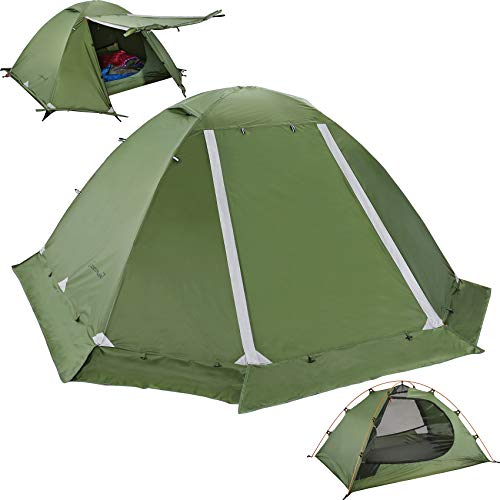
Clostnature 4 Season Backpacking Tent 1/2 Person

BISINNA 2/4 Person Lightweight Waterproof Tent

EchoSmile Instant Pop Up Camping Tent
Taking A Closer Look At The Options
The Forceatt 2-3 person tent is built for hikers who want a genuinely roomy shelter without turning it into a pack anchor. Its dual D-shaped doors solve the classic two-person problem: nobody has to crawl over a partner at 2 a.m. to answer nature, and both occupants get their own entry, which dramatically improves livability on multi-day trips.
Two vestibules (covered areas extending from the tent walls that keep gear dry and boots accessible without bringing them inside) flank the sleeping area, giving each person a protected spot for a backpack and boots. The aluminum pole structure keeps total carry weight reasonable, and the freestanding geometry means you can pitch it on a rocky ledge or a wooden platform without fighting guy lines. For three-season backpacking where rain, wind, and condensation are the real concerns, this tent strikes a sensible balance between comfort and pack size.
The Good Stuff
- Dual D-shaped doors and matching vestibules let two people move independently, a quiet upgrade that pays off on every shared night.
- Aluminum poles hold weight down while still resisting wind gusts that flatten fiberglass frames.
- Mesh canopy supports cross-ventilation, cutting the heavy condensation that builds up when two adults breathe in a small space.
- Freestanding design (it stands on its own without stakes) makes it easier to reposition after pitching if the ground turns out uneven.
- Interior dimensions around 88.6 by 53.1 inches fit two sleeping pads side by side without constant elbow contact.
Trade-Offs
- At roughly 5.5 pounds, it sits in the middle of the pack for ultralight thru-hikers chasing sub-3-pound shelters.
- Setup requires threading poles through sleeves rather than clipping, which takes longer in cold hands than clip-on designs.
- Seam sealing (applying a waterproof tape or liquid to stitched seams to block moisture) is commonly advised before extended wet-weather use.
Quick Facts
Right Fit For
Backpackers tackling three-season trails who want livable comfort without a heavy pack.
Where Another Pick Suits Better
For sub-freezing winter expeditions, the Clostnature cold-weather tent offers heavier-duty weather protection.
Where the Forceatt handles shoulder-season trips with grace, the Clostnature 4-season tent steps in when temperatures drop and snow starts flying. Its double-wall construction (two fabric layers separated by a gap that traps warm air and channels condensation outward) and factory-sealed seams target the conditions that leave three-season tents dripping and cold. A higher PU coating rating on the rainfly and floor blocks the saturated snow that builds up under a shelter during a long storm.
For solo winter mountaineers, a 1-person configuration gives enough space for a sleeping bag and pack without the wasted floor area that larger tents struggle to heat. A 2-person setup fits two adventurers in cold-weather gear with room for boots inside the vestibule. The heavier fabric and additional pole structure add carry weight, but that tradeoff is the point: when the forecast threatens freezing rain and 40 mph gusts, you want a shelter that shrugs it off.
Advantages To Know
- High PU (polyurethane) coating on rainfly and bathtub floor keeps snowmelt and freezing rain from soaking through.
- Double-wall design reduces interior condensation, a serious comfort issue in cold weather.
- Available in 1- or 2-person configurations so you can match shelter size to solo or paired missions.
- Sealed seams at the factory reduce the prep work before your first trip.
Things To Consider
- Heavier than three-season options, a real concern on long approaches with a loaded pack.
- Winter-focused ventilation is less breathable than mesh-heavy summer tents, so mild-weather trips feel stuffy.
- Larger footprint in 2-person mode makes it tight on narrow ledges or small tent platforms.
Best Suited To
Winter campers and shoulder-season backpackers facing snow, freezing rain, or sustained high winds.
Look Elsewhere When
For warm-weather car camping with quick setup, the EchoSmile pop-up tent is far easier to deploy.
The BISINNA tent occupies a useful middle ground for campers who want genuine backpacking capability without stretching the gear budget. Its 7001-series aluminum poles (an alloy known for high strength-to-weight ratio) hit a respectable strength-to-weight ratio, and the polyester rainfly handles the kind of rain that soaks through bargain-bin shelters. For weekend trips on established trails, the build quality clears the bar for casual thru-hikers.
A 2-person configuration works well for couples or solo hikers who want extra room, while the 4-person option handles family car camping without feeling cramped. Mesh inner tent panels keep airflow moving, important when the sun is out and temperatures climb. Compared to the Forceatt, the BISINNA trades some premium feel for a lower price, but for most three-season use cases it covers the same core functions.
Notable Upsides
- 7001 aluminum poles offer solid strength without excessive weight.
- Mesh canopy promotes airflow for warmer nights.
- Available in 2- and 4-person sizes to match trip type.
- Polyester rainfly handles moderate rain reliably.
Honest Caveats
- Heavier than premium ultralight options, noticeable on longer carries.
- Setup instructions can be unclear for first-time users, so practice at home.
- Not designed for snow loading or severe winter storms.
- Zippers and stakes are functional but feel less refined than higher-end tents.
Made For
Weekend backpackers and budget-focused campers who want a reliable three-season shelter without overspending.
Swap It Out When
For harsh winter conditions, the Clostnature 4-season tent is a stronger match.
The EchoSmile pop-up tent throws out the rulebook for backpacking and rewrites it for car camping. You pull it from the bag, unstrap it, and toss it into the air: the spring-loaded frame snaps open in seconds. That convenience makes it a strong fit for festival-goers, families with restless kids, and anyone arriving at camp after sundown who would rather pitch a tent than wrestle poles.
Available in 2-, 4-, and 6-person sizes, it scales up for group trips without forcing you to learn a new pitching system each season. The polyester fabric and mesh windows handle fair-weather camping comfortably. It is not built for the trail or extended rainstorms, and it folds back into a disc shape that takes a little practice to master. For its intended use, though, speed and simplicity win.
Good Reasons To Consider
- Automatic pop-up design sets up in seconds, no pole assembly required.
- Multiple size options accommodate couples, families, and friend groups.
- Mesh windows allow airflow on warm summer nights.
- Lower price point suits casual campers who only use a tent a few times a year.
Practical Considerations
- Folding it back into its storage disc takes practice and can frustrate first-time owners.
- Carry size is bulky even when packed, impractical for backpacking.
- Not rated for heavy rain or sustained wind; best for fair-weather trips.
Feature Snapshot
Whose Campsite It Belongs On
Car campers, festival-goers, and families who value fast setup over packability.
Reach For A Different Pick When
For trail-based backpacking where weight and packed size matter, the Forceatt or BISINNA is the right call.
What To Weigh Before Choosing A Two-Person Tent
Weight Versus Space
Backpackers counting every ounce should target tents under 5 pounds, while car campers can prioritize floor area and headroom. The Forceatt splits the difference, and the EchoSmile ignores weight entirely in favor of convenience.
Weather Rating And Season
Three-season tents cover spring, summer, and fall for most climates, while four-season models like the Clostnature add snow and high-wind capability. Match the rating to your typical trip conditions, not the worst-case scenario you might encounter once.
Setup Style And Learning Curve
Pop-up tents eliminate setup time but require practice to fold. Freestanding tents with clip-on poles pitch quickly once you know the sequence. Sleeve-style designs take longer in cold or wet conditions.
Comfort Features That Matter
Two doors, two vestibules, and mesh ventilation all add real comfort for two occupants. If you camp often with a partner, these features matter more than an extra inch of peak height.
Key Considerations Across These Picks
Pitfalls Shoppers Hit
Choosing a tent based on packed size alone often backfires, because comfort, ventilation, and weather resistance disappear in the pursuit of a smaller carry. Match the shelter to your trip style rather than chasing a single spec.
Where The Extra Money Goes
Premium tents invest in lighter fabrics, stronger poles, and better zippers. For occasional fair-weather camping, a budget tent performs well, but frequent backpackers and winter travelers benefit from materials that hold up over years of hard use.
Frequently Asked Questions
How Big Is A 2 Man Tent?
Most 2-person tents offer a floor area around 88 by 53 inches, enough for two sleeping pads side by side with limited extra space for gear inside.
Are 2 Man Tents Good For One Person?
Yes, solo campers often prefer 2-person tents for the extra storage space and improved livability, especially on longer trips.
Can A 2 Man Tent Fit Two Adults Comfortably?
Two adults can fit, but the space feels snug with sleeping bags and pads. Two-door designs like the Forceatt significantly improve comfort when sharing.
What Is The Difference Between 3-Season And 4-Season Tents?
Three-season tents use more mesh for ventilation and lighter fabrics for weight savings, while four-season tents use heavier fabrics, fewer mesh panels, and stronger poles to handle snow and high winds.
Do Pop-Up Tents Work For Backpacking?
Pop-up tents are designed for car camping because their packed size is too bulky for a backpack. Backpackers should choose a traditional tent like the Forceatt or BISINNA.
Closing Remarks
Two-person tents work best when matched to the trips you actually take, not the trips you imagine taking someday. Weekend car campers will appreciate the EchoSmile’s instant setup, while backpackers covering real miles will find more value in the Forceatt or BISINNA. For winter missions where conditions turn serious, the Clostnature earns its heavier pack weight. The right shelter is the one that disappears into your routine and simply works when you need it.