
You want shelter that vanishes into your trunk and reappears in seconds, the kind of tent you can wrestle out of the bag in a parking lot without a tutorial. A pop up pod for two to four people solves that exact problem: grab the bag, toss it on the ground, watch it bloom into a livable shelter before the kids finish complaining. The list below mixes ultralight backpacking pods, weatherproof sport bubbles, and family cabin tents that all share one trait. They pop, pitch, and pack with very little fuss.
Your Options, Compared

ATEPA Voyage 1-2 Backpacking Tent 20D SilNylon

Raynesys Foldable Pop Up Sports Tent

Vidalido 3-4 Person Family Cabin Tent

anngrowy Pop Up Sports Igloo Dome Tent

UNP 4-Person Portable Cabin Tent

Amazon Basics Camping Tent 3-Season Dome
Clostnature 4-Person Easy Setup Tent

CampExo 2-4 Person Pop Up Instant Tent

Mobihome Instant Pop Up Dome Tent
MOON LENCE Pop Up 3-4 Person Tent
The Details Behind The Selections
The Voyage earns its slot for backpackers who measure every gram. SilNylon (a silicone-impregnated nylon that is both lighter and more waterproof by weight than standard PU-coated nylon) in a 20-denier shell (denier refers to fiber thickness, and lower numbers mean thinner, lighter fabric) keeps packed weight low, while the 4000mm waterproof rating (a hydrostatic head measurement; anything above 1500mm handles real rain) shrugs off sustained storms. The freestanding design, meaning the tent holds its shape on its own poles without needing to be staked tight, sets up fast on rocky alpine shelves or forest duff alike.
Unlike the family cabin picks later in this list, the Voyage is built for moving days, not standing around. The expandable vestibule (the covered porch area outside the sleeping chamber that protects boots and packs) gives wet-weather storage for two packs, which matters on multi-day routes. Thru-hikers, bikepackers, and fastpackers get the most from this one.
Practical Pluses
- 20D SilNylon fabric holds serious rain at 4000mm while staying light on long hauls
- Freestanding pole layout pitches on bare rock or platforms where stakes won’t bite
- Expandable vestibule swallows two packs and muddy boots without crowding the door
- Four-season geometry handles shoulder-season snow loads better than three-season domes
- Two-person floor fits two adults and gear; squeezes a third for short trips
Trade-Offs Worth Knowing
- SilNylon doesn’t like prolonged UV, so long desert exposure shortens its life
- Two-person interior feels honest, not generous; wider sleepers may brush the walls
- Single-door layout means one person has to crawl over the other on midnight exits
Key Specs
Whose Trail It Belongs On
Distance backpackers and bikepackers chasing low pack weight and four-season confidence will love this one.
Swap It Out When
Car campers wanting standing height and family space should reach for the UNP 4-Person Portable Cabin Tent instead.
Raynesys delivers something rare: a fully transparent pop up pod you can actually stand inside, sized for a parent and a kid or two anglers. The clear PVC walls (a heavy-gauge vinyl that holds in warmth and resists wind-driven rain) wrap a fiberglass frame, which keeps the structure light enough to carry to the touchline but rigid enough to hold shape in a coastal breeze.
This is not a sleeping shelter. It is a viewing pod, a fishing hide, a “see the whole field” bubble. Where the ATEPA Voyage above prioritizes grams, the Raynesys prioritizes sightlines and weather sealing. Sideline sports parents, dock fishermen, and event spectators get the most from it.
Where It Delivers
- Clear-panel design keeps full visibility for watching games or spotting fish
- Fiberglass frame plus PVC skin adds real warmth in shoulder-season winds
- Folds flat into a carry disc that lives in a car trunk without fuss
Honest Caveats
- Clear panels fog up fast with body heat and breath inside
- Single-layer PVC is cozy but not a long-term sleep shelter
Made For
Sideline parents and casual anglers who want a wind-blocking viewing bubble they can pop up in under a minute.
Not Your Match When
Anyone planning overnight family camping should look at the Vidalido 3-4 Person Family Cabin Tent for proper sleeping space.
Vidalido goes the family-cabin route: near-vertical walls, a tall 70-inch center, and a mesh door plus two big mesh windows for cross-breeze. The double-layer build, where an inner mesh tent hangs inside a waterproof outer rainfly, means you get serious rain protection plus genuine summer airflow.
The floor swallows a queen air mattress or three to four sleeping pads without crowding the vestibule. Compared with the Raynesys bubble, this is a sleep-and-live shelter, not a viewing pod. Parents with two kids, casual couples, and festival-goers who want to stand up to change will appreciate it.
Good Reasons To Consider
- 60.8 sq ft floor fits a queen air mattress with room for packs and a dog crate
- Mesh door and dual mesh windows keep summer nights ventilated without letting bugs in
- Double-layer construction separates weatherproofing from breathable mesh
Worth Noting
- Taller walls catch wind; stake every guyline in exposed campsites
- Not freestanding in heavy wind without all corners anchored
Right Fit For
Families with one or two kids who want standing-room comfort and a real air mattress, not sleeping-pad Tetris.
Consider Something Else When
Solo backpackers should weigh the lighter ATEPA Voyage 1-2 Backpacking Tent 20D SilNylon instead.
anngrowy’s igloo pod uses a spring-steel frame (flexible wire hoops that snap open and hold the fabric taut without pole assembly) that literally unfolds itself, no poles to thread, no instruction sheet required. The 190T polyester shell (a mid-weight fabric with good tear resistance for the price class) and clear TPU panels (thermoplastic polyurethane, a stretchy clear film similar to PVC but more flexible in cold) let you see out from every angle.
It is a different beast from the Vidalido family cabin above: smaller, more playful, more about presence than sleep space. Backyard stargazing, kids’ camping nights, and garden lounging make the most of it.
Everyday Perks
- Spring-steel frame pops the dome open with one toss; takedown is just as fast
- Clear TPU windows create a greenhouse feel for stargazing or watching snow fall
- Compact fold-down footprint stores in a hall closet between weekends
Things To Consider
- Two to three person rating is tight; two adults and gear is the realistic ceiling
- Clear panels need gentle cleaning to stay transparent over time
Best Suited To
Backyard hosts and small families who want an instant bubble they can leave up for a week at a time.
Look Elsewhere When
Car campers needing overnight weather protection for four should look at the Clostnature 4-Person Easy Setup Tent.
The UNP cabin makes standing up inside a four-person tent feel routine, not a luxury. Walls go almost straight up, the 72-inch center leaves headroom for tall parents, and a top rainfly pulls over the whole structure for weather days.
At roughly 8 by x 7 by with the cabin geometry, you get two adult sleepers and two kids without the usual shoulder-bumping. It weighs around 13 lb, so it is firmly car-camping territory rather than backpacking. The 3-minute solo pitch is the real story: one person, no helper, done.
Real-World Strengths
- Near-vertical walls mean usable floor area, not just floor area in the spec sheet
- 72-inch peak height lets most adults stand to change
- One-person setup under five minutes with shock-corded poles (poles with internal elastic that keeps them snapped together)
- Top rainfly handles real weather without soaking the inner tent
Small Caveats
- 13 lb pack weight rules out anything beyond short walks from the car
Who It Suits Best
Car-camping families of three or four who want standing room and a single-adult pitch on a state-park weekend.
Swap It Out When
Festival campers needing a faster pop should reach for the CampExo 2-4 Person Pop Up Instant Tent.
The Amazon Basics dome is the no-surprises option. Polyester construction, welded seams (seams sealed with heat rather than stitched tape, which blocks needle holes from leaking), a removable rainfly, and a back window plus cool-air port give it functional weather performance without extras you pay for but rarely use.
Setup is under six minutes with snag-free pole sleeves, meaning fabric tubes the poles slide through without catching at the wrong joint. Where the anngrowy igloo above is about novelty, this one is about honest three-season shelter. First-time campers, scout troops, and occasional weekend users will find what they need here.
Advantages To Know
- Welded seams plus rainfly deliver real rain performance for the price
- Back window and cool-air port create genuine airflow on muggy nights
- Shock-corded poles with snag-free sleeves make first-time pitch painless
- Internal storage pockets keep headlamps and phones off the floor
Points To Keep In Mind
- Three-season rating is honest; this is not a winter or shoulder-season mountaineering tent
- Dome geometry eats floor space at the edges, so two adults sleep fine, four is snug
Perfect Match For
First-time campers and scout groups who want a no-drama dome that pitches easily and handles summer storms.
Not Your Match When
Parents wanting standing height should consider the MOON LENCE Pop Up 3-4 Person Tent instead.
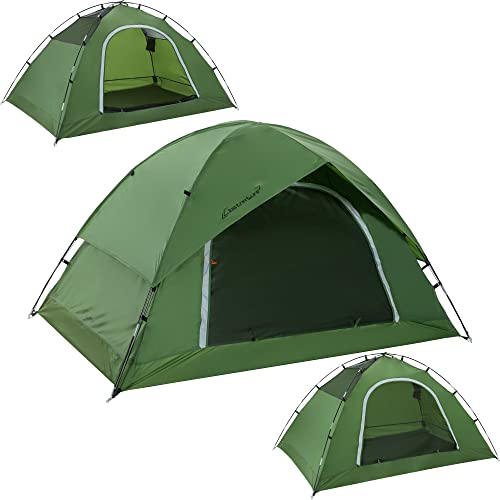
Clostnature’s classic dome keeps things simple. The freestanding frame pitches in under five minutes without instructions, and the wider 7’8″ footprint gives shoulder room most narrow domes skip. Polyester fabric with a waterproof coating handles overnight rain at typical car-camp intensity.
This is the tent you hand to first-time friends and trust them to set up correctly. Compared with the UNP cabin above, you lose standing height but gain a smaller pack size for trunk-friendly storage.
Noteworthy Benefits
- Wider-than-average footprint prevents the shoulder-bump that plagues narrow domes
- Five-minute freestyle pitch is forgiving for first-timers
- Compact pack fits smaller car trunks than cabin tents
Honest Caveats
- 4’7″ center height is too low to sit fully upright on a camp chair
- Single door makes middle-of-night exits awkward for the back sleeper
Built With In Mind
Festival-goers and weekend duos who want a no-instruction dome that fits a sedan trunk.
Another Choice May Suit
Families wanting standing room will be happier with the UNP 4-Person Portable Cabin Tent.
CampExo is built around the throw-and-go pitch. Toss it out of the bag, watch the 190T polyester and 150D Oxford floor (a heavier-denier fabric used on high-wear surfaces like the tub floor) pop into shape, slide it into the carry bag when you leave. The 112″ by 78″ by 47″ interior fits two adults or squeezes three for one-nighters.
Compared with the Clostnature dome above, this one skips traditional pole assembly entirely. It is the right shape for travelers who arrive tired and dark, not for stormy exposed ridges. Rooftop campers, festival hoppers, and short-stop overnighters will find it pays off.
The Practical Payoff
- True seconds-scale setup suits late arrivals and one-night stops
- 190T polyester roof plus 150D Oxford floor balances weight and durability
- Included carry bag keeps the pop-up discipline intact between trips
Things That May Matter
- Low 47-inch peak means adults kneel, not stand
- Pop-up mechanism needs careful refolding to land back in the bag; practice once at home
Right Fit For
Road trippers and festival campers who value fastest possible pitch over standing height.
Reach For A Different Pick When
Car-camping families will get more usable space from the MOON LENCE Pop Up 3-4 Person Tent.
Mobihome uses a hub-and-drawstring system: roll out the tent, lift the central hub, pull the drawstring, and the dome rises. The whole sequence is genuinely one-person. At 8.5 lb packed, it is light enough for short walks from a parking spot, and the 40″ by 6.6″ carry bag fits behind a car seat.
The mesh roof, mesh door, and mesh windows make it a summer tent first and foremost, with a rainfly for the odd shower. Where the CampExo above is the fastest pop, this one balances pop-up speed with better ventilation. Lightweight family campers and warm-weather weekenders will appreciate the trade.
Useful Strengths
- Hub-and-drawstring system pops the tent with one person, no instructions
- Mesh roof, door, and windows maximize stargazing and airflow on warm nights
- 8.5 lb packed weight is light enough for short trailheads and park campsites
- Compact 40″ carry bag fits behind most car seats
Worth Bearing In Mind
- Mesh-heavy design needs the rainfly up in any real precipitation
- Interior 43-inch height is kneeling-only for tall adults
Who Will Love This
Lightweight family campers who want pop-up speed plus genuine summer ventilation without hauling a heavy cabin.
Skip It When
Heavy-weather campers should pick the UNP 4-Person Portable Cabin Tent with its full-coverage rainfly.
MOON LENCE flips the pop-up format into a pentagonal cabin. The shape carves out a 52.4-inch peak and a wide 114″ by 121″ footprint, so two adults plus two kids sleep with real elbow room. Polyester fabric plus a windproof frame design handles backyard evenings and typical road-trip weather.
Setup is rated around ten seconds, which lines up with the hub-style pop-ups earlier in this list. Where the Mobihome dome above is a tight three-person summer shelter, this is the family-sized pop-up cabin. Backyard sleepovers, road-trip families, and casual weekend campers get the most from it.
Points In Its Favor
- Pentagonal cabin geometry widens floor area beyond typical pop-up domes
- 52-inch peak height lets most adults kneel and dress without crouching fully
- Ten-second pop-up pitch suits tired arrivals and kids who want to “help”
- Family capacity fits two adults plus two kids with gear
Less-Strong Areas
- Pentagonal shape catches crosswinds; stake all corners in exposed sites
- Refolding the pop-up cabin takes more patience than a freestanding dome
Right Fit For
Backyard sleepover hosts and road-trip families who want pop-up ease with cabin-level floor space.
Look Elsewhere When
Backpackers chasing low pack weight should pick the ATEPA Voyage 1-2 Backpacking Tent 20D SilNylon.
What To Weigh Before Picking A Pop Up Pod
Capacity vs. weight is the first fork in the road. Ultralight picks like the ATEPA Voyage trade standing room and family space for low pack weight, so they make sense for hikers and bikepackers. Cabin-style pods like the UNP or MOON LENCE give standing height and family capacity but tip the scales heavier, which is fine when your tent rides in a trunk, not a pack.
Weather rating deserves a real look. A “waterproof” claim without a hydrostatic head number (a millimeter measurement of how much water pressure the fabric resists before leaking) means very little. Look for at least 1500mm on the rainfly, double-layer construction for sustained rain, and welded or taped seams (seams covered with adhesive strips that seal needle holes). Three-season tents handle spring through fall; four-season builds like the ATEPA Voyage add snow-load capability for shoulder-season alpine trips.
Setup style is the make-or-break comfort factor. True pop-up pods like the CampExo and anngrowy dome toss out of the bag and self-erect, which is brilliant for tired arrivals. Hub-and-drawstring systems like the Mobihome need one short learning curve. Classic freestanding domes like the Clostnature and Amazon Basics dome need pole assembly but stay intuitive for first-timers. Cabin tents with near-vertical walls add a few minutes but gain standing height.
Ventilation matters more than people think. Mesh doors, mesh roofs, and multiple windows keep condensation down in humid conditions. If you camp anywhere east of the Rockies in summer, prioritize mesh-heavy designs and use the rainfly only when needed.
Things Worth Watching Before You Commit
Slips Worth Avoiding
The most common mistake is buying on capacity alone. A “4-person” tent with narrow dome walls fits two adults and gear, not four grown humans. Read the floor area and ceiling height, not just the headline number. Another common slip is skipping the rainfly check; some pods look weather-ready until the first real storm and the seams leak at the needle holes. Finally, ignore pack weight when you only car-camp, and obsess over it when you hike. Match the tent to your actual commute, not the spec that sounds best.
Where The Upgrade Earns Its Place
Spending more usually buys three things: stronger fabric (higher-denier polyester, ripstop weaves with reinforcement grids that stop tiny tears from spreading), better waterproofing with taped seams and higher hydrostatic head ratings, and smarter pole geometry that handles wind without complaint. For weekend family camping in fair weather, an entry-level dome does the job. For sustained rain, exposed sites, or multi-day backpacking trips, the upgrade to a four-season shell or a cabin with full-coverage rainfly pays back fast in dry sleep and fewer camp breakdowns.