
A cabin that traps stale air on a hot summer day turns a relaxing cruise into an endurance test, and a fridge running harder than it should quietly shortens its own life. The right 12V fan pulls heat out of enclosed lockers, vents an RV fridge on a trailered boat, or just keeps your face cool at the helm without taxing the battery bank. This list rounds up ten solid options, from budget 120mm computer-style fans to purpose-built marine vent fans and clip-on cabin blowers.
A Fast Comparison Of The Options

Wathai 120mm 12V Computer Case Cooling Fan 2-Pack

IP68 Waterproof 12V DC 4-Pin PWM Cooling Fan 2-Pack
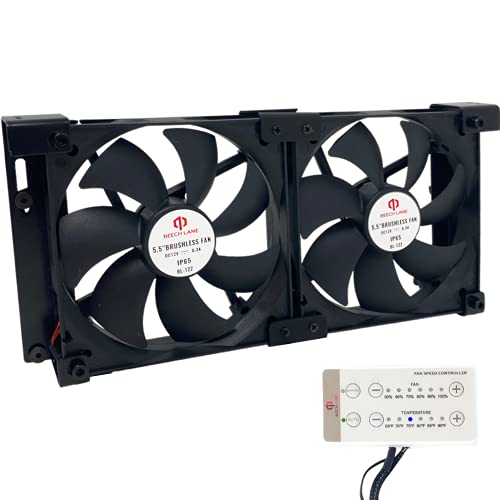
Beech Lane 12V RV Fridge Ventilation Cooling Fan 5.5″

GDSTIME 120mm 12V Dual Ball Bearing DC Fan 2-Pack

Wathai IP67 Waterproof 80mm 12V Cooling DC Fan

GDSTIME 120mm x 38mm 12V Waterproof IP67 Fan

Mini 60mm 12V DC Brushless Cooling Fan 2-Pack

Tujoe 8″ Portable 12V Clip Fan (Silver, 2-Pack)

Tujoe 6″ Portable 12V Clip Fan (Black, 2-Pack)

Tujoe 6″ Portable 12V Clip Fan (Silver, 2-Pack)
Taking A Closer Look At The Options
The Wathai 120mm pulls air at 2000 RPM, which lands it well above the gentle-breeze category without dragging a small battery down. Sleeve bearing construction keeps the price low, and the 2-pin lead makes wiring a direct hookup to any 12V source straightforward. Owners commonly mount these in electronics lockers and small cabin spaces where a few cubic feet per minute of movement matters more than quiet operation.
For a first ventilation project on a runabout or skiff, this fan offers a forgiving entry point. The two-pack gives you a redundancy option if one fan later wears out, which matters on sleeve-bearing units that run hot in confined spaces.
The Good Stuff
- 2000 RPM airflow handles moderate heat loads in cabinets and small lockers
- Two-pin 12V lead simplifies wiring to fuse blocks and battery taps
- Two-pack format covers intake and exhaust from a single purchase
- Compact 120mm frame fits standard PC-style mounting holes common in marine DIY builds
Things To Consider
- No waterproof rating, so splash zones and open decks require a shroud or housing
- Sleeve bearing fans typically need dust-free environments to reach expected service life
At A Glance
Made For
DIY boaters building their first vent fan project on a tight budget who want proven airflow without specialty pricing.
Skip It When
You need splash-zone protection, where the KEYFANCLUB IP68 fan handles the environment far better.
The KEYFANCLUB pair carries an IP68 rating, which is the marine-industry shorthand for full dust sealing plus protection against continuous immersion beyond casual splashes. Dual ball bearings back up that sealing with mechanical longevity, since ball bearings shrug off the slight shaft tilt that sleeve bearings cannot tolerate in wet, dirty bilge conditions. A 4-pin PWM connector adds speed control, useful if you want the fan to ramp down overnight and conserve amps.
For installations where condensation and spray are daily realities, this is the kind of fan you buy once and forget about. Compare it to the Wathai budget pick above: the Wathai delivers more raw airflow per dollar in dry conditions, while this unit trades a few cubic feet per minute for durability in places where water finds its way in.
Notable Upsides
- IP68 rating allows long-term immersion without performance loss
- Dual ball bearings extend service life over sleeve-style fans
- PWM control lets you tune speed without rewiring resistors
- Two-pack covers both intake and exhaust in a wet locker
Trade Offs
- Heavier price tag than unprotected computer fans
- 4-pin PWM requires a controller or compatible motherboard, which adds wiring work on a basic boat hookup
Whose Shelf It Belongs On
Owners of open-deck fishing boats and sailboats who need a fan that survives spray, rain, and bilge moisture without service interruptions.
Look Elsewhere When
You primarily need airflow behind an RV fridge vent, where the Beech Lane custom-mount fan offers a more direct fit.
The Beech Lane system is purpose-built for a single job: pulling heat out from behind an absorption fridge. It ships with custom mounts sized for the side vent openings on American RVs, which is a meaningful upgrade over generic PC fans that require you to fabricate brackets yourself. The included remote offers manual and auto temperature modes, so the fans can cycle up only when the fridge exhaust actually climbs.
If your boat or trailer carries an RV-style absorption fridge, this setup quietly extends compressor-off runtime and reduces the ambient heat that bakes the cabinetry around it. Note that the dual 140mm configuration delivers noticeably more airflow than the 90mm fans common in older retrofits, which matters when the fridge compartment runs hot in summer sun.
Strengths Worth Knowing
- Custom RV vent mounts remove fabrication work from the install
- Auto temperature mode adjusts output to real heat load
- Dual 5.5″ fans push serious air compared to single retrofit solutions
- Waterproof construction handles rooftop exposure
Honest Caveats
- Designed for RV side vents, so a smaller boat may need a different mounting approach
- Higher cost than bare axial fans since the kit includes controllers and brackets
Best Suited To
RVers and trailer-sailors running absorption fridges in hot climates who want a tidy, vent-matched upgrade.
A Better Fit Elsewhere
For general cabin cooling, the Wathai 80mm IP67 fan offers a smaller and more flexible mounting footprint.
The GDSTIME 120mm trades the sleeve bearing of the entry-level Wathai for a dual ball bearing design, which typically outlasts the cheaper option when the fan runs 24/7 in a hot engine room or battery compartment. Its 2-pin connector keeps the wiring simple, with enough lead length to reach a fuse block without splicing extensions. At this size, the fan fits standard 120mm cutouts that many DIY builders already have on a project enclosure.
For installations you want to install and then forget about for years, ball bearings are the safer bet, since they tolerate dust and minor shaft tilt without seizing. The honest trade-off is that you give up a bit of the low-noise character that sleeve bearings deliver, though in an engine bay it rarely matters.
What It Does Well
- Dual ball bearings tolerate tilt and dust better than sleeve designs
- Long lead reduces the need for splices or extensions
- Two-pack supports redundant cooling in critical compartments
Points To Note
- No listed waterproof rating, so the engine bay mount needs a drip shield
- Slightly noisier than sleeve bearing equivalents at full speed
Feature Snapshot
Who It Suits Best
Boaters running always-on cooling for inverters, battery banks, or engine room electronics who value service life over absolute silence.
Where Another Pick Suits Better
For wet mounting conditions, the KEYFANCLUB IP68 fan offers the sealing this GDSTIME lacks.
The 80mm Wathai slots into tight spaces where a 120mm fan simply will not fit, like a small RV fridge vent cover, a battery box lid, or a greenhousing vent. Its IP67 rating covers rain, splashes, and even brief immersion, which removes a lot of the enclosure-building work you’d otherwise face with a computer fan. The dual ball bearings provide dependable long-term operation, especially valuable in always-on roles.
Think of this as the smaller cousin of the Beech Lane system above: less airflow, but a smaller hole and a waterproof body. For cabin dehumidification or a small fridge boost, that balance often lands right.
Positive Points
- 80mm footprint fits where larger fans cannot
- IP67 sealing handles splash, rain, and brief submersion
- Dual ball bearings for steady long-term operation
- Low current draw suits small battery banks
Small Caveats
- Less CFM than 120mm fans, so heat-heavy spaces need multiple units
- Single fan, so a second purchase is required for paired intake and exhaust
Right Fit For
Boaters needing moisture-resistant venting in tight lockers, greenhouses, or small fridge compartments.
Consider Something Else When
You need maximum airflow in a larger engine bay, where the GDSTIME 120mm x 38mm fan moves significantly more air.
At 38mm deep, this GDSTIME fan is thicker than the standard 25mm fans elsewhere on this list, which lets it push notably more air at the same RPM. That extra depth makes it a strong match for hot engine rooms and inverter compartments where the standard 120mm fans struggle to move enough volume. IP67 sealing and dual ball bearings round out a fan that wants to live in harsh spots.
If the Wathai 80mm handles the small end of the cooling spectrum, this one owns the high-heat end. You give up mounting flexibility because the 38mm depth may not clear existing grilles, but the airflow payoff is real for confined, heat-loaded spaces.
A Favorable Mix
- Thick 38mm frame delivers higher CFM than slimmer 120mm fans
- IP67 sealing protects against spray and dust intrusion
- Dual ball bearings for long service intervals
- 2-pin lead works with standard 12V hookups
Worth Bearing In Mind
- Depth may not fit shallow mounting locations designed for 25mm fans
- Heavier than thin fans, so vibration-prone mounts need solid bracketing
Who Will Love This
Owners with heat-loaded engine bays or inverter lockers who want maximum airflow in a single 120mm hole.
Not Your Match When
You need a compact cabin fan, where the WDERAIR 60mm unit fits spaces this GDSTIME cannot.
The WDERAIR 60mm is the tiniest fan in this roundup, sized for projects where every millimeter counts: small electronics enclosures, kegerator compressors, or 3D printer control boxes. At 4500 RPM, it spins faster than the larger fans, which is how it delivers meaningful airflow from such a compact body. Dual ball bearings add longevity at those speeds, where cheaper sleeve bearings would wear faster.
Use these where a 120mm or 80mm fan simply will not physically fit. They are not a substitute for cabin cooling, but they excel at spot-cooling a hot component in a cramped build.
What Earns Its Place
- 60mm body fits cramped enclosures no larger fan can reach
- 4500 RPM produces real airflow from a tiny footprint
- Dual ball bearings survive the high-RPM operating range
- Two-pack supports redundant cooling on critical electronics
A Few Limitations
- Higher RPM means more audible noise than larger, slower fans
- Low airflow volume limits use to spot-cooling rather than cabin ventilation
Built With In Mind
DIY builders tackling compact electronics projects, mini-fridges, and laser engravers where space rules out larger fans.
Reach For A Different Pick When
You need cabin or sleeping-space airflow, where the Tujoe clip fans deliver a more pleasant breeze.
The Tujoe 8″ fans ditch the permanent-mount approach in favor of a clip and bracket system that moves with you. Each fan draws power from a 12V cigarette-style socket, and the 180-degree manual swivel aims the breeze exactly where you sit. The metal housing stands up to the inevitable bumps of boat life far better than a plastic grille.
Compared to the Wathai 120mm computer fan earlier, this is a wholly different tool. The Wathai moves serious CFM into a sealed locker; the Tujoe puts a gentle, person-sized breeze on your face at the helm or in a v-berth. Both earn their place, just in different roles.
Where It Delivers
- Clip and bracket mounting fits seats, sun visors, and door handles
- 180-degree swivel directs airflow where you need it
- Metal housing survives cabin knocks better than plastic fans
- Two-speed switch balances noise against airflow
Practical Considerations
- Cigarette plug relies on a 12V socket, limiting install options in some cabins
- Larger 8″ frame requires a sturdy clip surface, so thin visors can flex
Quick Facts
Made For
Skippers and crew who want personal cooling at the helm, in the v-berth, or at the galley without committing to a permanent install.
Swap It Out When
You want fixed cooling for a fridge or electronics locker, where the Wathai or GDSTIME axial fans mount permanently and quietly.
The black 6″ Tujoe offers the same two-speed clip-mount format as the 8″ version above, but in a more compact 6-inch body that fits smaller cockpits, tenders, and tight cabin nooks. The black housing disappears into most interior color schemes, which matters if a bright silver fan would clash with the boat’s finishes. The two-speed switch keeps noise manageable overnight at the lower setting.
This is the fan to reach for when the 8″ version is simply too large for the space. Same cigarette-plug convenience, same manual swivel, just a smaller breeze footprint.
Useful Touches
- Compact 6″ size fits cockpits and small cabins
- Black finish blends with most marine interiors
- Clip-and-bracket mounting without permanent holes
- Two-speed control adapts to day or overnight use
Details To Watch
- Less coverage area than the 8″ model, so larger cabins need more than one
- Metal housing adds some weight compared to all-plastic fans
Who Should Grab It
Small-boat owners and kayak anglers who want personal airflow without dedicating cockpit space to a larger fan.
Another Choice May Suit
For maximum cabin coverage from a clip fan, the Tujoe 8″ silver version moves more air per unit.
The silver 6″ Tujoe is the cosmetic cousin of the black version above, sharing the same 6-inch body and two-speed switch but finished in a brighter silver that catches light and looks sharper in lighter cabin interiors. For boats with white gelcoat, painted bulkheads, or aluminum accents, the silver finish reads as a more natural match than matte black.
Functionally identical to the black 6″ model, this is purely an aesthetic choice, but aesthetics matter in cabin spaces where you’ll see the fan every day. If you liked the description of the black 6″ Tujoe and prefer a lighter finish, this is your pick.
Everyday Perks
- Silver finish complements lighter cabin interiors and white gelcoat
- Two-speed switch for daytime breeze or quiet overnight mode
- Clip-on format requires no drilling
- 180-degree swivel for targeted airflow
Where It Is Less Suited
- Smaller 6″ coverage compared to the 8″ Tujoe option
- Cigarette plug only, so no hardwired install path
Perfect Match For
Boaters with bright, airy cabins who want a plug-and-play fan that visually disappears into lighter finishes.
Where A Sibling Pick Shines
For larger cabin airflow in the same plug-and-play format, the Tujoe 8″ silver model moves more air per fan.
Picking The Right 12V Fan For Your Boat
Choosing a 12V boat fan starts with where it will live and how much abuse it must survive. A computer-style axial fan like the Wathai 120mm delivers strong airflow at low cost, but it expects a dry, sheltered spot, since humidity and splash quickly corrode sleeve bearings and unprotected motor windings. In lockers exposed to bilge splash, deck rain, or salt mist, an IP67 or IP68 rated fan is the smarter investment, even though the upfront cost runs higher. The KEYFANCLUB IP68 and the GDSTIME 120mm x 38mm IP67 both fit that bill.
Match Size To The Hole You Already Have
Measure twice before buying, since 120mm, 80mm, and 60mm fans each correspond to different cutout dimensions. The WDERAIR 60mm is the only realistic option for tight electronics enclosures, while 120mm fans work best in lockers with PC-style mounting provisions. Remember that fan depth matters too: the GDSTIME 120mm x 38mm is 13mm thicker than the standard 25mm fans, which can be a deal-breaker behind shallow panels.
Decide Between Fixed Mount And Portable Clip
Permanent-mount axial fans cool compartments continuously without taking up living space. Clip-on fans like the Tujoe 6″ and 8″ models deliver personal airflow at the seat or bunk, but they rely on 12V cigarette sockets and don’t move air into sealed lockers. Many owners end up with both, a permanent fan for the fridge vent and a portable fan for the helm.
Plan For Wiring And Control
Two-pin fans connect directly to a fused 12V tap and run at full speed whenever powered. Four-pin PWM fans, like the KEYFANCLUB IP68, allow variable speed control, useful for trimming noise and amp draw overnight. Either way, route wiring through a fuse and consider an inline switch so the fan can be turned off without disconnecting the battery.
Don’t Overlook Bearing Type
Sleeve bearings are quiet and cheap, but they tend to wear faster in dusty or tilted installations. Dual ball bearings cost a little more and tolerate tilt, vibration, and dust far better, which is why they appear on most of the long-service fans in this roundup.
Key Considerations Across These Picks
Where Shoppers Go Wrong
A common slip is buying a computer fan for a wet location. A sleeve-bearing 120mm fan may cost less, but unprotected windings fail quickly in a bilge or open locker, leaving you replacing the fan within a season. Another trap is matching the wrong size to the cutout, forcing you to fabricate adapter plates that never quite seal. Always check both dimensions and the IP rating against the install environment before clicking through to the listing.
What The Higher Tier Buys
The jump from a budget Wathai sleeve-bearing fan to a KEYFANCLUB IP68 unit is mostly about sealing and bearing quality. That extra layer protects the motor in places where salt, spray, or condensation would otherwise shorten its life. For owners running a fridge vent or an always-on battery compartment, that reliability usually justifies the higher spend within the first season of trouble-free operation.
Frequently Asked Questions
How many fans does a typical boat cabin need?
Most small cabins benefit from one intake and one exhaust fan working together, which is why so many options ship in two-packs. A single Tujoe clip fan is enough for personal airflow at one seat, while compartment cooling usually wants matched intake and exhaust.
Can I run a 12V boat fan directly off the battery?
Yes, as long as the fan runs on 12V DC, which every option here does. Route the wiring through an appropriately sized fuse and, ideally, a switch so the fan can be disconnected when leaving the boat unattended.
What’s the difference between IP67 and IP68 ratings?
IP67 means the fan survives temporary immersion in water up to one meter, while IP68 handles continuous immersion at greater depths specified by the manufacturer. For most marine uses, either rating is overkill in the right direction, since both block spray and brief dunking.
Do sleeve bearing fans last as long as ball bearing ones?
Sleeve bearings typically deliver shorter service life, especially in tilted or dusty installations. Ball bearings like those in the GDSTIME and WDERAIR models generally run cooler and last longer under continuous use.
Will a 12V fan drain my battery overnight?
Most small 12V fans draw under 0.2A, so a typical deep-cycle battery can run them for many nights without trouble. Higher-CFM models like the GDSTIME 120mm x 38mm pull more current, so pairing them with a PWM controller helps trim overnight draw.
Closing Thoughts
The right 12V fan depends less on spec sheets and more on where it will live. Dry lockers welcome affordable axial fans, wet compartments call for IP-rated models, and personal cabin comfort is best served by a portable clip fan. Pick the format that matches your install, verify the size, and your boat will breathe a little easier on the next hot afternoon.